
Les Delices brings classical music to new communities in Cleveland
Classical music is for everyone, but an upcoming program by Les Delices is for one particular demographic a little more than most: Cleveland’s Hispanic community.
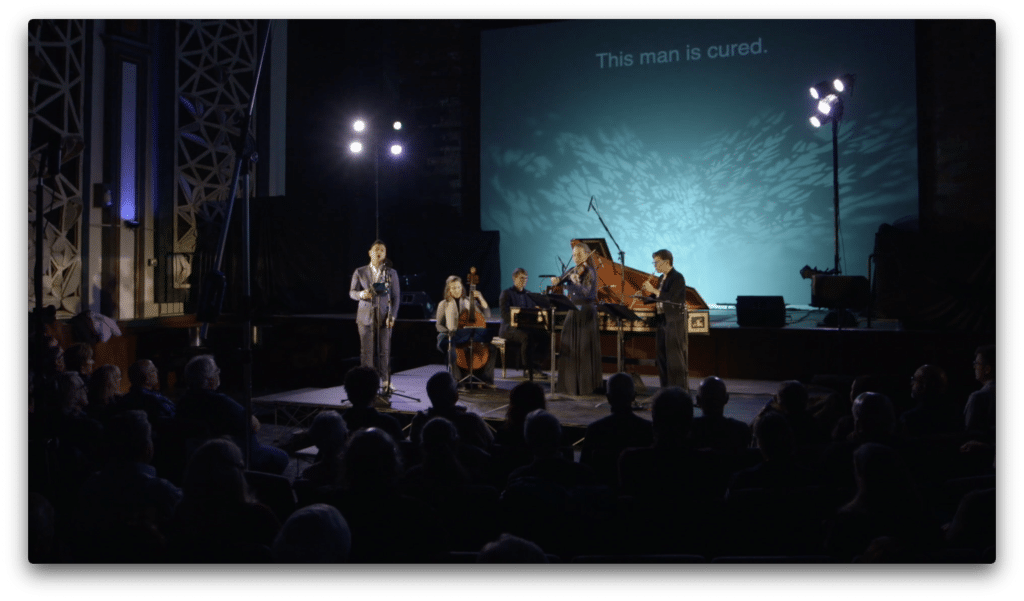
Classical music is for everyone, but an upcoming program by Les Delices is for one particular demographic a little more than most: Cleveland’s Hispanic community.
With “La Diosa,” which runs Feb. 26-March 1, Les Delices is veering boldly from its comfort zone, Baroque-era France, into very different territory, the music of 17th– and 18th-century Latin America.
In doing so, its aim is not only to inspire existing patrons but also to create new ones, to transcend barriers and help listeners from non-European traditions better understand and appreciate the music of their homeland’s past.
“History is not a line forward,” said violinist Liz Loayza Herrera, a native of Bolivia and a lead participant in “La Diosa” (“The Goddess”). “It is not a dead archive. We are woven together in so many ways.”
Debra Nagy, the oboe-playing founder of Les Delices (pronounced “Lay Day-Lease”), a Cleveland-based Baroque chamber music group, has a penchant for thematic programming, for putting together concerts that bear out a certain concept, style, or message.
In the case of “La Diosa,” however, part of the group’s ongoing, multi-year “Mythology Project,” Nagy started with a person. Eager to truly connect with her Hispanic neighbors, she began by tapping Estelí Gomez, an acclaimed soprano of Mexican heritage, who she said would help her design a program in an authentic manner.
“That felt important to me, to not impose an idea,” Nagy said. “I wanted this to be a collaborative creation, for others to bring something of themselves to the table.”
That they did, in spades. With the help of Gomez, Herrera and others, the group researched, amassed and prepared a truly vibrant collection of music conceived for the cathedrals, missions, and courts of modern-day Peru, Bolivia and Guatemala. The pieces they found call for combinations of two violins, viola, cello, recorder, harpsichord, guitar and percussion.
The idea is to illustrate how freely music moved across oceans. European missionaries to Central America brought their music with them, as did people of African descent. Likewise, when those people and others left that region, they exported Indigenous traditions.
“I love to think about this [colonial Latin America] as a place of encounter,” said Herrera, a graduate student at Case Western Reserve University. “When these two continents got together, they formed the beginning of this music, and they passed it on through generations.”
Indeed, they continued passing it on for centuries, right up to the present day. Hence the presence on “La Diosa” of a new piece – an unusual offering from a group that specializes in very old music.
To make that connection between older traditions and the music of today, Nagy imported another talent: Gilda Lyons, a Nicaraguan-American composer and vocalist whose music often straddles boundaries of time, geography, and style.
Lyons penned the work that became the program’s title, “Soy La Diosa” (“I am the Goddess”), a four-movement, bilingual piece for soprano and chamber ensemble invoking the female Mayan deity Ix Chel and celebrating the divine feminine.
“It’s a beautiful, mystical piece,” Nagy said, noting that between Gomez, Lyons and probably the Mayan deity herself, “I think there’s a lot in common. They’re kind of kindred personalities.”
Les Delices plans to present “La Diosa” (the program) twice in full. Performances will take place at 4 p.m. Saturday, Feb. 28 at The Heights Theater in Cleveland Heights and 7:30 p.m. Sunday, March 1 at the Pivot Center for Art, Dance, and Expression in Cleveland. Tickets are available at the group’s website, lesdelices.org.
Those aren’t the only ways to experience “La Diosa,” however. Importantly, in a special effort to reach the Hispanic community, Les Delices will also present a free preview at Cleveland’s CentroVilla25. That program, at 7 p.m. Thursday, Feb. 26, will feature a conversation with Lyons as well as performances of music from colonial Bolivia by specially coached students at Bard High School Early College.
Separately, Herrera is also leading a workshop for high-school string players called “Bolivian Baroque” at The Music Settlement in Cleveland and a choral program at Firestone Community Learning Center in Akron, which will culminate in a side-by-side performance March 14 with Les Delices at House Three Thirty, also in Akron.
Les Delices is no stranger to such outreach. The group maintains strong relationships with schools all over Northeast Ohio and routinely tailors its educational programs to fit whatever the musicians happen to be exploring at that time.
But the number and nature of the offerings around “La Diosa” is special. That’s because there’s something special about “La Diosa.”
What’s true for the students being trained around the program is surely true for everybody else, and especially for those from Cleveland’s Hispanic community: This is a concert not to be missed if you’re interested in how the music of Latin America fits into the broader history of music.
“It’s a beautiful narrative to dig into,” Herrera said. “It’s not just a concert to listen to…They’re deeply immersed. They’re literally cherishing it. It’s about giving people the opportunity to understand how these stories evolved.”
Keep our local journalism accessible to all
Reader support is crucial as we continue to shed light on underreported neighborhoods in Cleveland. Will you become a monthly member to help us continue to produce news by, for, and with the community?
P.S. Did you like this story? Take our reader survey!
Related Articles
The Movie Nerd Report: 3 film festivals this week in Northeast Ohio
Plus, see what other new releases and classics are playing at independent theaters around you!
Walking Cleveland’s past, one story at a time
“How much of Cleveland do I pass by without knowing the story?”
More than a card: Why Cleveland Public Library still matters in the digital age
September is National Library Card Signup Month. The Land talked with Cleveland Public Library Executive Director Felton Thomas, Jr. at the Main Library downtown.


