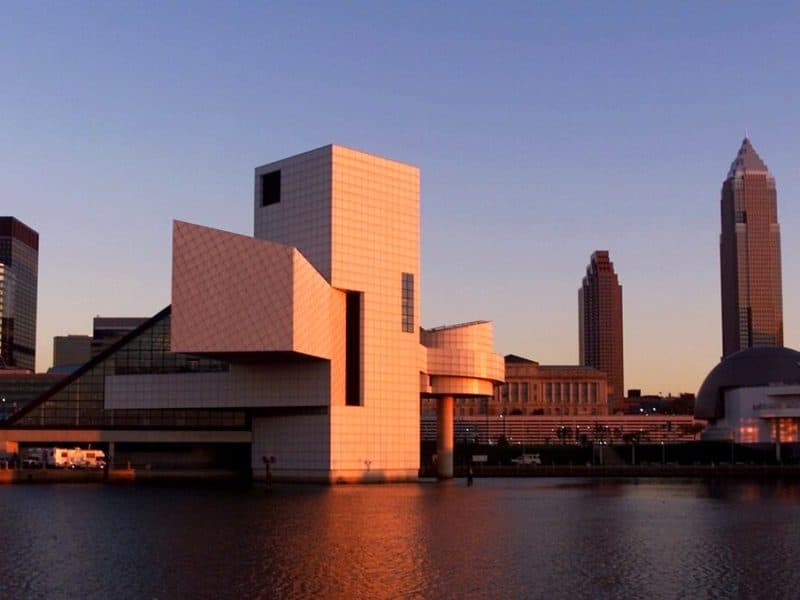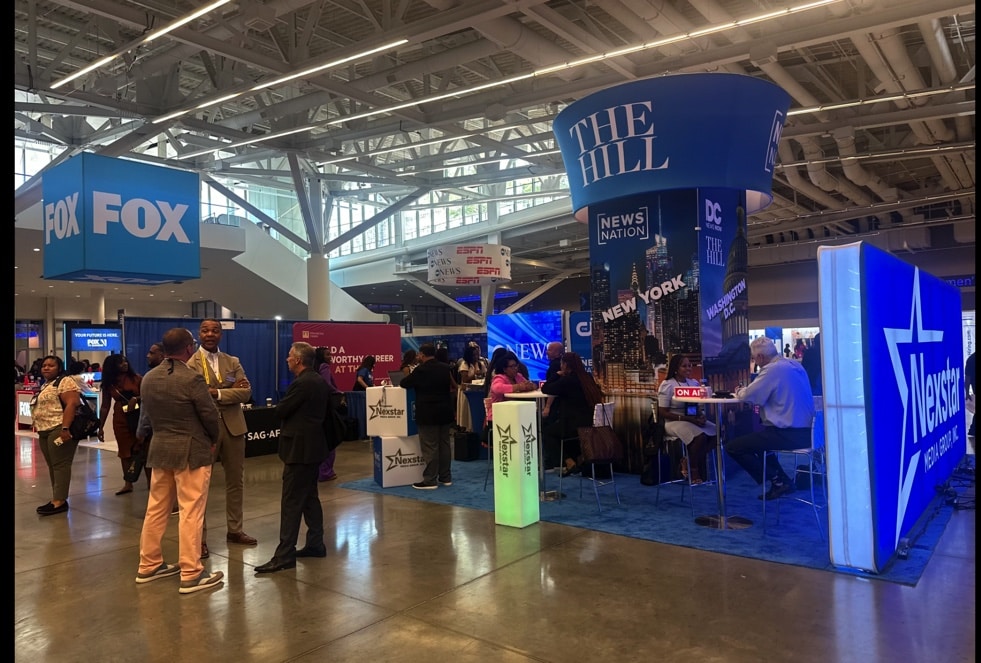
The National Association of Black Journalists marks its 50th anniversary this year. And for the first time in the organization’s history, they held their annual conference in the CLE with 3,096 people in attendance.
According to Candace Ledbetter, of the NABJ PR and communications team, Cleveland was chosen as the 50th anniversary gathering place because of its dedication to the industry. The Huntington Convention Center of Cleveland welcomed 3,096 people during the August 6-11 event, that’s down significantly from the previous year. In 2024, Chicago had a record-breaking 4,336 convention goers.
Much talk has centered around why Cleveland’s convention attendance was lower than Chicago’s in 2024. To that point, both local and national organizers felt in part it was due to economics. Media companies are no longer covering travel and registration costs like they did 10 years ago. Rhonda Crowder, president of the local GCLEABJ, believes that’s one reason.

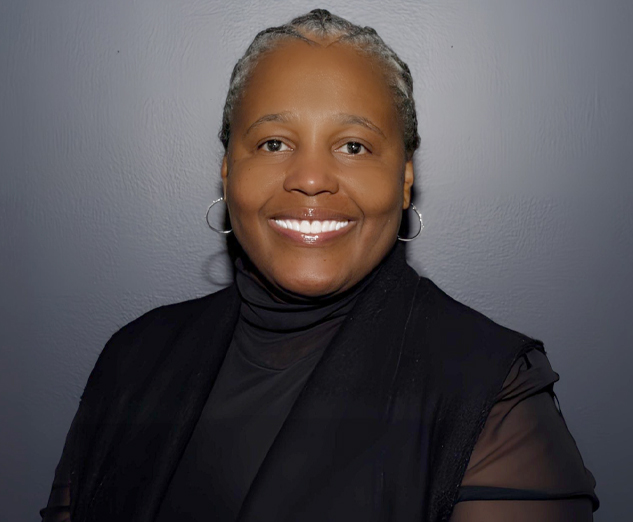
“I definitely don’t think it’s Cleveland,” she said. “I think, particularly because it was the organization’s 50th anniversary, I think that there is a political climate that has caused organizations to pull back on activities that seemingly promote Diversity, Equity, and Inclusion. I’ve heard some TV stations didn’t cover the cost of their staffers to attend the convention as in the past. Many journalists are out of work, and you might say the conference is the place to be. But if you can’t afford travel, convention registration, and other expenses, it’s futile to even suggest. Attendees left Cleveland with a different perception of our city. Most of them I spoke with were pleasantly surprised about their time here.”
The Loss of Black journalists impacts Cleveland, the nation
In 1975, over forty members of Black media from across America, including the late ABC news anchor Max Robinson, came together to speak of ways to have a voice in newsrooms and to advocate for better coverage in black communities. Those journalists became the founding members of the National Association of Black Journalists.
Although the industry has made strides in Black and brown leadership roles since 1975, layoffs and the enticement of buyouts have forced many to abandon journalism altogether. So, this poses an issue with getting representative coverage for Black and brown communities.
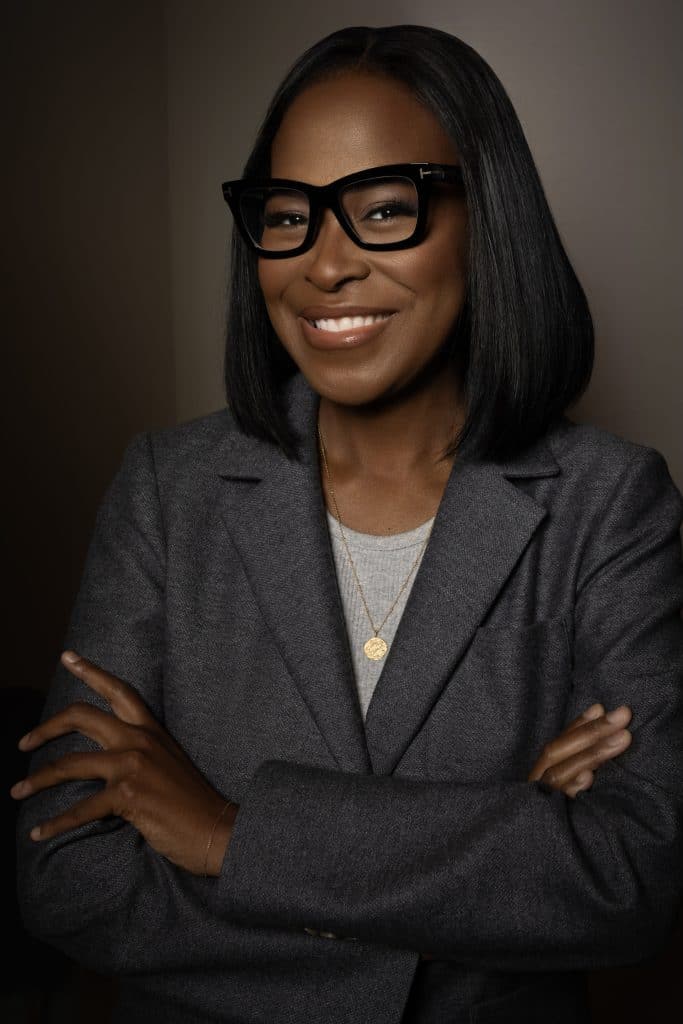
Erinn Haines became the new president of NABJ during the conference in Cleveland. She understands the impact of losing so many Black and brown voices in the industry. But her immediate focus will be the next generation of Black and brown journalists.
“We have been in the midst of a shift in our industry, and print is definitely being affected by that shift,” Haines told the Land. “I think that NABJ must now put our members in a position to pivot so that we are able to survive and thrive in this evolving industry. Print has seen the evolution to digital. When my career began 20 years ago in print, it was at its peak. Five years ago, I helped found a digital startup newsroom. For a lot of our members, this industry does not look the same as it did when they first came in. We must make sure that young writers are in a position for success. So that means training, not just at our conventions, but year-round on things like AI. Also, how do we break through and meet our audiences where they are online?”
Large-language models, often referred to as AI, pose another hurdle for journalism.
“There are legitimate concerns about AI and what it’s going to mean for our industry and our society. Journalists have made the mistake of being skeptical about technology in the past. Instead of helping to shape what our relationship was going to be with technology, we have let it shape us. We need to learn the lessons of the past and not let that happen with this AI revolution.”
The lack of media coverage in the Black community is an ongoing topic of discussion in Greater Cleveland, Crowder noted. Although in the last few years, some digital outlets have pledged to dramatically increase coverage of neighborhoods that have been neglected, there is still a need for more reporting. According to Crowder, both on the local and national levels of the NABJ, there’s advocacy for better and more inclusive coverage. However, we need to embrace Black media outlets and demand that Black people are in the boardroom making decisions about coverage, she said.
Haines believes, as the founders did 50 years ago, that communities must fight for the truth.
“There’s always going to be a need for this craft,” she said. “But what does that look like going forward? We can’t control that, but we can certainly prepare ourselves to make sure we’re part of it as NABJ enters its next 50 years.”
Keep our local journalism accessible to all
Reader support is crucial as we continue to shed light on underreported neighborhoods in Cleveland. Will you become a monthly member to help us continue to produce news by, for, and with the community?
P.S. Did you like this story? Take our reader survey!