
Nearly three years after St. Vincent Charity Community Hospital closed its emergency room doors, a new Crisis Receiving Center (CRC) will initiate development this spring.
The facility is being brought to fruition by the partnership of the ADAMHS Board of Cuyahoga County, The Centers and Cuyahoga County government to “serve as the front door to the behavioral health system” in Cleveland’s Central neighborhood, said Scott Oseicki, the CEO of ADAMHS. Central will now have another opportunity to serve the community through the Crisis Receiving Center.
“People are very familiar with that site because of the history with St. V[incent]’s,” said Brandy Carney, Public Safety and Justice Services director of Cuyahoga County. “It’s centrally located, so even individuals from other neighborhoods throughout the county can access it.”

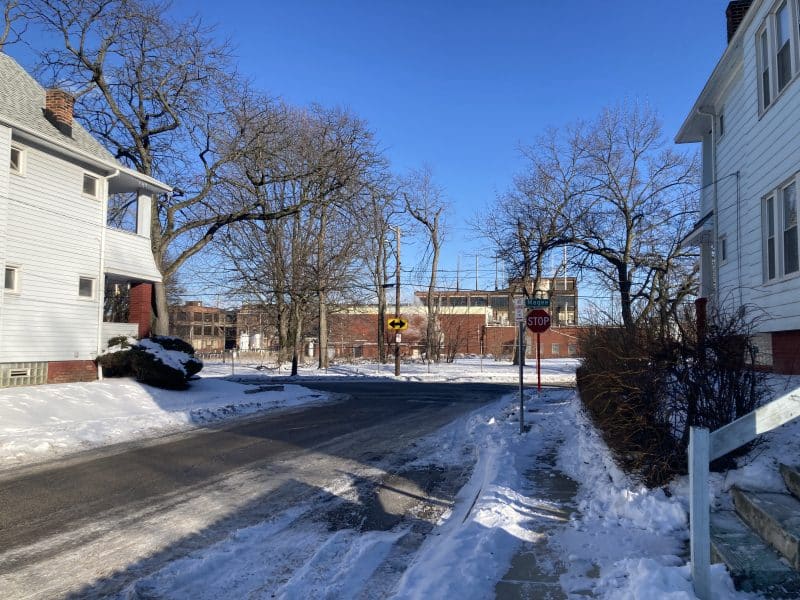
The CRC will be located at 2322 E. 22ndSt and will be a great resource for the residents of Cuyahoga County who are struggling with mental health and substance abuse issues, according to Carney.
Cities across the country are facing a growing number of mental health and substance abuse crises, and Cleveland is among them. The pandemic increased society’s awareness of mental health and substance abuse issues and encouraged people to speak out about their struggles, Oseicki explained.
“People are more willing to talk about it and more willing to seek help for it,” Oseicki said. “Here in Cuyahoga County, there is definitely a need for people to be able to receive these services.”
According to Eric Morse, president and CEO of The Centers, based on the size of Cuyahoga County, anywhere from 14,000-20,000 people a year need these services. Due to this, the ADAMHS Board and The Centers knew it was then time to implement a CRC.
The Centers estimates that the Crisis Receiving Center will serve 17,000 people in the county annually.
“We can handle 14,000 people coming through the crisis receiving center per year,” Morse said. “The other 3,000 people will be outpatient.”
Morse also stated that in communities where crisis facilities were implemented, about 83% of the patients that enter the facilities are discharged quickly and safely in comparison to being treated at a non-specialized hospital or taken to jail.
How it will work
The Crisis Receiving Center will be a first-of-its-kind facility in Northeast Ohio, operating unlike any other behavioral health center in the state, as a “continuum of care in one site,” Carney said.
The facility will take a unique approach to patient care with three levels of service and a “living room model” intake room.
The first floor of the CRC will be a walk-in behavioral urgent care center, allowing for people to see a counselor and receive treatment and medication on a walk-in basis. This will establish the “crisis receiving component” of the facility, Morse said.
The first floor intake area will be furnished with chairs instead of beds to get away from the emergency room feel, and patients will also be greeted by peers to help support their recovery.
“People will be able to be greeted by a person with lived experience,” Oseicki said. “People living in recovery from addiction and mental illness, as well as professionals.”
The second floor will have an inpatient unit for long-term psychiatric care and a detox unit that is supported by the partnership of Rosary Hall, the outpatient addiction services connected to St. Vincent Charity.
“It’s a home-like alternative to go to instead of the emergency room,” Oseicki said. “It will offer a safe space, rather than an emergency room that can be loud and noisy. That’s a very good place for someone who’s experiencing a mental health crisis.”
Finally, the third floor will hold all outpatient services and provide a “warm hand-off” of outpatients back into society, according to Oseicki. Patients will leave with a complete linkage to outside services that will help continue their recovery.
In summer 2024, the ADAMHS Board received a $6.8 million capital grant from the Ohio Department of Mental Health & Addiction Services to be used toward a crisis center in Northeast Ohio.
This grant will fund the renovation of the existing building in which the Crisis Receiving Center will operate. The ADAMHS Board will contribute $2 million for start-up costs and will continue to fund and oversee the operation once the facility has opened.
As for the future of this project, the goal is for this facility to flourish as a service for all of Cuyahoga County, according to Oseicki.
“We hope it’s going to be used and we’re excited for it to open,” Oseicki said. “[The goal] would really be for individuals to get services when they need them most. So in the future, we hope that people who are having a mental health or an addiction crisis would be able to utilize this facility and get the treatment that they need.”
Keep our local journalism accessible to all
Reader support is crucial as we continue to shed light on underreported neighborhoods in Cleveland. Will you become a monthly member to help us continue to produce news by, for, and with the community?
P.S. Did you like this story? Take our reader survey!