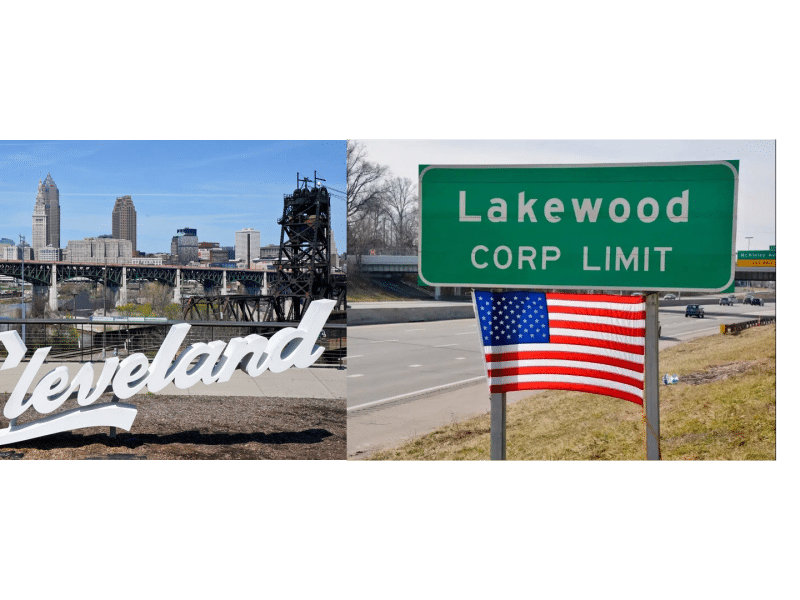
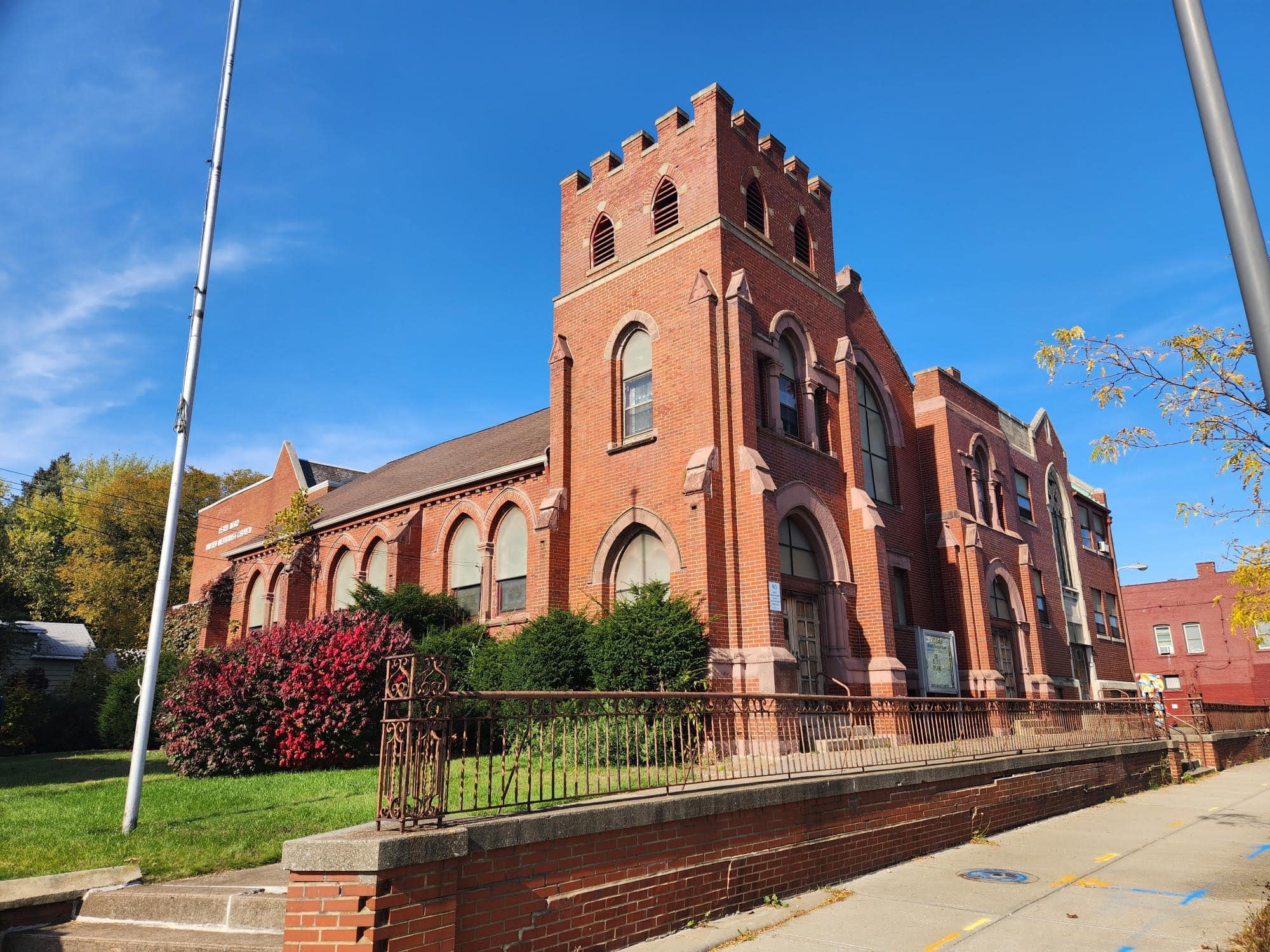
In the heart of Cleveland’s Old Brooklyn neighborhood on the west side, there’s a historic property that stands as a symbol of our heritage and the shared values of our community. I’m talking about the former St. Luke’s Church, located at 4216 Pearl Rd. at the intersection of Memphis and Pearl, which has unfortunately been empty and devoid of life since 2014. It’s been owned by the nonprofit Old Brooklyn Community Development Corporation for several years now, and the goal is to redevelop it into a mixed-use property that benefits the community.
Now, much like the intersection this church stands on, we find ourselves at a crossroads: While some envision a vibrant, modern building that will breathe new life into the center of our downtown, other, primarily older folks are worried about losing the charm and history of this cornerstone property that has been there since 1905. The challenge is clear: How do we bring together young and old to create a design that celebrates both our history and our future as a community?
Lucas Reeve, executive director of Old Brooklyn CDC, who has been with the project since its inception many years ago, said it best: “This can be something powerful and be part of setting up Old Brooklyn for a really sustainable future.”

As a 20-year resident of Old Brooklyn, the former vice president of The Historical Society of Old Brooklyn, and a member of the Old Brooklyn CDC Real Estate Committee, I felt conflicted throughout most of the community planning process for this property and wasn’t sure which way it would go. Yet I am incredibly passionate about this project as a whole, Old Brooklyn, historical preservation, and planning for a sustainable future. I believe this project will help us maintain the essence of our former heritage while appealing to newer generations.
The community has agreed on a proposal which is projected to cost $31 million, and would add 80 market rate apartments, 6,000 sq ft of community green space, 20,000 square feet of new retail, and a large brewery/restaurant. Redesigning a historic property in the center of downtown Old Brooklyn presents a unique opportunity to bring young and old together, fostering a sense of cooperation, unity and community pride. By prioritizing open communication, collaboration and compromise, we are slated to create a space that honors our past while paving the way for an exciting and inclusive future. I believe that together we can bridge the generational divides and create a place that reflects the shared values and aspirations of our diverse Old Brooklyn community.

A rocky start to redevelopment planning
The former church was abandoned in 2014 and spent its last three years without utilities, which rapidly accelerated its deterioration. Old Brooklyn CDC, in doing its fiduciary responsibility to see the community thrive, toured countless developers and potential users through the building, including artists, restaurateurs, nonprofits and churches. Ultimately, the CDC was not able to identify a candidate to take on such a behemoth redevelopment due to Americans with Disabilities Act (ADA) requirements to make the space accessible, structural issues, and outdated systems.
In August 2019, the CDC accepted the property as a donation. In January 2021, through the Cuyahoga County Land Bank, the CDC signed a purchase and sale agreement for this historic property. Thus began multiple years of strategic brainstorming and development of plans for its future use. In spring of that year, Old Brooklyn CDC also obtained 3426 Memphis Ave., a commercial building which sits adjacent to the property, in order to maximize the combined footprint for redevelopment.
To unite the community around a shared vision for the church, we needed to have an open dialogue. At these early meetings over the past few years, all options were on the table – total preservation of the buildings, preservation with some new construction, and complete demolition of the historic properties. Old Brooklyn CDC asked for proposals from developers, and then came out with a plan in February 2021. This proposal, which called for the property to be almost completely removed and replaced with new affordable housing, would have changed the landscape of this historic and beloved corner, and it met with a lot of resistance.
The community at large was in an uproar with some people even saying they would “chain themselves” to the building in front of the bulldozers. Many older residents understood the benefits of redesigning the property but disagreed with total demolition. Connie Ewazen, president of the Historical Society of Old Brooklyn, said, “In my mind this is sacred land, one of the few gems in Old Brooklyn.” The proposal did not get awarded the tax credits.
A community-approved plan takes shape
Old Brooklyn CDC went back to the drawing board to come up with additional proposals. The idea was to bring forth a design for all generations. Two groups, the Desmone Group out of Pittsburgh and the Yablonsky Group from Cleveland, both of which work with architects who specialize in historic preservation, submitted proposals. They each emphasized the importance of retaining key historical elements and architecture while incorporating modern amenities and functionality. I believe striking a balance between old and new was key to winning over the community.
The proposals were presented to the residents, stakeholders, Old Brooklyn CDC Real Estate Committee, and the CDC board of directors. They revealed how preserving the past can coexist with embracing the future. Throughout the process, the CDC held multiple town hall meetings and online forums where residents of all ages could voice their concerns, ideas and aspirations for this historic property. This was to ensure everyone felt heard and respected.
Ultimately, the CDC decided to go with the Desmone Group. Their plan brought new uses to the property while preserving the history. When the final community meeting was held to unveil the new plans, the developers listened intently to the community’s ideas of what else they could incorporate into the design. Most community members were very excited about the plans for market-rate apartments, green space and storefronts, but some were hesitant about the brewery.
In community discussions, there was a feeling that a brewery should not be in the plans, in part due to the outcry over a former sanctuary being filled with beer tanks and in part due to a concern about whether the business would be financially sustainable. A family-friendly restaurant or hotel was suggested instead, a place where all ages could be welcomed and break bread together. Other ideas included art space and rentable community rooms. While change was necessary, most felt the need to preserve the historical significance and dignity of the property. The CDC and developer built trust with the community because of their willingness to adjust plans based on feedback.
The next step for the project to move forward is financing. As of this publication, Cleveland City Council approved $2.5 million in construction gap financing. Community members like me are eagerly awaiting details of the project, including whether or not it obtains the rest of the financing to move forward.
To learn more about this project and get involved, please visit www.oldbrooklyn.com/memphispearl.
We're celebrating four years of amplifying resident voices from Cleveland's neighborhoods. Will you make a donation to keep our local journalism going?