Earlier this month, the Ursuline Sisters of Cleveland commemorated 175 years of impact on the Northeast Ohio community. The religious community celebrated the anniversary with the launch of a new book, “Bonds of Charity,” by Richard Osborne.
“The Ursulines have been a quiet but powerful force for good in this city for nearly two centuries,” said Sister Laura Bregar, president of the Ursuline Sisters of Cleveland. “This celebration is as much about the people we’ve served as it is about our own history.”
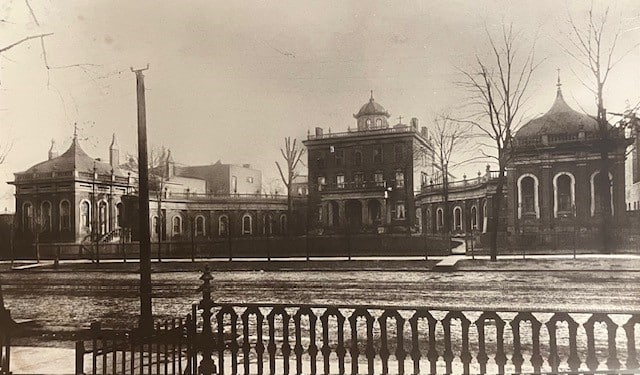
During both an anniversary luncheon and book launch event, attendees and members of the community were invited to reflect on a tradition that began in 1850, when the Ursuline Sisters of Cleveland opened the region’s first Catholic school. Over the ensuing century and a half, the Sisters expanded their work to include social services and ministry. The entire history of the group is covered in Osborne’s book.

“This volume preserves memories of the Ursulines’ dedication to the people to whom they have ministered in Cleveland (and beyond) throughout their history,” said author Rich Osborne. “In assembling this history, I am indebted to the congregation’s archivist, Sister Cynthia Glavac, and to Sister Laura Bregar, the congregation’s current president, whose positivity and encouragement helped bring this project to life.”
An excerpt from Osborne’s book is below.
“The more I learn about the first fifty years of our history in Cleveland (1850-1900), the more I am amazed at all the sisters accomplished during those years, and moreover, the great faith they exhibited in their endeavors,” says Sister Cynthia Glavac, director of the Archives of the Ursuline Sisters of Cleveland. “Truly they took to heart St. Angela’s words from the Prologue to her Counsels: ‘Have hope and firm faith in God, for he will help you in everything’ ” (line 15).
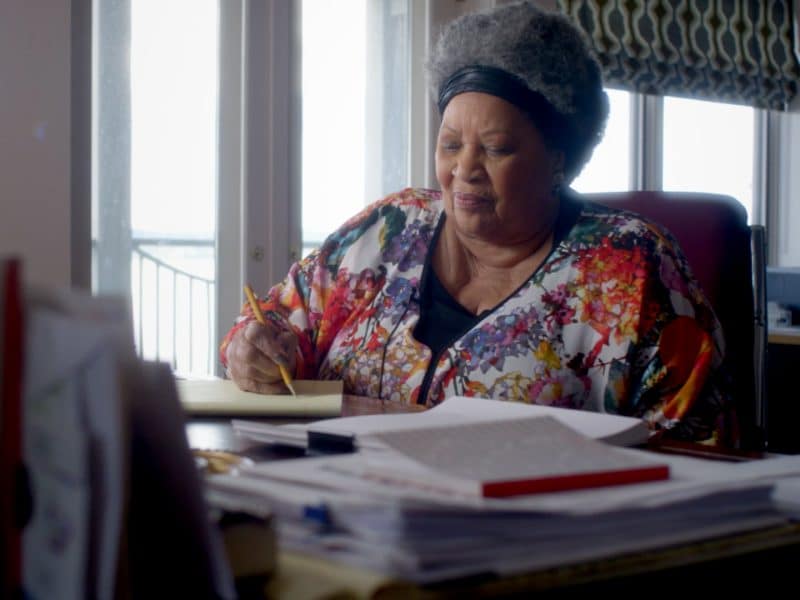
Before becoming director of the Cleveland Ursuline Sisters’ Archives, Sister Cynthia ministered as a teacher of composition and literature courses and chair of the English Department at Beaumont School, Villa Angela Academy, and Ursuline College. Her special interest is in women’s literature and twentieth-century world literature. In addition, she is the author of In the Fullness of Life, a biography of Ursuline Sister Dorothy Kazel, who was martyred on December 2, 1980, in El Salvador where she served as a member of the Cleveland Latin American Mission Team.
Sister Cynthia earned a BA in English from Ursuline College, an MAin English from John Carroll University, and in 1992, earned a PhD in English literature from Bowling Green State University.
A 1972 graduate of Villa Angela Academy, Sister Cynthia serves on the Villa Angela Heritage Center Committee at Villa Angela-St. Joseph High School, VA’s successor school formed in a merger with St. Joseph High School in 1990.
After retiring from a thirty-seven-year teaching career, Sister Cynthia assumed the role of the congregation’s archivist despite her love of teaching. “At that time, I knew little about this profession but felt an inclination to it because I do possess good organization and research skills,” she says.
“Our founding mothers knew they had the skills of operating a boarding school, as they opened our first school, Ursuline Academy, one month after they arrived in Cleveland,” she adds. “This may be a stretch, but just as some of our foundresses had to learn English, I had to learn the ‘language’ of archiving. I am still learning just as they continued to learn the particulars of operating schools on all levels of education from elementary through college.”
Sister Cynthia’s vantage point provides her with a unique perspective of the Ursulines’ early decades in Cleveland. “I think of us as adventurers,” she says. “Because I am an archivist, many times I feel as though I’m living the first fifty years of our history!”
***
The presence of the Ursulines in Cleveland can be traced to the first bishop of Cleveland, Louis Amadeus Rappe, who came to America in 1840 from his home in France where he had served for a time as chaplain of the Ursuline Congregation in the coastal city of Boulogne-sur-Mer, some five miles from Paris. Under the leadership of its superior, Mère Sainte-Ursule Darquer, Boulogne’s Ursuline Congregation achieved great success in its mission to aid the afflicted, educate the poor, and spread the Good News.
When Archbishop John Baptist Purcell of the Archdiocese of Cincinnati visited the congregation and witnessed what the sisters had accomplished, he invited the Ursulines’ young chaplain, Father Rappe, to join him in Ohio, initially to serve as pastor of a parish in Toledo and later as bishop of the newly established Diocese of Cleveland, which had been carved from northern Ohio territory of the Cincinnati Archdiocese.
After his consecration in 1847, Bishop Rappe petitioned his dear friend and colleague from Boulogne, Mère Sainte-Ursule, for help in establishing a school for girls. After extended discussions with her bishop and other church leaders in France and the United States, Mère Sainte-Ursule was in favor of the new foundation. In a letter, Bishop Rappe “expressed his gratitude for the zeal with which she responded to his appeal and for the wisdom with which she patiently and prudently conducted all things to the conclusion” (Hearon 96).
However, Mère Sainte-Ursule had to have ecclesiastical approval to begin a new foundation. Bishop Rappe knew this and in October 1849, he “was received at Arras by Cardinal de la Tour d’Auvergne who graciously granted him permission to choose from within his diocese and seminary whatever priests and young clergymen felt they had a vocation to the Missions. In addition, the Cardinal accorded him a small group of Ursulines and showed himself ready to confirm the choice the superior and her councilors would make of religious destined, by reason of their free and entire consent, for the foundation. Finally, he agreed to the conditions which had been arranged by Mère Sainte-Ursule and Bishop Rappe” (Hearon 97).
Mère Sainte-Ursule obtained permission from Cardinal de la Tour d’Auvergne to send three professed nuns, one professed lay sister, and one lay postulant to the distant shores of Lake Erie.
The number of nuns was stated in the conditions upon which Bishop Rappe, Mère Sainte Ursule, and Cardinal de la Tour Auvergne had agreed.
In her book, The Broad Highway, Sister M. Michael Francis Hearon calls the women’s journey to America “splendid wayfaring.” And splendid it surely was. After a tempest-tossed trip across the Atlantic, their arrival in Cleveland would be the starting point of a glorious adventure that continues today.
The first Ursulines in Cleveland included English sisters Mother des Seraphines (Theresa) Young and Mother Mary (Mary) of the Annunciation Beaumont, and French sister Mother St. Charles (Victoire) Boudalier, all of whom had been professed as religious of the monastery in Boulogne. Completing the contingent was a French lay sister, Sister Saint Benôit (Sylvia) Picquet, and Arabella Seymour, an English noblewoman and graduate of the
Boulogne school, who had been operating a seminary for young ladies in the city of Lille, France, since 1837. Bishop Rappe, who knew of Miss Seymour’s school, invited her to join the four Ursulines bound for Cleveland. Although only four years professed, thirty-two-year-old Mother Mary of the Annunciation was chosen to be the Cleveland congregation’s superior due to her tenacity, business acumen, and religious fervor.
On August 6, 1850, the ship carrying these pioneering women across the Atlantic landed in New York where they were met by Bishop Rappe. The very next day, they continued their travels to Cleveland where they immediately set about their mission.
A month later, on September 9th, they opened a boarding school and a day school. The tireless and energetic nature, not to mention the adventurous spirit, of the Ursuline Sisters of Cleveland was thus immutably set in the congregation’s DNA.
Keep our local journalism accessible to all
Reader support is crucial as we continue to shed light on underreported neighborhoods in Cleveland. Will you become a monthly member to help us continue to produce news by, for, and with the community?
P.S. Did you like this story? Take our reader survey!