Facing the possibility of relocating its signature tournament, the Forest City Tennis Club (FCTC) — founded in 1912 and claiming to be the oldest Black tennis club in the United States — will see its longtime home restored following a commitment from Cleveland City Hall.
The City of Cleveland has committed to a renovation of the Judge Jean Murrell Capers Tennis Courts at Rockefeller Park, ensuring the courts will be tournament-ready for the 79th Tri-City Tennis Tournament. Scheduled for Sat., Aug. 30, 2025, beginning at 8 a.m. at 1626 E. 105th St., the tournament will feature singles, doubles and mixed doubles play. The restoration secures an important piece of Cleveland’s Black tennis history in the Rockefeller Park Cultural Gardens corridor.
“This isn’t just an investment in courts — it’s an investment in history, in youth, and in legacy,” said George Dixon, president of the Forest City Tennis Club. “We’re thrilled to welcome the Tri-City Tournament back home to Cleveland, on courts that now reflect the dignity of the people who’ve played here for generations.”

History in Play
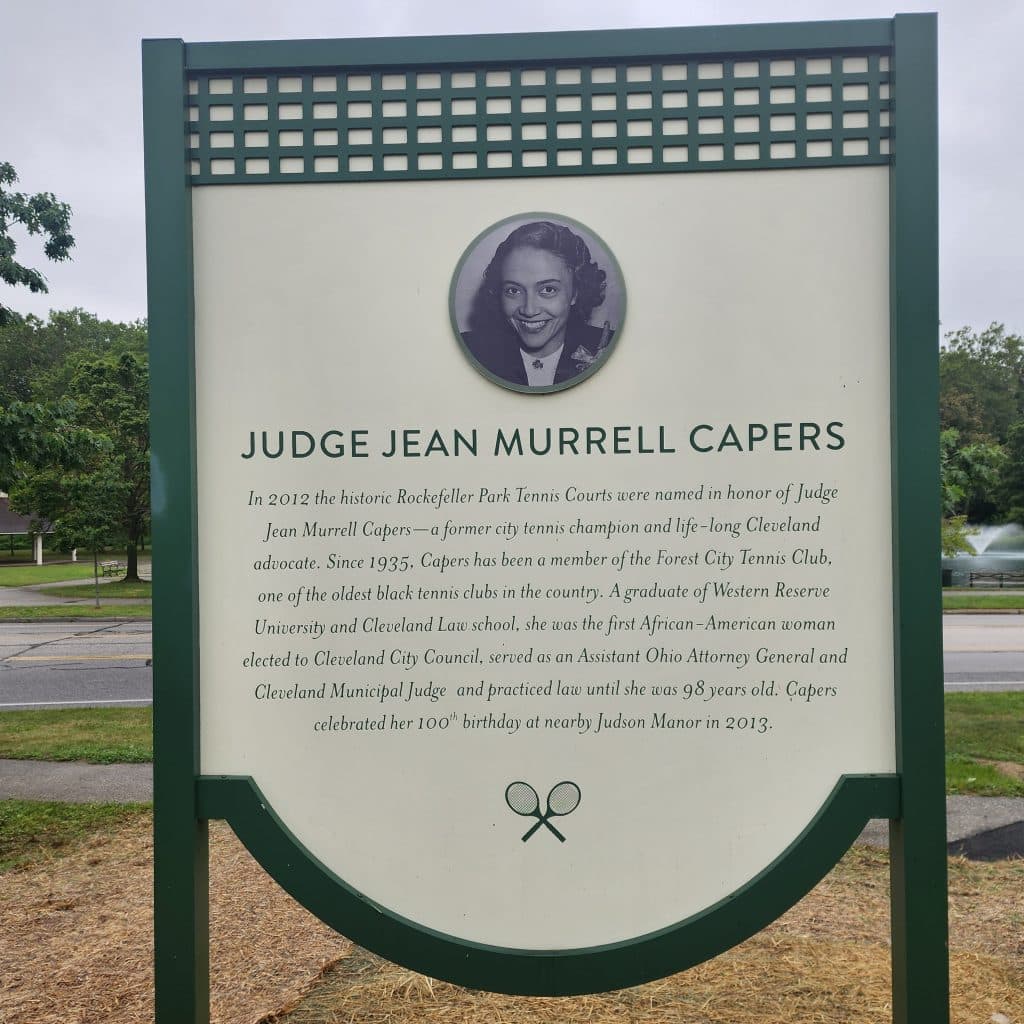
The Forest City Tennis Club has long served as a cultural institution and community anchor in Cleveland. Its home courts are named for Judge Jean Murrell Capers, a civil rights pioneer who became the first Black woman elected to Cleveland City Council in 1949 and later served as a municipal court judge.
By early 2024, the courts had fallen into such disrepair that club leaders determined they could no longer host the 2025 Tri-City Tournament, a marquee event that rotates annually between Cleveland’s FCTC, the Prairie Tennis Club of Chicago, and Detroit’s Motor City Tennis Club. During a strategic planning session, club leaders were forced to weigh alternative venues — including Solon, Shaker Heights and Cleveland’s Kerruish Park. Instead, the club pressed the City of Cleveland for help.
“When this came to our attention, it was clear we weren’t just talking about infrastructure — we were talking about equity and civic pride,” said Bradford Davy, chief of staff to Mayor Justin Bibb. “The Mayor was all in. We’re proud the City of Cleveland could help restore a sacred space and ensure the tournament could return where it belongs.”
Chief Operating Officer Takes the Court
Officials soon engaged Cleveland Chief Operating Officer Bonnie Teeuwen and Parks & Recreation Director Alexandria Nichols. Teeuwen visited the site herself — bringing a racquet and joining President Dixon in a doubles match opposite FCTC board members Kevin and Kali Strickland. She wasn’t just there to watch. She returned shots, moved across the cracked surfaces and listened as players explained what the courts meant to them.
“That day meant everything,” said Bob Render, the club’s second vice president of Government Affairs and Community Relations. “Seeing Bonnie on the court, going through what we go through every week made it real, not just politics — and that’s when I knew we had a partner.”
Support for the project didn’t stop with infrastructure. Davy, who also serves on the Cleveland Sports Commission, facilitated a meeting between FCTC leadership and David Gilbert, president and CEO of the Greater Cleveland Sports Commission and Destination Cleveland. That meeting secured institutional backing for the tournament and helped raise its visibility across the region.t
“This is more than just a facelift,” Render said. “It feels like we’re bringing the courts back to life — and bringing the community back with them.”
Keep our local journalism accessible to all
Reader support is crucial as we continue to shed light on underreported neighborhoods in Cleveland. Will you become a monthly member to help us continue to produce news by, for, and with the community?
P.S. Did you like this story? Take our reader survey!