Olga Tokarczuk describes writing a novel as “one of the worst ways of occupying oneself.” George Orwell once described it as “a horrible, exhausting struggle.” Not even writers, it seems, like writing.
Yet an array of organizations across the country are turning writing into something that is fun and engaging for young people, breathing fresh life into literary culture. These nonprofits reimagine writing as a community process of connection and expression in youth-driven spaces – not a solitary slog or a high-stakes test.
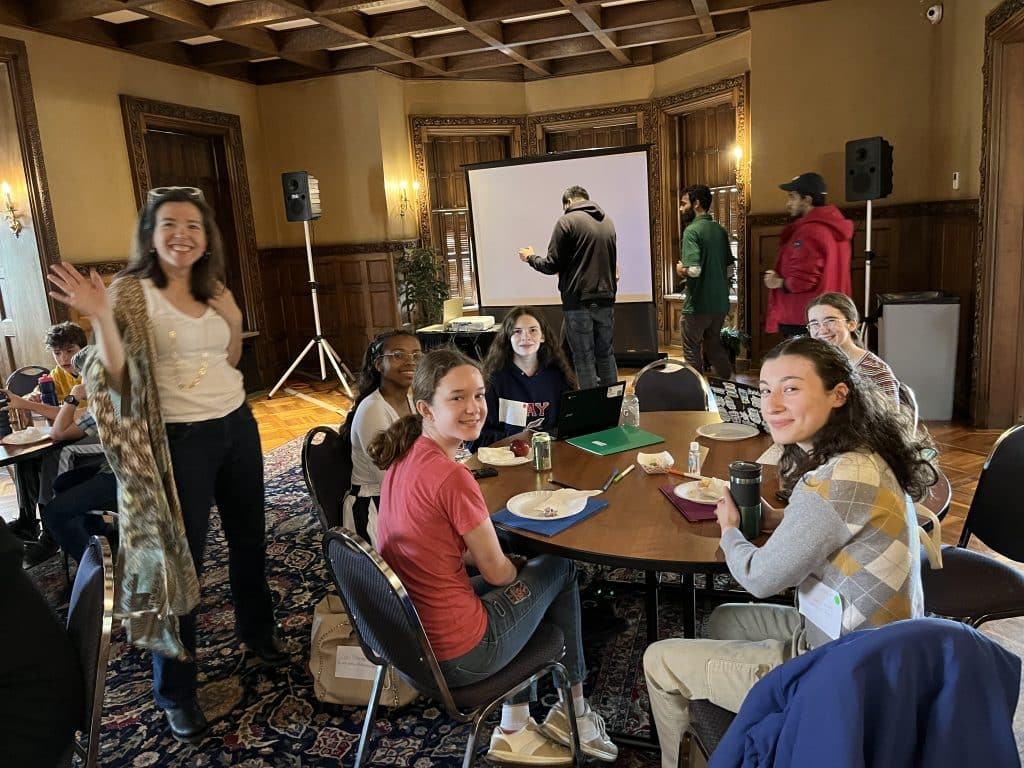
Leaders from five of these organizations were in Cleveland from Aug. 23-25 for a retreat with Lake Erie Ink , a Cleveland Heights based nonprofit that’s been making waves since 2010 with its youth writing programs. Directors from Pittsburgh, Louisville, Austin, Toronto, and Indianapolis met with Lake Erie Ink and partner organizations, discussing ways to engage youth in writing and the culture of youth voice they’re creating in cities.
The driving belief behind LEI, according to its website, is that “creative writing is not only for kids and teens who already love writing, but also for youth who have something to say and too often feel that no one is listening.” Lake Erie Ink executive director Amy Rosenbluth emphasizes that paying attention to youth creative voices is a way of supporting young people. And supporting youth is one of the most important things we can do, she says.
Prior to Lake Erie Ink, both Rosenbluth and LEI education director and co-founder Cynthia Larsen facilitated poetry clubs in Cleveland Heights elementary schools. Over time, they found funding for creative writing projects through mini-grants and then transitioned into an organization with funding from foundations, government, and individual donors.
Based in the former Coventry School at Coventry Road and Washington Blvd., now renamed the Coventry Peace Campus, LEI’s program offerings support youth creative expression both within and outside of school. The group provides in-school programs, after-school programs, and summer camps. They also publish an annual anthology of teen writing whose work is selected and edited by teens. In addition to six full-time and four part-time staff, the group has teaching artists who bring experience in poetry, journalism, comics, music, and visual arts to the table – and the mic. It has also grown from an organization oriented primarily around Cleveland Heights to one that serves a wide area, including providing school programs in the city of Cleveland and other communities.
Last year, Rosenbluth said LEI served 5,600 kids, a substantial jump from previous years and a sign that the organization is growing. In recent years, they’ve provided an increased number of in-school residencies and worked with new school partners. Rosenbluth said their overall mission is resonating with schools, kids and families, and that’s evident in their growth.
“We get to really develop relationships with the kids and just go a little bit deeper,” she said of the school-based residencies.
Trading expertise and inspiration
Larsen said LEI very much grew out of a response to No Child Left Behind. “As parents, we suddenly saw what happened to schools … a lot of creative expression had just kind of vanished from the classroom because it wasn’t on the test,” she said. “It wasn’t what teachers were being told they had to do.” LEI also took inspiration from 826 Valencia, a kids’ writing center in San Francisco founded by Níneve Calegari and Dave Eggers in 2002 that became a national model.
Before founding LEI, Larsen and Rosenbluth visited 826 writing centers in San Francisco and Chicago to understand how to move their idea of a Cleveland writing center into a reality. Now, they are experienced with those realities and have come full circle, hosting like-minded organizations to discuss common concerns.
During the recent gathering, center directors had a chance to check out Cleveland’s literary scene. They toured Cleveland Public Library, met with the Ohio Center for the Book, engaged with educators at the Rock & Roll Hall of Fame about a rockin’ haiku assignment, learned about Superman’s Cleveland roots, and visited Loganberry Books on Larchmere Boulevard. They also spent time at Literary Cleveland, a partner organization working to develop and amplify adult writers in the city.
“There are so few chances to interact with not only other nonprofit groups, but especially those doing similar work,” said Matt Weinkam, executive director of Literary Cleveland. “[It’s a chance] to talk about shared concerns and issues, to hear about what’s successful and what they are doing in other cities, and to pool our knowledge. We all walk away better.”
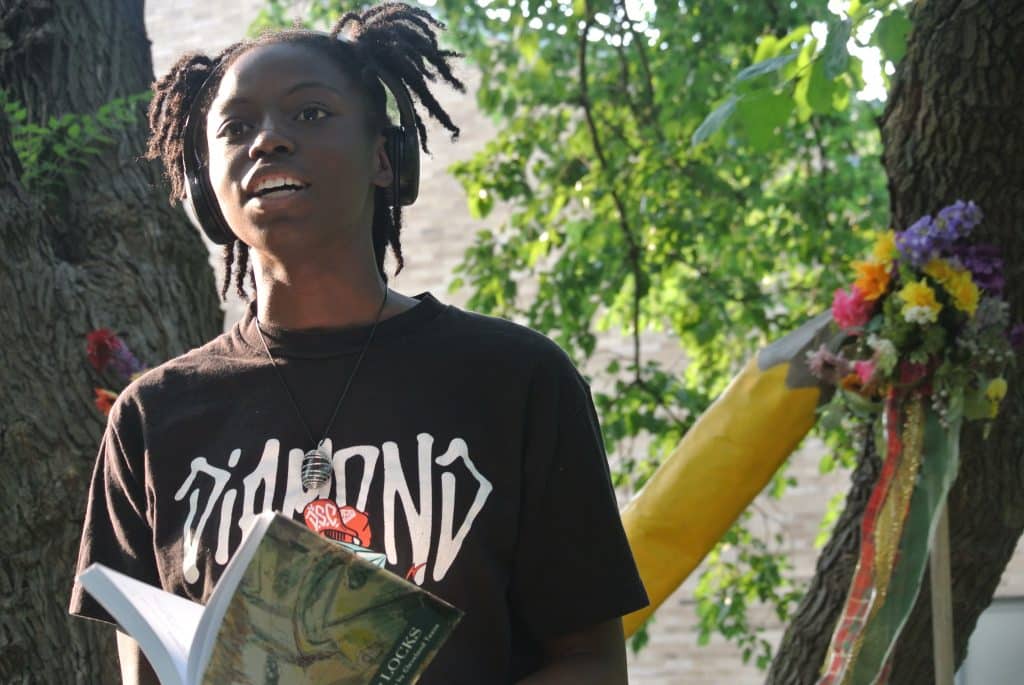
On Thursday, Aug. 24, they also gathered for a poetry event at Coventry branch of Heights Libraries featuring a number of local poets, including LEI youth poets Anders Beckman and Myieshia Hodges.
“This has been so inspiring, hearing the other programs that folks are running and the ways that they are doing outreach,” said Tracy Pumfrey of Planet Toronto.

Taking youth seriously, while making writing playful
The groups that gathered in Cleveland were Young Authors Greenhouse in Louisville, the Austin Batcave, Write Pittsburgh, Story Planet in Toronto, and the Kurt Vonnegut Museum and Library in Indianapolis. For these organizations, fostering a culture of writing means finding ways to connect with youth who may associate writing with timed tests and high-stakes evaluations. It’s also about elevating the process and the person rather than on particular writing outcomes, said Christine Dixon of Write Pittsburgh.
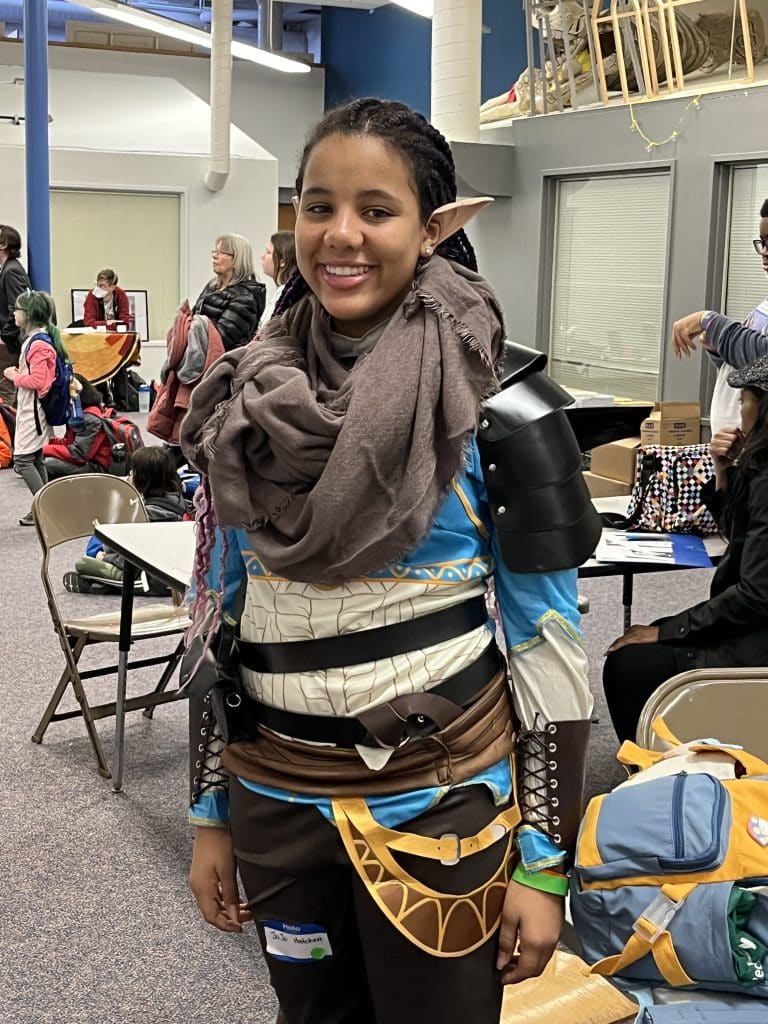
The retreat participants had all kinds of ideas for how to reframe writing: treasure hunts, comic cons, puppets, and poetry. Playful co-creation is one answer, while offering young people an opportunity to be taken seriously is another.
“I find that if you read their work back to them with the seriousness of your own work or published work, suddenly they hear it in a new way: ‘Oh, I wrote that!’” said LEI teaching artist Amy Hughes.
Dixon said her organization is making Pittsburgh a place where writers are “born, developed, and grown.” Part of how they do that is by building programming where young people already are: in libraries, youth centers, and coffee shops. “Our whole mission is about creating this nurturing garden for the voices of young folks,” she said.
Similarly, in recent years Lake Erie Ink has broadened its appeal by targeting helping kids in four main areas – academic support (writing), creative youth development, social-emotional support, and social justice and equity. By targeting their curriculum across these four areas, Rosenbluth said, they’re able to connect creative writing to other parts of the curriculum.
Reinvigorated by connection
Although conversations at the retreat were often about similar struggles, not just shared successes, participants left feeling reinvigorated about their work. For Dixon, the Cleveland retreat “did for us what we strive to do for our young writers – put us into community with other people who are standing right where we are and working towards the same goals.”
Over the years, LEI has maintained connection to its source of inspiration at 826 Valencia. For example, Rosenbluth traveled with teens to Dave Eggers’ International Congress of Youth Voices in San Francisco in 2018 and San Juan, Puerto Rico in 2019. Cleveland teen delegates at these events included Tess Kelly, Grace Yoo, and Ayelet Travis.
With pandemic restrictions lifted, open mics and poetry slams are starting to reemerge as places for youth to connect and share. The last Heights Teen Poetry Slam occurred in 2020, but Rosenbluth hopes to see the event she facilitated for more than 20 years come back. “Youth slam is incredibly honest,” she said. “If you want to know where people are that are under 21, go to a youth slam.”
The sense of connection offered by the retreat was very valuable for organization leaders, Rosenbluth said. “It’s that bigger picture of knowing that teen anthologies are happening all over the country and all over the world through the international alliance,” she said.
Just knowing that there are others out there doing similar work is affirming and helps fuel their passion, she said. “Knowing we are part of this larger movement to give kids a voice is very hopeful,” she said.
Learn more about Lake Erie Ink on their website, including how to learn about upcoming programs, or by calling (216)-320-4757.
We're celebrating four years of amplifying resident voices from Cleveland's neighborhoods. Will you make a donation to keep our local journalism going?