The Gathering Place, a nonprofit with a wide array of programs and support groups to help those dealing with cancer, acknowledges that disparities in cancer treatment, access to information, and outcomes exist within Cleveland’s Black, brown and LGBTQ+ communities. Now, the organization is looking to make inroads within these marginalized neighborhoods in order to gain trust in its mission.
Sydney Beeman, community program manager for The Gathering Place, said barriers in healthcare are wide ranging and problematic. “The biggest thing that comes up that needs to be addressed is systemic racism and how those sorts of barriers [have] aged over generations,” said Beeman.
A stigma exists in African American communities about what it means to get tested, especially for men as it relates to prostate cancer and examinations, she said. “TV really plays a role in how men feel they’ll be treated and that can be uncomfortable, but for most men testing your prostate levels, it’s just a blood draw, and just knowing that you do need to be screened [is lacking] in our community,” she said.
“We have a lot of secrecy and pride,” she added. “So we don’t always know our family history. We don’t know what runs in the family. We just know that ‘big momma got sick.’ We don’t know what it was. We don’t name things, either.”
Beeman said she’s starting to see that mentality change within the Black community, but it’s a slow process that requires building relationships over time. “It takes time and understanding when people come into the community,” she said. “Yes, I’m a Black woman, but I’m not from that (specific) community and I represent an organization. So there is still a level of mistrust that I have to overcome in dealing with people, too.”
To begin to overcome those disparities, Beeman and other staff at The Gathering Place, which has offices in Beachwood and Westlake, have been doing more outreach in urban neighborhoods.

“In 2021, we first started going to their community dinners,” Beeman said. “And that goes beyond just having the information table. It’s actually me sitting at the dining table with folks while eating and just talking to them.” She said it’s essential to get to know the community before trying to gain their trust about larger issues like medical care.
The Gathering Place has partnerships with neighborhood organizations like The Friendly Inn and also works with MetroHealth, University Hospitals and the Cleveland Clinic. She said they’ve found the most success working with community partners. “What we found is just going into locations and trying to offer programming alone, when people don’t know who we are, we don’t gain a lot of traction and trust,” she said. “If we already are using a trusted community partner, they trust that these folks will not bring in someone who will be to their detriment, and that helps us reach a larger audience.”
Cleveland’s Ward 5 has the highest incidence of cancer diagnosis with higher mortality rates than all of the wards in Cleveland, Beeman said. That’s why they partnered with Friendly Inn, to reach out to the neighborhood.
The Gathering Place holds over 50 programs and outreach events throughout the city of Cleveland annually, including the inaugural Community Minority Health Fair with ThirdSpace Action Lab, where over 50 people were in attendance. Beeman said so far, they have received over 30 individual referrals from partnering organizations.
Support groups, activities, and other services help cancer patients and families
In the early ‘90s, The Gathering Place founder and former CEO Eileen Saffran lost both of her parents to cancer and found various psychological and social needs were not being met in Northeast Ohio for those dealing with the disease. She began a grassroots effort to focus on the “non-medical” needs of those whose lives have been affected by cancer, which became The Gathering Place. Ever since, the organization has worked to help cancer patients and their families, serving more than 47,000 individuals and families.
With its current CEO Michele Seyranian, the organization looks to continue its mission “to support, educate and empower individuals and families currently coping with the impact of cancer in their lives through programs and services provided free of charge.” The organization is privately funded and has raised $42 million through fundraising and donors since its inception.
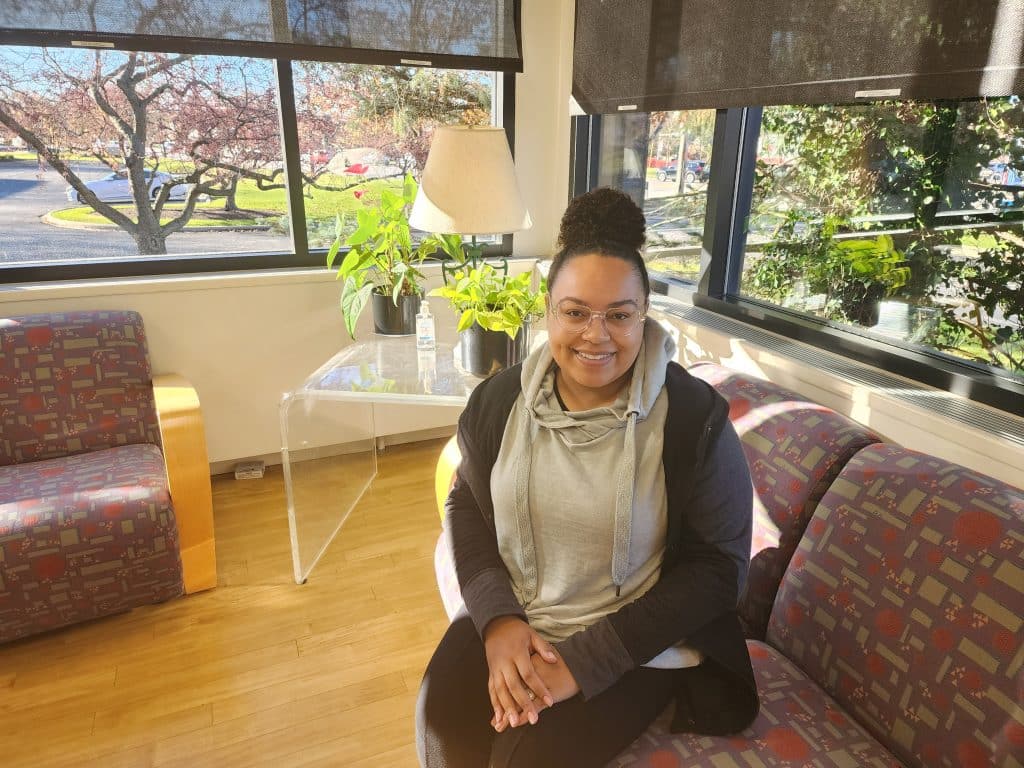
One of the ways that it supports cancer patients is through support groups. Brittany Davis is a licensed Professional Clinical Counselor who coordinates the virtual LGBTQ+ drop-in group out of the Westlake office. “That group is our way of letting folks know that we’re a safe space for those who identify within the LGBTQ+ community and also have a cancer diagnosis,” she said. “A lot of times folks feel like it can be a bit complicated to talk about their cancer experience with loved ones. What the support group offers is a place where they can express all the things that are going on. They may want to express frustration around their diagnosis, or just frustration and anger at cancer.”

According to The National Cancer Institute/National Institutes of Health (NIH), the top reason that people join a cancer support group is to be with others who have had similar cancer experiences. According to the NIH, some research shows that joining a support group improves both quality of life and survival.
Davis said there’s typically 8–12 people in a group. The group allows for people to fully express what they’re going through. Davis said that being in a support group allows you to “take a load off, share what’s going on through the day and really find comfort in just being heard, or just listening to the experiences of others concerning cancer.”
Eileen Coan, The Gathering Place Medical Librarian, has been part of it since its inception. While speaking with The Land at the Beachwood location, Coan admitted that often healthcare facilities can be large and intimidating, but that The Gathering Place strives to be the opposite.
“From the get go, I felt like the mission here is amazing, that this was a group of people that were saying with intentionality, I want someone going through cancer themselves, or someone they love, to have a safe haven to ask anything, to relax, to talk to, vent, a place where they can learn cooking and they can do yoga and Tai Chi and get a massage and get away. That this is like a one stop shop, that’s not a hospital, doesn’t smell like a hospital, doesn’t look like a hospital.”

Equity in healthcare and racial disparities in cancer outcomes, screening, and treatment
Coan admitted the organization has room for improvement and a lot of it has to do with diversity and equity, adding, “We are in two white suburbs and we are very aware of that, but we’ve made a tremendous effort with diversity in terms of staff, our board and in terms of where we go in the community.”
Historically, within the Black community there is a notion of widespread distrust of the medical field. Coan agreed, “The health disparities are real.”
Evidence shows that despite significant advancements and improvements in cancer outcomes and treatment the Black population is diagnosed with cancer at a later stage, that it’s not being caught at stage one when it’s more treatable, and that their issues are being either dismissed or not heard by their doctors.
Coan told The Land that the organization may not be for everyone, but, “We want to be here for anyone that is unsure, scared, or alone, and that doesn’t have family or friends in the area, or doesn’t have family or friends that seem to quite get it.”
She went on to say that The Gathering Place doesn’t claim that you will live longer because you come there, but says your quality of life will improve for whatever time you have.
Davis stated that once people hear about a cancer diagnosis they often can be overwhelmed, confused, frustrated and angry. “The Gathering Place can really be a starting place to gain that support and community that you need during this time,” she said.
Both locations are open Monday–Friday from 9 a.m.–5 p.m. The Beachwood office is open on the 2nd Saturday of the month from 9 a.m.–1 p.m. The Westlake location is open on the 3rd Saturday of the month, 9 .a.m.–1 p.m. Visit touchedbycancer.org for more information.
Keep our local journalism accessible to all
Reader support is crucial as we continue to shed light on underreported neighborhoods in Cleveland. Will you become a monthly member to help us continue to produce news by, for, and with the community?
P.S. Did you like this story? Take our reader survey!