
Beyond recycling: Old Brooklyn Recycles grows towards sustainability, circular economy
When Cleveland paused its recycling program, Old Brooklyn Recycles stepped up with an alternative program. Now that the city has resumed recycling service, OBR continues to work towards sustainability.
My front porch looks out on a busy corner in the southeastern part of Old Brooklyn. It gives me a front row seat to children drawing with chalk on the sidewalks, neighbors walking their dogs, and, in many cases, people stopping to chat with one another about their ideas for our community. It is also a thoroughfare to the neighborhood community garden, Ben Franklin Community Garden, where folks walk to garden, drop off their compost, and take their chairs to listen to music on Saturday evenings.
Established in 1981, the garden has been bringing people together for years. I have admired it and have taken many walks through it in the years I have lived in the neighborhood. I marvel at the open land in spring and the fullness of it by fall. I longed to have a plot but was sufficiently overwhelmed by my own yard. Yet Mr. Tim, the neighborhood grandpa and effervescent community builder, convinced my family and me to share a plot with him this season. He gave us all the reasons for being a part of it: we can do it together, share meals, and be a part of something bigger than ourselves. Thus, we began our community gardening journey in May.

Stepping up to fill a need
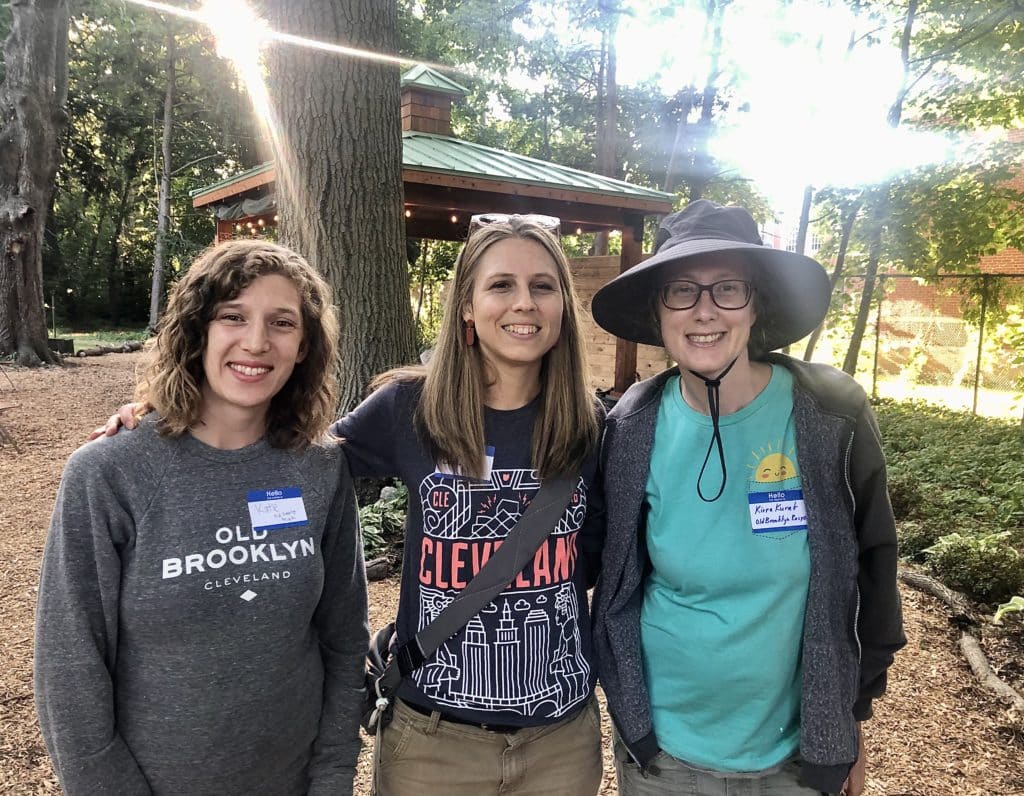
In addition to having a plot at the garden, we have also used the composting program that was established between Ben Franklin and Old Brooklyn Recycles (OBR). OBR was established in 2020 by Katie Dugan, Kiera Kurak, and Sarah Tan. Individually, the neighbors were frustrated to learn the city of Cleveland had discontinued its recycling program and at the lack of transparency about it. Together, through the Old Brooklyn Community Development Corporation (OBCDC), they found each other and focused on fostering connections among neighbors that would lead to grassroots recycling and repurposing.
“Pain, shared pain, is an opportunity,” said Tan during an interview over the summer. Tan, along with Dugan and Kurak, spent a Saturday afternoon talking about their collective efforts of OBR and hopes for the new recycling program the city of Cleveland launched in June after a two-year hiatus. They also spoke to the idea of the circular economy: fixing something, or repurposing it, instead of throwing it away.
According to the EPA, the circular economy “keeps materials, products, and services in circulation for as long as possible…it reduces material use, redesigns materials, products, and services to be less resource intensive, and recaptures ‘waste’ as a resource to manufacture new materials and products…This work on a circular economy is an important part of slowing climate change.”
Since the beginning, the trio has focused their time and energy on partnering with like minded partners, organizations, and efforts. Their recycling efforts began on Thursday evenings with Metropolitan Coffee and City Fresh, a local foods program that sells fresh, locally grown fruits and vegetables throughout Northeast Ohio. Thursday evenings at Metropolitan Coffee is the neighborhood pick up time for City Fresh.
“Deirdre, owner of Metropolitan Coffee and neighbor, has been making thoughtful decisions about her business like City Fresh and she has been composting with the community garden since she opened so it made sense to partner with her, and she was open to it,” said Dugan. “The space she provided in her parking lot was a game changer.”
The Thursday evening effort turned into a 24/7 collection site at Metropolitan Coffee with bins for recyclables such as aluminum and glass and a dumpster for paper and cardboard. This stopgap was a community effort that made an incredible difference. The impact of OBR can be felt in the neighborhood and citywide. Folks from OBCDC and Cleveland’s Office of Sustainability were quick and genuine when asked about the group – their grassroots effort and growth were amazing to watch and, while hard to quantify, their reach has been wide and deep. Not only did it divert recyclable waste from the landfill, it brought neighbors and like-minded folks together.
“The women behind OBR are doers and connectors. They get the word out which is so helpful, and they show up to community events. It feels like they are everywhere,” said Hope Fierro, community health coordinator with OBCDC.
Growing a circular economy
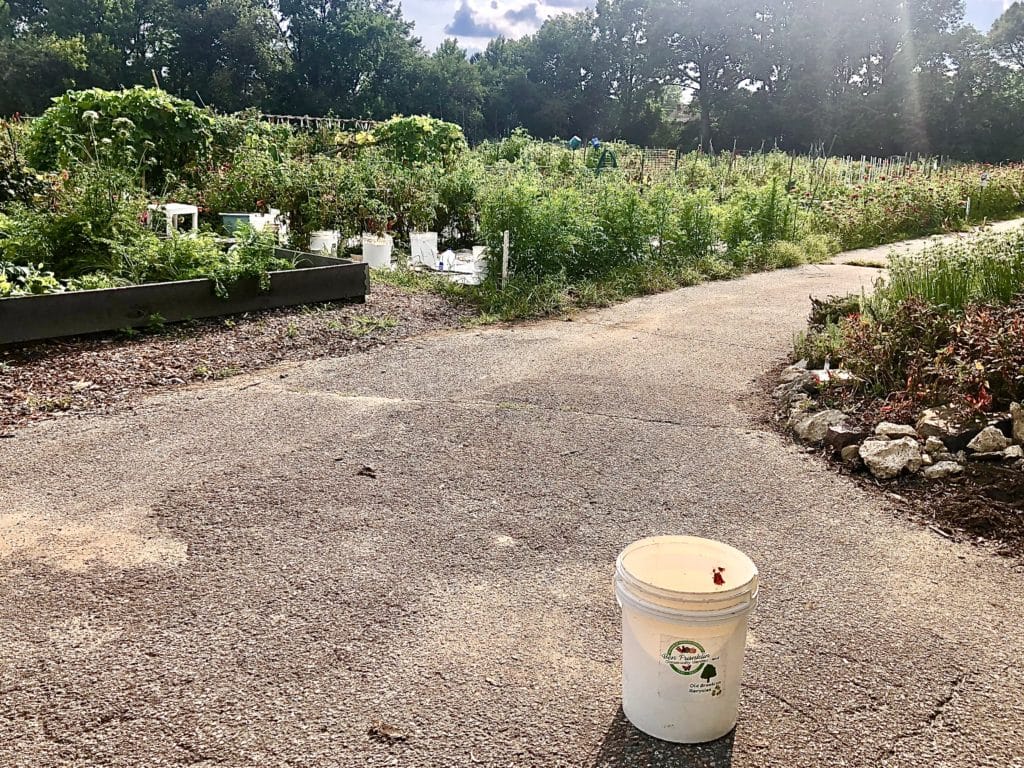
Formalizing the composting program at the garden is an example of the impact of OBR. OBR partnered with Ben Franklin to secure grant funding from Circular Cleveland, the city’s circular economy initiative, to build out the space and equipment for community composting, OBR spread the word and passed out compost buckets, and OBCDC served as the fiscal sponsor. They saw an opportunity and made it happen.
During the interview in my backyard with the threesome, Dugan did a quick calculation. “We passed out 50 compost buckets, and the folks at the Ben Franklin Garden said their compost bin is full or almost full every week, so that is 40 gallons of compostable waste diverted each week since we started.” I sat there amazed both at the quick math skills and at the amount diverted.
When I began the conversation with the founders of OBR, I was naively focused on recycling only. I wanted it to be cut and dried: the waste that my family generates can continue as long as we are good and obedient recyclers. But after spending time with them, I now know it is about so much more. It is about consuming less and throwing away less. Recycling is a small fraction of it, an important part but the hope is to not have to recycle anything.
“We need to solve some big problems, and we cannot do it alone. We need the government, small groups, neighbors all doing their part,” says Kurak. The three ask questions like, “How do we get more people to compost? To reduce their waste? Can we do a waste audit for Old Brooklyn? For the City of Cleveland? What infrastructure can be adopted to truly be a greener city?”
Although a lot of work lies ahead, they believe this is a moment in Cleveland for the circular economy to really grow and thrive and become an everyday practice. I believe it, too, with neighbors like Kiera, Katie, and Sarah. They pull us forward, and I am grateful to be a part of it.
Learn more about Circular Cleveland here. If you would like an example of the circular economy at work in Old Brooklyn, visit the Ben Franklin Community Garden; it is a sight to behold and is open through mid-October.
Erin McIntyre participated in The Land’s community journalism program.
We're celebrating four years of amplifying resident voices from Cleveland's neighborhoods. Will you make a donation to keep our local journalism going?
Author
Related Articles
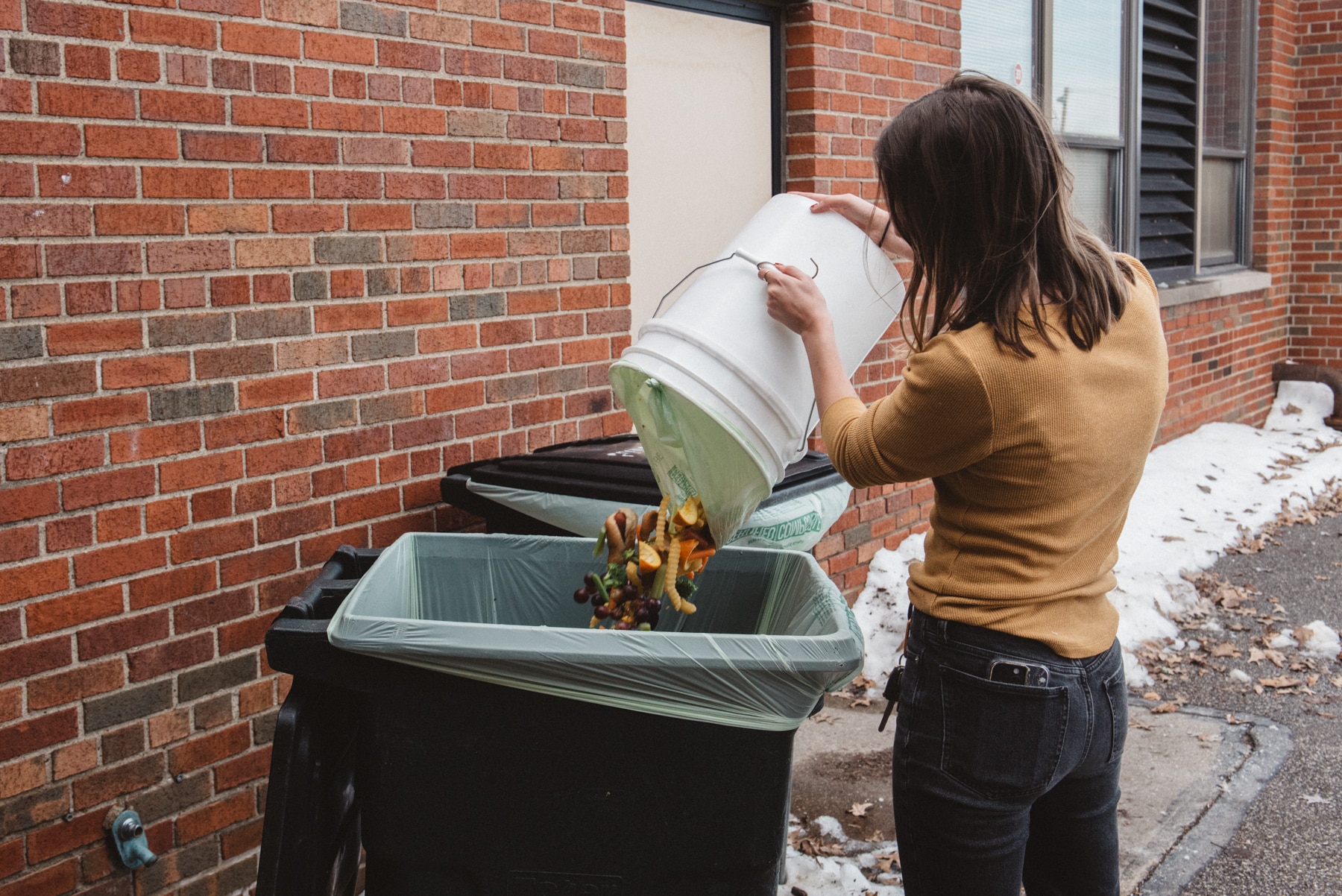
Northeast Ohio schools’ composting merges sustainability, student action
Schools throughout Northeast Ohio are turning food scraps into productive, environmentally-beneficial soil.
Leave the lights out for them: How a Cleveland group is trying to save the birds
Downtown Cleveland’s mass of lights and buildings can be deadly for birds. Luckily, there’s a local group trying to save our flying friends.
Creating the perfect pollinator garden this spring in Lakewood
Here’s how you can help butterflies, bees and other pollinators this spring and summer.


