
Cuyahoga County Public Library CEO Jamar Rahming celebrates National Library Week
Rahming talked with The Land about all things library, including CCPL’s redesigned Parma Heights Branch and its state-of-the-art day care center.
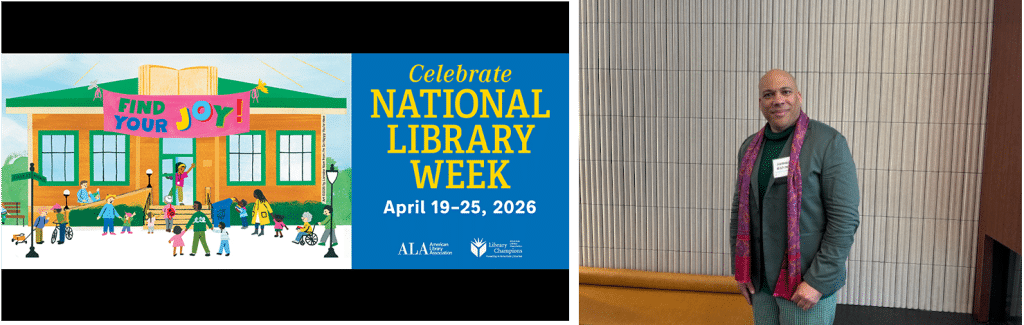
National Library Week occurs April 19 through April 25. It’s an exciting time to introduce readers to Cuyahoga County Public Library’s (CCPL) newest CEO, Jamar Rahming. Rahming arrived at CCPL in August 2025. He’s the president-elect for the Public Library Association and led the nationally-recognized Wilmington Free Library in Wilmington, Delaware. Rahming talked with The Land about all things library, including CCPL’s redesigned Parma Heights Branch and its state-of-the-art day care center.
What inspired you to pursue a career in Library Science?
I was a latchkey kid growing up in inner city Denver and the library was my sanctuary, where I could do my homework. In the early nineties, I watched a biopic (pre-internet and pre-YouTube) called, “The Josephine Baker Story.” Baker became a spy for the French resistance, helped defeat the Nazis and adopted 12 children of different races. At seven years old, I was blown away that a world existed where Black people did not have the same rights as white people. I went to find a book on Baker at my local school library and none existed. I wrote a letter to the school superintendent. He was so impressed to receive a letter from a 7-year-old, that he put a book about Baker in every Denver Public School. That’s what compelled my library science career trajectory-being able to travel the world through the adventures and books the public library offered.
You’re the first African American to lead Cuyahoga County Public Library in its history. What does the moment mean to you and the community?
It reflects Cuyahoga County’s melting pot, with CCPL serving 47 different communities. I came into this position more than qualified. I’m the president-elect for the Public Library Association and have more than 20 years in the industry. I led the award-winning and nationally-recognized Wilmington Institute Free Library in Wilmington, Delaware. People traveled from all over the nation to attend our library events, which enhanced the whole culture and economic vitality of downtown Wilmington.
As the new CEO of CCPL, what excites you the most about leading one of the nation’s top library systems?
I’m excited because the sky is the limit for CCPL and Cuyahoga County. In most organizations I’ve led, I’ve had to go in and fix problems, but CCPL has such a strong foundation. We’re adored by the community and have great stakeholders. We also have great advocacy and funding. I’m excited to build off the great work of former CEO, Sari Feldman and my immediate predecessor, Tracy Strobel.
The newest branch of CCPL opened in Parma Heights on April 11. Can you highlight its features?
The branch is state-of-the-art and there is not another library like it in the nation. It has a day care center inside the library, so you will have kids literally being raised in the library. This is a great approach to addressing today’s epidemic struggle to get kids to read at grade level. We’ve also created a new paradigm model for library services, incorporating an early literacy ecosystem. We’re partnering with Tri-C and their students working towards their Early Childhood Development certification. Burgeoning professionals will be able to do their practicum and training there. At CCPL, we are always at the forefront of innovation in the industry.
What does National Library Week mean to you personally?
In a time when the world is on fire and everything is being shaken, National Library Week gives me hope that democracy is still standing. There’s no other institution that is a greater manifestation of democracy than the Public Library System. The fact that we’re still standing and serving gives me hope that democracy will stand amid the precariousness we’re experiencing nationally and internationally.
In your worldly travels, have you experienced a library you were in awe of?
First, CCPL is an awesome library system. Second, it’s easy to build a palace or a new library, but their true value is their impact, making the space come alive and engaging constituents in a robust and prolific manner. The best library I’ve been to was when I passed through rural South Carolina in a small town called Denmark. There, I saw a gentleman sitting in front of the library on a Sunday, using the Wi-Fi to fill out a job application. In this small rural area, the library was a gamechanger for this person, because that job application could change the trajectory of his life. The most beautiful library I’ve set foot in the United States is the Boston Public Library. But again, beautiful buildings don’t impress me – it’s their impact, filling the space with life and being well-used.
What is your position on book bans in public libraries?
I have a balanced position. I’m an ardent proponent for intellectual freedom and think libraries have the responsibility to make sure that a variety of things are widely available to our constituents. But it’s up to the consumer to render what’s appropriate and what’s not. I do think we have to be sensitive to what gets into the hands of children. We have a civic responsibility to empower parents to guide their children in making appropriate decisions. It’s our responsibility to remain neutral and allow the consumer to make the final rendering.
What is the most surprising thing available throughout CCPL?
People still to this day do not know you can go to any CCPL library and get a passport. Several CCPL branches near the Cleveland Metroparks provide bicycles for patrons to check out for the day. I think we’re the only library system in the nation that has a large toy selection to check out. One of our innovation centers provides frames for prints; and others provide old VHS tape conversion to digital formatting. Passports are a big deal, because I got mine several years ago at the Fairview Park Branch.
What does the library of the future look like to you?
The library of the future ensures that democracy, which we cherish and love, is stabilized. Democracy occurs when everybody can equally participate and the future library ensures this. Democracy doesn’t mean anything if you’re unable to feed your family, have a job and gain access to the information and resources you need to live a good life. I’m excited that as long as the public library is here, every person will have the opportunity to be a participant in democracy.
Why are libraries still essential in an age of instant digital information?
One thing the digital world can’t do is strengthen communities. It can’t help elderly people cope with isolation. Yes, people can connect via social media, but for the young, their suicide rates are higher and they’re having higher instances of mental health issues. Social media relationships and friendships tend to be artificial. But when you go into a public library and connect with people, it’s on a whole different level. Also, we have more information at our fingertips, but people are less informed than ever before. It’s because they’re bonded to this digital ecosystem where algorithms profile what you like and dislike. The things you dislike are converted to caricatures. Consequently, we have a constituency who cannot decipher between fact and fiction. So, the public library is still a reliable source where people can get information that is true.
How can community members best support and advocate for libraries today?
It’s simple, go to your public library and get a library card. Make sure that Ohioans, regardless of race or socio-economic status can get the resources they need to make their lives better. Do not allow Ohioans to get left behind in this digital and technological age, especially with the advent of artificial intelligence.
In closing, what are your three biggest takeaways you hope readers know?
First, if you’ve never stepped foot in a library, there is something here for everybody at the Cuyahoga County Public Library. For example, you can tune up your resume or attend a citizenship class. I want every household in Cuyahoga County to use their library. Second, I encourage all constituents to be engaged in the political process. A recent survey found that 92% of Ohioans believe libraries add value to their lives. We need those people to be politically active because there are politicians making decisions that could make or break our future sustainability. Thirdly, we’re facing an epidemic of illiteracy. The average American reads at a sixth-grade level. Our children are not reading at grade level and those kids are predisposed to entering the penal system, being on welfare and experiencing every other social ill you can think of. It’s an issue that libraries and schools cannot solve by themselves. We need all hands-on deck for this issue because it will have a domino effect and create future collateral damage. So, get involved and help children read.
We're celebrating four years of amplifying resident voices from Cleveland's neighborhoods. Will you make a donation to keep our local journalism going?
Author

Related Articles
The Movie Nerd Report: 3 film festivals this week in Northeast Ohio
Plus, see what other new releases and classics are playing at independent theaters around you!
Walking Cleveland’s past, one story at a time
“How much of Cleveland do I pass by without knowing the story?”
More than a card: Why Cleveland Public Library still matters in the digital age
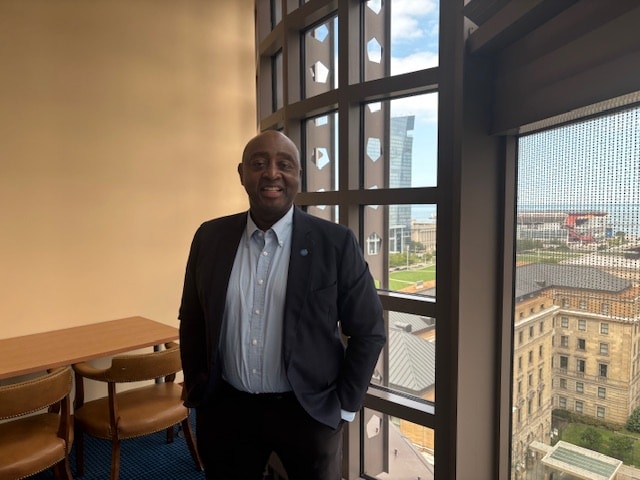
September is National Library Card Signup Month. The Land talked with Cleveland Public Library Executive Director Felton Thomas, Jr. at the Main Library downtown.


