
Power pause: What the proposed one-year ban on new data center permits means in Cleveland
Some feel the push to build new data centers is reckless and needs to be examined. Others feel slowing the growth of the industry is a mistake.
“Marge Vs. the Monorail” is a classic “The Simpsons” episode about a slick-talking shyster who sells Springfield on a costly and dangerous monorail system. When this boondoggle nearly destroys the town, Springfield’s citizens are left with a bitter lesson on chasing shortcuts to prosperity.
Hyperscale data centers emerging nationwide are the new Springfield monorail, says Cleveland Councilmember Charles Slife, who recently introduced legislation for a one-year moratorium on city permits for these massive computing facilities.
In their current form, data centers are enormous power sucks wrapped in a guise of economic development, says Slife, who goes so far as to call them “exploitative” of residents.
“Having a center of modest scale that supports existing businesses or nonprofits feels distinct, in comparison to the hyperscale data centers that have been popping up across the country and Ohio,” says Slife.
Slife, who represents the West Side neighborhoods of Kamm’s Corners and West Park, is not calling for an outright ban on the developments. More so a strategic pause to modernize local zoning codes and evaluate future infrastructure requirements.
Typically exceeding 10,000 square feet and 5,000 servers, data centers are operated by companies such as Amazon Web Services, Google and Microsoft to deliver global digital services. These sites require significant water volumes to manage server temperatures, along with escalating energy needs that could double or triple by 2028, according to some projections.
More than a dozen U.S. states are currently considering temporary data center bans. In Ohio, at least 18 municipalities are discussing or have already enacted similar freezes. Earlier this month, the City of Cleveland rejected a $1.6 billion bid by private equity group Lakeland Equity Group to build a center on a 35-acre site at 3560 E 55th St.
Ultimately, data centers don’t generate enough permanent jobs to justify their gigantic physical and environmental footprint, Slife says.
“They’re creating economic output, but the benefits are getting exported elsewhere,” says Slife. “Traditional manufacturing creates more spillover jobs in trucking and the supply chain. What I worry about with Cleveland is these (tech companies) coming into distressed communities and expecting to be met with broad enthusiasm. They imply that people should be grateful to receive anything, whether or not it’s of substance.”
An ongoing conversation
Ohio hosts 205 data centers, according to the Data Center Map, a global directory for the industry. Cleveland’s 25 existing centers have raised red flags for opponents like Slife, who worry about the energy load outstripping the grid’s supply. In addition to environmental impacts, these centers have been labeled a noise nuisance by some for subjecting residents to the hum of high-powered fans and cooling systems.
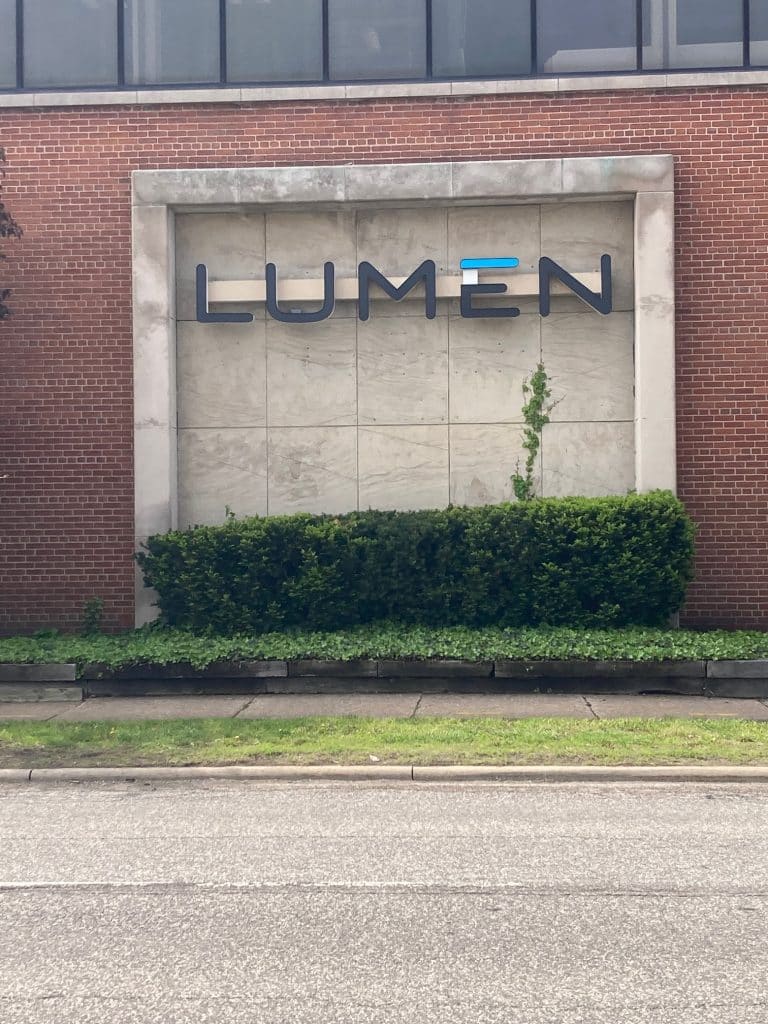
Avenue is one of 25 data center facilities in the city.
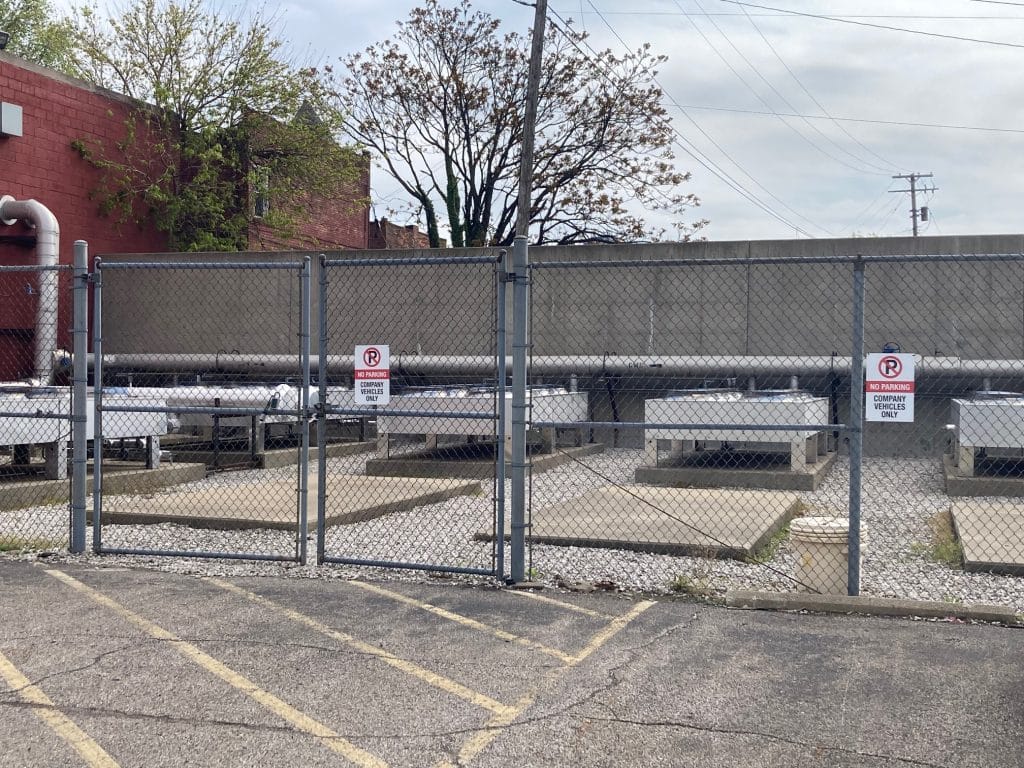
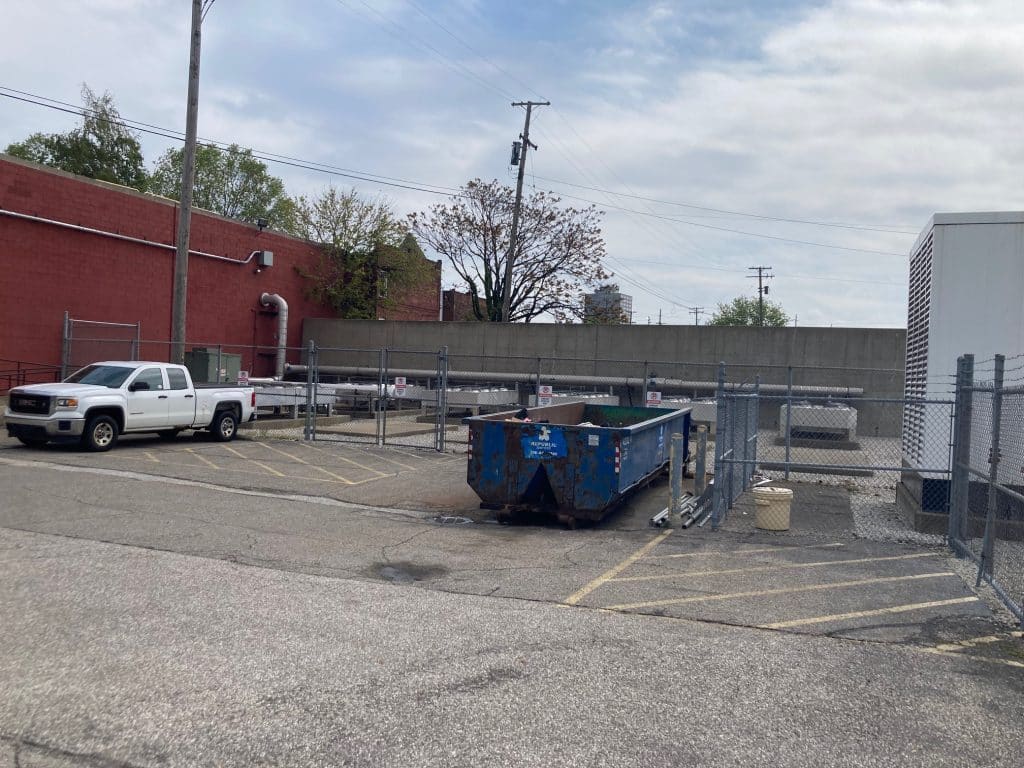
Though local opposition remains, entities like Greater Cleveland Partnership (GCP) believe moratoriums against the technology are short-sighted, if not altogether harmful for the region. GCP, the area’s largest chamber of commerce, has encouraged a “smart growth approach” encompassing dialogue and information sharing.
“Bans and moratoriums are not the right way to engage (on this subject),” GCP CEO Baiju Shah said in an interview with The Land. “This doesn’t mean every community should have a data center, but they need to make informed decisions on where, when and how we should have them. There’s existing zoning, permitting and regulation processes governments have that result in development agreements for projects like this.”
Some residents disagree. William Hollingsworth spoke out against data centers in impassioned speeches to Twinsburg and Ravenna lawmakers. In these widely shared remarks – which had viewers calling for Hollingsworth to run for Congress – the Kent resident says a pause on data centers is less an act of cynicism than of stewardship.
Hollingsworth reiterated this position in an interview with The Land, saying municipalities need to educate themselves on what these sites actually offer.

“In a perfect world, I’d say no to data centers because of what I know about them,” says Hollingsworth, 33. “A 12-month moratorium is the best case, because we need to look at the regulations first. We can’t just build willy-nilly without knowing what the impact is going to be.”
Several states, including Maine, have prohibited approvals for facilities exceeding 20 megawatts of power – Hollingsworth seeks similar regulations for Cleveland, but sees no scenario where he would support further data center expansion.
“What if [AI] is like the dot com bubble and it bursts?” Hollingsworth says. “A one-year pause gives us a chance to say we looked at the problems, and we can find solutions. And if there’s not solutions, let’s find an alternative.”
Councilman Slife says that setting guardrails now will protect residents from the unknowns of a rapidly evolving industry.
“I’m not opposed to every data center full-stop – let’s just take things as they come,” says Slife.
Keep our local journalism accessible to all
Reader support is crucial as we continue to shed light on underreported neighborhoods in Cleveland. Will you become a monthly member to help us continue to produce news by, for, and with the community?
P.S. Did you like this story? Take our reader survey!
Author

Related Articles
Understanding Lakewood’s 5 proposed charter amendments
Ahead of Nov. 3, take a look at what the proposed charter amendments could mean for Lakewood’s government.

Obama, in Cleveland and Michigan, assails ‘cruelty’ and indecency from Trump and his allies in the midterm campaign
Former President Barack Obama has stepped into one of America’s ugliest midterm fights as he works to rally Democratic voters in two Midwestern battlegrounds.

Former President Barack Obama rallies in Cleveland [Livestream]
You can watch the rally here.


