
You can now hike the Veterans Memorial Bridge for free
The city’s historic bridge is now open on Fridays for tours. You have until September to explore the bridge and our reporter took a stroll herself.
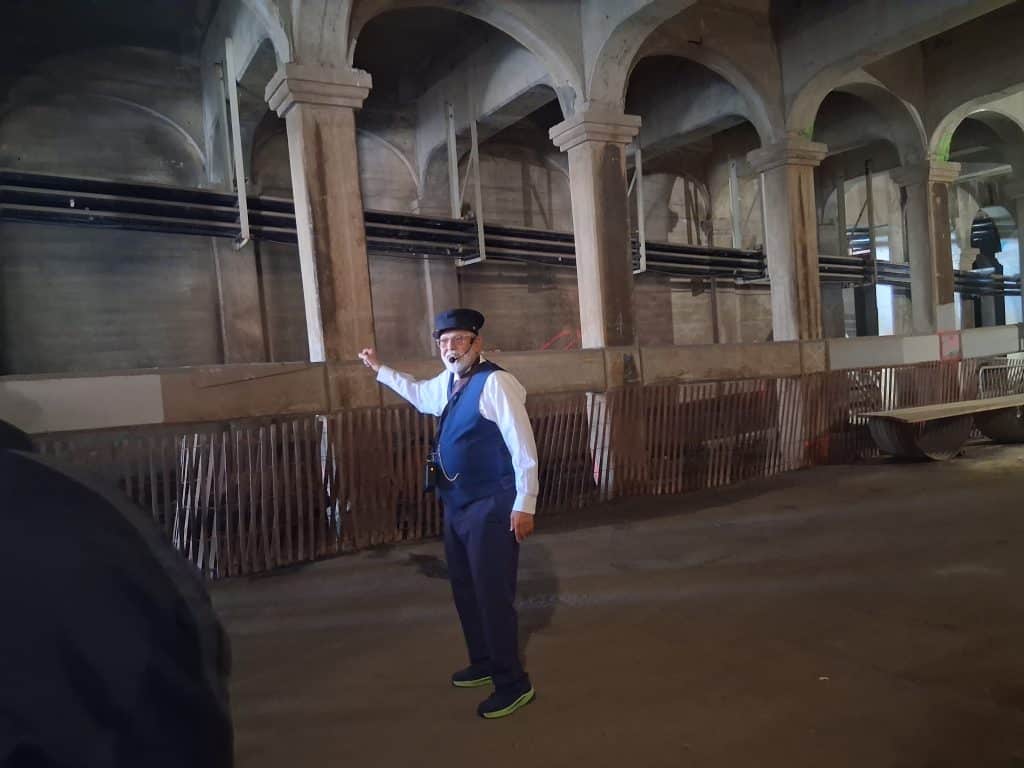
Take a Hike offers year-round opportunities to experience the highlights of Cleveland’s history, architecture and culture. One such guided tour of the lower level of the Veterans Memorial Bridge takes place on most Fridays, June through September. The tours tend to fill up fast.
During a guided tour of the bridge that I took in June, hikers were offered historic facts while viewing firsthand the bare-bones structure lying in wait for redevelopment. The streetcar level was made ready for casual foot traffic, although it is very old. The 0.75 mile length has remnants of track and subway lanes and interesting views of the river below.
Bob, a participant who was there with a group of friends, told The Land, “These hikes are a good way for us to see the sites of the city. We have hiked quite a few of them together.”
The group was led by Ron, a Take A Hike volunteer. Ron shared the history, development and hopes for the future of lower level in a friendly and informative way.
Early History
During 1900-1910, Cleveland’s population grew over 46% to 560,663 people, elevating it to the fifth most populated city in the United States and a growing industrial city as well. The growth was a reality on both the east side and west side of the Cuyahoga River.
The old Superior Viaduct served as access across the river in the Detroit-Superior area since 1878. The city’s growth brought a huge increase in automobile, commercial and foot traffic. That traffic was often tied up for long periods because the Viaduct was a swing bridge that opened and closed multiple times a day for vessels that passed below on the Cuyahoga River.
After years of discussion about the new construction of a “high-level” bridge, one that would not open and close, issues were presented to the voters in 1905, 1906 and in 1910 voters approved the construction and the tax levy for the bridge. Additionally, the new bridge would become a county bridge in the city of Cleveland by court order.
Construction
- Construction began in the summer of 1912 by The King Iron Bridge Company of Cleveland. King Bridge was nationally known for the development and construction of metal truss bridges. The double-deck structure used:
- 2.1 million cubic yards of concrete. The concrete was poured in record time with the use of trucks to haul it versus the use of horse-drawn wagons. This innovation was a first in the world of concrete construction.
- 18.7 million pounds of steel
Bridge Dimensions: 3,112 feet long and 96 feet above the river.
Total cost of construction – $5,407,000 that included land cost of $1,687,000. Today, the equivalent of $100,000,000.
Completion and Opening
- The Detroit-Superior Bridge was completed in 1917 and the upper deck officially opened to vehicles and pedestrians on November 29, 1917 (Thanksgiving Day). No official ribbon cutting was scheduled due to the country’s involvement in World War I.
- The lower deck was built to carry streetcars on sets of tracks with underground stations at both ends. The tracks ran across the floorless span offering a startling view of the river almost 100 feet below. The fare was 3 cents.
Later
- 1954 – Streetcar operations ceased. After much controversy over the possible use of the lower level of the bridge for an auto subway, the lower level was abandoned.
- 1955 – Ramps leading to the lower level were paved over. This sealed the stations from street access.
- 1967 – 1969: Due to deterioration, a structural renovation was completed. The cost was $6 million.
- 1974 – The bridge was added to the National Register of Historic Places.
- 1989 – On November 11th (Veterans Day), the bridge was renamed the Veterans Memorial Bridge
- 1995 – 1997 – A second major renovation costing over $43 million was completed. Specialized colored lighting was installed on the seven bridges in the Flats, including the Veterans Memorial Bridge in preparation for Cleveland’s Bicentennial in 1996 (City of Bridges Theme).
Today
The upper deck of the bridge is still a busy route for cars, bus traffic and pedestrians with a well-used bike lane. The lower level is occasionally used for community and special events. Numerous suggestions have been made on how to repurpose the lower deck into a safe and useful addition to the community.
In 2024, the U.S. Department of Transportation awarded Cuyahoga County Veterans Memorial Bridge Connectivity Plan Project a $7 million federal grant to help build a plan to open the lower level of the bridge as a public thoroughfare for cyclists and pedestrians. It would also be a venue for events, programs and recreation. The project starts with a Feasibility Study followed by an Engineering Plan.
This was part of the official announcement: “The Reconnecting Communities and Neighborhoods program is an important component of the Department’s commitment to equity and the Biden-Harris administration’s commitment to supporting communities marginalized by underinvestment and overburdened by pollution, and strengthening equitable development.”
The Study
Eric Mack, chief section engineering, planning & programming, Cuyahoga County of Public Works offered the following project summary. Mack told The Land,
1. On reconnecting Cleveland’s neighborhoods
“Reopening the lower level of the Veterans Memorial Bridge is about restoring a vital connection between downtown and the near‑west side. This project makes it easier, safer, and more comfortable for people to move between our neighborhoods and adjacent amenities — whether they’re walking, biking or simply enjoying this historic space.”
2. On the project’s long‑term vision
“Our vision is to transform the lower level into a welcoming public space that honors the bridge’s past while creating new opportunities for recreation, mobility, and community events. This isn’t just an infrastructure upgrade — it’s a once‑in‑a‑generation chance to reshape how people experience the Cuyahoga River valley.”
3. On equity and access
“For many residents who rely on non‑automobile travel, especially in nearby disadvantaged communities, this project represents a meaningful improvement in daily access to jobs, transit, parks and public spaces. We’re building a connection that truly serves people of all ages and abilities.”
4. On improving safety and user experience
“The community told us that safety, lighting and accessibility were top priorities — and we listened. The redesigned lower deck will include improved lighting, clear sightlines, ADA‑compliant paths and secure access points to ensure that people feel safe using the bridge at all times of day.”
5. On integration with major riverfront projects
“As Irishtown Bend Park, Canal Basin Park, Bridgeworks, Superior Midway and other transformative investments take shape, the Veterans Memorial Bridge becomes the missing link that ties these destinations together. This project unlocks a seamless network of trails, open space and mobility options across the river.”
6. On community enthusiasm and public engagement
“Thousands of Clevelanders participated in tours, surveys and the Rediscover Veterans Memorial Bridge event — and the message was clear: people want this space open, activated and accessible. This project reflects their ideas and excitement.”
7. On collaboration among agencies
“This is truly a regional effort — combining the strengths of Cuyahoga County, the City of Cleveland, ODOT, Cleveland Metroparks, GCRTA and our federal partners. Transforming a century‑old structure into a modern mobility asset requires teamwork, and we’re proud of the strong partnerships driving this work forward.”
8. On the bridge’s historic significance
“The Veterans Memorial Bridge is one of Cleveland’s great landmarks. Opening its lower level again allows us to celebrate its history while giving residents and visitors an entirely new way to experience the city.”
Our tour ended with a visit from Bob, an actor portraying a streetcar conductor from the past.
“I still remember the faces of the people day in and day out, business men running to get to the streetcar on time. Metal workers and steel workers heading home after a long day. Shoppers with their arms full of bags. Families bringing their children downtown maybe for an Indians game or to press their noses against the department store windows. This place was more than tile and steel. It was routine. It was a celebration. It was everyday life that passed through on steel rails and busy footsteps. There is so much nostalgia here, so much history within these walls. Wouldn’t it be wonderful to see this space shared again? Not just remembered but experienced, felt. Well, hopefully, some day that will happen.”
Perhaps Bob’s hope will be realized in our not-to-distant future. The groundwork appears to be laid to not only once again link two sides of the river but link the bridge’s colorful past with an amazing future.
We're celebrating four years of amplifying resident voices from Cleveland's neighborhoods. Will you make a donation to keep our local journalism going?
Author

Related Articles
More than a card: Why Cleveland Public Library still matters in the digital age
September is National Library Card Signup Month. The Land talked with Cleveland Public Library Executive Director Felton Thomas, Jr. at the Main Library downtown.
The Movie Nerd Report: It’s “Primetime” for Northeast Ohio cinema
There’s a lot of fun screenings happening at independent theaters around Greater Cleveland this week.
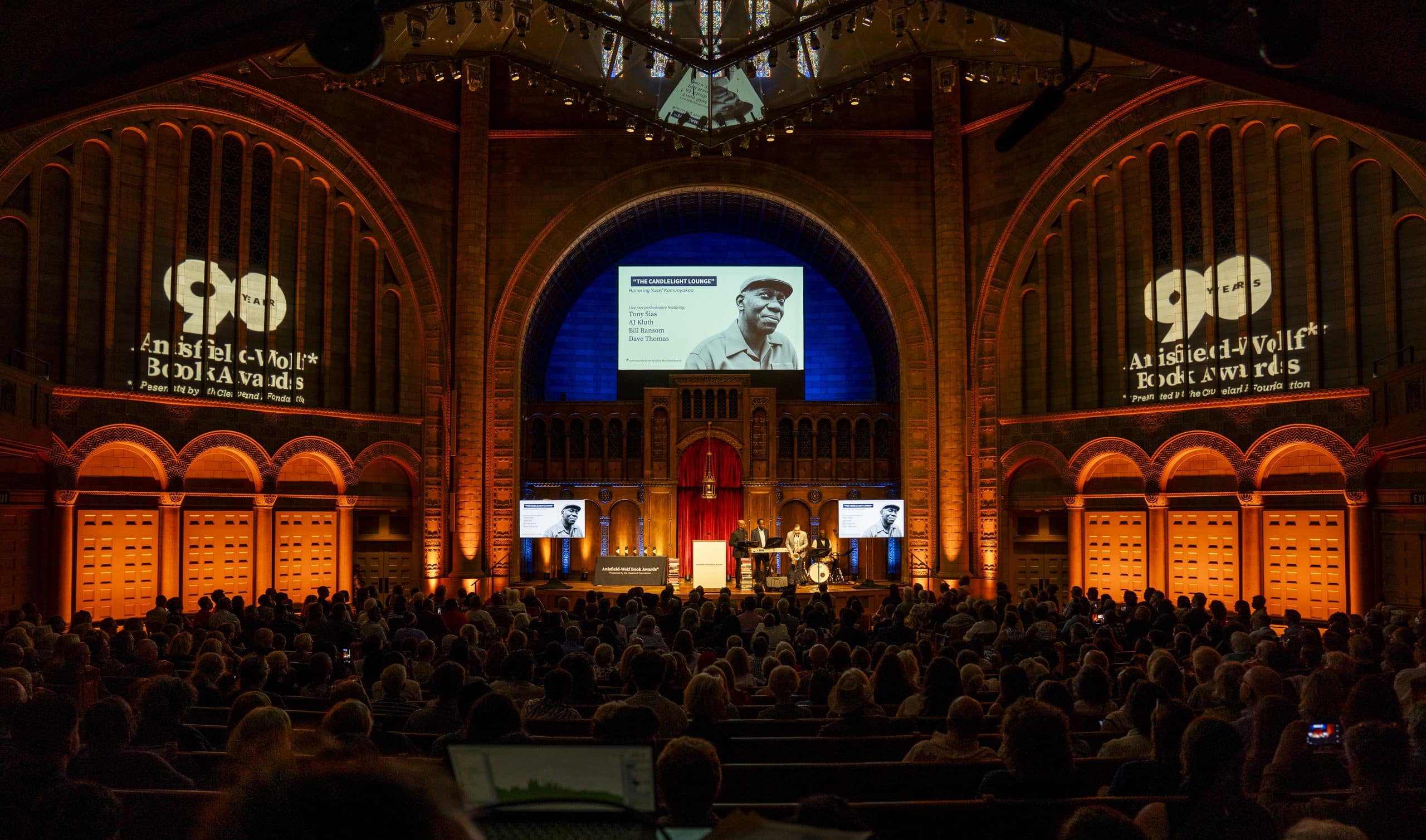
Anisfield-Wolf Book Awards weekend celebrates 2026 winners at 91st annual event
“We’re taking all of the good work the partners do year round and creating a space that allows us to have conversations that create shared language for experiences that otherwise might remain private or unspoken for readers but become a special experience for everyone.”


