
Not-so-yellow brick roads polarize Clevelanders
Pavers seem to draw more praise than criticism online, with locals enjoying their unique aesthetic.
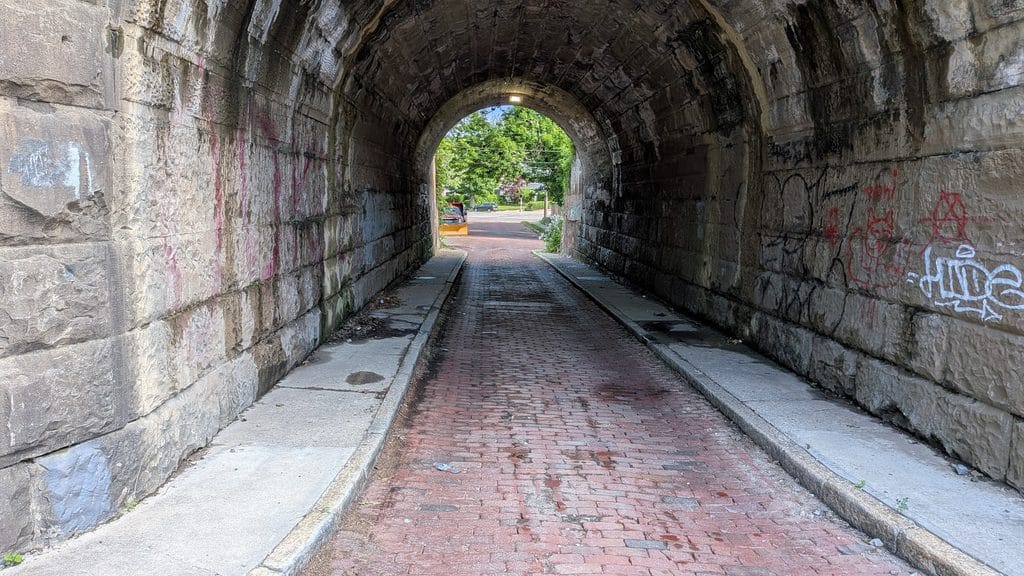
Locals seem passionate about pavers.
“I love living on a brick street,” Patricia Kasik says about Cleveland’s Buechner Avenue. “It has character. It has history.”
“I don’t like it,” a man who doesn’t give his name says about the brick East 120th Street.“ All that bumpy s—!”
Facebook posts about Greater Cleveland’s brick, stone and wooden streets have drawn hundreds of comments.
“They are a beautiful piece of the past!”
“It’s like driving on craters.”
“It’s better than tire-eating holes!”
“It’s 2024, time to upgrade them.”
Another comment recounts sliding four tympani over the bricks of Hessler Road. “Nearly destroyed the wheels, pedals, etc., but we got it to the venue.”
Online or in person, pavers seem to draw somewhat more praise than pans.
Rae Martello, who manages apartments on the brick Hessler Road, says, “I love it. It’s different.”
Edgar Hernandez, who superintends apartments on the intersecting Hessler Court, one of the nation’s few surviving wooden streets, says, “It’s pretty neat. It’s historical. It’s holding up.”
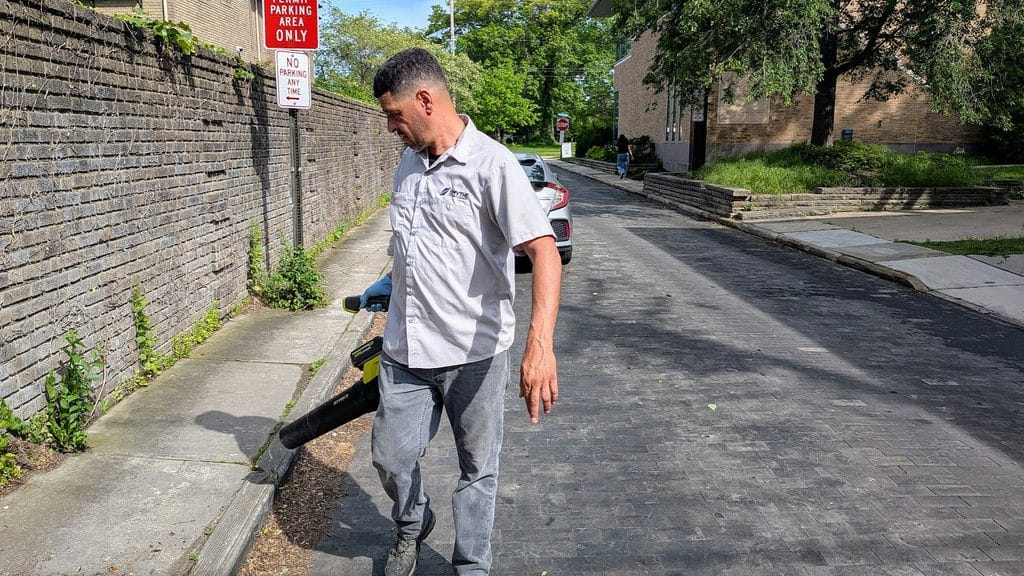
What and where
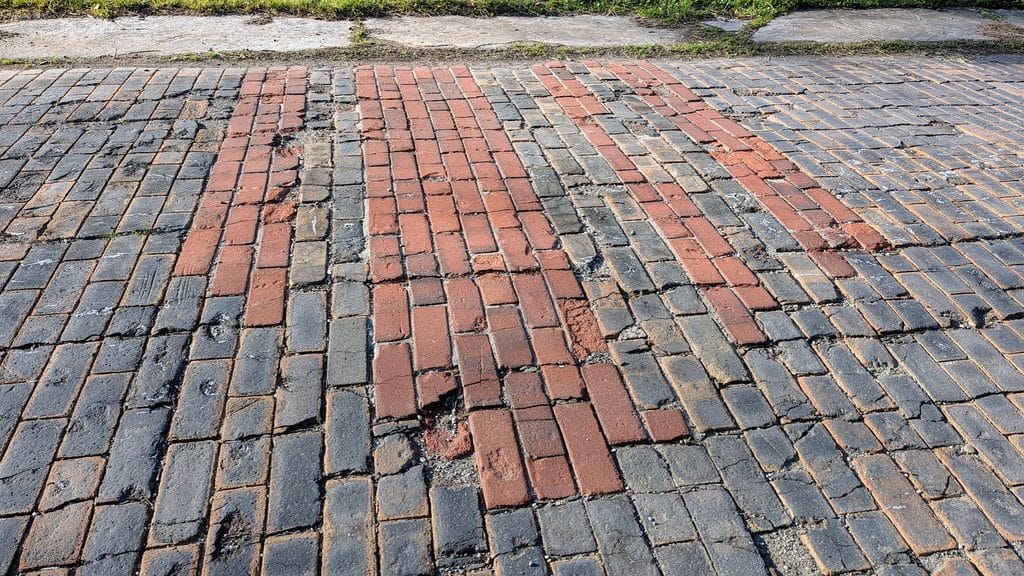
Cleveland records list 68.87 square miles of brick streets. Up close, though, two of the listed blocks — the northernmost ones of East 16th Street and East 18th Street — appear to really be quarried stone.
And the list wrongly includes Hessler Court, made of small wooden blocks. According to Robin S. Williams, author of Historicpavement.com, other wooden streets include Pittsburgh’s Roslyn Place, part of Philadelphia’s Camac Street and Chicago’s accurately named Wooden Alley.
Cleveland’s suburbs have brick streets here and there, including 10 partly or wholly brick ones in Cleveland Heights. Downstate, Columbus has what Historicpavement.com calls one of the nation’s biggest clusters of brick streets, which complement the many brick buildings and sidewalks of that city’s 19th-century German Village.
With exceptions like Murray Hill Road in Cleveland and Falls Road in Chagrin Falls and nearby suburbs, most of our brick streets are short and lightly driven. They also seem somewhat randomly scattered. Only a few lie near each other.
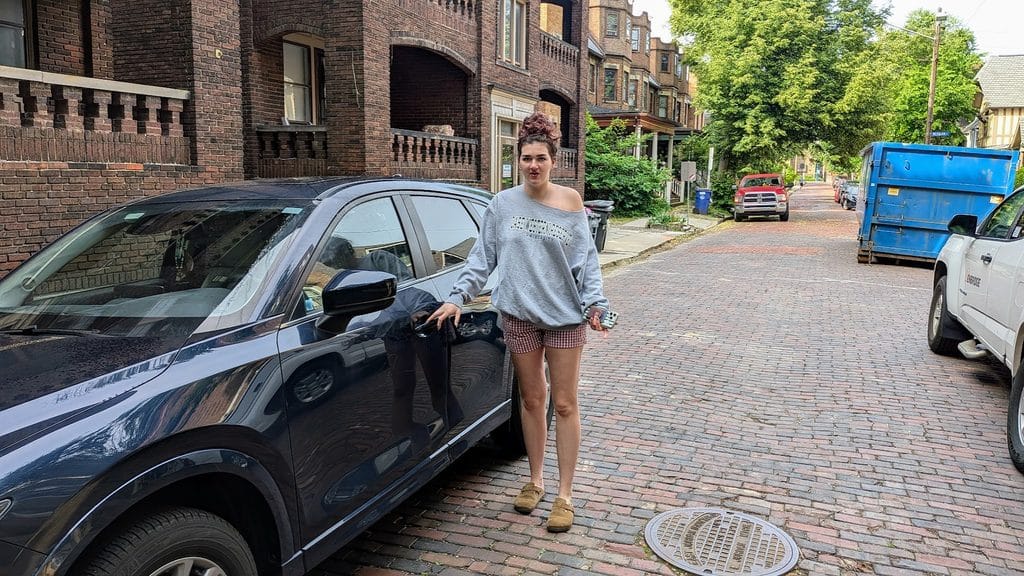
Parma has three brick avenues in a row off East 78th Street — Liberty, Newport and Manhattan. Cleveland has two in a row off Warner Road — Rosewood and Bancroft, which both turn to asphalt at the Garfield Heights line. The historic Erie Street Cemetery is flanked by the historic bricks of Sumner Avenue and Erie Court.
Lakewood has a few streets of brick and two of modern materials resembling brick — Roosevelt Avenue and Victoria Court. “The public likes this appearance,” says City Engineer Matt Papke. Imitation brick has also become common on many towns’ crosswalks and curb breaks.
Rough and tough
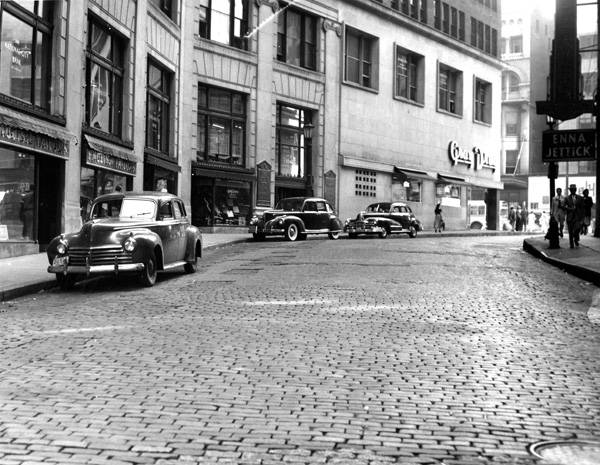
Old-time toppings have pros and cons.
They can be slippery when wet or icy. Stone and brick ones tend to make cars clatter, irritating drivers but at least slowing them down and alerting bystanders.
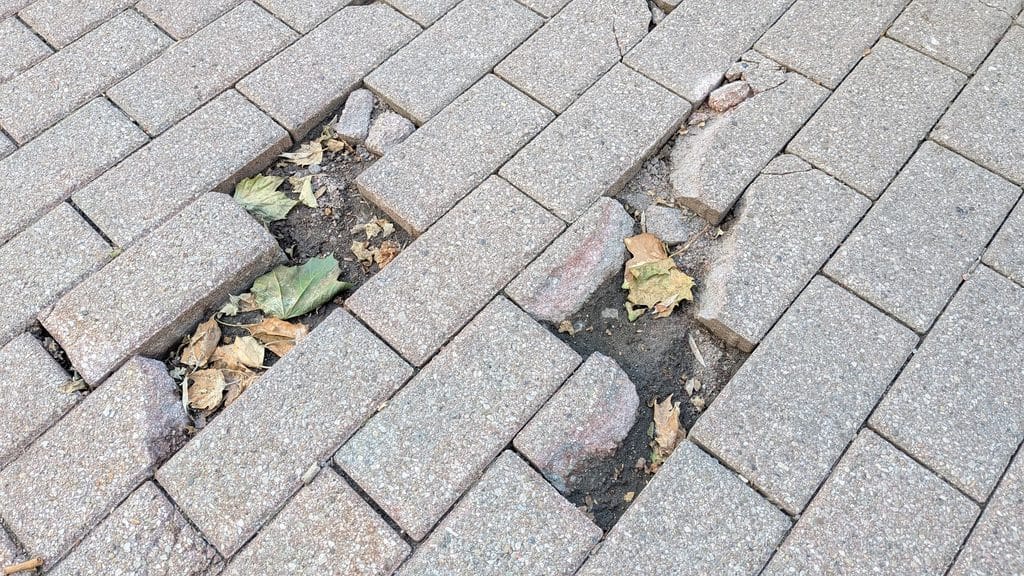
Pavers don’t expand or contract as much as asphalt, and many have concrete bases, so they seldom develop potholes. But ruts tend to form along the paths of vehicles’ wheels. Bricks can also pop up in extreme heat.
According to local officials, brick costs several times more than asphalt to restore but tends to last 50 years versus 10 to 20. According to a team from Carnegie Mellon University, brick tends to pay off better over that time. Crews try to reuse the original bricks when possible.
But bricks are harder to paint than asphalt. On Sept. 9, Cleveland dedicated a mural on the asphalt at Huron Road and Prospect Avenue, funded by the nationwide Bloomberg Philanthropies Asphalt Art Initiative.
Ruffled Fir
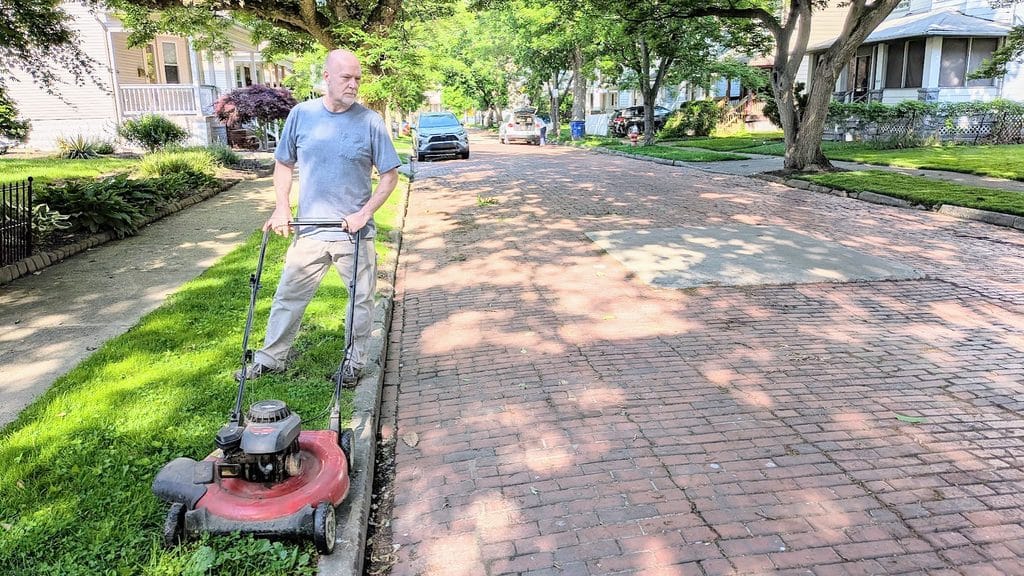
Jason Hauser of Fir Avenue loves its bricks but hates its big concrete patches, installed by utility crews after repairs. As the remaining bricks keep settling, the patches become speed bumps.
Ward 7 Councilman Austin Davis promises that Fir will soon be repaired with bricks. “Brick is very expensive,” he says in an email, “and it can be tough to say that the financial trade-off is always worth it when we as a city have so many expensive needs. As a person with a disability, brick is also harder for me to walk on because it is naturally uneven. (Davis wears prosthetics below his thighs.) But it is also so beautiful and can provide so much character to a block, and I have zero appetite for any efforts to pave over historic brick on Ward 7 streets.”
A 2024 memo at Cleveland City Hall calls for maintaining brick streets, with exceptions considered for some alleys and courts outside historic districts.
Collette Clinkscale, Cleveland Heights’ public works director, says the suburb has fallen behind on maintaining its brick streets and is looking at ways to address them. “Most residents that live on brick streets want to keep them.”
Pavers past
The world’s first roads were dirt, typically cutting through wilderness. Early on, according to the Encyclopedia of Cleveland History and its editor, John Grabowski, some local roads were known as plank roads for their boards or corduroy roads for their logs.
In the mid-1800s, wood and stone blocks became popular, including Medina sandstone. Macadam was a mix of crushed stone named for inventor John McAdam. Another inventor added tar and called the result tarmac.
Many settlers of Little Italy were bricklayers. Grabowski calls Murray Hill Road’s bricks “a symbol of the community.”
1888 brought Cleveland’s first brick streets. From 1893 to 1896, what’s believed to be the nation’s first rural brick street arose — a stretch of today’s Pearl Road from Strongsville to Parma Heights. The stretch was eventually asphalted but given a historical marker at the eastern end, which intersects Olde York Road.
According to Ohio Geology, Canton was considered the world’s leading source of brick pavers in the late 1800s. In 1893, 44 Ohio firms made 292 million brick pavers, enough for nearly 600 miles of roads. A 1999 issue of Ohio Geology said, “We can see lasting reminders of this industry in the streets, alleys, and sidewalks of nearly every town and village in our state.”
As bicycles and cars multiplied, demand rose for smooth surfaces, and asphalt or concrete gradually replaced or covered most pavers. Thomas Sotak, Cuyahoga County’s deputy chief of engineering, says, “Brick makes a very good base.” Potholes and repairs often expose it.
Bouncing bikes
Many people call brick or stone pavers cobblestones, which were really natural stones laid on early East Coast streets. Now Paul Hamad leads Cleveland Cobbles, a yearly bike ride on our bricks.
“You have to pay attention to where your wheels are going at all times,” he says. Tires are often punctured, and “you might lose a filling or two,” but no one’s been hurt worse. As for the bumpy ride, “It adds to the challenge and the enjoyment.”
Hamad says the faster you ride on bricks, the smoother. “You can just glide right over them.”
Keep our local journalism accessible to all
Reader support is crucial as we continue to shed light on underreported neighborhoods in Cleveland. Will you become a monthly member to help us continue to produce news by, for, and with the community?
P.S. Did you like this story? Take our reader survey!
Related Articles
Cleveland Council must enact the proposed Parking Benefits Fund: Opinion
“Mobility improvements that would be delivered through the Parking Benefits Fund are numerous, practical and high-impact. They can be delivered quickly and equitably across the city, and they have broad community support. Residents overwhelmingly want more investment in safe, multi-modal transportation.”
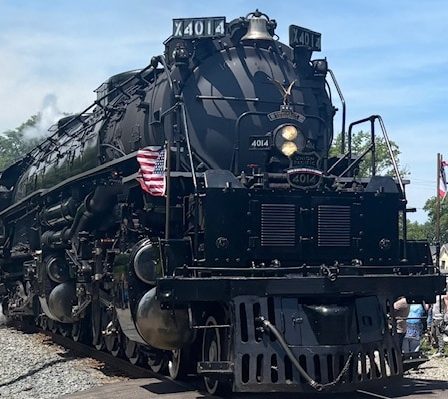
Historic steam giant Big Boy No. 4014 draws crowds along Lakewood Rail Corridor
The massive train brought joy and excited to the West Side this week. It’ll make its return on July 13.


