
Choosing life: Seneca Bankston’s story of suicide, faith and hope
“Seneca’s story reminds us that mental health challenges can affect anyone. It also highlights why it’s so important for people to know they don’t have to face those challenges alone.”

September is National Suicide Awareness and Prevention Month — a time to remember those we have lost, support those who are struggling, and remind one another that help is available.
If you are struggling, call or text 988. You are needed. You are not alone. There is hope.
In June, the Cuyahoga County Public Library-Parma-Snow Branch, hosted an after-hours event entitled, Courage to Speak: The Seneca Bankston Story. Bankston was a local hip-hop artist, owner of the Royal Media Music Group record label, videographer and photographer (among other creative talents). He died by suicide on Jan. 25, 2025.
A Life Remembered
Bankston’s widow, Iteisha, along with her creative collaborators, produced a documentary about Seneca’s life. Its message is one of hope, faith and love for anyone struggling with mental health challenges and their affected friends and family.
The Bankstons met in 2012 and their bond grew through their affinity for children (although they had no kids of their own). In 2020, they started a company called TeaSpot Learning Center, based on a one-to-one educational approach. After Seneca’s passing, Bankston created the LionHeart Kids Initiative, a nonprofit which provides after-school programming in his memory. The 10-12 students in the program focus on art, behavioral wellness, fitness and STEM, to promote resilience and self-advocacy.
In addition to his creative endeavors, Bankston directed academic programming in the after-school space at Scranton Road Ministries.
“I had the privilege to serve with Seneca for almost seven years and my life is much richer for that,” said Christopher Whitmore, executive director of Scranton Road Ministries. “I appreciate and miss his infectious laugh, creativity and love of music. His genuine care for people was evident. He energized and encouraged everyone he met. He left an indelible mark on this community and I’m thankful we had a chance to “do life” together.”
“People who view ‘Courage to Speak,’ ideally can see a glimpse of themselves, their loved ones and friends, because Seneca’s personality was very communal and relatable to many different people,” said Bankston. She hopes they can see that this jovial, caring person also carried deep wounds. Seneca was in counseling, worked out, changed his diet, he did everything (Seneca stopped medicating, because of its side effects). Unfortunately, in a moment of crisis, he just wasn’t able to regulate.
Choosing Life
Bankston teaches people that even when they think the worst has happened and they’re struggling with their mental health they can still move forward. Each day is an opportunity to make choices, including getting out of bed, making a cup of coffee, leaving the house and feeling the sunshine on your face. She urges people to choose life, knowing there is always hope, nothing is the end.
Recognizing the Signs
Even though Seneca was in the recording studio the day before his death, in hindsight, Bankston said there were signs of his distress.
“He was still masking, but there were signs he was not behaving like himself, being distant.”
Bankston said if someone thinks a loved one or friend is struggling, they should continue to engage them in conversation about how they are feeling both mentally and physically every day. Discuss something good that happened that day. Do a daily pulse check, incorporate a feelings wheel.
The Courage to Speak
The “Courage to Speak” documentary originated after a Lionheart Kids Initiative board member and Seneca’s friend, Aaron Hale, wanted to produce a tribute video after Seneca’s passing. Bankston’s community creatives (which included two film makers) collaborated during a phone call and the discussion morphed into a documentary instead of a video. They decided what parts of Seneca’s life they wanted to share; how intentional they wanted to be and the people to highlight. The documentary took a year from conception to production.
The name “Courage to Speak” evolved from Bankston’s encouragement for Seneca to write a book about his life. He always dismissed the idea, not wanting to revisit his past, which included being bullied. Admitting you need help requires bravery. Bankston acknowledged her own courage to share parts of her husband’s life, their marriage and family that others may not have known. But in doing so, others candidly came forth and shared their own stories of dealing with family struggles with mental health.
Turning Grief Into Purpose
A recent session with her counselor produced the question. “What gives you hope today?” Bankston believes her hope is a work in progress. She’s rebuilding her life and doesn’t try to predict the future. She tries to take care of her immediate needs and feels blessed to have been given another day to live well. She reflects often on how she can help somebody else, while being present for herself.
When Strong Means Speaking Up
It’s important to normalize asking for help because we’re human and nobody is a superhero, Bankston said.. Seneca had a collection of Marvel Universe action figures, meticulously preserved in their boxes. Bankston believes they symbolized male bravado, strength. “Yet, we don’t have superhuman strength,” she said. “We need to be able to tell another human that we’re struggling. There’s no shame in asking for help.”
“For far too long, Black men have been handed a script – one that says strength means silence and that asking for help is weakness,” said LaToya Logan, founder and CEO of Even Kings Feel Healing Community (formerly, Project LIFT Services). “When we stop boxing men into what they’re supposed to be, we open the door to who they actually are. Mental health is not a luxury or a last resort. For our community, it is a matter of survival and of dignity.”
Bankston reminds readers that there are free resources, including counseling and companies often have employee assistance programs. Sometimes it’s just a matter of calling somebody and letting them know you need help. While your friends are not your therapist, in a moment of need, they can connect you to broader resources.
“Seneca’s story reminds us that mental health challenges can affect anyone,” said Star Sizemore, director of faith-based and special projects at the Alcohol, Drug Addiction & Mental Health Services (ADAMHS) of Cuyahoga County. “It also highlights why it’s so important for people to know they don’t have to face those challenges alone. Through the ADAMHS Board’s faith-based initiatives, we partner with multi-faith organizations and congregations across Cuyahoga County to help individuals recognize when someone might be struggling and connect them with the support they need. We know that faith communities are often the first place people turn for help and having trusted, trauma-informed leaders who understand mental health can make all the difference in someone’s journey toward hope and recovery.”
Faith and Mental Health
Bankston acknowledges that she could not go through this journey without her faith. She prays and journals every morning. Both she and Seneca were churchgoers and believers in God.
She admits that at times, when the Christian community learns of Seneca’s suicide, they doubt his faith. Bankston says people can believe in God, in Jesus and still be hurting – and that there is a way to work through that.
Men are Needed
Lastly, Bankston said, “Men, you are needed.” “There’s a natural protection men bring to this world and when they are not present, that absence is felt.” If a man is struggling with his self-worth, thinking, “Oh, I’m not that kind of person,” or “I am all messed up,” it doesn’t matter. She wants men to know they are needed. “Our society, children and families need them. The world responds differently to men and they’re needed for advisement, direction, wisdom and purpose.”
The Cuyahoga County Public Library-Mayfield Branch, will be showing “Courage to Speak,” on Saturday, October 17, at 3 p.m.
We're celebrating four years of amplifying resident voices from Cleveland's neighborhoods. Will you make a donation to keep our local journalism going?
Author

Related Articles

Haus of Transcendent hosts healthcare directory with focus on Cleveland’s Queer community
“It also serves as a one-stop shop for people who do not know what the link is to access the Medicaid portal and other critical government programs.”
At Fairfax Community Gym, ‘exercise is medicine,’ and free (no strings attached)
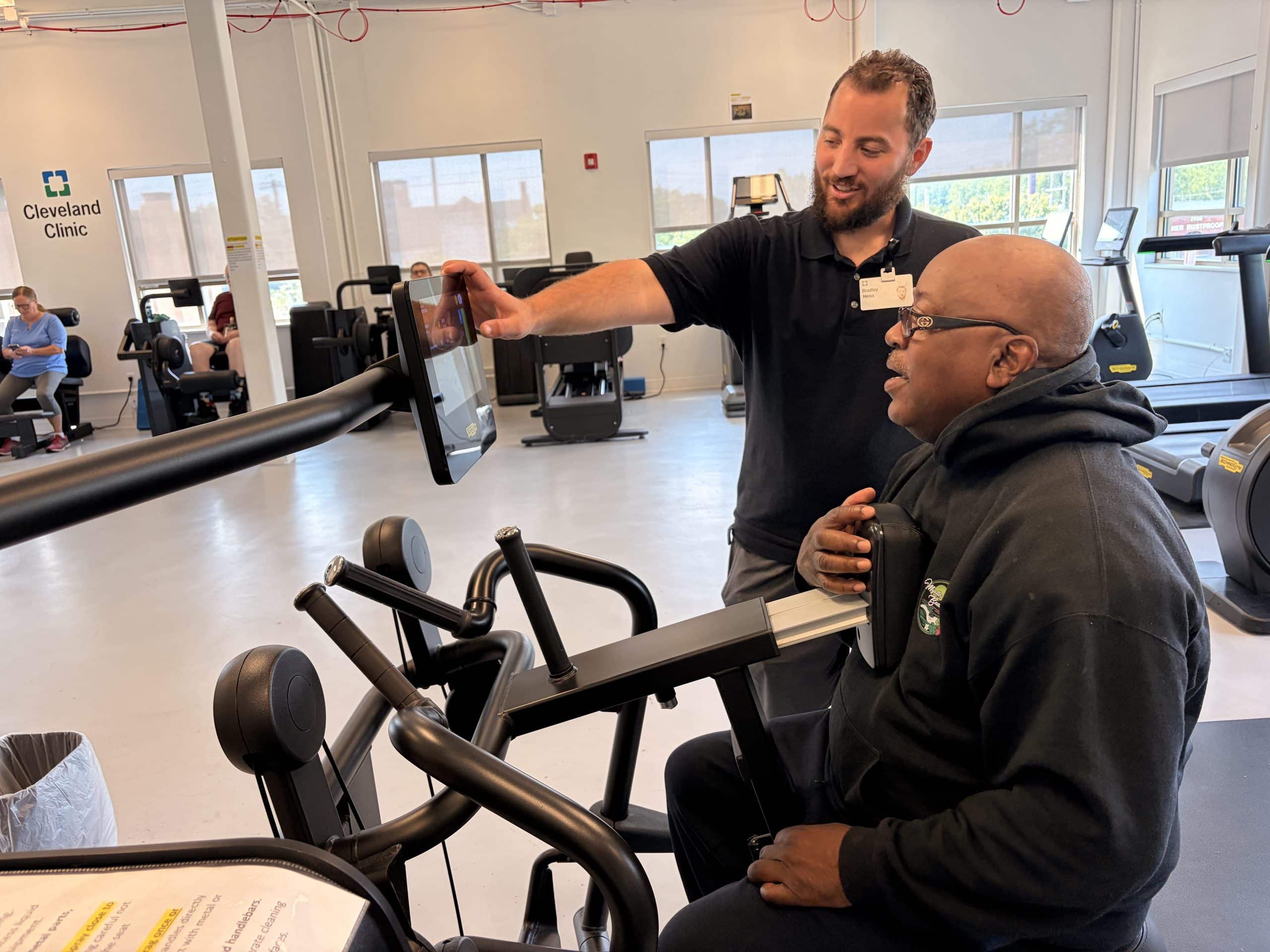
What if you had a trained sports medicine doctor and a team of certified exercise physiologists at your disposal to regularly measure your body and health and guide you through a customized regimen, tweaking workouts as you go?
Northeast Ohio therapy dog organization lends listening ear to trauma victims
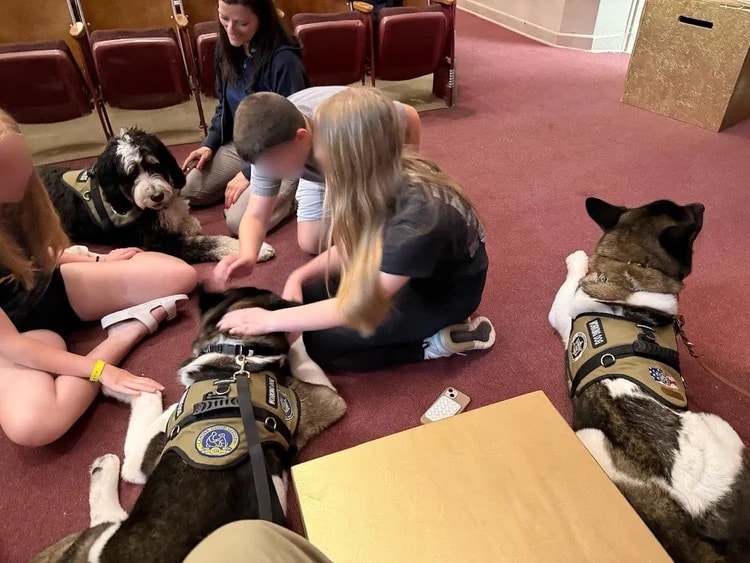
While visiting Valley Forge High School in Parma Heights the day after an 18-year-old student took her life in the schools’ cafeteria on April 20, Shirley Graziano, the president and founder of Crisis Canine Corps (CCC), and therapy dog Zodiac noticed two young girls in the library.


