
Haus of Transcendent hosts healthcare directory with focus on Cleveland’s Queer community
“It also serves as a one-stop shop for people who do not know what the link is to access the Medicaid portal and other critical government programs.”
The Haus of Transcendent healthcare directory website HOTHeal.org, which launched earlier this year, focuses on sexual health for those who struggle to find affordable healthcare in Cuyahoga County. While hospital systems such as Cleveland Clinic and MetroHealth have healthcare directories available, HOTHeal focuses on the queer community in Cleveland and people looking for affordable healthcare through programs like Medicaid.
“It also serves as a one-stop shop for people who do not know what the link is to access the Medicaid portal and other critical government programs,” said Haus of Transcendent CEO Jordi Luke (they/he, elle/el).
Health Disparities Within the LGBTQ+ Community
According to the Williams Institute, Cleveland’s estimated queer population is around 62,000 people. Despite such a large population, queer people have less access to healthcare and are at a higher risk for certain health conditions due to stigmas.
Transgender people feel less comfortable than cisgender people in a doctor’s setting and are less likely to get the care they need due to social and mental anxieties within the healthcare system, according to a study in the Annals of Family Medicine.
Rachel Drotar (she/her) is a mental health therapist that specializes in sex and relationship therapy in individuals and couples in the Cleveland area. Her main clients are queer and transgender individuals and couples who come to her seeking help with conversations surrounding sexuality and exploring gender identity.
When asked about the most common problems her queer and trans clients discuss, Drotar mentioned social discrimination, getting proper gender affirming care, navigating the healthcare system and the nuances of the healthcare system.
“Healthcare is either tied to your status within poverty or your job,” Drotar said. “If someone has health insurance that is covered by most therapeutic providers or doctors, chances are they’re either getting it through their job or they’re getting it through Medicaid. And it’s a really difficult system to navigate around, especially if you have other coexisting barriers.”
According to the American Hospital Association, funding cuts to the Medicaid program will impact access to health care for more sensitive groups, like members of the LGBTQ+ community.
In America, around 1.8 million LGBTQ+ adults have Medicaid as their main health insurance and LGBTQ+ adults are twice as likely to rely on Medicaid than non-LGBTQ+ adults, according to the Williams Institute. Around 45% of Cleveland’s population relies on Medicaid for their healthcare needs.
What HOTHeal is Doing for Cleveland’s Community
Haus’ CEO Jordi Luke’s involvement with the Cuyahoga County Board of Health (CCBH) allows them to see the efforts that the city is putting towards improving the accessibility and affordability of healthcare, despite the city experiencing restrictions such as cuts to federal government funding.
Luke said, “I think (Greater Cleveland) is doing a great job with so many resource constraints right now. Obviously there’s always room for improvement.”
Drotar said resources could still be spread out and made more accessible.
“It felt like a niche within Cleveland that there was a sex and relationship clinical practice who worked specifically with queer and trans people who took Medicaid,” she said. “With these barriers we saw a huge influx of clients and wait lists all of the time, which tells me that there aren’t enough resources.”
According to Luke, most health insurance directories and hospital directories focus on partner organizations or providers that are in or out of network, making the focus more broad and not as local or community driven.
“It’s not countywide. The CDC would probably be the closest thing to what we have but all of the funding for a lot of those initiatives within CDC have been eliminated so these directories aren’t being up to date and they’re not local,” Luke said.
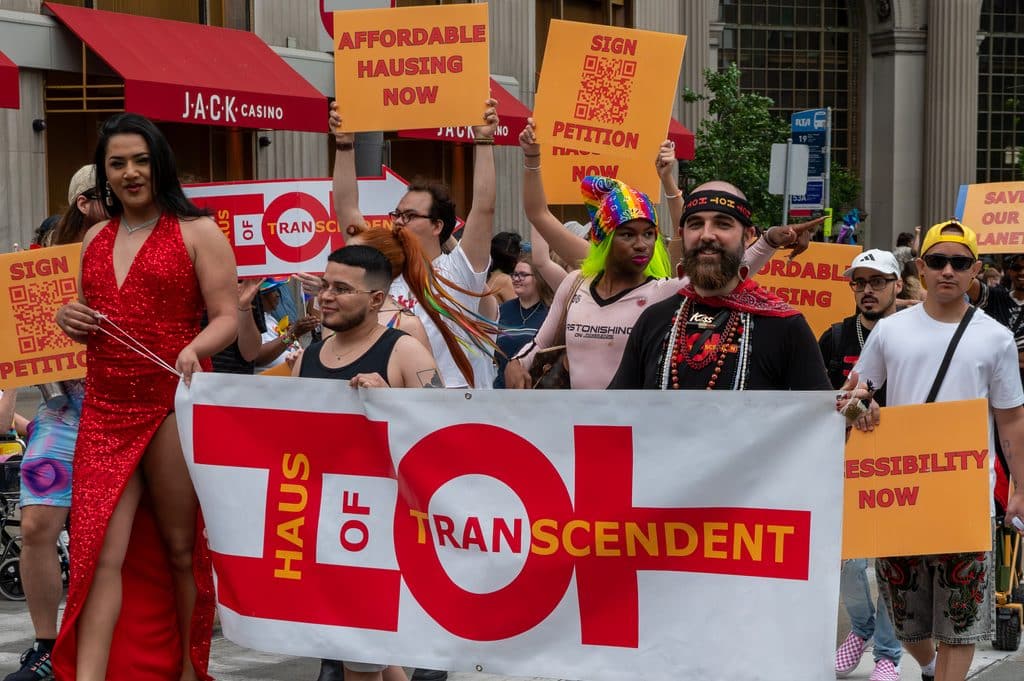
At this year’s Cleveland Pride parade, Haus of Transcendent volunteers could be seen handing out QR codes taking users directly to the healthcare directory. With the Cleveland community in mind, HOTHeal offers features such as a sliding fee scale, uninsured services and highlights the focus on Medicaid services. These features allow the directory to be as up-to-date as possible.
In the year it took for the HOTHeal directory to launch, Luke and Haus of Transcendent Co-Founder SlayIcon collaborated with locals including Cederick Taylor, one of the Popular Opinion Leaders at the LGBT Center, and Elain Tso, the former CEO of Asian Services in Action, to help improve and compile all of the data for the directory.
At the root of their organization, SlayIcon firmly believes in local community efforts.
“HOT is connecting with the community on dance floors, outside of bars, and through video games. When outreach and health care directories meet people where they go to have fun, prevention stops feeling like a lecture and starts feeling like culture, which leads to greater trust and impact,” SlayIcon said.
The Future of HOTHeal
HOTHeal is planning to launch enrollment in their Medicaid case management program. Luke is hoping to figure out a way for Cuyahoga County residents with Medicaid to request support that is queer friendly. The next goal is to integrate mental health by including therapists that take Medicaid and showcase programs that offer therapy for people who are uninsured.
Haus of Transcendent has also received a grant through the Three Arches Foundation to hire a community health worker.
Luke said, “This is a tool for people to more quickly access care, specifically around sexual health and there’s a lot of potential to what this could become in the future.”
The organization has also developed a smartphone app for a quicker and easier way to access the directory. To make things even more interactive and educational, a beta version of their mobile game in the app has already been released.
To get involved, visit hotheal.org and sign up for volunteer work. Medicaid and SNAP recipients are able to use their volunteer hours needed toward the 20 hour mandatory work that is required. The website offers a link to fill out that form.
We're celebrating four years of amplifying resident voices from Cleveland's neighborhoods. Will you make a donation to keep our local journalism going?
Author
Related Articles

Choosing life: Seneca Bankston’s story of suicide, faith and hope
“Seneca’s story reminds us that mental health challenges can affect anyone. It also highlights why it’s so important for people to know they don’t have to face those challenges alone.”
At Fairfax Community Gym, ‘exercise is medicine,’ and free (no strings attached)
What if you had a trained sports medicine doctor and a team of certified exercise physiologists at your disposal to regularly measure your body and health and guide you through a customized regimen, tweaking workouts as you go?
Northeast Ohio therapy dog organization lends listening ear to trauma victims
While visiting Valley Forge High School in Parma Heights the day after an 18-year-old student took her life in the schools’ cafeteria on April 20, Shirley Graziano, the president and founder of Crisis Canine Corps (CCC), and therapy dog Zodiac noticed two young girls in the library.


