
The city that created Rock ‘n’ Roll: Cleveland faces challenges keeping music venues alive
The community that built Cleveland’s music scene remains remarkably resilient. The question facing local leaders, venue operators and musicians is whether resilience alone is enough.
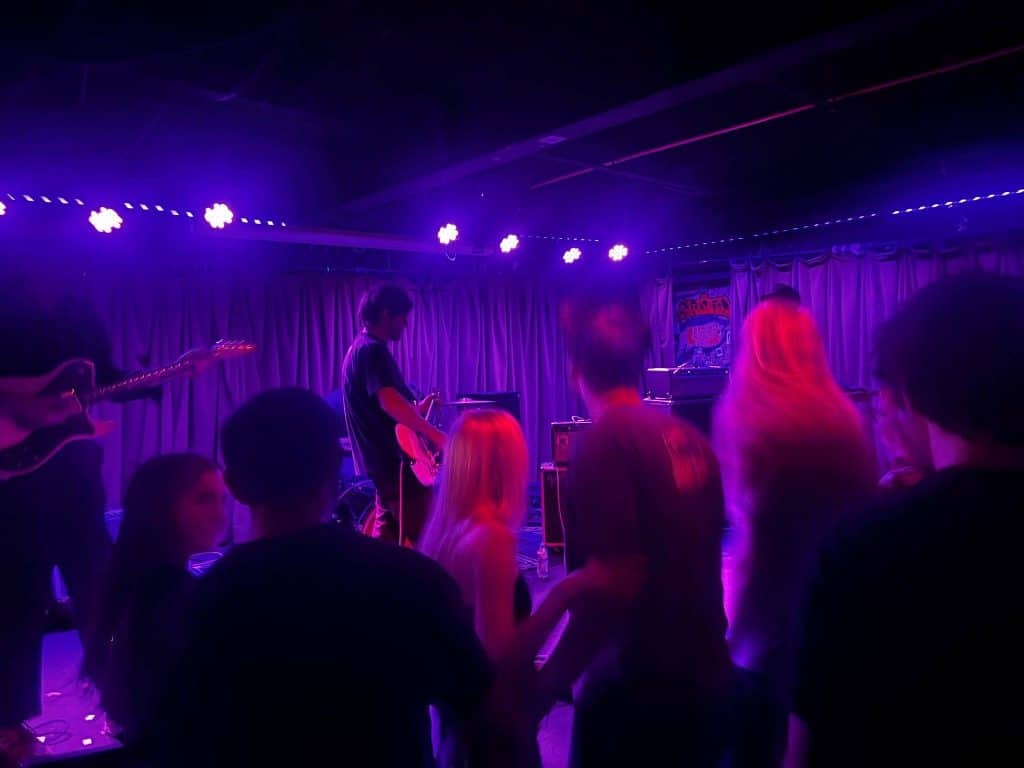
There is a saying in mosh pits: if someone falls, you pick them up.
That same principle has long guided Cleveland’s independent music scene. Venues share resources. Musicians recommend one another for gigs. Volunteers organize festivals and mentorship programs. When one part of the ecosystem struggles, others often step in to help.
But many of the people working in Cleveland music say that community can only go so far.
Even as local leaders celebrate music as a cultural and economic asset, artists and venue operators face rising costs, declining bar revenue, limited industry infrastructure and new financial pressures. The result is a paradox: Cleveland’s music scene remains vibrant, but the people powering it say the foundation underneath it is increasingly fragile.
For Rachel Hunt, marketing director at The Grog Shop in Cleveland Heights, one of Cleveland’s greatest strengths is the community itself.
“If you’re going to a lot of the same shows, you’ll see the same faces over and over again,” Hunt said. “It’s a more tight-knit community.”
That sense of connection has helped independent venues such as The Grog Shop and the Beachland Ballroom become institutions in Cleveland’s music landscape. Founded in 1992, The Grog Shop has been a staple of Cleveland’s music scene for over three decades. In 2003, it expanded but has kept its scrappy, raw character.
Unlike arena concerts, where fans watch from hundreds of feet away, small venues allow audiences to discover artists up close and develop lasting relationships with local scenes. In April, the Grog Shop hosted a packed performance by California punk band Together Pangea. On the surface, a packed room might suggest a healthy business.
A Saturday night in Coventry felt intimate and electric. The band might not be as big as Bruce Springsteen or Taylor Swift, but the fans were dedicated. Because of the small venue the crowd could mingle with band members and connect with the performers who put on such a show. People’s desire to hear something different and unfiltered was palpable. The energy the crowd brought reflected why Cleveland is known for its rock ‘n’ roll.
David Kennedy of Cleveland Rocks: Past, Present & Future said those venues remain one of Northeast Ohio’s greatest assets.
“The strength of Cleveland is the places like the Grog Shop and the Beachlands,” Kennedy said. “You have people who are serious, passionate music lovers who are combing the earth for the next new thing.”
Yet those same venues face growing economic challenges.
Like many independent venues, The Grog Shop relies on multiple revenue streams beyond ticket sales. Hunt said declining alcohol consumption has significantly altered the economics of operating a music venue.
“In the old days, you might not sell out a show, but you would make up that money at the bar,” Hunt said. “These days, it’s just not quite there.”
The decline in alcohol sales is not unique to Cleveland. According to a Gallup poll, 54% of Americans say they consume alcohol, the lowest percentage in 90 years. In 2025 Ohioans, bought 15.7 million total gallons of liquor, down from 16.4 million in 2024 according to the Department of Commerce.
Music venues and bars across the country have reported significant drops in alcohol revenue as younger consumers drink less frequently and increasingly seek non-alcoholic alternatives. Some venues viewed hemp-derived THC beverages as a potential replacement revenue stream, offering patrons an alternative to traditional alcohol sales. But Ohio’s recent crackdown on intoxicating hemp products has largely eliminated that option. A new state law that took effect in March restricts THC-infused beverages to licensed dispensaries, removing a product category that many bars, breweries and music venues had hoped could offset declining alcohol consumption. For independent venues already facing rising costs and tight margins, the loss of both alcohol sales and THC beverage revenue has further complicated efforts to remain financially sustainable.
The Business of Live Music
The financial pressures facing independent venues have become increasingly visible across Northeast Ohio.
This year, venue owners raised concerns about Cleveland’s admissions tax, arguing that additional taxes on ticket sales disproportionately affect smaller venues operating on narrow margins. Industry advocates have argued that while large entertainment corporations can absorb additional costs, neighborhood venues often cannot. The debate has become part of a larger conversation about how local governments can support cultural institutions while balancing revenue needs.
The debate over Cleveland’s admissions tax has become a flashpoint for independent venues already operating on razor-thin margins. Locally operated venues with capacities between 150 and 750 people paid a 4% admissions tax on ticket sales, a policy originally tied to broader city revenue needs. In May, Cleveland City Council voted to eliminate that tax for independent music venues and comedy clubs after venue owners and advocates argued the levy disproportionately burdened small businesses still recovering from the pandemic and adapting to changing consumer habits. Supporters of the change pointed to research from the National Independent Venue Association showing independent venues contribute hundreds of millions of dollars annually to the local economy while many struggle to remain profitable.
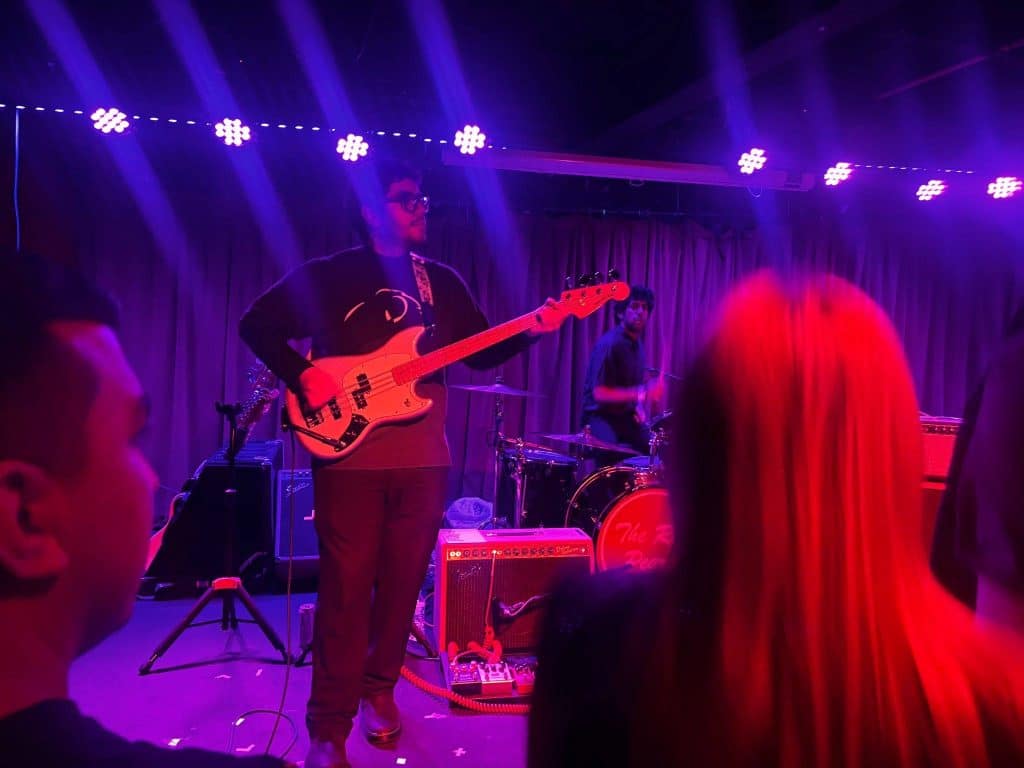
For Hunt, the issue illustrates how even relatively small costs can have an outsized impact on neighborhood venues. “It’s been a challenge to try to figure out how we can still keep operating, even though different challenges pop up, like the admissions tax,” she said.
While the Grog Shop itself is located in Cleveland Heights and was not directly affected by Cleveland’s tax policy, Hunt said venue operators across the region viewed the issue as part of a broader struggle facing independent music spaces. “That can definitely hurt smaller venues, because you’re not really making that much of a profit on the tickets that you’re selling,” she said.
The concern comes at a moment when new data shows just how important independent venues are to the regional economy.
According to research highlighted by the State of Live report, Cuyahoga County’s independent venues generated approximately $1.17 billion in economic output in 2024, including hundreds of millions in wages and spending tied to live music activity. Yet only about one-quarter of those venues reported turning a profit.
That disconnect has a significant economic impact but limited financial sustainability and has become a central challenge for the region’s music ecosystem.
Recognizing those challenges, Cuyahoga County launched Cuyahoga LIVE!, a task force bringing together musicians, venue owners, promoters and cultural leaders to identify ways to strengthen the local music industry. The initiative emerged from the Greater Cleveland Music Census, which surveyed nearly 2,800 musicians, venue operators and industry professionals, making it one of the largest music ecosystem studies conducted in the country.
County officials have described live music not simply as entertainment but as a significant economic development sector deserving public investment and policy attention. Early recommendations include improving audience development, increasing artist support, expanding industry resources and exploring healthcare and workforce initiatives for musicians.
For Kennedy, those conversations are long overdue.
Through Cleveland Rocks: Past, Present & Future, he helps oversee programs designed to fill gaps that traditional music industry institutions often leave behind. One initiative provides low-interest microloans and mentorship opportunities for musicians pursuing creative projects.
The nonprofit’s recent annual report highlights both the demand for those services and the organization’s growing reach. In 2025, Cleveland Rocks reported distributing more than $65,000 in direct funding to more than 220 local musicians, organizing more than 45 music-related events and reaching over 160,000 audience members through live and virtual programming.
But Kennedy argues that philanthropy and nonprofit programs cannot solve every problem.
What Cleveland lacks, he said, are some of the core business institutions that help musicians build sustainable careers in cities such as Nashville, New York and Los Angeles.
“We have only a couple of booking companies and management companies here in our area,” Kennedy said. “They don’t take risks on original music.”
That shortage can create a difficult reality for artists hoping to remain in Northeast Ohio. While Cleveland produces musicians and attracts audiences, many artists eventually leave in search of management, publishing and booking opportunities elsewhere.
The findings of the Greater Cleveland Music Census echo many of those concerns. Survey respondents described a region with a healthy and active music culture but one that still needs stronger support systems, including grants, tax incentives, audience development and industry infrastructure.
Kennedy believes larger institutions could play a greater role.
He points to cities such as Dallas, where sports organizations and major venues participate in local music licensing initiatives that generate revenue for musicians. Similar partnerships, he argues, could help keep more money circulating through Cleveland’s creative economy.
“We should be trying to recirculate as much money back into the community as possible,” Kennedy said.
The Road Ahead
The argument reflects a broader reality about Cleveland’s cultural economy. The arts contribute more than $1.3 billion annually to the regional economy, and tourism increasingly relies on cultural experiences to attract visitors. Yet artists and independent venues often operate with far fewer resources than the institutions that benefit from their work.
For now, Cleveland’s music community continues to rely heavily on its own networks of support.
That support can look like a nonprofit offering a musician a low-interest loan. It can look like a venue taking a chance on an unfamiliar touring act. Or it can look like fans showing up on a weeknight to see a band they’ve never heard before.
The community that built Cleveland’s music scene remains remarkably resilient.
The question facing local leaders, venue operators and musicians is whether resilience alone is enough.
We're celebrating four years of amplifying resident voices from Cleveland's neighborhoods. Will you make a donation to keep our local journalism going?
Author

Related Articles

The Movie Nerd Report: 3 film festivals this week in Northeast Ohio
Plus, see what other new releases and classics are playing at independent theaters around you!
Walking Cleveland’s past, one story at a time
“How much of Cleveland do I pass by without knowing the story?”

More than a card: Why Cleveland Public Library still matters in the digital age
September is National Library Card Signup Month. The Land talked with Cleveland Public Library Executive Director Felton Thomas, Jr. at the Main Library downtown.


