
Silent film in the present tense: Opinion
What happens when a century-old film is put back in a theater and given live music? Quite often, it stops feeling old.
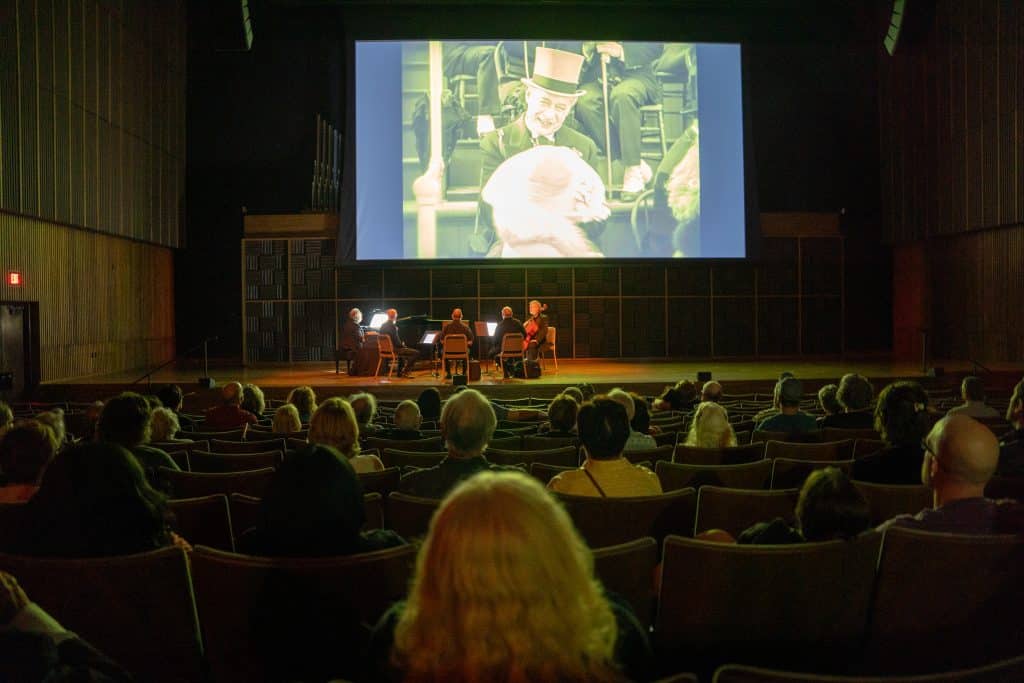
What happens when a century-old film is put back in a theater and given live music? Quite often, it stops feeling old.
Silent film is easy to caricature: pratfalls, heavy makeup, exaggerated acting. Because the form belongs so clearly to a particular period — roughly 1895 to 1930 — it can seem sealed off from modern life.
But that changes when you see a silent film as audiences originally did: on a large screen, in a darkened theater, with live musical accompaniment. Gestures that can look excessive on television become expressive and emotionally legible. A glance, a turn of the head, the way someone crosses a room — all carry more weight when there is no spoken dialogue competing for our attention. Movement begins to function almost like dance.
The music changes things too. A live silent-film score is not simply background music pasted onto an old movie. It is a performance happening in the room, responsive to the pace and emotional shape of the film. Different musicians, musical choices and performances can alter the humor, menace, tenderness, grandeur, or ambiguity of the same scene.
As a professional musician, I recognized something familiar in this: the organic qualities of chamber music, except that the moving image becomes another player in the ensemble.
Silent film also asks more of the audience. Without spoken dialogue, we watch faces, bodies, framing, editing, landscape and movement more closely. Music may guide the emotions, but it does not dictate a single interpretation. We become partners in making sense of what we see.
I probably first saw a silent film with live music at the Michigan Theater in my hometown of Ann Arbor, but the form really took hold of me in 2006 at the National Gallery in Washington, DC. A program there included René Clair’s 1925 film “Paris qui dort,” with a score performed by pianist and silent film scholar Marty Marks. Afterward, Marks told me the music had been compiled by a woman in France who had played for the film when it first opened. The past suddenly seemed much closer.
After moving to San Francisco, my husband and I began attending the San Francisco Silent Film Festival. What we heard and saw there made us rethink almost everything we thought we knew about silent film. Over time, I became something of an evangelist: more people should experience this.
That conviction led to another question: shouldn’t more young musicians learn this craft?
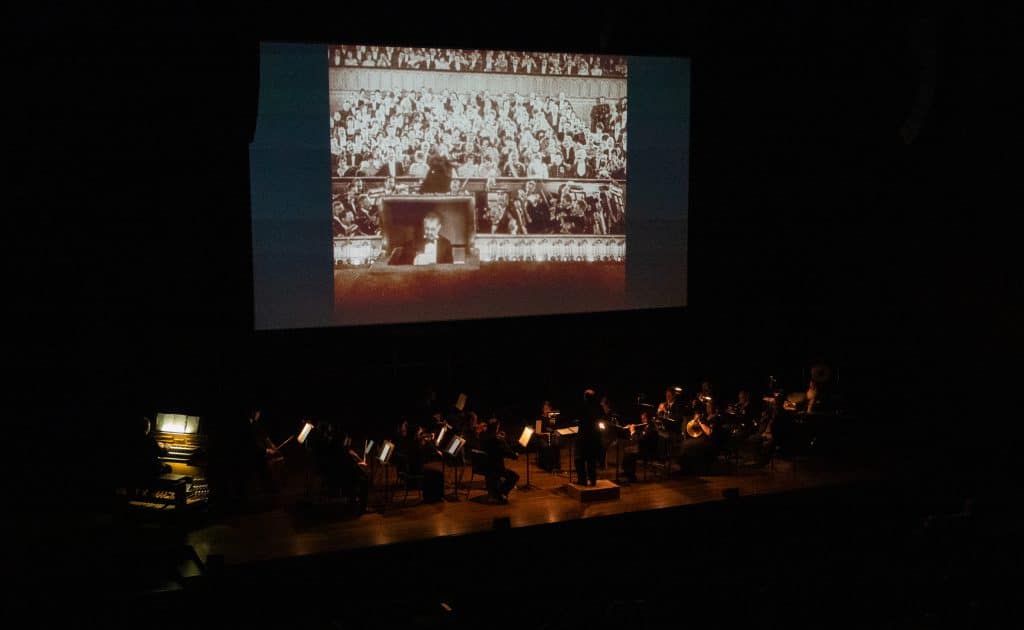
After moving to Cleveland and joining the Oberlin Conservatory faculty, I invited Rodney Sauer, music director of Colorado’s Mont Alto Motion Picture Orchestra, to work with students on a Winter Term project. Those performances, along with screenings at the Cinematheque and Oberlin’s Apollo Theatre, became the beginnings of the Cleveland Silent Film Festival.
Cleveland turned out to be an especially congenial home for a silent film festival with live music. The city came of age during the silent era and became an early center of film music. In 1913, the Sam Fox Corporation published “Sam Fox’s Music for Moving Pictures” by J.S. Zamecnik, a Slavic Village native and pioneer of “photoplay music” — scene-length cues written to accompany films.
That Cleveland connection remains central to our programming, as does the city itself. We have presented films in historic spaces including the Cleveland Public Library, the Masonic Auditorium, and the Cleveland Grays Armory Museum.
The aim is not to recreate the past exactly. It is to bring old films, live musicians, historic places, and present-day audiences into the same room.
When that happens, a century-old film can feel startlingly present.
The Fifth Annual Cleveland Silent Film Festival runs from September 15–20, 2026 at the Cinematheque (Cleveland Institute of Art), Cleveland Grays Armory Museum, and the Cleveland Museum of Art. For more information, see https://www.clevelandsilentfilmfestival.org/events.
We're celebrating four years of amplifying resident voices from Cleveland's neighborhoods. Will you make a donation to keep our local journalism going?
Author
Related Articles
The Movie Nerd Report: 3 film festivals this week in Northeast Ohio
Plus, see what other new releases and classics are playing at independent theaters around you!
Walking Cleveland’s past, one story at a time
“How much of Cleveland do I pass by without knowing the story?”
More than a card: Why Cleveland Public Library still matters in the digital age
September is National Library Card Signup Month. The Land talked with Cleveland Public Library Executive Director Felton Thomas, Jr. at the Main Library downtown.


