
At Fairfax Community Gym, ‘exercise is medicine,’ and free (no strings attached)
What if you had a trained sports medicine doctor and a team of certified exercise physiologists at your disposal to regularly measure your body and health and guide you through a customized regimen, tweaking workouts as you go?
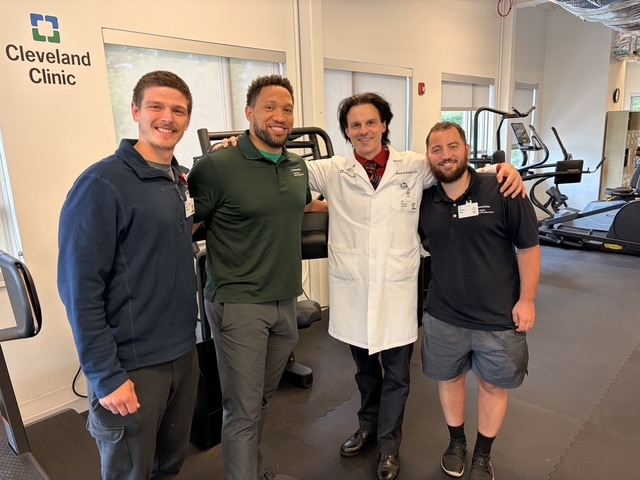
You’ve been told your whole life the same basics on wellbeing: exercise and eat right. Maintain a healthy weight and don’t smoke. Moderation in food and drink. But what if the throughline of all that advice — the exercise portion — came with a precise prescription of how to do it so that you, specifically you, can get to optimal health?
What if you had a trained sports medicine doctor and a team of certified exercise physiologists at your disposal to regularly measure your body and health and guide you through a customized regimen, tweaking workouts as you go?
It sounds like something only the likes of James Harden or José Ramírez could afford or enjoy. But what if it was free, and right in your backyard?
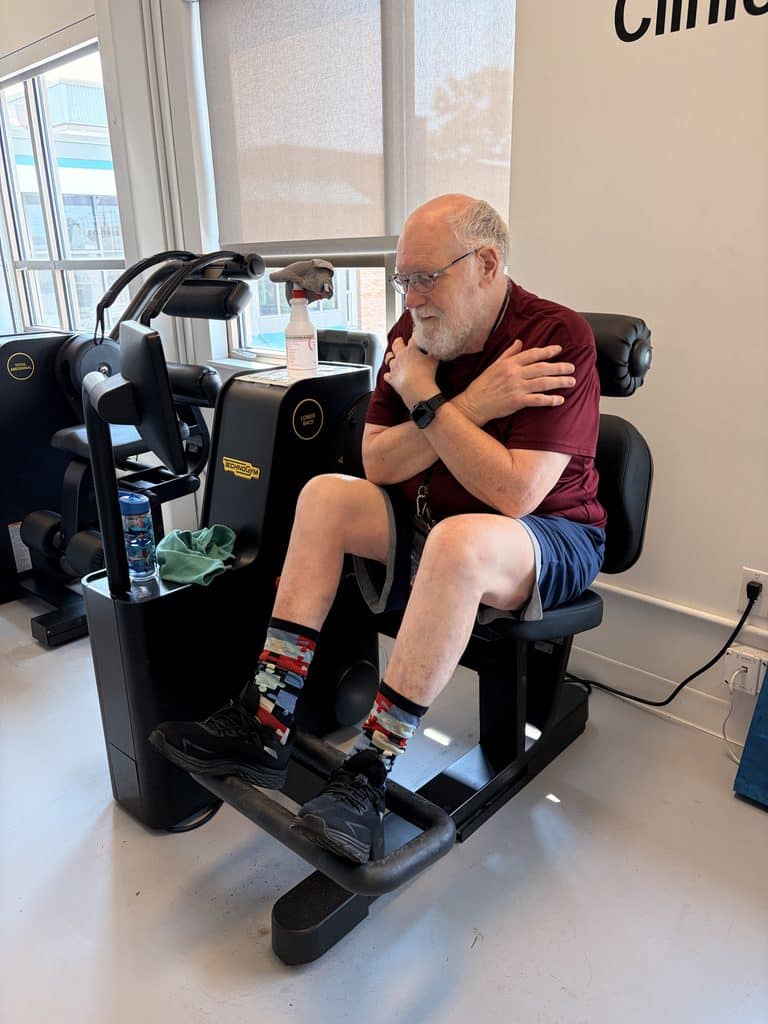
That’s the case at the Langston Hughes Community Health and Education Center, a Cleveland Clinic site in the city’s Fairfax neighborhood. The center offers primary care services, screenings, health education, behavioral health support and a new teaching kitchen. But a big draw the last few years has been the gym, stocked with state-of-the art exercise machines and a staff of exercise experts that will walk you through an initial evaluation, follow-up strength measurements and day-to-day assistance on getting to a regular workout routine that is informative, pain-free and social.
“This is really the type of gym that a lot of patients need,” said Matthew Kampert, a sports and exercise medicine physician and the driving force behind the Clinic’s “Exercise is Medicine” effort. “There are patients who need total joint [replacement], but they won’t be medically cleared for the surgery because of their weight. Some went their whole lives without working out. You can’t just tell them to eat less and exercise more — you have to have a structured program in an environment like we created, where we get you assessed, set up and then we reassess and actually show you how much progress you made.”
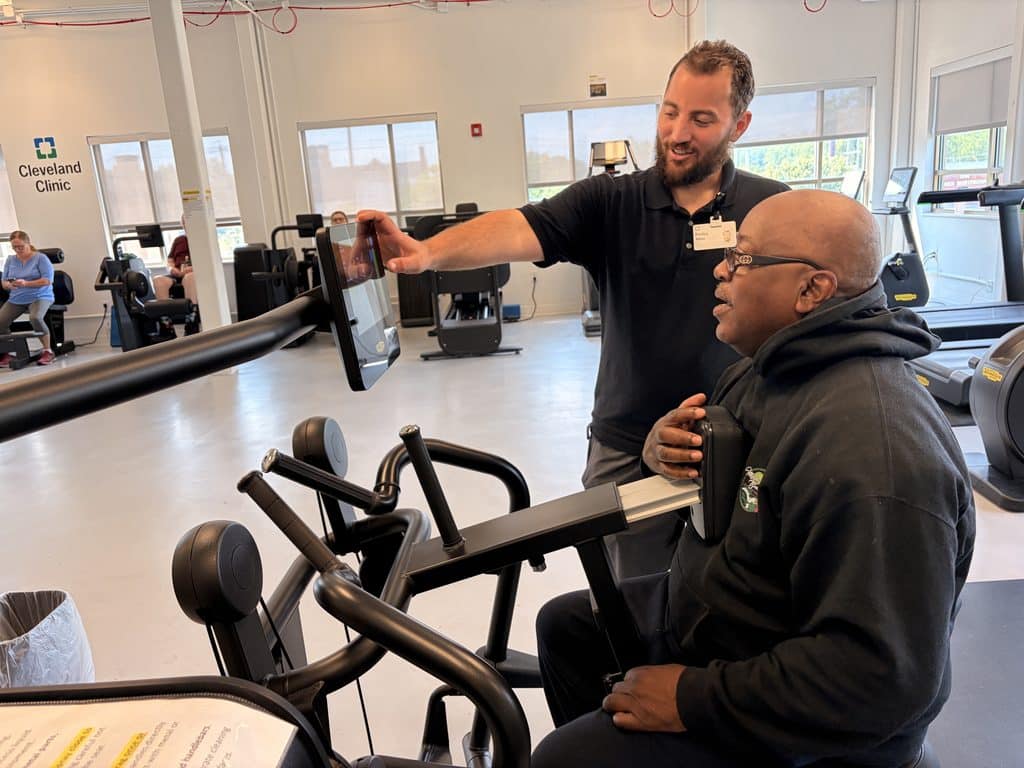
The Hughes gym is part of the Cleveland Clinic’s orthopaedic department, and within that, its sports medicine specialty, which works with some 50 high school athletic departments; at the college level for Kent State, John Carroll, Cleveland State and Walsh University; and with the Cavaliers and the Guardians.
There is a second such free gym within the Cleveland Clinic’s Lutheran Hospital in Ohio City, with plans in the works for a third location at Euclid Hospital in the latter half of 2027. The community of users has seen steady growth over three years, from a dozen or so to well over 1,000 members today. Kampert and those who work at the gym stress it’s open and free to all who can make it to the facility. All that’s required is an initial assessment, with three-month follow-ups.
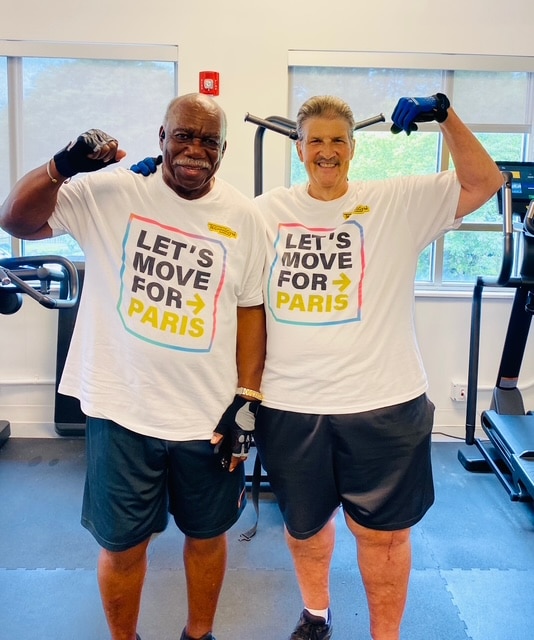
That said, “the gym is considered a community space and not clinical,” said Brad Heiss, an exercise physiologist at Hughes, and often the first person that new members meet. “We have the space, we created an atmosphere, but the people built it themselves. Anybody that wouldn’t necessarily go to a typical gym may feel more comfortable coming here, and then they feel so good about it that their family and friends decide to join them.”
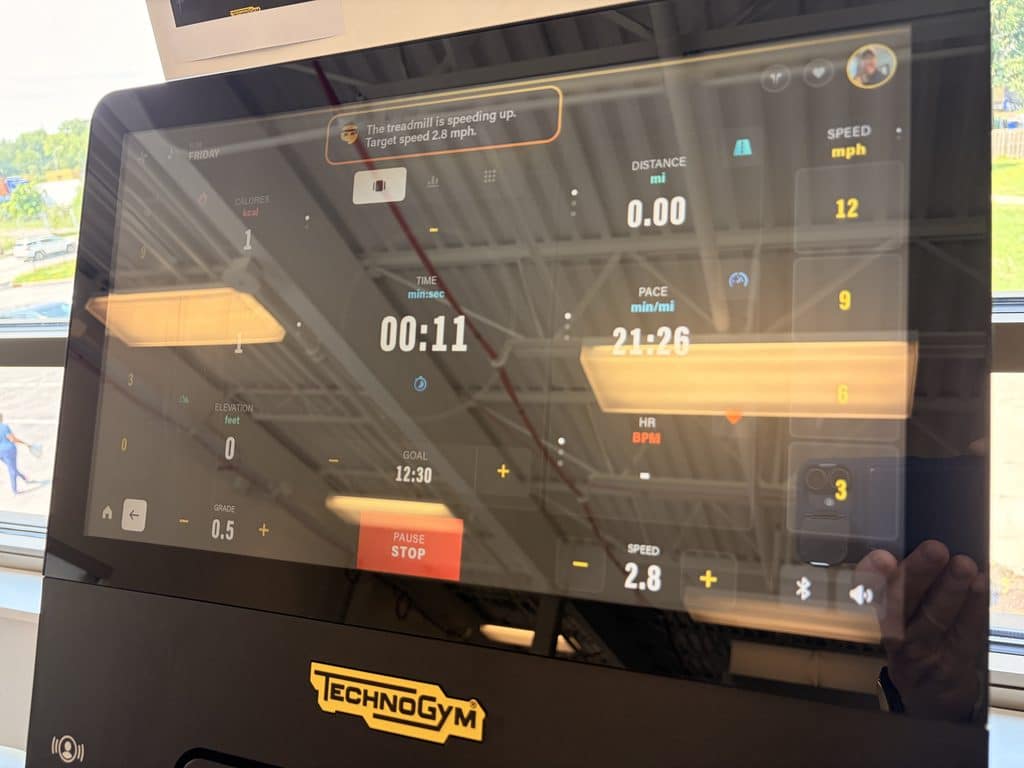
The equipment, by the Italian company Technogym, is AI-enabled, turning each user’s measurements and workout history into a continually changing exercise prescription. The initial assessment and subsequent workouts are tracked via the company’s “Biodrive” technology to deliver a detailed body composition and details on strength performance, balance, mobility and other parameters, which become part of the user’s digital profile. It’s all part of what’s called “adaptive training,” taking performance history into constant consideration, giving Kampert and the gym’s exercise physiologists more time for coaching and human interaction.
A chest press or an elliptical becomes a strength machine that remembers you. It knows your seat height, your prescribed number of reps and what you did the last time you were there. It can set the range of motion, automate the resistance and adjust the workload. The equipment allows the facility to capture outcomes in a way that is safe, and allows for Heiss and his colleagues to individually monitor clients without hovering.
“It expands our reach to where, in a regular day, if I’m personal training and [there are] single individual sessions, I may see 12 people in a day,” Heiss said, “But now I can handle the exercise of 70 to 100 people in one day. Because of the feedback it gives you, I can see everything they do, and I can actually help them a little bit more than I could just standing there with them.”
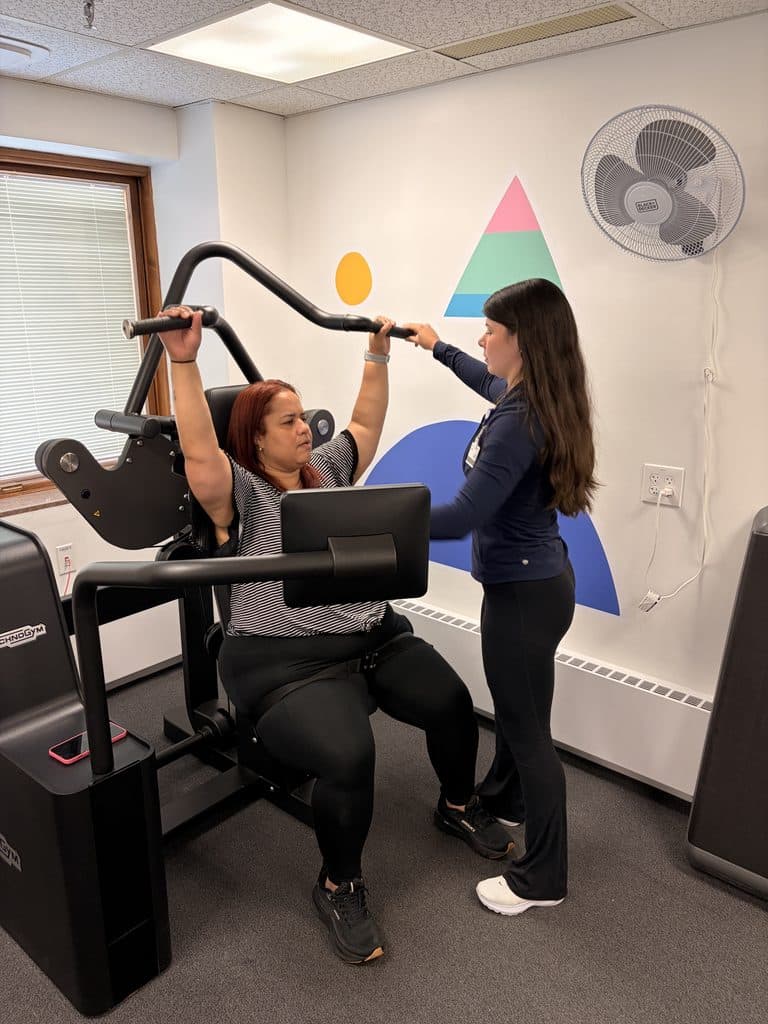
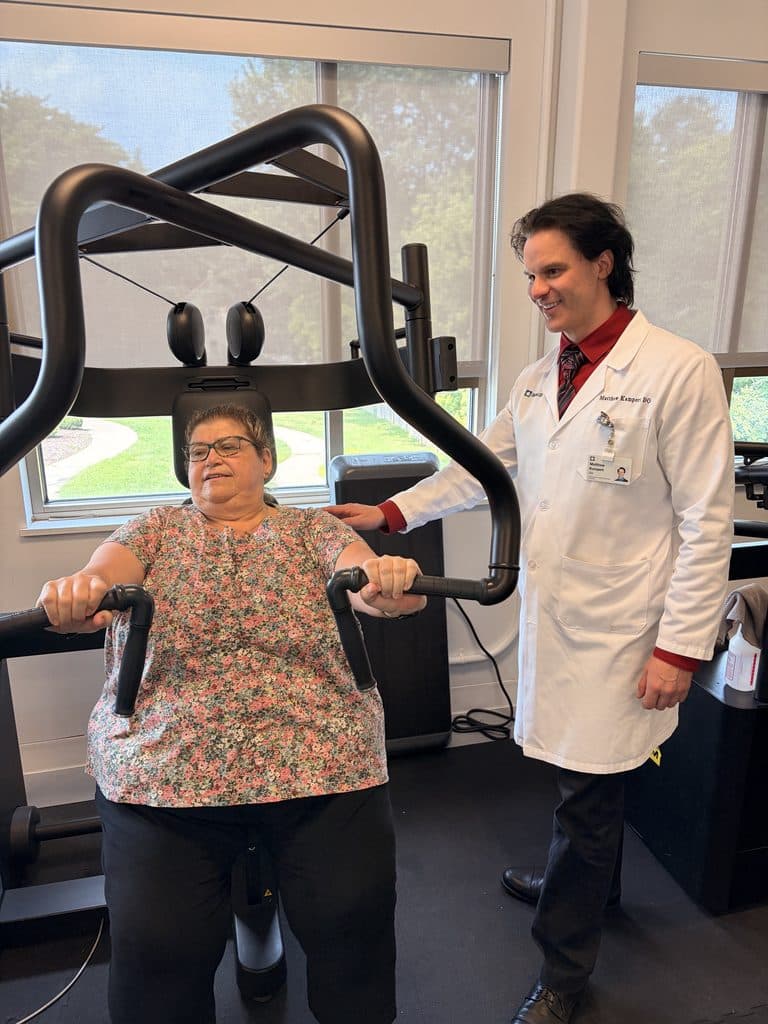
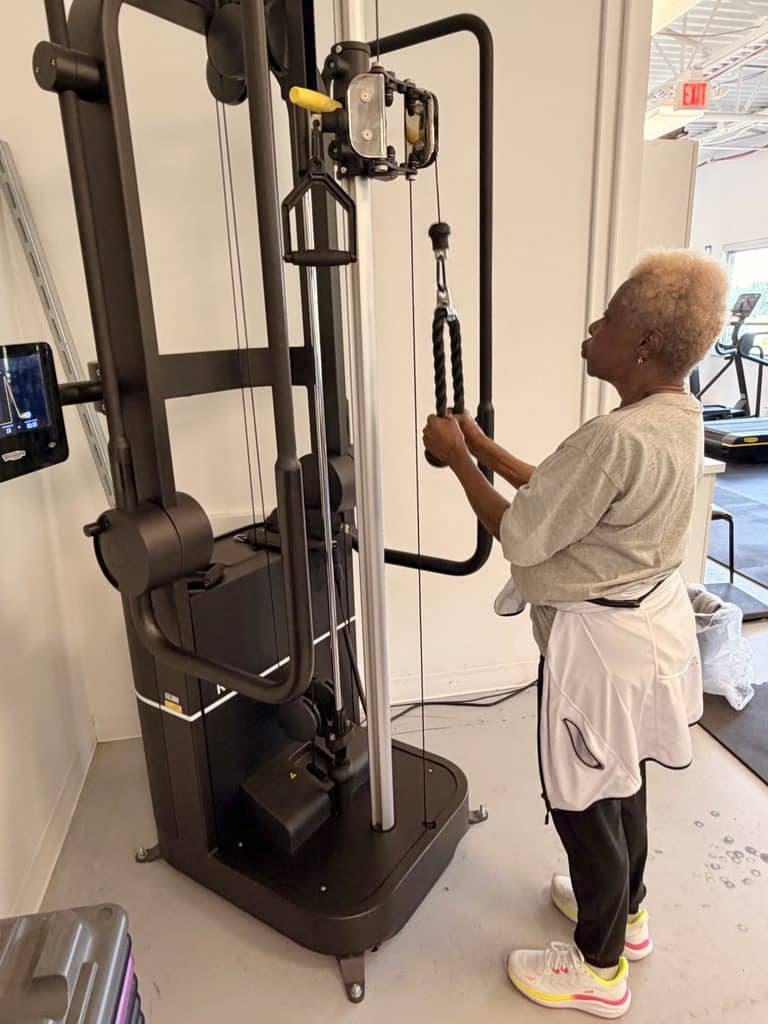
While the machines may be the latest and best of technology, the staff is the connective tissue. “You don’t only need the equipment, you need good exercise physiologists,” Kampert said.
‘The cutting edge’
A program at John Carroll University had a bachelor’s degree in that discipline, but Kampert worked with the school to develop a master’s curriculum while teaching an advanced exercise physiology course. The Carroll exercise physiology program has since become a sort of farm system for Hughes — it’s where Kampert met several of the gym’s main physiologists, including Heiss, who became part of the effort to turn a facility with a few broken-down machines and the odd yoga class into something closer to a modern laboratory for everyday health, and a place where doctors and nurses work down the hall.
“This is, to my knowledge, the first place in the country that had [Technogym’s] Biostrength machines free for community members,” said Chase Holmes, a Cleveland State grad and an employee at Hughes for more than a decade. With his fellow exercise physiologists, Holmes said they are “on the cutting edge of a whole new field.”
A rewarding part of the job is turning people who don’t want to be there into evangelists for the place. “People come in, they’re very hesitant, they’ve never worked out … they might even be scared,” said Tom Marjak, another of the exercise physiologists. “And then through coaching and teaching, and not just telling them what to do” they come to understand the process.
That leads clients to use the gym “as a filter to other resources,” as Holmes put it. “In this building, we also have other opportunities.”
One of those, he said, will be the new community kitchen due to open in the building later this year. Holmes said that guest community chefs will be teaching nutrition and recipes that are “realistic” in terms of obtainable ingredients from nearby supermarkets.
On a daily basis, Heiss said he encounters people who have changed not just their fitness, but their total wellness. They’re following up with their doctors to lower medication doses or get completely off of them. They’re following nutrition guidelines they previously had trouble with. Many clients at the Langston Hughes and Lutheran Hospital gyms are getting significantly stronger, losing weight, and building and maintaining muscle mass.
But the best results, Heiss said, are the ones he doesn’t see.
“They are telling me, ‘I was able to run around with my grandkids today, or I was able to go bowling. I was able to actually participate in activities that were not a part of my life.’ That’s the most remarkable thing.”
The distinction from a normal commercial gym that someone might join as part of a New Year’s resolution is important. This isn’t simply a place where Clevelanders can come in, climb onto a treadmill and watch videos while they work up a mild sweat. The goal is to take the guesswork out of working out, and change the way people think about it. And with the new gym’s success came more Clinic providers to the Langston Hughes facility, Kampert said.
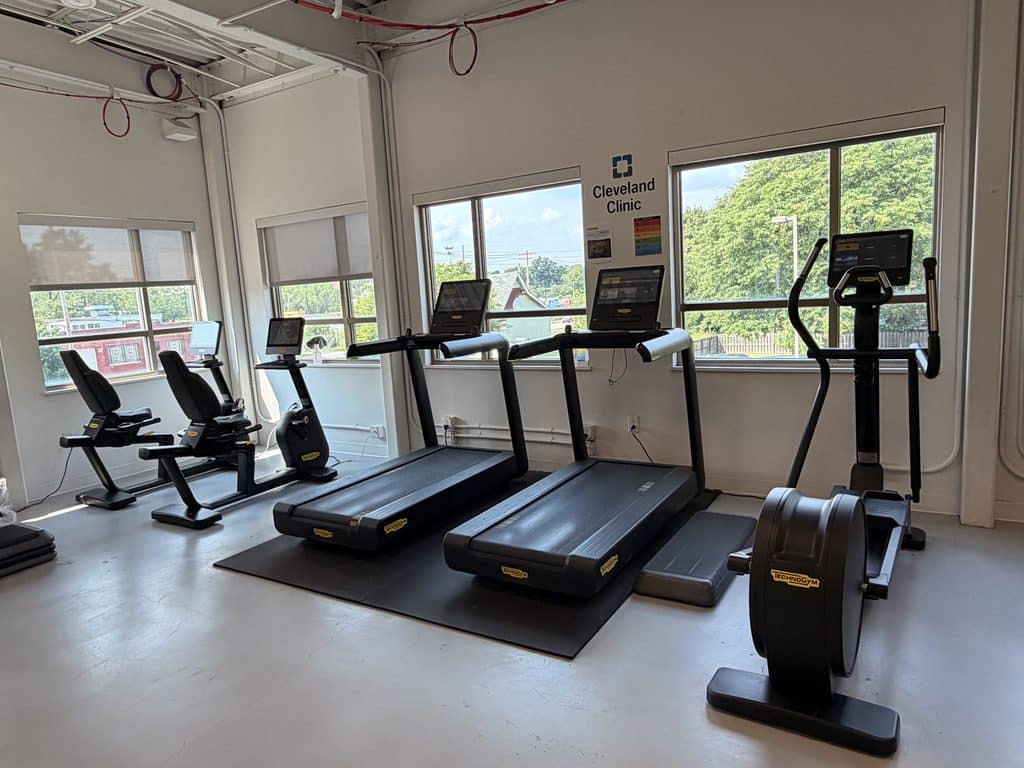
The emphasis on overall wellness and strength “reminds people that the scale is not the most important thing,” said exercise physiologist Hailey Mekruit, now working at the Lutheran Hospital location. “There are obviously certain health goals, and weight is a part of that, but there’s so many more important things, like how they feel in their daily living. To be able to be around for their family is really rewarding.”
The exercise physiologists all can point to clients who, after a year or two of working out (or even just six months) profess that they are now the strongest they’ve ever felt. That’s the case for Nick Connavino, who said he’s been overweight his whole life, and never maintained any kind of regular exercise. Speaking the day after his 70th birthday, he called the staff and his own experience of transformation over the past two years “absolutely amazing.”
“My doctor said, and I quote, ‘Your knees are shot.’ When I got in here, just walking across the room was difficult,” he said. But improvements to his pain level were evident to him just a couple of weeks after starting at Hughes. Now, two years in, accompanied by dietary changes, “I would say that I am in the best health I have been … in … my … life. I have never exercised this consistently … in … my … life.”
Connavino said he has used the Hughes gym to prepare for two successful knee surgeries. The workouts before the procedures helped him take off the necessary pounds and build muscle to help him recover. In that, he represents many other patients who came in to shed pounds for surgery, then stuck around.
“I’m so happy with it, I can’t even tell you,” said Margarete Ziegler, a Willoughby resident who is currently working toward her own knee surgery. “It’s a great place, and these machines are just amazing.”
Ziegler said she is also grateful for the personal guidance from Kampert, and it is for community members like her that he went to medical school, he said. After college, Kampert did not harbor dreams of being a doctor. He said his dream job was to be an exercise physiologist, but he grew frustrated with how stratified the exercise space was between that discipline, physical therapists and athletic trainers, along with the way each group could or could not bill a patient’s healthcare insurance.
“Every step along the way was to do what I’m doing, because this just didn’t exist,” Kampert said. The treatment of weight loss, diabetes or hypertension is the realm of primary care physicians, he explained. But the exercise component is where a sports medicine doc can be essential, because a lot of patients have musculoskeletal problems, and those that don’t may well develop them. Diagnosing the need for imaging, an injection, rest or working through a problem in some other way can save a lot of pain, time or both.
The grant, the insurance
How can it all be free? The short answer is that the Cleveland Clinic received a seven-figure philanthropic donation from an individual for Kampert’s vision. That was a godsend for the Hughes facility, but an additional grant was donated after the donor heard about what is called the “BRIDGE-PROJECT,” or “Bridging research and institutes through digitally guided exercise.”
And though the gift got the project off the ground, “philanthropy is not going to be sustainable or scalable,” Kampert said. “My goal is to get exercise covered by insurance, so that these programs can grow. You have to have the knowledge and the insight to write an exercise prescription, just like you would any other prescription. If you can show objective outcomes and improvements in compliance, this should be covered.”
Like any other medication, prescribed exercise should be based on a specific “dose,” Kampert said, followed by an assessment of the effect and a further titration of that dosage. And it “should be respected and reimbursed,” particularly since exercise is often much more effective than pills.
Even with pills, or injections, outcomes are going to be better with physical activity. If a patient is taking a new GLP-1 medication such as Ozempic, for instance, about 30 percent of the weight lost is going to be lean muscle mass, Kampert said. So, taking strength exercise as an accompanying medicine makes even more sense — the latter dose is going to help the former.
Further, Heiss pointed out that the traditional model of insurance-approved physical therapy is often not nearly enough for what’s needed for patients undergoing cardiac rehabilitation, for example.
“You get them to a point where they only have so many sessions, and then they are on their own,” Heiss explained. “Here, we have people that have been with us for three, almost four years. They’re not being phased out, like physical therapy or cardiac rehab where you only get so many visits with your insurance. Now they have the opportunity to not just meet their goals, but go beyond what they could have imagined.”
To get to a mainstream acceptance of exercise as medicine, barriers that separate medical specialties and exercise programs must be broken down, Kampert said. A patient might have arthritis, complete cardiac or pulmonary rehabilitation, or be recovering from cancer. Rather than treating exercise as a separate service, Kampert sees a system in which exercise becomes part of the continuum of care, tailored to the needs of each patient.
Specialists are great, he said, and often necessary, “but instead of having siloed care, you really can break down some of those barriers and bridge the gap between the different specialties, because different patients have different needs.”
Working out with the Cavs
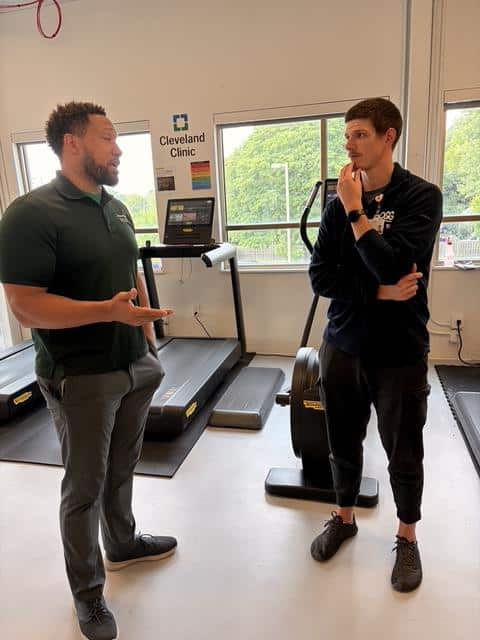
That philosophy will be put into a more high-profile trial when the Cleveland Clinic opens its Global Peak Performance Center in 2027. The facility, being developed as the Cavaliers’ new training center, will contain more Technogym equipment and other sophisticated testing capabilities, among other bells and whistles. Kampert sees its purpose extending beyond professional athletes.
“Patients who are in the community should get the same world-class care as our elite athletes,” he said. The center is expected to offer limited public access at certain times, meaning a retiree in Fairfax recovering from a hip replacement or a heart ailment might be using the same equipment and health care team as Donovan Mitchell and Evan Mobley.
But Kampert also envisions something even bigger: using the center in tandem with the community gyms as a source of expertise and data that can be shared. “If someone gets assessed, we could deliver that exercise prescription digitally to the gyms in the community,” he said. This would contribute further to the case for exercise being covered by insurance.
The long-term goal, he said, is to expand the model across Cleveland Clinic’s network, including its facilities in Florida and overseas, and eventually get other U.S. health systems, or even a national network of YMCAs, interested in adopting it. That could result in a national data registry tracking how individualized exercise prescriptions affect people’s health over time.
In Kampert’s vision, then, the gyms are but one piece of a much larger health-care system in which exercise is measured, prescribed, monitored and tweaked.
It’s where the gym is no longer a place to dread, or to feel bad about how you look, or worry about how long it’s been since you stretched your hamstrings. The gym is instead the medicine, aided by new technology, and the medicine in turn is social, in the old-fashioned sense of the word.
“There are people here that wouldn’t have ever considered stepping foot in a gym,” said Heiss. “People who have never done any form of weight training or resistance training before, to where now they’re dedicated, coming two, three, four days a week.
“It’s now the highlight of their week.”
Keep our local journalism accessible to all
Reader support is crucial as we continue to shed light on underreported neighborhoods in Cleveland. Will you become a monthly member to help us continue to produce news by, for, and with the community?
P.S. Did you like this story? Take our reader survey!
Related Articles
Choosing life: Seneca Bankston’s story of suicide, faith and hope
“Seneca’s story reminds us that mental health challenges can affect anyone. It also highlights why it’s so important for people to know they don’t have to face those challenges alone.”

Haus of Transcendent hosts healthcare directory with focus on Cleveland’s Queer community
“It also serves as a one-stop shop for people who do not know what the link is to access the Medicaid portal and other critical government programs.”
Northeast Ohio therapy dog organization lends listening ear to trauma victims
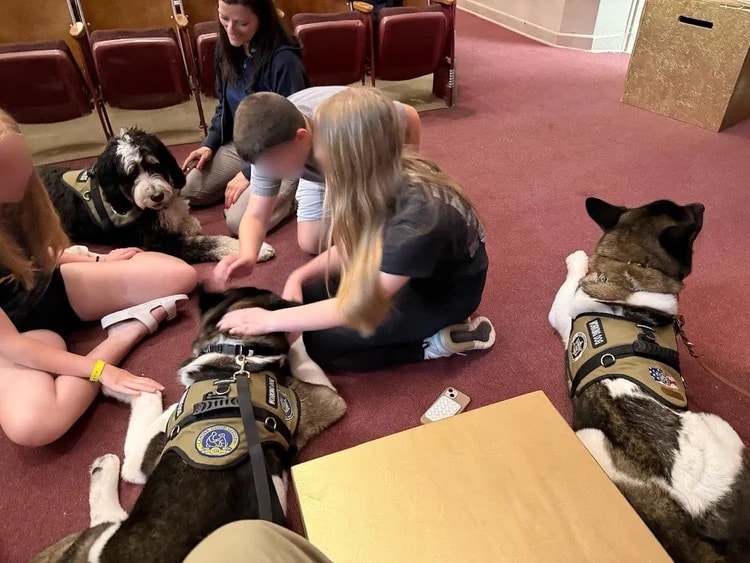
While visiting Valley Forge High School in Parma Heights the day after an 18-year-old student took her life in the schools’ cafeteria on April 20, Shirley Graziano, the president and founder of Crisis Canine Corps (CCC), and therapy dog Zodiac noticed two young girls in the library.


