
Northeast Ohio schools’ composting merges sustainability, student action
Schools throughout Northeast Ohio are turning food scraps into productive, environmentally-beneficial soil.
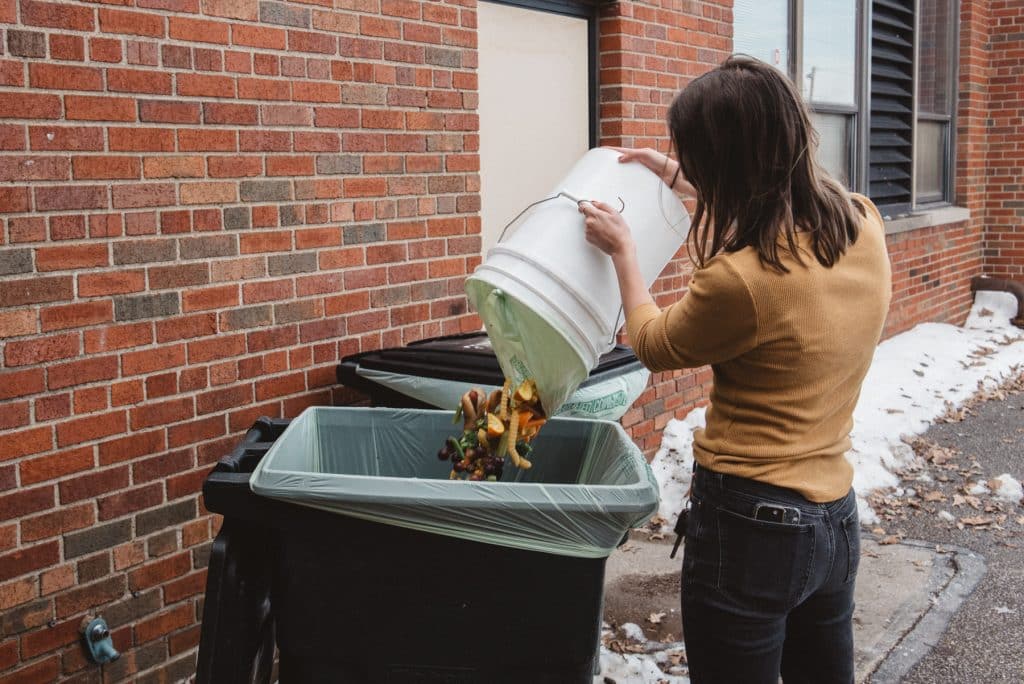
Dozens of Northeast Ohio schools spent the year composting food scraps in their lunchrooms with Rust Belt Riders (“RBR”), a worker-owned co-op servicing about 5,000 households and 300 commercial businesses throughout Cuyahoga and Lorain counties.
School may be out for the summer, but the food scrap journey is just beginning. After each weekly pick-up, the food scraps go to a processing partner in Lorain County where they are composted through thermophilic static composting. RBR Director of Hauling Robert Kurtz, explains the process. The food scraps are put in piles to decompose. As the food scraps break down, nutrients are released into the compost and temperatures rise. It takes consistent temperatures of at least 131 degrees fahrenheit to break down the food waste and kill any weeds, seeds or pathogens in the mix. The food scraps become nutrient rich soil in three to six months. RBR’s brand is called Tilth Soil and can be used for a variety of purposes including garden beds, house plants and farming.
Bennett Steidinger (Population Education) writes that organic material, like food waste, does break down naturally, but only when the right conditions are met. Composting requires care, oversight and plenty of oxygen. In environments without much oxygen, like a typical landfill, decomposing food waste creates methane, a strong greenhouse gas.
Each year, the RBR team diverts about 4,000 tons of food waste from landfills and converts it into soil, creating a sustainable circular economy. “We’re building a future where food scraps become living soil” explains Kurtz.
Composting food scraps into soil creates a circular economy and a memorable learning moment for students
Kurtz used Heinens, a grocery store chain, as an example. Heinens gives RBR thousands of pounds of food scraps a week. These food scraps are composted. They become soil. The soil goes to local Amish farms. The produce grown on the farms goes back on the grocery store shelves.
This example is a memorable moment in RBR’s school education program. Multiple educators mentioned the benefits of students understanding where their food comes from. Parma City Schools even has a position called the Farm to School Coordinator. Brittnee Rourke holds the position now and oversees a wide range of program initiatives including menu development, taste tests to introduce young students to new fruits and vegetables, cooking in the classroom, outdoor gardens and, of course, composting.
With 12 schools across the Parma City School District, Rourke explains how Farm to School projects in different buildings intersect. Dentzler Elementary School students compost their lunch scraps. Rust Belt Riders donated Tilth Soil this year. The soil will go to the outdoor garden sites at Green Valley Elementary and Pleasant Valley Elementary. Those students will grow produce in the soil created from compost. Eventually, Parma students will even cook with the produce grown on site.
“It paints the picture for kids that everything we do in our daily lives when it comes to food, even the scraps that we have, all root back to the food that we’re putting into our bodies and how we can grow it,” explains Rourke.
Rourke’s predecessor launched the composting program at Dentzler Elementary. Parma School’s second composting program at Thoreau Park Elementary will launch in the fall. With 12 schools in the district, Rourke acknowledges the budget as a major challenge for expansion. “You have to make sure you allocate your time and also some of your budget,” she says.
Although not many districts have a Farm to School Coordinator, there was widespread agreement that composting in schools benefits the students as well as the environment.
Student leaders at John Marshall transform lunchroom culture through their new composting program
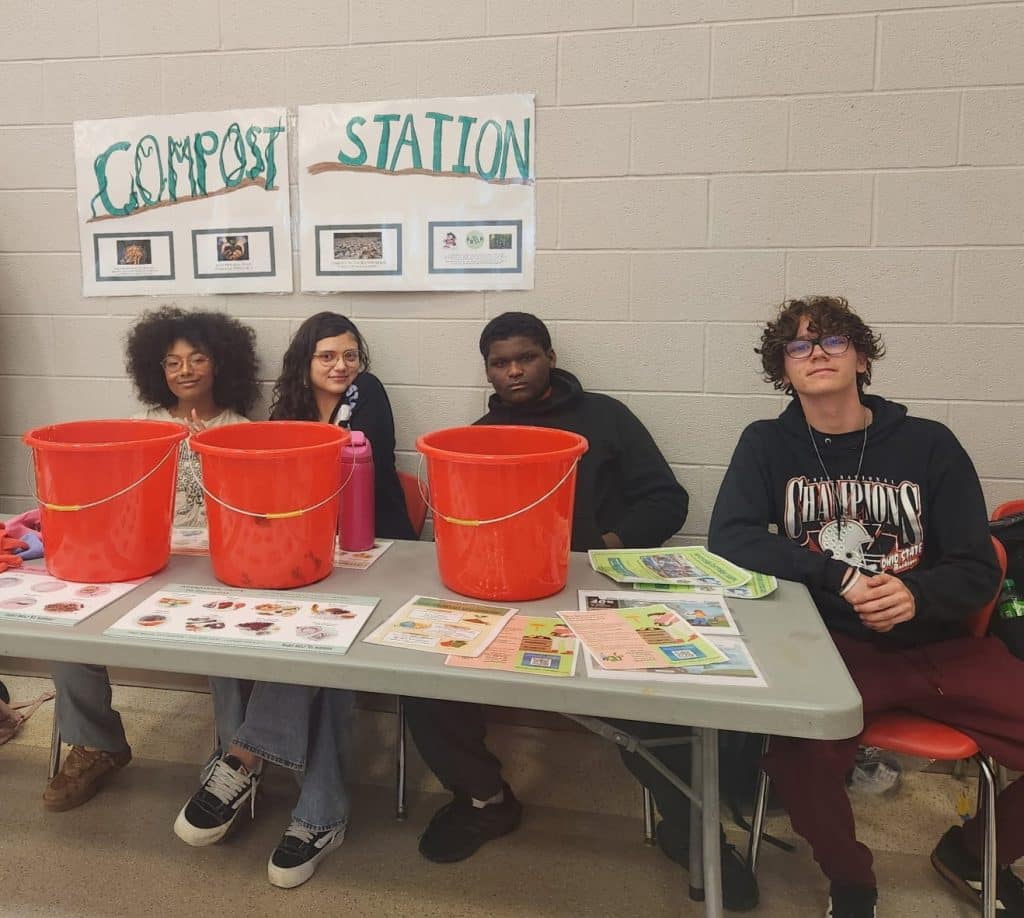
Within the Cleveland Metropolitan School District (CMSD), students at John Marshall High School launched a student-driven composting program this spring after years of careful planning.
During the 2022-2023 school year, three John Marshall AP Environmental Science Students laid the groundwork that would eventually launch the school’s composting initiative. In Mary Kennedy-Brown’s AP Science Class, the students secure their own grant funding and act on sustainable projects of their own design. Examples include work in their outdoor classroom, tree give-aways, pollinator spaces and composting.
Students researched composting. They completed a waste audit to learn how much food was being thrown out. They even presented their findings to school and district administrators, but the project took time. Kennedy-Brown explains the main challenges were costs and getting the right administrators in the room, especially as CMSD’s Building Brighter Futures plan will merge the three campuses that share John Marshall’s building in the coming school year.
On May 1, 2026, John Marshall Environmental Club students successfully launched their school composting initiative. Student compost monitors, trained by RBR, walk around the lunchroom and collect the food waste from every student. Students sign up for shifts and keep record of their service hours, a district requirement for graduation. Environmental Club students manage this process themselves.
Kennedy-Brown noticed a lunchroom culture shift just two weeks into the program. “They’re thinking about how they can really make composting and being more sustainable in general part of the school culture. I’m really proud of them,” she explains.
The student body knows the composting rules. Interest has grown in being a compost monitor. Students are even focusing on the bigger goal of reducing food waste all together. Kennedy-Brown explains Environmental Club students collect uneaten packaged food to share with others and are thinking ahead to how food waste data might one day influence menu choices.
Composting is an action even young students can take to become global citizens
Shool culture and student actions play a large role in Lakewood’s composting program too. The district’s vision of a Lakewood Ranger includes a competency in global citizenship. Dr. Christine Palumbo, assistant superintendent of Lakewood City Schools, highlights composting as an achievable way for even young students to reach that goal. “When we talk about a kindergartener or 1st grader being a global citizen, sometimes you think that’s a big stretch for a 5-year-old or 6-year-old, but this [composting] is a really tangible example of a way they can grow and achieve that competency.”
Lakewood High School, Grant Elementary and Hayes Elementary all run composting programs in their cafeterias. Chef Corti originally introduced the idea to the Lakewood City School District’s Green team several years ago to incorporate composting in her West Shore Culinary Arts Program and family and consumer science classrooms. A teacher, Julie May, took the lead on launching composting at Grant Elementary School and the PTA brought composting to Hayes Elementary School. Dr. Palumbo shares that other buildings have expressed interest too, but aren’t yet ready to launch.
The Lakewood school district supports composting, but does not require it. Dr. Palumbo sees the benefits, but also understands the time and commitment a composting program takes.
Launching a school-wide composting initiative takes significant support, planning
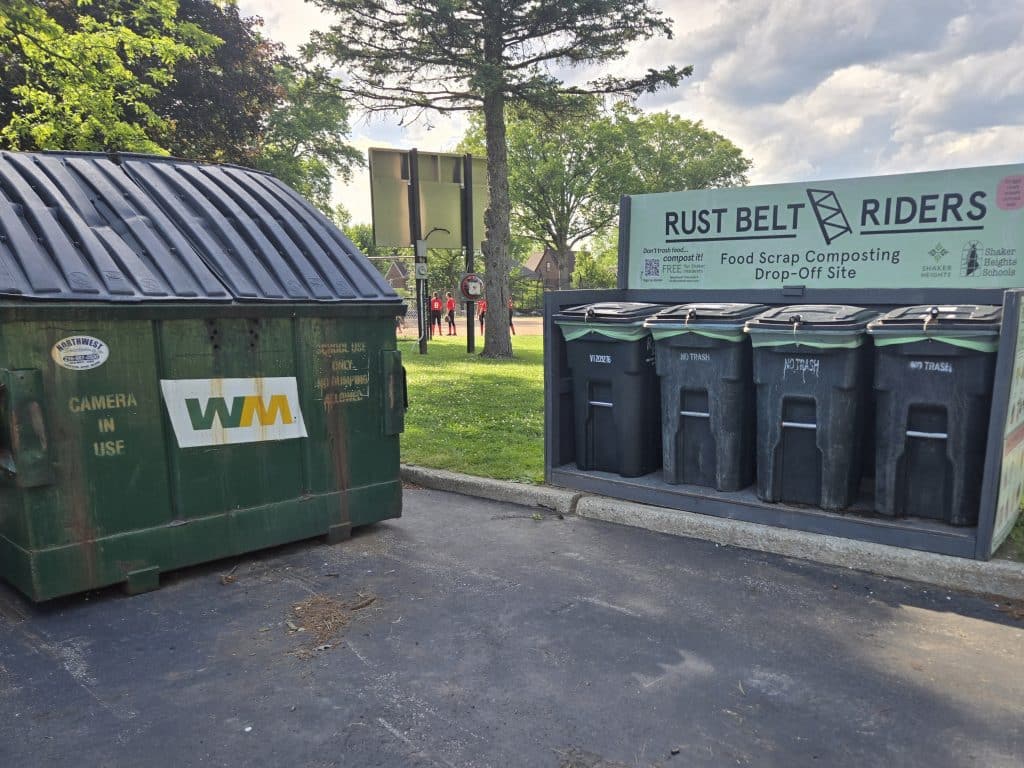
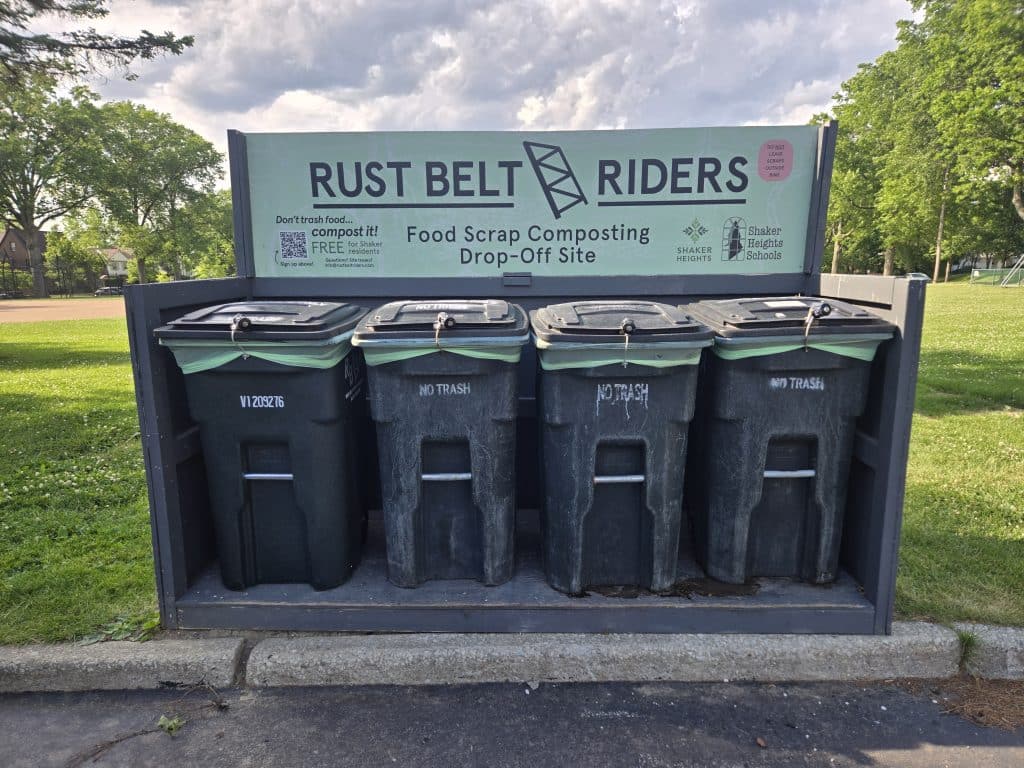
Dave Boyer and Sean Brown, director and assistant director of buildings and grounds with the Shaker Heights School District, provide further insight on the logistic challenges of composting. All five Shaker elementary schools have composting in their lunchrooms and collectively diverted 9.73 tons of food in 2025. RBR taught staff and students how composting works and Brown believes program momentum can be sustained over time through ongoing education.
Boyer and Brown emphasized the program needs to be managed and it would not be possible without the consistent support and oversight of the custodial and food service teams in each building. These individuals collect the food scraps, coordinate bin pick-ups, keep everything clean and help the students avoid contaminating the compost. If the compost bin is contaminated with regular trash, it cannot be composted and instead is thrown out in the dumpster.
In addition to collecting food scraps at lunch, each of the Shaker elementary schools also serves as a community drop-off site paid for by the city and available to all Shaker residents. This community drop-off initiative launched at Lomond Elementary in 2023 and has since expanded to every elementary school building in the district. There were some growing pains as the surrounding community discovered the smell of compost bins, but Boyer, Brown and their teams supported the program to keep it going. Boyer explains the biggest challenge is managing the expectations and communicating with those involved.
Rust Belt Riders composting services available throughout Cuyahoga County
Each school interviewed took a slightly different approach to find the intersection between environmental action, student achievement and program logistics. Themes included farm to school, student leadership, student service hours, global citizen skills and even community drop-off sites.
To find your own entryway, consider composting, gardening with Tilth Soil, supporting your local school, shopping for local produce or reducing your own food waste.
RBR operates 52 drop off points throughout Cuyahoga County. Drop-off services are available for $12 per month. The cities of Shaker Heights, Cleveland Heights, and Beachwood provide composting as a service at no charge to residences.
We're celebrating four years of amplifying resident voices from Cleveland's neighborhoods. Will you make a donation to keep our local journalism going?
Author

Related Articles
Leave the lights out for them: How a Cleveland group is trying to save the birds
Downtown Cleveland’s mass of lights and buildings can be deadly for birds. Luckily, there’s a local group trying to save our flying friends.
Creating the perfect pollinator garden this spring in Lakewood
Here’s how you can help butterflies, bees and other pollinators this spring and summer.
World-famous birder urges inclusivity, conservation during Cleveland talk
The noted author and birding enthusiast – famous for his racially charged encounter with a woman in New York’s Central Park – may have been preaching largely to the choir, but his message of inclusivity was welcome and deeply inspiring nonetheless.


