
After Heinen’s, who will still bet on downtown Cleveland?: Opinion
Who is still willing to put their money where their mouth is and bet on us?
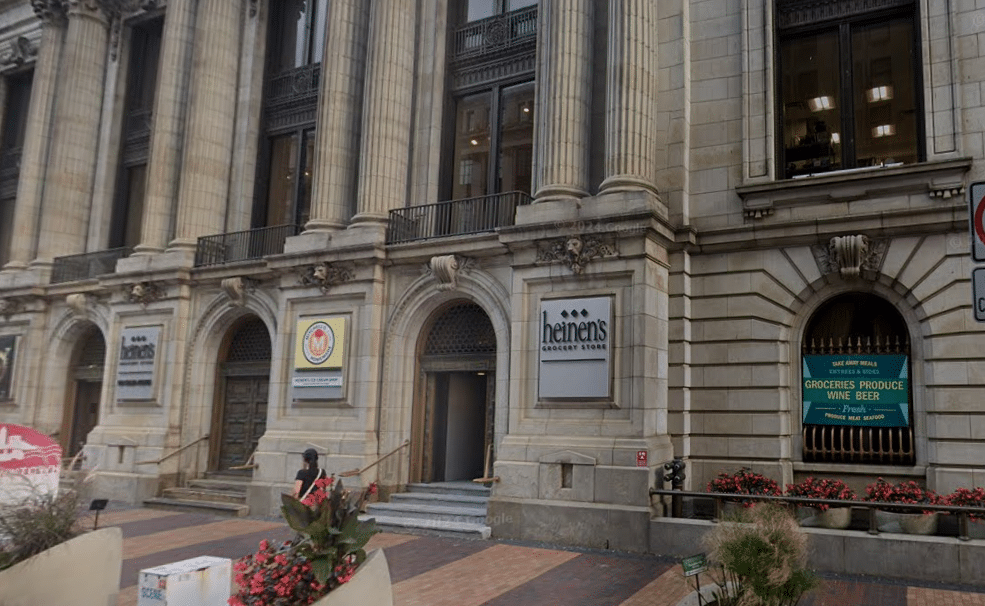
I keep going back to that Heinen’s rotunda.
I know it sounds a little weird. It is, after all, a grocery store. But anybody who has spent time downtown knows it was never just a grocery store. It was one of those places you showed visiting relatives: “You have to see this.” The old Cleveland Trust building, that dome, the light, and the strange pleasure of buying bananas in a room that felt like another era.
And now Heinen’s is shuttering its downtown store at East 9th and Euclid.
My office is downtown, so most days when I get in early, the streets are pretty dead. Not just quiet, almost abandoned. A delivery truck rumbling by. Some guy with coffee. A security guard. A vacant storefront waiting for someone to finish the sentence.
So when a grocery store like that closes, you start to wonder:
Who is going to take a chance on downtown now?
Cleveland has been asking that question for decades. Who is going to stay? Who is going to open the next shop? Buy the old house? Take a chance on the block everyone else has given up on?
I first started thinking seriously about that question in Moscow.
Three weeks after I passed the Ohio bar exam, I touched down at Sheremetyevo on an Aeroflot flight. It was 1993, a weird time in Russia. The Soviet Union had collapsed, but the old system was still hanging on. I remember the airport: soldiers with rifles, people in heavy coats, faces trained by waiting.
I was young, unemployed and trying to look like I had made a sensible decision.
Between you and me, I was just as lost as anyone.
My future office was a few blocks from the Kremlin on Ulitsa Gertsena. It was not the glamorous setup I had imagined: cold walks, bad phone lines, confusing rules and the eternal quest for the right stamp. One office would send you to another, then back again, and by then the rule might have changed. Russia made even the simplest errand feel like a law degree.
But the people.
That is what stood out. They were world-weary, suspicious at times, dry-humored. But they were moving. Young entrepreneurs, engineers, traders, interpreters, would-be business owners with half a plan and a winter coat. They were not talking about “innovation ecosystems.” They just wanted something to work before the lights went out or the rules changed again.
They had an appetite for the future, a hunger to make something happen through bad phone lines, dark corridors and bureaucrats who seemed born saying no.
When I came back to Cleveland, America felt different.
Those of us born here see what is broken first: potholes, bills, politics, empty buildings, promises not kept. We know better than to confuse love of place with denial. The roof leaks. We can admit it.
But people from other countries often see something else first.
They see room. Not Eden, not easy money, not a movie set. Just space: for a school, a job, a license, a storefront, a place where a kid can grow up to be something more than the parents could imagine. A country where failure can bite but does not always mean game over.
That is what I have seen as an immigration lawyer for more than 30 years.
People come into my office with folders full of passports, receipts, tax returns, marriage certificates, diplomas and denial notices. Some speak flawless English. Some bring a child to translate and then apologize.
The plan is usually simple: work, stick with family, buy a house if you can, open the shop, pass the exam, make payroll, get the kids through school. Keep going.
And if you stay around long enough, you see the next chapter.
The kid who translated at the conference table becomes the nurse, lawyer, engineer or teacher. The restaurant you tried once becomes the place everyone goes. The little shop with the hand-painted sign stays open after the chain store folds. A tired block gets one more light in the window.
That is why immigration has never been abstract to me.
Downtowns do not magically revive because an official says “revitalization” into a microphone. Neighborhoods do not come back on their own. Medical centers need nurses. Restaurants need cooks. Storefronts need someone with a pulse and a set of keys. Cities need families willing to show up, sweep the sidewalk, unlock the door and quietly say: this place is still worth it.
The numbers are impressive. Immigrants or their children founded more than 46 percent of the companies on the 2025 Fortune 500 list. But I usually think about the mother up early studying for a licensing exam after the little ones fall asleep. The father out the door at 6 a.m. getting the restaurant ready. The student working nights. The family taking over a tired storefront and slowly making it feel like home.
Immigration is not the silver bullet for bad schools, crummy public transport, dodgy streets, high rents or poor leadership. I have spent too many years practicing immigration law to sell fairy tales. Countries need borders. Laws need to mean something.
But enforcement alone will not build a country. It certainly will not rebuild a city.
In my book “Immigrant, Inc.,” Robert L. Smith and I called people who come to this country “dream-keepers.” I still believe that, though the older I get, the more plainly I understand it. Dream-keepers are not floating above reality. They are the people doing the hard work: sweeping the sidewalk, studying for the exam, saving up, translating for relatives, unlocking the shop and doing it again the next day.
America is inching toward its 250th birthday, and Cleveland has its own problems too. Before we decide we are too tired or too afraid to welcome more hard-working people, maybe we should walk around our underused downtowns and ask an honest question.
Who is still willing to put their money where their mouth is and bet on us?
The answer, all too often, is immigrants.
Let’s be grateful they still want to take the chance.
Keep our local journalism accessible to all
Reader support is crucial as we continue to shed light on underreported neighborhoods in Cleveland. Will you become a monthly member to help us continue to produce news by, for, and with the community?
P.S. Did you like this story? Take our reader survey!
Author

Related Articles
Irishtown Bend is a window to Cleveland’s past — and future: Opinion
With the coming of Cleveland Metroparks’ Irishtown Bend Park, this historic turn of riverfront is about to become a shining example of a new era for Cleveland: less populous but greener; freshly forward-looking, but ever mindful of its past.
Gateway North set to open fall 2027
Trader Joe’s is currently targeting an opening between mid-October and November of this year.
Planned Euclid soundstage aims to bring Hollywood-scale production indoors
“The big picture is to create a sustainable, economically smart center for films to work in.”


