
The rebirth of the Warner & Swasey building: Groundbreaking marks start of new era
Cleveland officials gathered at the former Warner & Swasey site to mark the beginning of construction.
This is the third part of an ongoing series looking at the impact of the Warner & Swasey redevelopment.
The first article told the story of two young men who became best friends during their apprenticeship in Exeter, New Hampshire. Beginning in 1869, they worked and lived together at Pratt & Whitney in Hartford, Connecticut, before forming a partnership in Chicago in 1880. In May 1881, they relocated their young enterprise to Carnegie Avenue in Cleveland, where Warner & Swasey would grow into one of the city’s great industrial institutions.
Part II concluded with the beginning of the demolition of the sprawling single-story production sites known as the sawtooth buildings. Today, only fragments of that industrial landscape remain: a section of structure that once housed the boilers and heat-treating equipment survives beside the water tower, and beyond it stands the former shipping and receiving building. In its working years, the building’s elevated second floor connected directly to a rail siding, allowing finished machines to be loaded onto freight cars while raw materials and components arrived directly into the factory complex — a reminder of how completely the plant was integrated into the rail-based industrial network that once defined Cleveland manufacturing.
It is there that today’s story resumes.
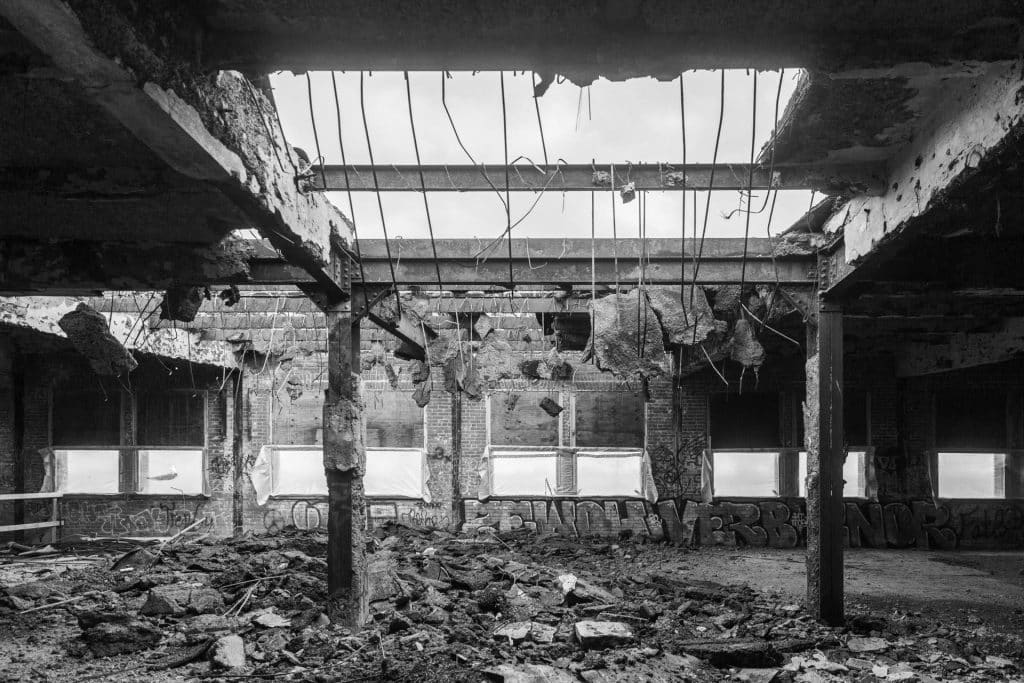
Over the past 90 days, the old and treacherous stairwells and elevator shafts at the east and west ends of the main five-story building have been demolished. Masonry walls that once separated spaces — including the mail lobby on the first floor and the executive offices on the third floor of the building’s west end — from the expansive machining areas on the first and second floors, as well as the open workspaces on the floors above, have also been removed.
Where a stairwell once stood, a cinderblock shaft now extends from the basement to the roof, through what was the lobby at the east end of the building, to make ready for a new stairwell. The same is in process at the west end where two elevator shafts and a stairwell have been demolished. In the basement are two sealed entrances to the tunnels — likely constructed in 1941 to allow material, parts and machines in varying stages of assembly to be moved between Plant 1 on the north side of Carnegie Avenue and Plant 5 on the south side, avoiding traffic and weather. The entrances to the tunnels were sealed off, following the closing of the buildings in 1985. When I worked there as a young man, the west tunnel was the one I most often drove a pallet truck through taking paint, drop clothes and ladders to the day’s job.
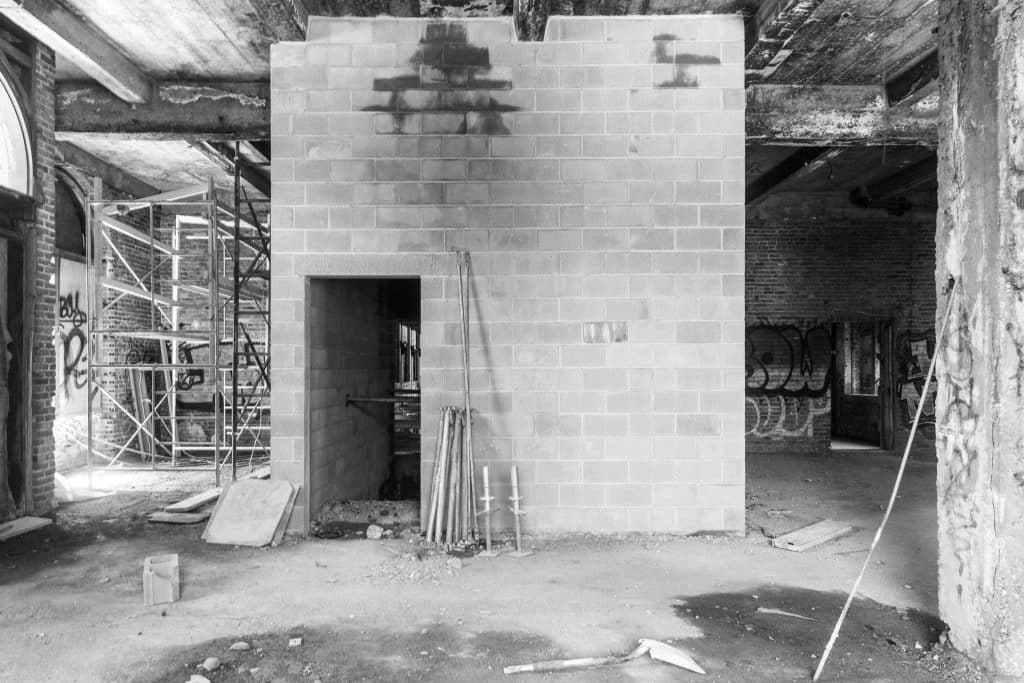
On the roof, the parapets — the walls extending above the roofline — are being reinforced. Because the concrete contains a high concentration of gravel, demolition and replacement of the roof has begun and will continue downward floor by floor, from the top level to the basement. On the exterior, crews are busy with the removal of years of urban art from the building’s exterior and are cleaning and repairing the areas where the sawtooth buildings once connected to the main building on the south and the wedge building on the east.
June 1 marked the official Groundbreaking Ceremony. The event took place under a tent on the concrete pad that used to be the floor of the sawtooth buildings. Among the estimated 250 in attendance, 35 were Warner & Swasey alumni and spouses, including the current longest-serving employee with nearly 40 years of service. It meant a great deal to all in attendance that, after 40 years of abandon, vandalism and decay, and more than 15 years since the first proposal was submitted for the building’s renovation, work is now underway.
Speakers — including Pennrose Regional Vice President Geoff Milz, MidTown Cleveland’s Executive Director Ashley Shaw Eaton, Cleveland Mayor Justin Bibb, Cuyahoga County Executive Chris Ronayne, Ward 5 Councilman Richard Starr, Ohio Housing Finance Agency’s Cody Price, Port of Cleveland President & CEO Jeff Epstein, Hunt Capital Partner Vice President Heather Pierce, County Council District 8 Councilman Pernel Jones, Huntington Bank Regional Vice President Jay Turakhia, and Pennrose President Charlie Adams — combined to tell the story of years of ups and downs, rewards and disappointments and steady confidence and determination that resulted in the green light to General Contractor John G. Johnson.
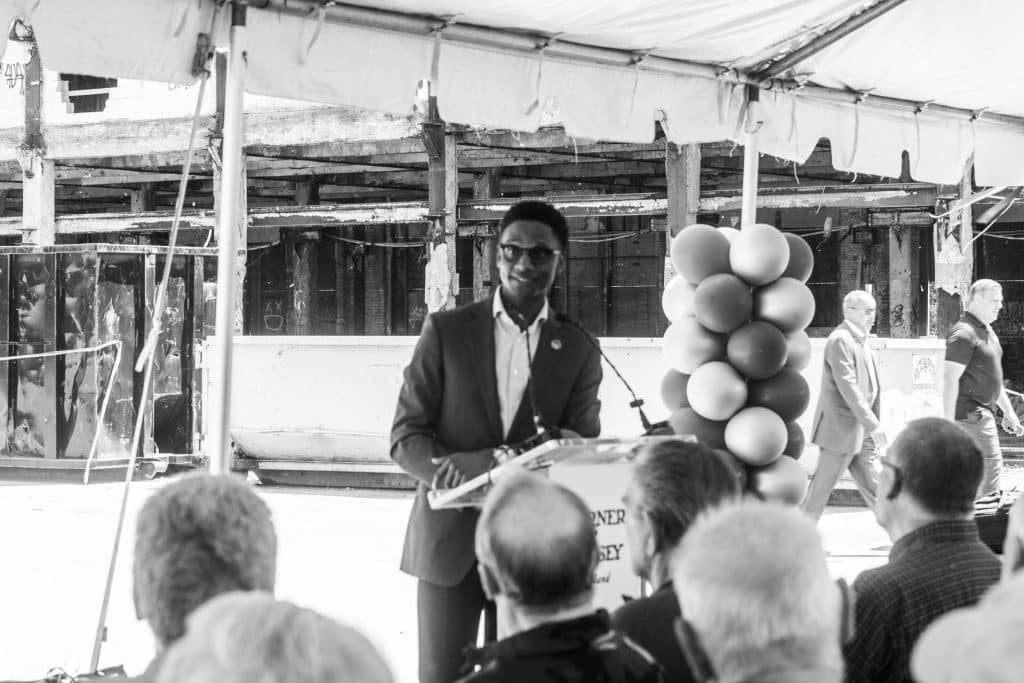
“Many Clevelanders have a deep, personal connection to this building, this site, and this neighborhood. That shared history made the case for redevelopment incredibly compelling, and it’s what kept our team motivated through years of complex work to get here,” said Milz, regional vice president, Midwest, at Pennrose. “Our team did a herculean job bringing together the financing and partnerships needed to make this project a reality. Today, we begin honoring that legacy by creating quality, inclusive housing that will make Warner & Swasey an active part of this community once again.”
With the City of Cleveland’s recent announcement of the Midline Business and Greenway Project — a 350-acre redevelopment including the first Cleveland Railway Power Station (built in 1888 at Ashland Road and Cedar Avenue) and a larger facility, built across the street that we see today as the greatly expanded Westinghouse Electric complex, and the long-vacant McDowell-Wellman building at East 71st Street and Central Avenue where the massive Hulett ore unloaders were built — the successful launch of the Warner & Swasey projects takes on even greater importance. Over the next 18months the Warner & Swasey building will become home to residents in 112 affordable housing units — 56 for seniors, and 56 for families.
“This groundbreaking represents nearly a decade of collaboration and a belief in the future of MidTown,” said Shaw, executive director of MidTown Cleveland. “Warner & Swasey has long stood as a symbol of this neighborhood’s industrial legacy. Today, we are not only preserving an important historic landmark, but creating new opportunities for residents, families, and businesses to thrive in the heart of Cleveland. This project reflects the kind of equitable, community-centered development that strengthens neighborhoods while honoring the people and history that shaped them.”
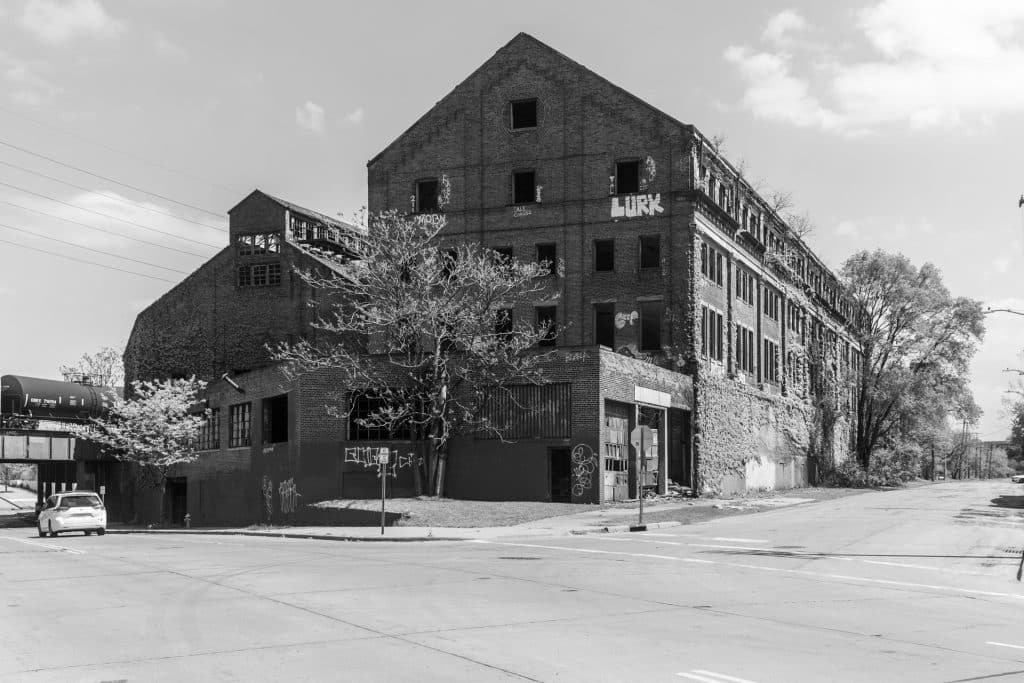
Former Westinghouse Electric Building on Ashland Road at Cedar Avenue
Keep our local journalism accessible to all
Reader support is crucial as we continue to shed light on underreported neighborhoods in Cleveland. Will you become a monthly member to help us continue to produce news by, for, and with the community?
P.S. Did you like this story? Take our reader survey!
Related Articles
Irishtown Bend is a window to Cleveland’s past — and future: Opinion
With the coming of Cleveland Metroparks’ Irishtown Bend Park, this historic turn of riverfront is about to become a shining example of a new era for Cleveland: less populous but greener; freshly forward-looking, but ever mindful of its past.
Gateway North set to open fall 2027
Trader Joe’s is currently targeting an opening between mid-October and November of this year.
Planned Euclid soundstage aims to bring Hollywood-scale production indoors
“The big picture is to create a sustainable, economically smart center for films to work in.”


