
Cleveland musician marks U.S. 250th with new musical work inspired by America’s greatest minds
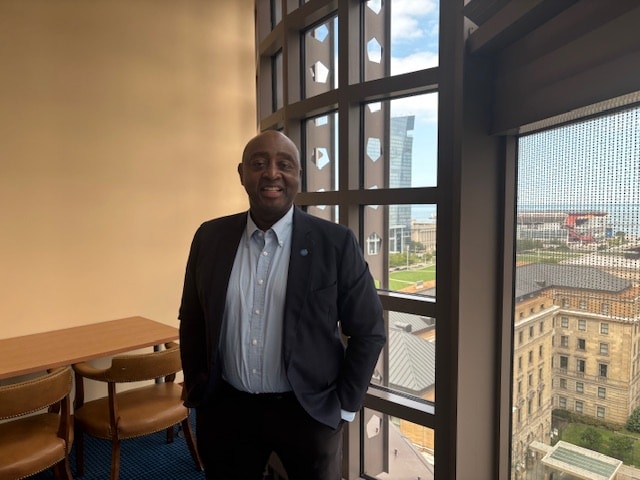
Paul Ferguson who is the artistic director of the Cleveland Jazz Orchestra and director of Jazz Studies at Case Western Reserve University, is preparing to debut his composition, “A Declaration…if you can keep it.”
It began, as most things do, with an idea; a nebulous imagining of something that befits the 250th anniversary of a nation. Months later, in the hands of composer Paul Ferguson, the idea has become a thoughtful musical reflection on what are arguably some of the greatest words ever wielded in U.S. history.
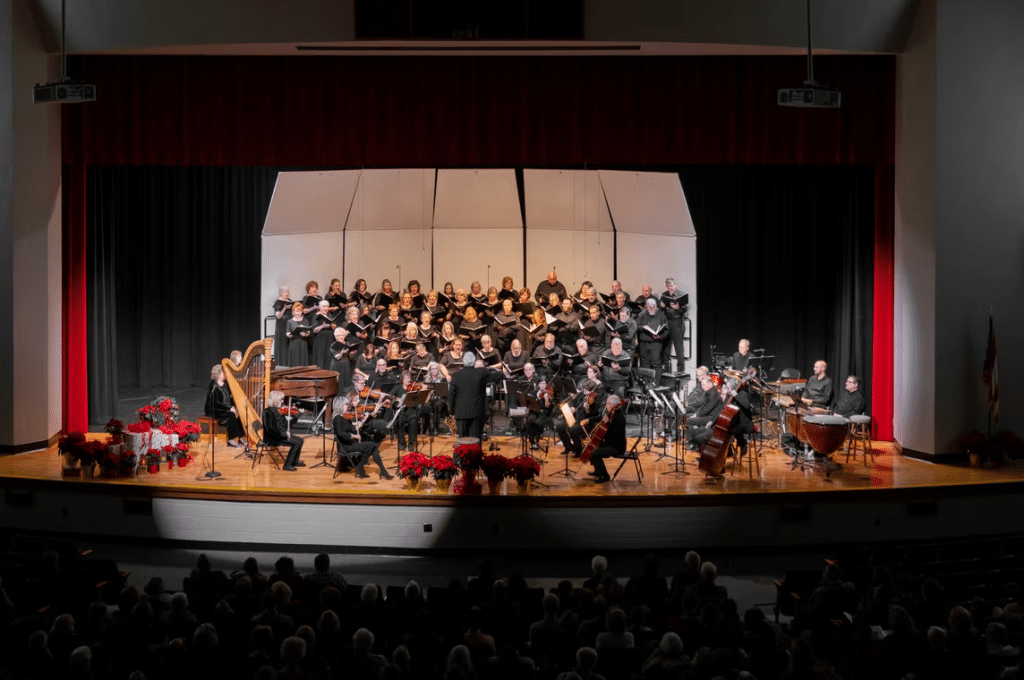
Ferguson, who is the artistic director of the Cleveland Jazz Orchestra and director of Jazz Studies at Case Western Reserve University, is preparing to debut his composition, “A Declaration…if you can keep it,” which was commissioned by the Brecksville Broadview Heights Community Chorus. The work, which is funded by a Cuyahoga Arts & Culture grant, will be performed live for the first time on April 26, 2026 at the chorus’ ticketed spring concert (interested readers can obtain tickets here).
In addition to Ferguson’s pieces, the program will incorporate additional music that ties into the themes of U.S. history and community. The chorus will be accompanied by an orchestra that Ferguson has selected and will feature members of the Cleveland Jazz Orchestra and several other local symphonic players. “It’s going to be a really good group,” Ferguson said.
The idea for a commissioned work to commemorate America’s 250th was first conceived by chorus board member at large, Neil Thackaberry. It was picked up by the chorus’ executive and artistic directors who ultimately presented the idea to Ferguson. In a video interview, the chorus’ Executive Director, Nancy Stokes, said that she knew “Paul would be a perfect person because, not only does he have the music talent, but he has a historical interest and background.”
Ferguson began composing the series of four pieces in the fall of last year and, drawing inspiration from Benjamin Franklin’s description of the United States as, “A republic, if you can keep it,” entitled his work, “A Declaration…If You Can Keep It.” In a video interview with The Land, he described his work as “an interpretation of the Declaration of Independence,” but noted that, “It’s also part of a continuing conversation about the Declaration of Independence.”
Fittingly, he focused his first piece on Thomas Jefferson’s words in the Declaration, itself, composing music that he described as sounding “like a hymn.” Artistic Director Brian Suntken said, in a video interview, that this piece reminds him of a dream: “And out of this dream, out of this thought process that Jefferson had worked so hard on comes this amazing idea of independence.”
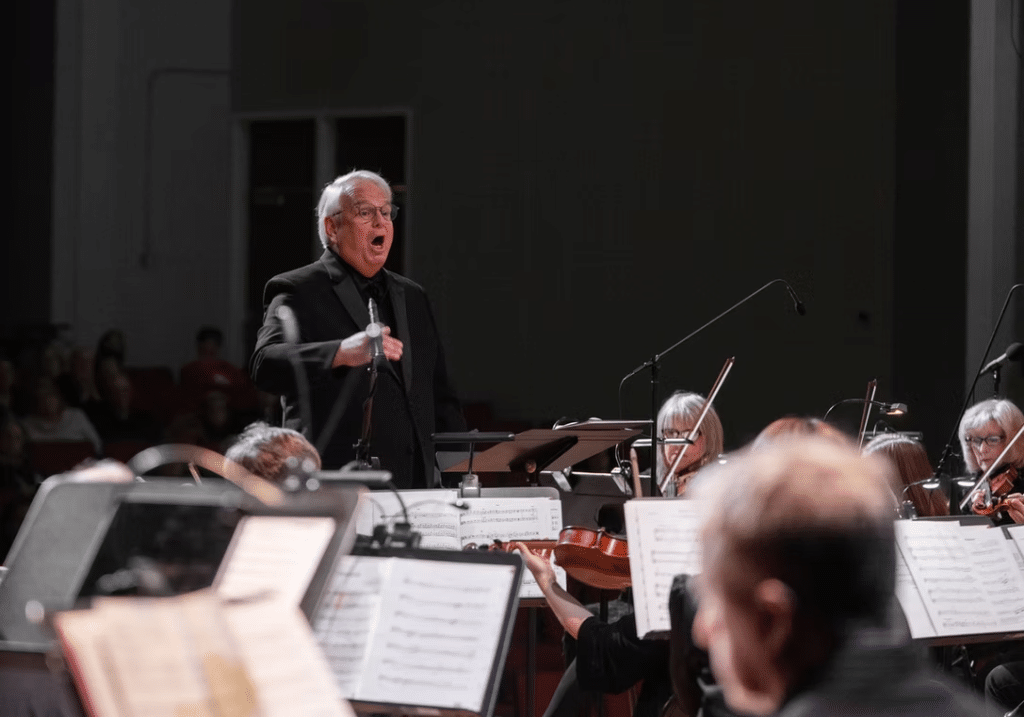
During our conversation, Ferguson also highlighted the novelty of the ideas that were proposed in the Declaration of Independence.,
“The most lyrical parts of the beginning are, ‘We find these truths to be self-evident,’ which is really quite a thing to say in 1776 because these truths were not self-evident,” he said.
In the second piece, Ferguson found inspiration in Fredrick Douglass’s 1852 speech “What to the Slave Is the Fourth of July?” in which Douglass asked why a slave would celebrate the Declaration of Independence. According to Time magazine, The Ladies Anti-Slavery Society of Rochester, N.Y. asked Douglass to deliver his speech on the Fourth of July, but because of the pain that that date caused enslaved people, Douglass, instead chose to speak on July 5th. In his personal correspondence from the time, Douglass wrote that he spent two to three weeks writing the speech.
Ferguson, who chose to use a jazzy style when composing this piece, reflected on Douglass’s speech during our conversation. “What is the Fourth of July to the American slave? Is it a symbol of freedom? Afraid not. So, it’s a scathing report, but that’s part of the conversation.”
The third piece, which draws on several speeches given by Abraham Lincoln, continues this conversation, “How should our country be constituted? Individual rights? What are states’ rights? What are national rights? So, anyway, this is all part of the conversation.”
In the same way that he chose the lyrics from a variety of Lincoln’s speeches, Ferguson found inspiration for the musical score of this piece from several different composers. “I kind of borrowed a little bit from Aaron Copeland, who wrote a piece called the Lincoln portrait…and also a little bit of Duke Ellington and George Gershwin … kind of American voices,” he said.
Ferguson’s final piece combines the musical styles and the lyrics of the three previous pieces, while incorporating Martin Luther King Jr.’s words, “The arc of the moral universe is long, but it bends toward justice.” Reporting from NPR has noted that versions of this quote have a long and complex story that begins in a sermon that was given by the 19th century abolitionist Theodore Parker. Martin Luther King Jr. adapted the words and used them on several occasions, leaving them embedded in the American conscience. In fact, in 2010, the words were incorporated into a rug that President Barack Obama had installed in the Oval Office.
Now, Ferguson is using them to tie together past constitutional commentary and draw it into the present day. “These are all kind of old, antique voices, but still quite relevant, I would say,” said Ferguson.
Suntken agrees, when asked about the value of setting these texts to music. “I believe that every generation should wrestle with these texts. I have been blessed enough to live outside of this country for a number of years and I don’t take my liberties for granted. I think in the times in which we live, they are imperative to review … That’s not a political statement. That is simply one of a concerned and passionate American who deeply loves the idea of freedom and liberty and justice for all,” he said.
Suntken noted the connections that working with these pieces have with his memories of America’s bicentennial, “This anniversary has made me reflect back on what it was like to be around in 1976 … I was in high school. So, a very different idea than 50 years later.”
Indeed, the times are very different. In contrast to today, when many Americans are feeling more divided than at any other time in their lives, in 1976 the Vietnam War had just ended and the country was working to rebuild national unity. Still, it is likely not a coincidence that Suntken’s experience with Ferguson’s work is raising such memories. “Art exists as a reminder of higher truths or universal truths,” said Ferguson. “We hope art can be interpreted in a number of ways, but the goal is to transcend ourselves but also include, not deny our past. Transcend, but include.”
Stokes echoed these ideas in her own interview with The Land, adding that art often conveys a message about social constructs, politics and the historical moment in which it is created. “The arts have always been the ones to hold things up to the light. The arts are truth and it’s our job as artists to hold those truths, as they say in the Declaration, hold those truths to be self-evident. It’s very important for the arts to not be intimidated by anything that’s going on … Someone has to speak truth to power,” she said.
At the end of the day, though, despite the lofty ideas and powerful messages that Ferguson’s music conveys, he has simple hopes for the community’s response to the debut of his work: “Just listen to it, enjoy it, and then, you know, download a copy of the Declaration and read it.”
We're celebrating four years of amplifying resident voices from Cleveland's neighborhoods. Will you make a donation to keep our local journalism going?
Author

Related Articles
The Movie Nerd Report: 3 film festivals this week in Northeast Ohio
Plus, see what other new releases and classics are playing at independent theaters around you!
Walking Cleveland’s past, one story at a time
“How much of Cleveland do I pass by without knowing the story?”
More than a card: Why Cleveland Public Library still matters in the digital age
September is National Library Card Signup Month. The Land talked with Cleveland Public Library Executive Director Felton Thomas, Jr. at the Main Library downtown.


