
Cleveland to host public hearings on data centers, potential impacts
“We’ve worked with data center experts, compiled research, and visited data centers. Knowing what residents think about data centers is a critical part of what we need to understand.”
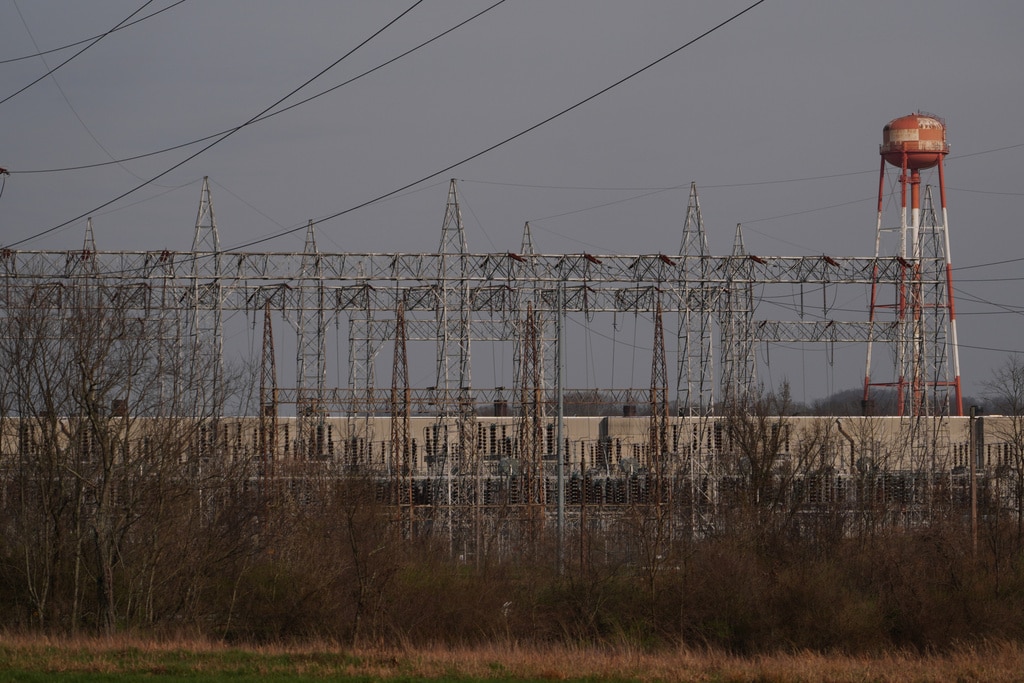
Cleveland City Council will host three hearings focused on data centers and their potential impact.
Earlier this year, Cleveland City Council passed a three-month moratorium on the development of new data centers within the city. That moratorium is scheduled to end on Oct. 20, though there is a possibility for an extension. Now, Cleveland officials want to gather public input about the facilities, and potential future developments. To do that, they will hold hearings held around Cleveland in late September and early October.
“We were charged with compiling information that will help Cleveland City Council make informed decisions about data centers,” Councilman Brian Kazy said in a press release announcing the hearings. “We’ve worked with data center experts, compiled research, and visited data centers. Knowing what residents think about data centers is a critical part of what we need to understand.”
In an interview with The Land, Kazy added that he “wants to hear from the public.”
“I’m not pro or anti (data centers),” he said. “I want to make sure all the facts are gathered and that we cover every angle.”
The three hearings will be held at the following dates and times:
- Sept. 24, 6 p.m. to 8 p.m., at Collinwood Recreation Center
- Sept. 29, 5 p.m. to 8 p.m., at Cleveland City Hall
- Oct. 7, 6 p.m. to 8 p.m., at Gunning Recreation Center
Notably, an early flyer for these hearings specificed the Gunning Recreation Center hearing as being held on Oct. 6. However, Kazy told The Land that was an error and the event will actually be held Oct. 7. Kazy left open the possibility of holding additional hearings should there be public demand.
On the day of the recreation center events, there will be opportunities to sign-up for speaking slots beginning at 5:30 p.m. Both the Collinwood Recreaction and Gunning Recreation events will feature a 20-30 minute presentation by Kazy about what city officials have learned so far about data centers. The Cleveland City Hall event will not feature a presentation, but will offer a rolling and extended comment period for residents.
Kazy said one of his goals for these sessions is to better define what a data center is. He noted that there are already data centers within Cleveland, but they’re not connected to crypto, AI and do not qualify as “hyperscale data centers.”
A political maelstrom began swirling around hyperscale data centers this year. Amid growing concerns about the safety and deployment of large language models (LLMs, or AI), and the environmental impact of data centers, protests broke out in communities across the U.S. The majority of Americans, 53 percent, are now “extremely or very concerned” about the environmental impact of AI and data centers, according to a new poll from The Associated Press-NORC Center for Public Affairs Research and the Energy Policy Institute at the University of Chicago (EPIC).
“We’re undertaking a massive experiment in real time, and I don’t think there’ll be any putting the milk back in the bottle. Change is scary, and I think some of that is being reflected here,” said Michael Greenstone, who directs the University of Chicago institute that collaborated on the survey.
Kazy doesn’t believe Cleveland has the space for a facility like the ones being protested in Texas and other parts of the country.
However, Ohio is among the states with the most existing data centers, according to reporting from the Associated Press. Most of those facilities are in urban areas, but many plans for new data center sites are focused on rural communities. Many Americans opposed to data centers say they’re concerned about utility prices, and the impact on water supply.
Data centers could account for 11.8% of the U.S.’ electricity consumption by 2030, according to a Lawrence Berkeley National Laboratory Report.
“We’re talking about building electric infrastructure on a scale of entire cities, or in some cases, entire states just to serve one data center,” said Erik Nordman, director of Michigan State University’s Institute of Public Utilities.
These projections have left many Americans, and Northeast Ohioans, queasy at the prospect of additional data centers coming to town.
In Cleveland, Kazy wants Mayor Justin Bibb’s administration to be involved in the upcoming hearings and in future discussions around data centers and LLMs. He said Cleveland City Council and the mayor’s team have been working together via an internal and public working group focused on data centers and AI.
“Data centers are here to stay and deciding how the city will handle them is too important for political gamesmanship,” Kazy said. “We have to do this together, and refusing to get ahead of one another will lead to a better solution.”
Reporting from the Associated Press was used to supplement this story.
Keep our local journalism accessible to all
Reader support is crucial as we continue to shed light on underreported neighborhoods in Cleveland. Will you become a monthly member to help us continue to produce news by, for, and with the community?
P.S. Did you like this story? Take our reader survey!
Author

Related Articles

The cost of drugs from Canada is set to soar for millions of Americans because of a federal rule
Millions of Americans who buy cheap drugs from Canada could soon lose access due to a new customs rule.

A gut punch in Ohio: Nearly 1,400 laid off at truck factory just days before Trump rally
The November midterms are a test for the working-class coalition that lifted Trump into the White House and gave Republicans control of Congress. The outcome will be decided in places like Ohio.


