
Courtyard, food hall, infrastructure upgrades for West Side Market presented in ‘master plan’ on Thursday
The new nonprofit Cleveland Public Market Corporation, which is expecting city council approval to grant it leadership of the historic market, shared details about $40 million in planned improvements.
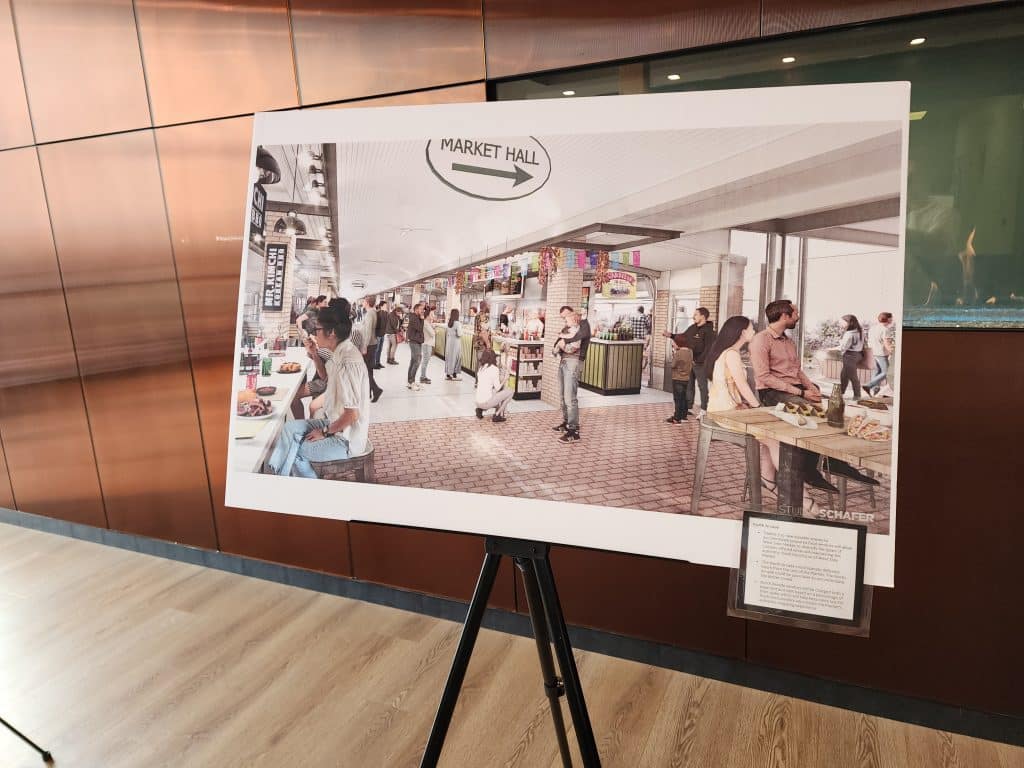
On Thursday, leaders shared details about big changes planned for the West Side Market under its “master plan,” the latest in a series of moves to revamp the 111-year-old institution and reposition it for its next century. The new nonprofit Cleveland Public Market Corporation, established in February, presented a $40 million+ plan which might be described as “everything plus the kitchen sink,” including rebuilding the market’s basement spaces; creating a courtyard between the produce arcade and main building with seating for customers; and building a new prepared food hall with space for 12 new vendors. The details shared at Thursday’s meeting build on the recommendations of the Phase 1 report released by the city in February.
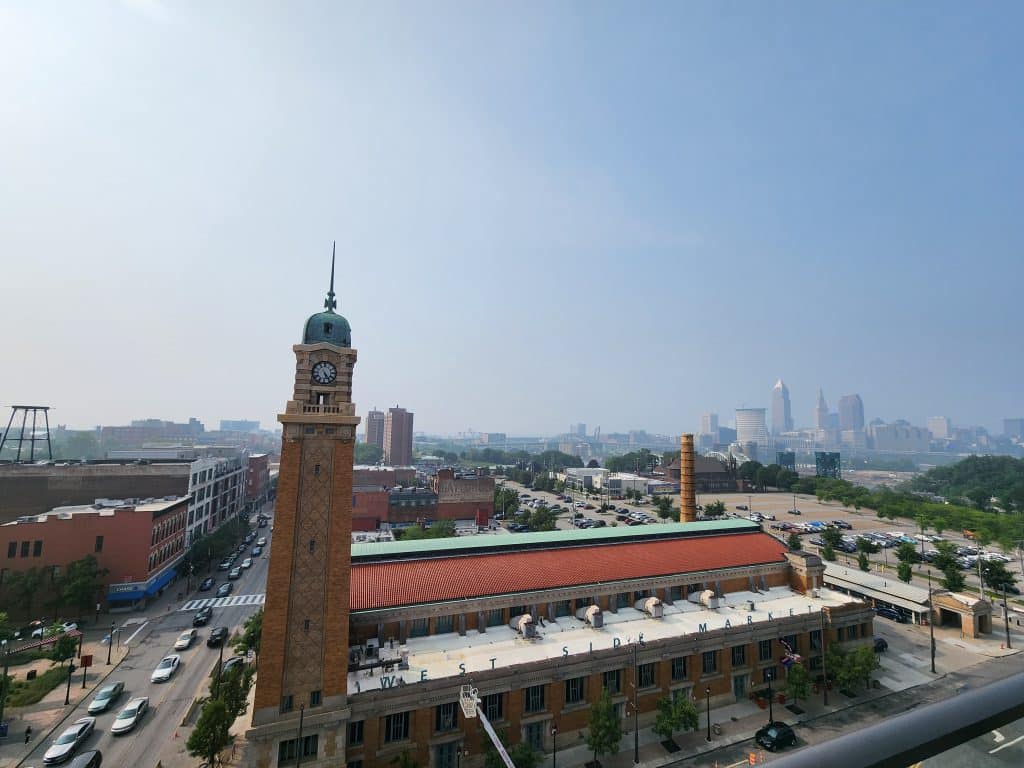
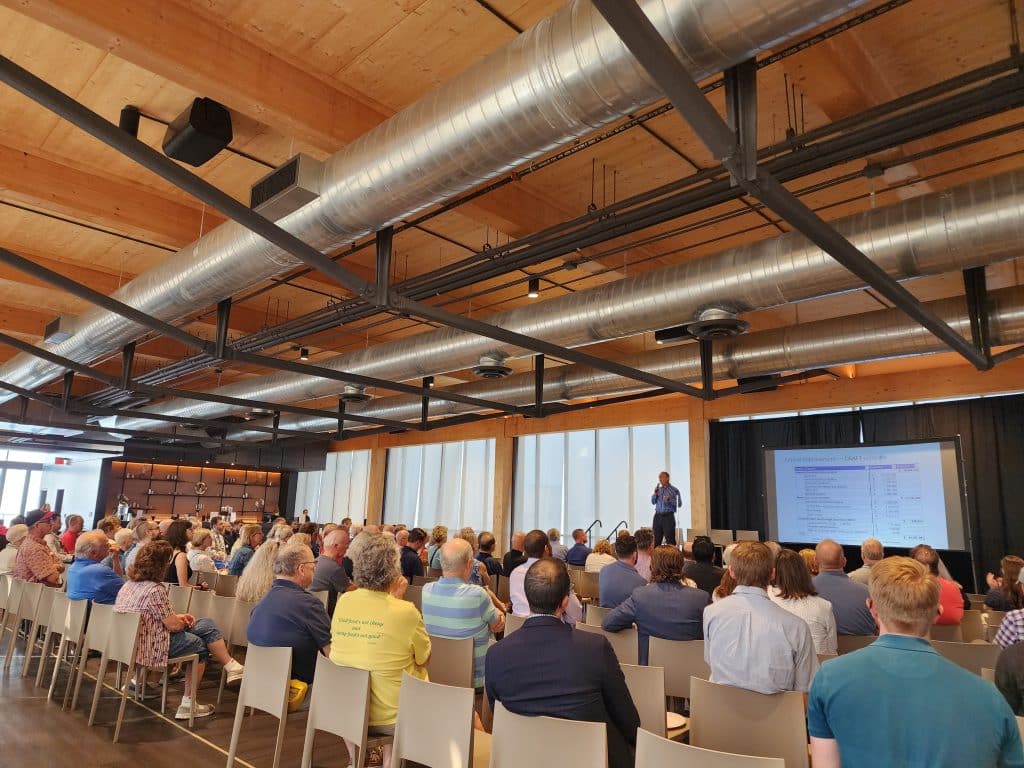
On Thursday evening, over 100 people gathered at Truss, a rooftop venue at INTRO Cleveland adjacent to the market on W. 25th St. for the unveiling of the plans. The Cleveland Public Market Corporation presented the revamp as part of its “In The Market For Progress” series. The new master plan was informed by the West Side Market Advisory Committee (a group of advisors selected by the city, some of whom are now board members of the new nonprofit) and drawn up by Market Ventures, Inc., a consulting firm hired by the city that specializes in public markets.
The plan – which is the first stage of a three-part update to the market, according to Bibb’s West Side Market website – focuses on improving market operations and the quality of life for vendors, activating spaces for vendors and visitors alike, and opening up more revenue streams for the market. Planners assured the audience that while capital expenses and operating costs will go up as a result, vendor rents will remain unchanged (it’s not clear for how long). While the final budget for the plan is not concrete, planners are estimating that the changes will cost around $40 million.

What’s new
Proposed changes to improve vendor quality of life include:
- New HVAC for both buildings
- New elevators
- Basement renovation – better storage, facilities, and two shared commercial kitchens
- Customized vendor stalls
Proposed changes to improve the visitor experience include:
- The “North Arcade,” a prepared food hall in the main building with space for 12 vendors
- Expanded seating to seat 300 across the market
- Redevelopment of the mezzanine level to include a teaching kitchen and event space
- Outdoor courtyard between the produce hall and main building – think string lights, tables, etc.
Ted Spitzer, president of Market Ventures Inc., walked attendees through a detailed overview of the master plan, calling the West Side Market “the most beautiful public market in America.” He noted the need for basic upkeep like repairing broken elevators and stressed the importance of continuing to serve shoppers who use SNAP benefits (Supplemental Nutrition Assistance Program, which helps low-income Ohioans to purchase fresh groceries). (Right now, not all market vendors accept SNAP, but the market is working with a coalition to improve produce access for lower-income customers.)
Spitzer said that change starts with the market’s basement, an area the size of the whole market that has been left behind. Out of sight to your frequent market-goer, the basement has served a critical purpose to vendors who have limited space to operate in their stalls on the street level. Historically, the basement has provided storage and food prep space, but its systems are dated and outmoded. “There are lots of opportunities to improve the basement, but it’s not inexpensive to fix the basement,” he said. “It really needs to be wiped clean and started over.”
Despite the scale of the planned renovations, Jessica Trivisonno, senior specialist for the market, dismissed fears that the market would mimic newly built public markets and lose its diverse, authentic, distinctively Cleveland feel. “This is all to support what makes this market special and authentic, and it’s these vendors we care about,” she said.
In addition to making improvements and renovating the two buildings, Trivisonno and Spitzer both emphasized that there is opportunity beyond physical improvements, including using the market to help grow new businesses and provide jobs for Clevelanders.
Another plan – what’s different this time?
The new plan is a big evolutionary step for the market, Trivisonno told the crowd, and one that will only be possible if management of the West Side Market is transferred into the hands of the new, nonprofit Cleveland Public Market Corporation as planned in early 2024. “The primary goal is to switch the operations of WSM from being City owned and operated, to City owned but being nonprofit-operated,” she said, stressing that the city will retain ultimate authority.
The new master plan comes in a long line of proposed changes to the market. The West Side Market has been a flashpoint for controversy for years, with locals and vendors claiming it doesn’t get the attention it deserves and calling for a radical overhaul, and the city touting repairs it has already made or is making. Things began to shift two years ago when Mayor Justin Bibb ran on fixing the market as one of the key elements of his platform: While city council has not yet formally approved transitioning the market to new, nonprofit management – something previous mayor Frank Jackson had long fought – but there appears to be consensus for the transition. More recently, council approved $10 million in ARPA funding for the market, less than Bibb wanted but more than some council people sought.
The West Side Market has historically not lacked for splashy – and pricey – new plans. In fact, plans were completed during the market’s centennial in 2011 and again in 2021 during the outgoing Jackson administration, which in its later years invested heavily in market repairs. The difference now is that the new plans are more ambitious, have more money behind them, and would be led by nonprofit leadership.
The Land asked Trivisonno after the meeting what the planned changes mean for the future of the market, which lost some longtime vendors during Covid and had an overall vacancy rate of 32% last year, according to presenters. “There is a plan for the market, it is implementable, it is inspiring, doable, and there are good people who are ready to dig in and get it done,” she said. “There has been so much stagnancy with the market for years, and people have gotten excited.”
By shifting management to a nonprofit exclusively focused on the market, Trivisonno said it would streamline operations, implement much-needed changes to the market more quickly, be more responsive to vendor and customer needs, and generate new revenue that would help the market become more sustainable over time. Right now, the West Side Market operates at a loss of about $700,000 annually, not including large capital expenses.
Trivisonno said the nonprofit will be able to access financial resources that the city cannot, including grants, sponsorships, and fundraising opportunities will help the operators raise the funds to execute their vision, and the organizational change will allow the market to streamline some of the city’s bureaucratic processes.
The new financial opportunities of operating as a nonprofit will eventually allow the market to wean off city subsidies that have sustained it while it has operated at a loss, said Spitzer. “We have been very clear to city council and the mayor’s administration that this will not happen overnight; we cannot go from large subsidies to no subsidies in one fell swoop. We need the time to make the improvements, get new cash flow, and then we can upgrade without subsidies,” he said on Thursday.
Community questions
After the presentation, community members had many questions and a lot to say about the market’s future. City representatives said the new market corporation will hire an executive director when they take over operations of the market in early 2024 , that vendors are happy with the current ongoing improvements, and that there’s a desire for a more efficient way to get in and out of the market. According to the city’s website, the search is currently underway for an executive director.
One commenter questioned if the market would subsidize users of public transportation to come to the market, similar to how parking is free (at times) to drivers. Planners acknowledged that they want visitors to take other forms of transportations to the market but that visitors predominantly come by car.
“We don’t want to take actions that would negatively impact the vendors at the market,” said Spitzer. “It is amazing that there is an RTA station right across the street. Other markets have done things to encourage alternative transportation – giving gift certificates to people who ride their bike to the market, for example.” Spitzer also described efforts to restructure the parking lot system to help drive revenue while eliminating the gated entrance.
After the meeting concluded, The Land had the chance to speak with attendees. Jeffrey, a 26-year-old downtown resident, commented, “I like how the market will have prepared food and how they’ll activate more spaces. It’s such a nice location, you can take transit here or walk here.”
Jordan, a 33-year-old who lives in Old Brooklyn, told The Land, “A big part of my excitement is activating the unused space, and giving the vendors what they are asking for, that’s huge. It’s like they said, there are people who have been in the market for generations that have been begging the city to do something, so to give those people what they’ve been asking for is probably the biggest thing in this project.”
And Lindsay, a 30-year-old resident of the St. Clair Superior neighborhood, said, “Having a team of people who have experience running markets who have dedicated time and focus on this will be a great step forward for the market.”
The market is about one-quarter of the way towards its roughly $40 million goal, said Trivisonno. She anticipates the rest of the funding will come from grants and sponsorship along with possible new revenues from parking, the food hall, and new commercial kitchens. Cleveland City Council still needs to approve the plan and transfer of market management to the nonprofit corporation this fall.
Nate Flauto was a participant in The Land’s community journalism program.
We're celebrating four years of amplifying resident voices from Cleveland's neighborhoods. Will you make a donation to keep our local journalism going?
Author

Related Articles

Blanket Sunday celebrates 40th anniversary of bringing blankets, essentials to Northeast Ohioans
As its name implies, “Blanket Sunday” also serves the unhoused. What began as a large donation of blankets to SVDP by an employee at the former O’Neil’s department store in Akron has blossomed into an enduring and regionwide effort to keep those unable or unwilling to stay in shelters warm at night.

Black LGBTQ+ women aren’t safe in Cleveland, but they’re finding ways to thrive
In 2020, an analysis by Bloomberg CityLab ranked Cleveland as the worst city for Black women to live. For Black LGBTQ+ women, the struggles are real.

Crowdfunding has become a lifeline for LGBTQ+ Ohioans of color
Community members say online fundraisers and mutual aid are filling gaps left by housing, healthcare and employment systems.


