
‘Time for upgrades’: West Side Market vendors weigh in on need for repairs, ARPA debate
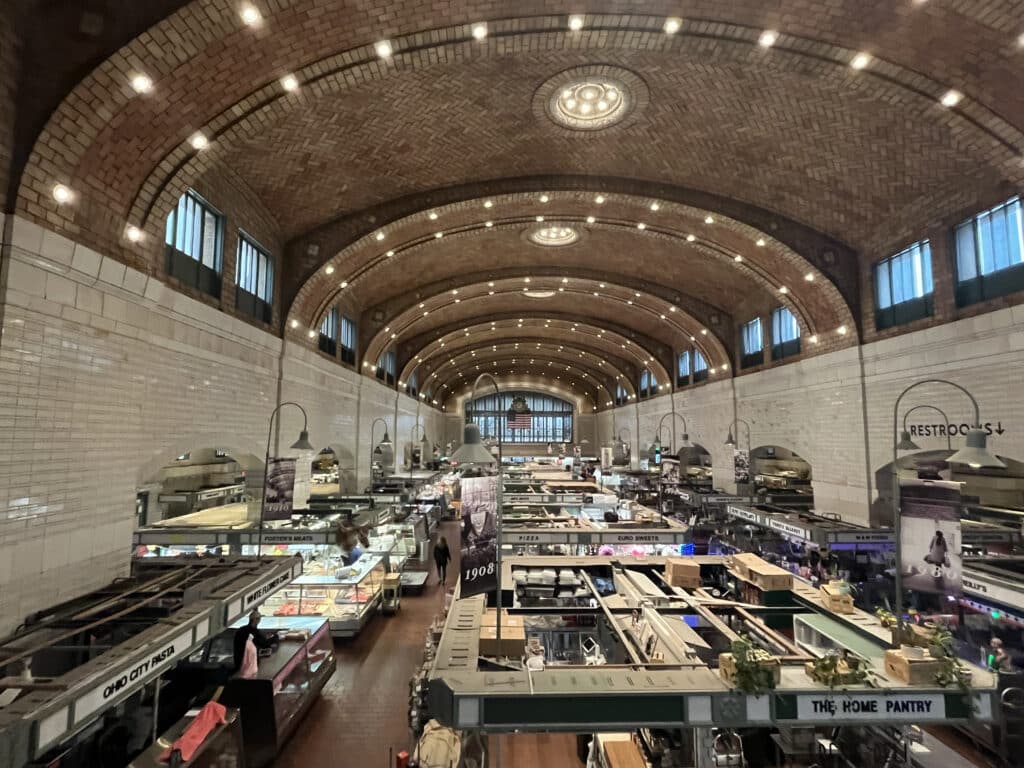
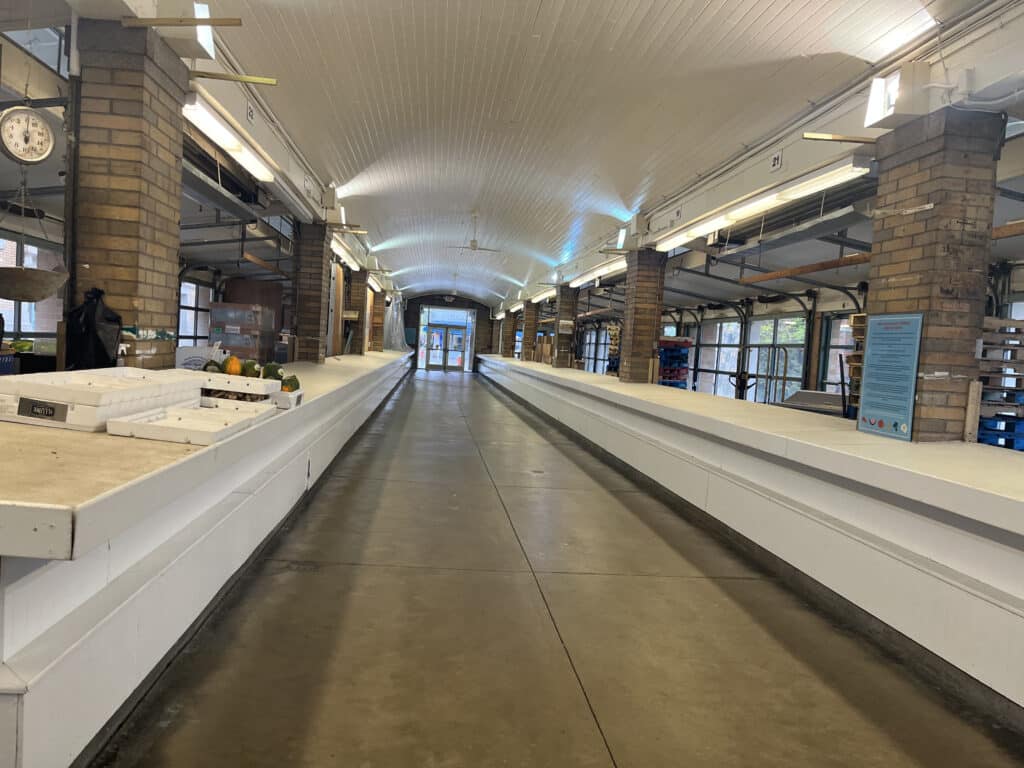
Issues like an outdated basement, roof leaks, and broken elevators make it difficult for vendors at the 111-year-old West Side Market to run their businesses. Many of the vendors hope that the Bibb administration’s ask for millions of dollars in ARPA funding could bring an end to what they describe as decades of neglect from the city, which owns the market.
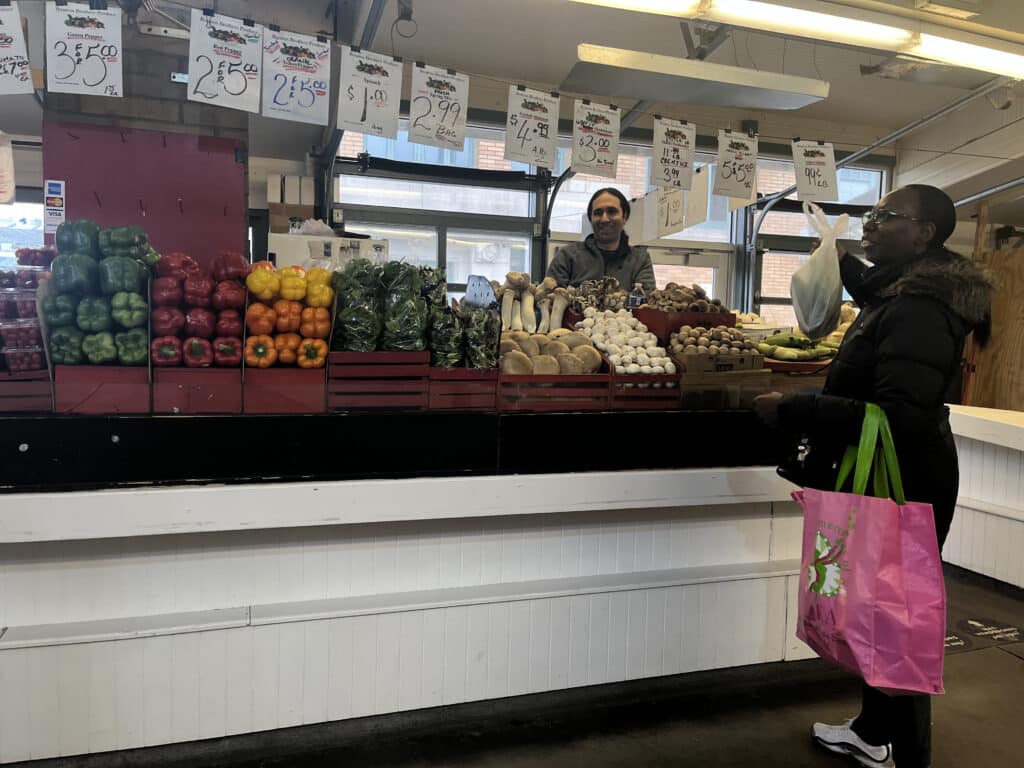
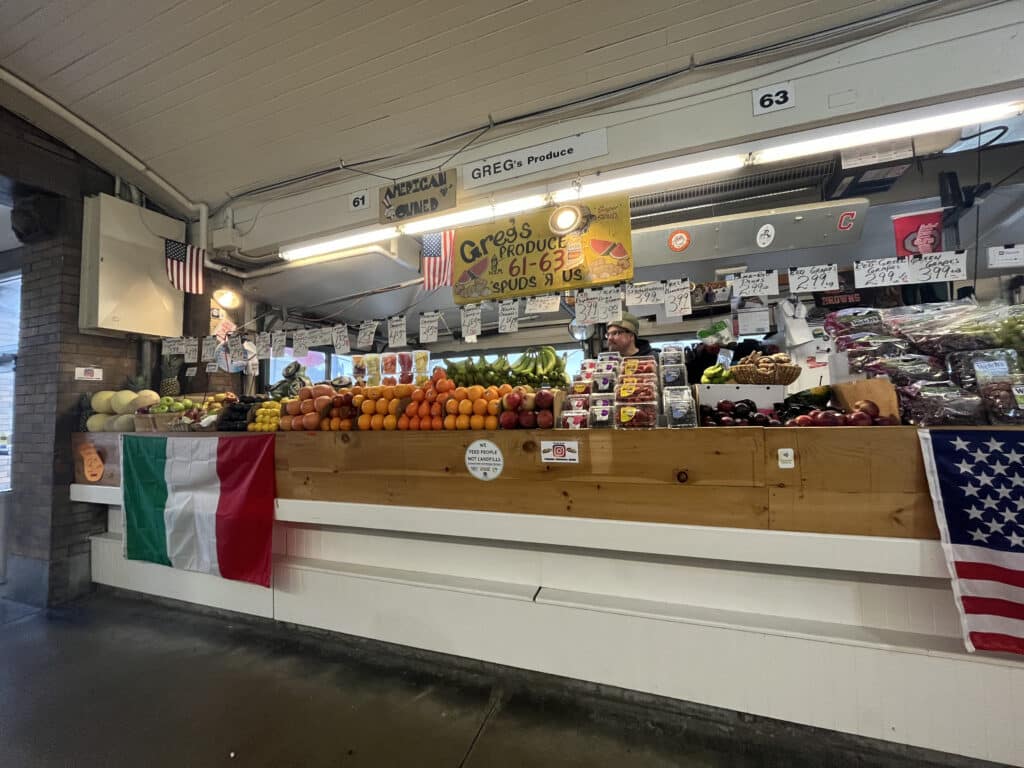
Greg’s Produce owner Jason Scott has been working at the West Side Market since he was 16, and now that he’s an owner of a business there, he can’t imagine doing anything else.
He’s one of many vendors at the market who say the transition from city management to nonprofit management and upgrades like fixes to the basement, roof, and heating and cooling systems are necessary to sustain the 111-year-old market for another century.
“If you think the Titanic is old, this thing was built before the Titanic, and we still have some original parts in this building,” said Tom Boutros of Boutros Brothers Produce.
The city says the master plan for the market will prescribe a total of $45 million in improvements, including $30 million of infrastructure upgrades, Ideastream reported. The city has owned the market from the beginning and will continue to own it even as the nonprofit takes over operations of the market. Several vendors at the market said that the city has neglected taking care of it, relying on Band-Aid solutions to temporarily address issues.
Now, the Bibb administration wants to use $15 million in American Rescue Plan Act (ARPA) funds on the market, a move that several council members are not sold on, citing other pressing needs like food access, home repairs for residents, and fixes to deteriorating rec centers. Legislation about funding improvements to the West Side Market was introduced to Cleveland City Council on April 24.
The legislation does not include an ask for a specific amount of funds. It’s in administrative review right now. When it comes back to council, they will determine a dollar amount and amend the legislation, Council President Blaine Griffin said.
The Land spoke to several vendors at the market about the repairs the market needs, how these needs affect their businesses, and their hopes for getting funding for the market.

Vendors want repairs at the market
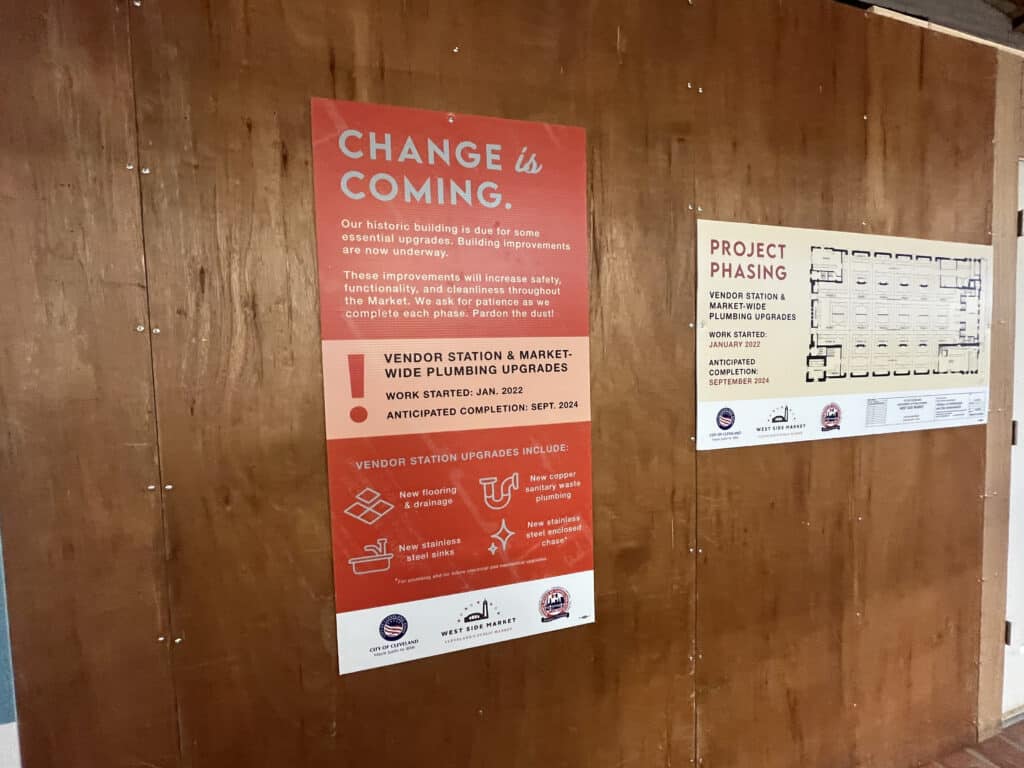
While the market’s master plan has teased renovations like adding a teaching kitchen and creating a designated section of the market for vendors offering prepared food, the changes that vendors are looking forward to the most are not glamorous.
Amanda Chucray, the owner of Czuchraj Meats, the oldest business at the market, said that a teaching kitchen where chefs could do cooking demonstrations for kids on field trips and other market visitors would be “a dream.” But basic fixes need to come first, she said.
“It’s actually not all the shiny things,” Chucray said. “Our basement is so, so, so outdated and not functional. And obviously, we’re having a lot of leaking and roof problems. So those are the two things that I would really advocate for.”
The need for repairs at the market has made the space unreliable at times, and this affects vendors’ day-to-day work running their businesses, vendors said.
“It feels like it’s always something,” said Beth Bowman, the owner and managing operator of Vera’s Bakery. “Everything’s going OK, and then maybe the elevator doesn’t work, or there’s a leak in the stairs, or there isn’t adequate lighting, or downstairs is very wet, or the coolers aren’t working, or a case isn’t working, or your case lights aren’t working.”
Tom Boutros of Boutros Brothers Produce, for example, couldn’t open his stand one day last week when the market’s last working elevator broke down.
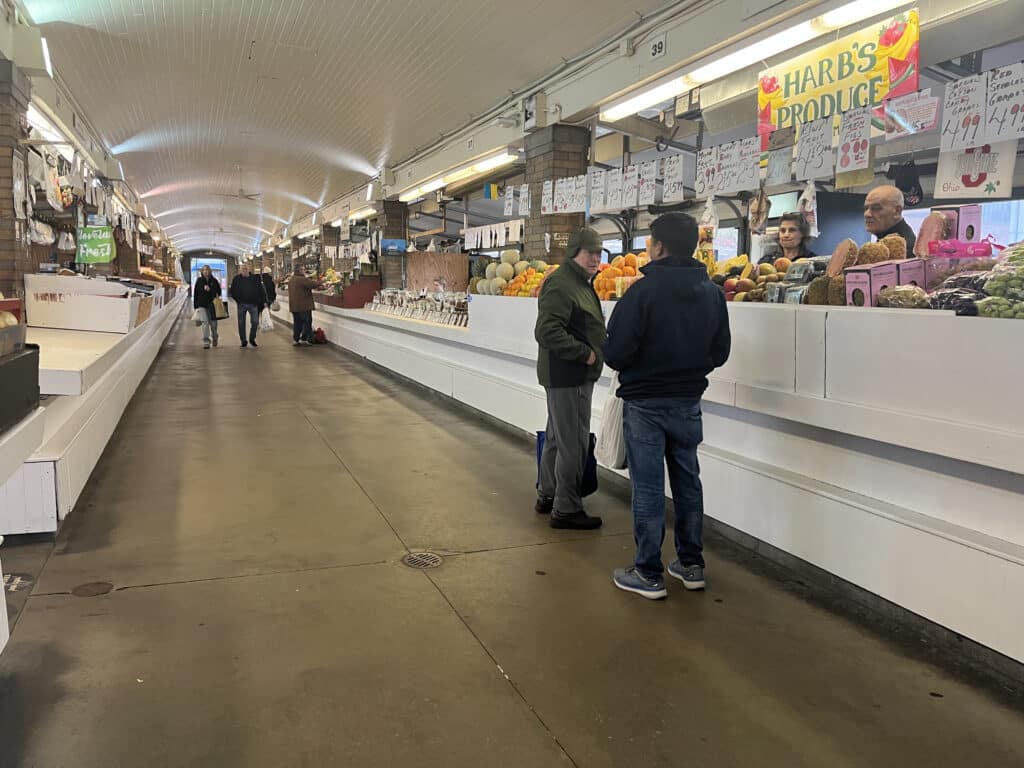
The market’s outdoor Arcade area, which hosts produce stalls like Boutros Bros., doesn’t have plumbing, heating, or air conditioning. The outdated facilities have caused some vendors to make the difficult decision to leave the market, Boutros said. The Arcade had a vacancy rate of 49% in September 2022, and the indoor Market Hall had a vacancy rate of 22%, according to phase 1 of the master plan.
“Anytime we need water or something, we still do the same thing they did 100 years ago — we have to fill up a bucket. And it’s just time for upgrades,” he said.
Aside from the issues that vendors experience with the physical space, Bowman, who serves on the market’s advisory committee, said the market is in need of a budget for advertising. Right now, the tenants association has been handling the advertising for the market, she said. Covid took a toll on many businesses at the market, and she wants to be able to count on having customers.
The ask to use ARPA dollars to fund market repairs
Council President Griffin said he is hesitant about the ask to use $15 million of ARPA funds on the market because he wants to make sure the city uses its one-time Covid recovery dollars in an equitable way, including the needs of seniors and families.
“We want to be able to do both,” Griffin said. “I think people have blown this out of proportion because really, a number was thrown out there. And I didn’t necessarily agree with the number, but nobody said we didn’t want to do anything for the market. We just wanted to make sure that we took care of some competing priorities and competing needs in the neighborhood as well.”
Other council members have made suggestions to the council president of giving around $5-10 million to the market instead of $15 million, Griffin said. Council will debate the amount of funding once the legislation comes back to the table, and they’ll also ask the administration about other potential funding streams outside of ARPA, Griffin said. “Because once this (ARPA) money is gone, some of the other tools that we use just won’t go into these disadvantaged neighborhoods,” he said.
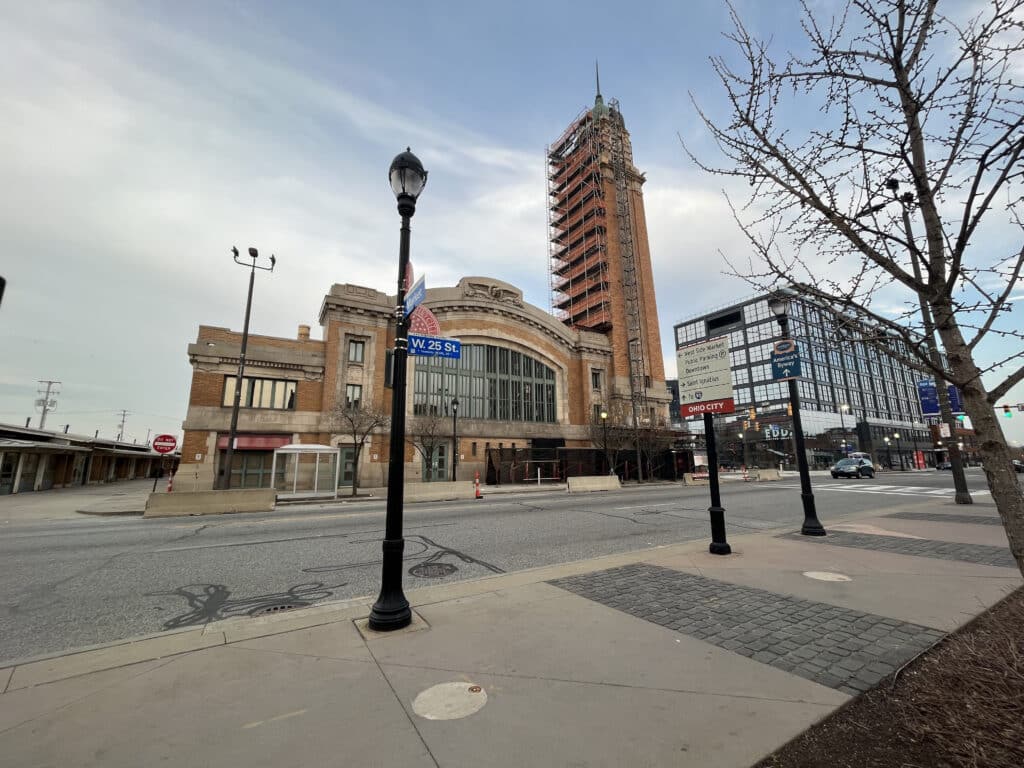
Griffin also said that out of the $45 million in bonds the city has spent on public facilities between 2019 and 2022, over $10 million has gone to the market, which equates to about 20% of the total. Ordinances from city council show that the city committed $3.3 million in bonds for roof repair and $1.25 million for elevators 2, 3, and 4 at the market in 2022. It also provided $2.1 million in bonds for the market’s “phase II” in 2021, which included repairs to the clock tower and vendor booths, $1.5 million for the market in 2020, and $2 million for emergency repairs in 2019.
Council Member Kerry McCormack, who represents Ward 3, which is home to the market, said at the April 17 council meeting that he thinks the dialogue happening around how to spend the ARPA funds is healthy. He also said, “The best way to sink our city is pitting neighborhood versus neighborhood.”
Market vendors echoed this sentiment, with some, such as Chucray of Czuchraj Meats, feeling like they’ve gotten stuck in the middle of negative politics. Boutros, who serves on the market’s advisory committee with Chucray, said he doesn’t want the market’s needs to be compared to needs in the neighborhoods, or to a multibillion-dollar business like the Cleveland Browns. “We are the West Side Market. I don’t want to be compared to anybody. So if you can fix us, fix us. If you can’t, your names will go down as the people that ruined this market.”
Griffin said that he wants to be able to fund both the market and neighborhood needs.
“We are not pitting neighborhood needs against each other. This is not an either/or; this is an and/and. And that’s what we’re staying focused on,” he said. “Other people have made those arguments in order to try to bolster their argument. My argument has been consistent all along. We value the market, but we also value everything between Kamm’s Corners to Collinwood, and Lee-Harvard to Detroit Shoreway.”
Now is the time to fund repairs, vendors say
Market vendors, including Scott of Greg’s Produce, said they have customers who come from all over the city to shop at the market. “The market is the community, in my opinion,” Chucray said. “I have customers from every single part of the city shop from me. And I know them; they’re like my family.”
But the owner of the oldest business at the market is worried that the market won’t make it if it doesn’t get funding it needs for repairs. “This is the time to fix this place. If they’re not gonna fix it now, they’re never gonna fix it,” Boutros said.
Still, vendors like Regina Traynor, who owns a business called P-Nut Gallery, and Bowman of Vera’s Bakery recognize that the changes will take time. “It’s been a while since things have been taken care of, so it’s gonna take a little bit of time to get where we need to be,” Bowman said.
Don Whitaker, the owner of D.W. Whitaker Meats and the president of the market’s tenants association, sees the possibility of ARPA funding as an opportunity to start making progress on the funding needs, and to move away from temporary fixes that he said the city has resorted to in the past.
“It’s like, when you fix something, fix it right. And that’s what we see in this plan — that it’s really a plan to be fixed correctly and being able to sustain it, like they always say, for another 110 years,” Whitaker said.
The West Side Market is open from 8 a.m. to 5 p.m. on Monday, Wednesday, and Friday, from 7 a.m. to 5 p.m. on Saturday, and from 10 a.m. to 4 p.m. on Sunday. You can visit the market’s website here. Click here to read the first phase of the West Side Market’s master plan. You can watch the April 17 and April 24 city council meetings where community members made public comments and council members shared their perspectives on YouTube. Check out The Land’s previous coverage of the West Side Market here and here.
Keep our local journalism accessible to all
Reader support is crucial as we continue to shed light on underreported neighborhoods in Cleveland. Will you become a monthly member to help us continue to produce news by, for, and with the community?
P.S. Did you like this story? Take our reader survey!
Author

Related Articles
Bringing the farm to the city: Farm Dog Fresh offers fresh, local produce on Cleveland’s West Side
One customer says: “For [Clevelanders], sometimes it’s hard to get fresh, local produce. We need to take advantage of these produce stands for the four or five months out of the year that they’re open.”

Keeping the light on at Can Do Neon
Preserving the art of neon sign making is Craig Alan Nichols’ mission, but he’s in search of a student and medical aid.
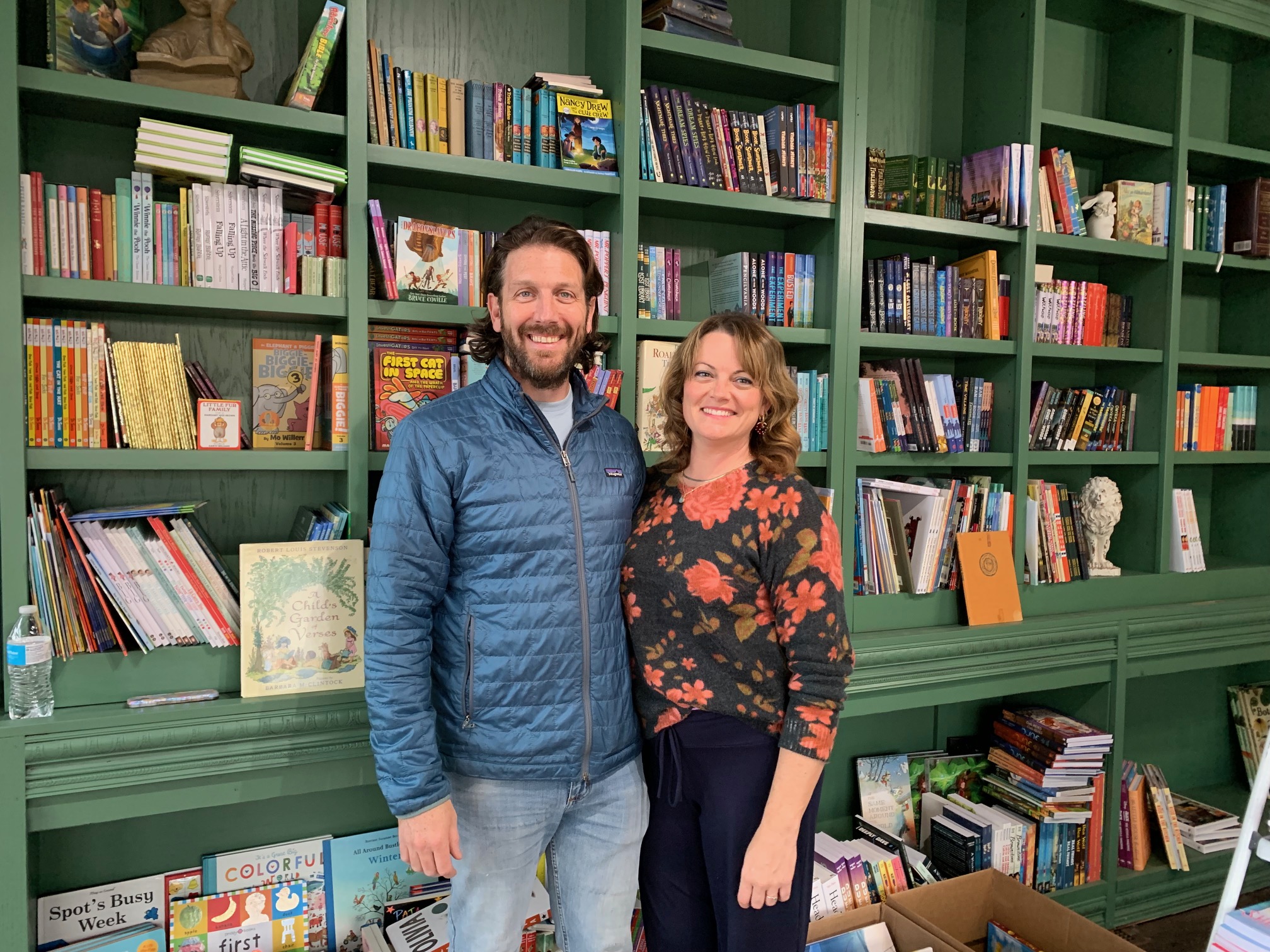
New children’s bookstore in Lakewood aims to inspire, delight kids, families
The Wandering Lantern aims to be a cozy, welcoming kid’s bookstore, with space for families to explore reading.


