
Award-winning filmmaker premieres movie shot in Cleveland barbershop at Atlas Cinemas Shaker Square
On Saturday, April 18, “Fade 2 Black,” Calhoun’s newest short film, will receive its world premiere at the Atlas Cinemas movie theater at Shaker Square at 3 p.m. and 7 p.m.
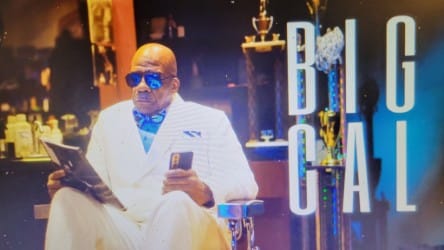
Seasoned screenwriter and filmmaker Cornell Calhoun III’s new short film “Fade 2 Black” has already won more than 30 awards from Los Angeles, California, to Hamburg, Germany. And it hasn’t even premiered yet.
In fact, during the past decade, his 16 films have garnered more than 350 awards for screenwriting or the movie itself. They’ve earned praise from film festivals throughout the U.S. and around the world.
But submitting entries to film festivals for more than 500 films wasn’t cheap.
“I’ve probably spent $16,000 or $17,000 since I first started sending my films out,” Calhoun estimated. “I know people say that’s crazy, but I’ve always felt if you’re not going to invest in yourself, who will invest in you?”
On Saturday, April 18, “Fade 2 Black,” Calhoun’s newest short film, will receive its world premiere at the Atlas Cinemas movie theater at Shaker Square at 3 p.m. and 7 p.m.
To complement the 38-minute “Fade to Black” and provide a full evening of viewing, Calhoun plans to show a couple of his other productions, including the pilot program for his TV series “Longwood” and “Central’s Baby,” a new short about human trafficking.
He will also show “The Mighty, Mighty Scarabs: A Legacy,” a 15-minute documentary he made about the celebrated basketball teams at East Technical High School that won or competed for Ohio state championships annually during the 1950s and 1960s.
He was the perfect person to produce that documentary. East Tech is his beloved alma mater and he was a member of those teams during the late 60s. From there he went on to be co-captain and MVP for Talladega College in Alabama, where he earned his bachelor’s in English in 1971. He later earned his master’s in education at Ursuline College in 2000 so he could teach at Glenville High School.
After returning to Cleveland from Alabama, he enrolled at Cleveland State University solely to take theater classes and perform in plays. There he became close to local theater legends Reuben Silver, chairman of the theater department, and his wife Dorothy. Silver had also served as artistic director at Karamu House, the oldest African American theater in the U.S., for 21 years.
For several decades Calhoun was an actor at Karamu, where he performed in about 20 plays before he transitioned into filmmaking. Karamu also produced three of Calhoun’s scripts, including one of his signature Cleveland shows based on characters he knew while playing for East Tech.
Thanks to the power of the “funny, lyrical and mournful” play about what happens to “inner-city hardwood stars when the glory days are a distant memory” combined with the support of the 5,000-strong East Tech Alumni Association, “The Mighty Scarabs (An East Tech Story)” sold out all of its performances at Karamu in 2015, won a Cleveland Critics Circle award and went on to be the best-selling play script for Original Works Publishing in 2016.
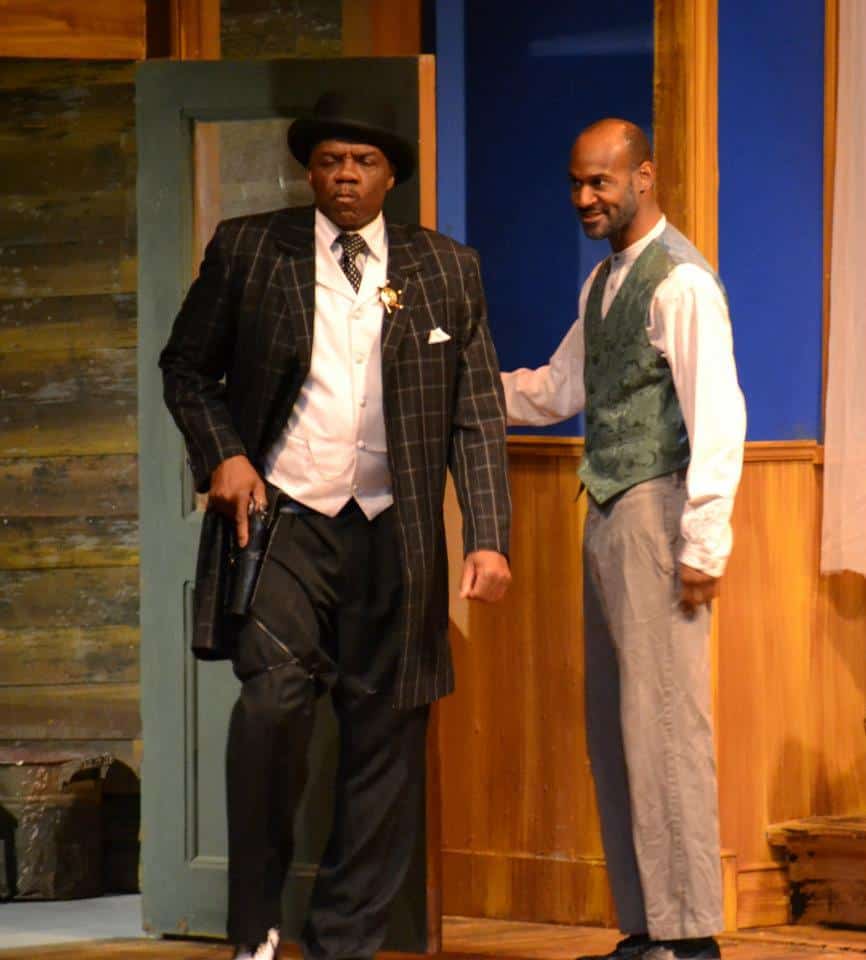
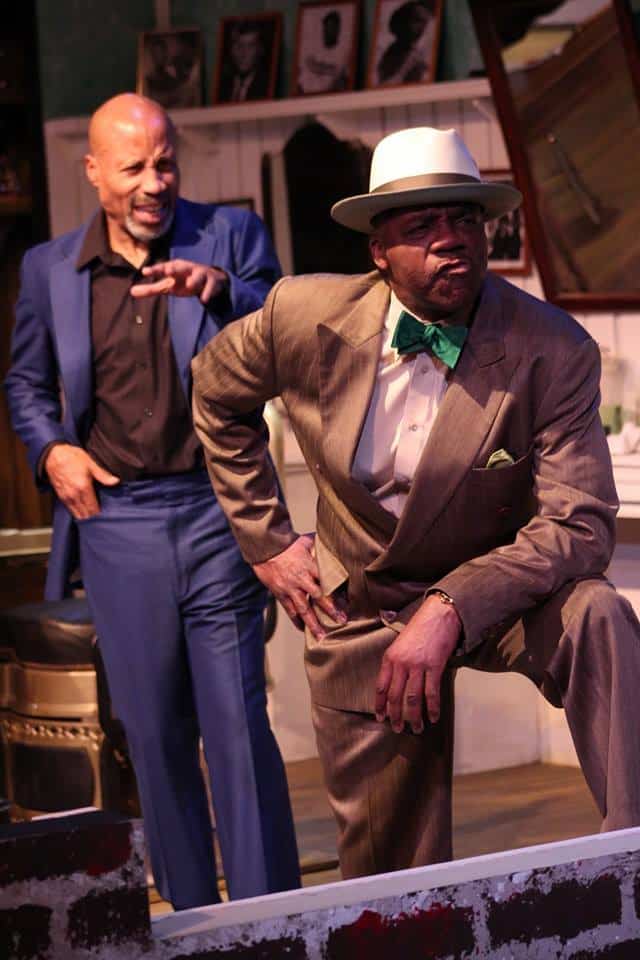
About eight years ago, he decided to venture into filmmaking by creating a 7-minute film for the 48-Hour Film Project – Cleveland. He enjoyed the experience and learned a lot during the seven years he participated but wanted to progress beyond the requirements of the project.
“By that time, I didn’t like being told what to do, and I’m a drama guy so didn’t want to make sci-fi or westerns,” Calhoun said. “Let me make the film I want to make, because that way you get the best film.”
Taking his camera down to the barbershop
For several years, Calhoun’s friend and business partner Clarence Gilmore had been repeatedly suggesting that they shoot a film at the tonsorium he frequents: Diamond Cut Barbershop at 5139 Superior Avenue.
“I wanted to do a short film, and I was looking for a nice, urban community, Cleveland-related, not far from East Tech,” Calhoun recalled. “So, I went in one day just as an observer with my notepad, and I liked the owner. He’s an entrepreneur and had renovated the building, and he was just so good I decided to put him in the film!”
The owner, Asu Mook Robinson, is also a city councilperson in Richmond Heights. He had so much fun watching the cast and crew work behind the scenes he almost forgot the lines Calhoun wrote for him after listening to his barbershop banter.
“I thought they were going to shoot a ‘hood’ type movie with an iPhone,” Robinson said. “Man, they brought so much stuff in here, it was impressive the elaborate ways they changed the whole place from a regular barbershop into a motion picture studio.”
Gilmore, who’s been a customer at Diamond Cut for years, grew up around the barbershop that his father owned for 40 years. He feels at home hanging out there with other regulars, many of whom he grew up with, so he had wanted to make a film about it.
He did not want to copy the “Barbershop” films starring Ice Cube, Anthony Anderson and Cedric the Entertainer, but was confident his “visionary” playwright and screenwriter pal with “a gift for capturing characters and making a story come to life” would create a fresh tonsorial tale.
Roughly a year and a half ago, Gilmore needed a haircut, so he took Calhoun with him. His friend sat in the shop for two hours, observing the energy, action and conversations, jotting notes and even began drafting a story. Shortly after Gilmore got home, Calhoun called him and said “It’s done” and sent him a rough draft.
“After that day I took him back two or three other times, and he likes the environment and what’s going on, and everyone likes him,” Gilmore said. “He started adding things but it was going to be too long for a short film, though we can use it another time. It was just phenomenal that he was able to gravitate toward that place so quickly.”
Gilmore describes the film as “an urban street drama with a few twists and turns, not real gritty but not light either.”
The hair-raising story
His inner-city narrative, Calhoun explained, centers around two young women playing basketball for East Tech who are buffeted by the challenges of a world of drug activities. One girl, Princess Patterson, has no father and her mother is on drugs; the younger girl, Jinx, is mute as a result of domestic violence and basically living on the streets.
The owner of the barbershop, Big Cal, as played by Calhoun, mentors them and helps them navigate that rough and, at times, hostile setting.
“The movie is about these phenomenal young basketball players in the inner city surrounded by drugs and drug lords and violence, but you have to side-step those ills to survive,” said Calhoun, who coached girls basketball at Glenville for several years. “I just wanted to play Big Cal because I am Big Cal, though I’m not a drug dealer, but I’ve dealt with those ills of society.”
Calhoun cast a young member of his core company of actors that he works with, Logan Dior Williams, as Princess. He added the character of Jinx after a former teaching colleague at Glenville told him about Aaliyah Wagner, one of her students who wanted to get into film.
The remainder of the cast features a couple of his veteran core company members, Darryl Tatum and Rodney Freeman, who have starred in many of his plays and films over the years. Another of his students at Glenville, now an accomplished actor at Karamu, Darelle Hill, plays a police lieutenant, and his friend Tina Hobbs from The Talent Group suggested Kamry Williams to play Big Cal’s female co-star.
Calhoun hired his fraternity brother and long-time production colleague and filmmaker Devon V. Collins from STIMULI FILM as cinematographer and editor. Since he was going to act in the film he asked Gilmore, who normally handles camera and other production duties, to helm “Fade 2 Black,” giving him directing experience.
Although a personal commitment kept her from playing a featured acting role, another long-time company member Mia Jones handled the costuming responsibilities.
“With each project Cal works on, he does his best to create opportunities for other people, whether to act in the play or film or be part of the production,” said Jones, who works as a costumer at several Cleveland theaters. “There’s a core of us he writes parts for, and that helped us build our craft or branch out and get work in other areas.”
Calhoun’s life in front of another camera
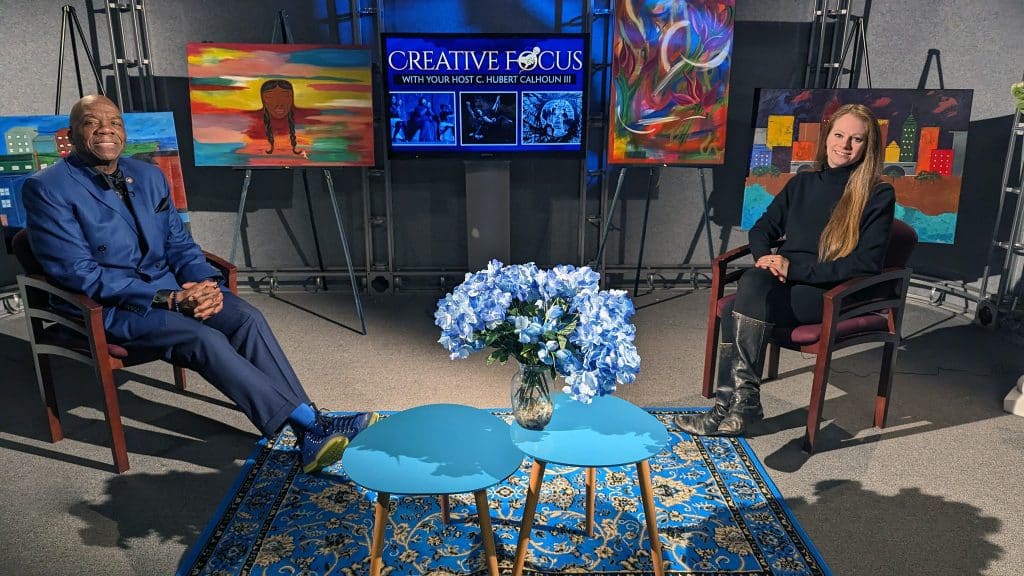
When he’s not writing or shooting a new film, Calhoun has worked at TV20, Cleveland’s cable station, since 2022. There he hosts the arts program “Creative Focus,” which allows him to interview prominent people in the arts and cultural worlds, and “Conversations with Cal,” where he can interview accomplished people in other fields.
Previously, he managed arts and cultural activities for eight years under Cleveland Mayor Frank Jackson, whom he had known for several decades because the two worked out at the same YMCA downtown and ran on the Tri-C Metro track.
In addition to producing some of his plays in the City Hall rotunda, Calhoun curated visual artists’ works throughout the building and also initiated Food Truck Fridays for the surrounding community during the summer.
As he did with his entire staff, Jackson helped Calhoun identify his role at TV20 so that he would have continued productive employment that he would enjoy after the mayor decided to retire from public life in 2021.
“No matter where you put Cornell, he will find a way to be great,” Jackson said. “He’s creative, and he has the ability to use his traditional mindset and honor the past, and as a very sensitive person but also intuitive about what’s going on around him, he can put that into an artistic form.”
As for his future, Calhoun plans to keep making films. He would love to get one of his productions on Netflix or another high-profile platform. He and his agent have reached out to Tyler Perry, Spike Lee and Ava DuVernay, but no response yet.
He would also love to see his theatrical masterpiece “The Mighty Scarabs” produced at another theater in the U.S.
“My father worked until he died, and I wouldn’t be surprised if I’m the same person, because I don’t see a reason to sit home unless I have to,” Calhoun said. “I enjoy getting out, meeting people, interviewing people in the arts and outside the arts.”
Calhoun also has a reputation for draping his still athletic, basketball player’s lanky frame in sartorial splendor.
“I love getting dressed, and I spend a lot of money on clothes, so I’m going to wear them,” said Calhoun, who frequently pulls from his personal wardrobe to costume his characters in plays or films.
He adds with a sly smile: “If I retire, they’re just going to sit in the closet because I won’t have any other reason to wear them.”
Keep our local journalism accessible to all
Reader support is crucial as we continue to shed light on underreported neighborhoods in Cleveland. Will you become a monthly member to help us continue to produce news by, for, and with the community?
P.S. Did you like this story? Take our reader survey!
Author

Related Articles

The Movie Nerd Report: 3 film festivals this week in Northeast Ohio
Plus, see what other new releases and classics are playing at independent theaters around you!
Walking Cleveland’s past, one story at a time
“How much of Cleveland do I pass by without knowing the story?”
More than a card: Why Cleveland Public Library still matters in the digital age
September is National Library Card Signup Month. The Land talked with Cleveland Public Library Executive Director Felton Thomas, Jr. at the Main Library downtown.


