
Clevelander Justine Siegal says “Play Ball” for inaugural season of Women’s Professional Baseball League
The league is partially the result of her lifelong mission to break the barrier for women in professional baseball.
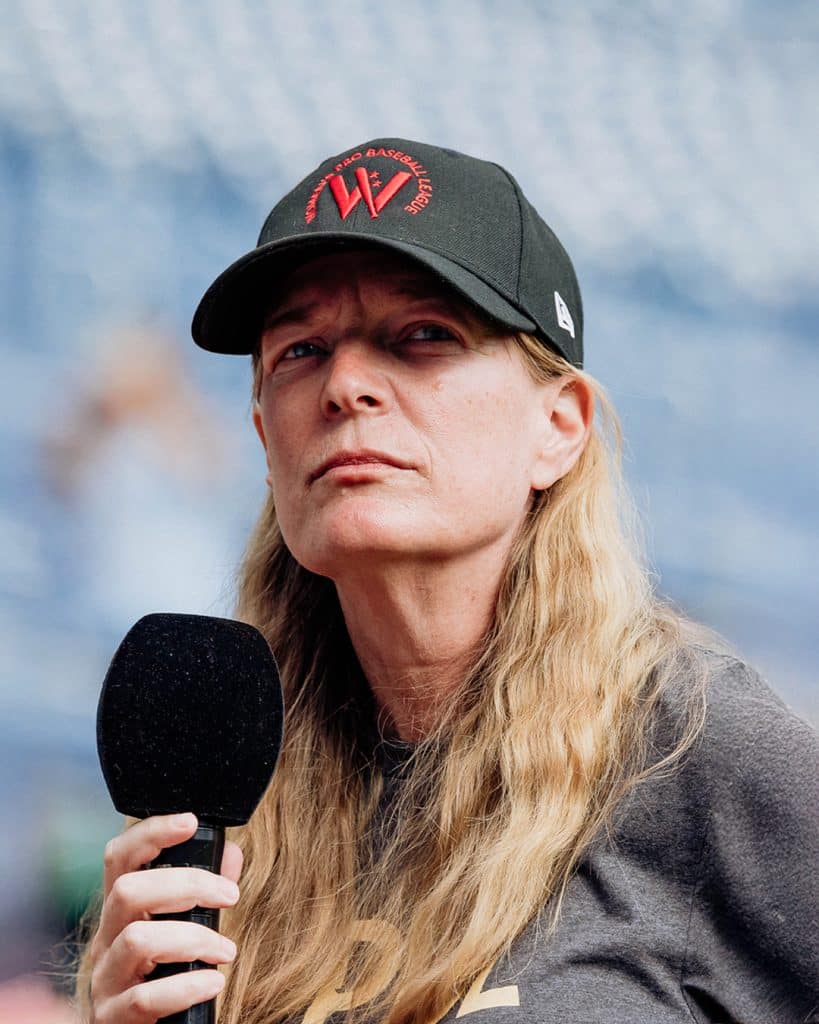
On Saturday, August 1, Justine Siegal once again made baseball history when the Women’s Pro Baseball League (WPBL) took the field for the first time. Siegal is the co-founder and first commissioner of the new league. She said the league is partially the result of her lifelong mission to break the barrier for women in professional baseball.
“There’s an appetite to watch baseball,” Siegal said of the various levels of America’s pastime. “The WPBL may be seen as somewhat of a novelty, but in the end it’s just baseball, and that’s what the fans are going to fall in love with.”
The inaugural eight-week season started in August and continues into September. The season features four teams: the Boston Hunters, the Los Angeles Queens, the New York Heights, and the San Francisco Firebells.
All games will be played at Robin Roberts Stadium in Springfield, Illinois.
“We chose to stay in one place to cut down on travel and production costs and just to showcase the product,” Siegal said. “It’s not uncommon for emerging leagues to go in one place because travel is one of the biggest costs of pro sports.”
They chose Springfield because it was the site of the first professional women’s game on September 11, 1875, when two all-female teams, the Blondes and the Brunettes, squared off in a paid exhibition game. The Blondes defeated the Brunettes 42-35.
Each team will play 15 games, with the regular season standings determining the matchups for the league’s first-ever playoffs.
According to the WPBL website, the playoffs will begin on Sept. 9 and each matchup will play a three-game series to earn a spot in the inaugural WPBL Championship. The winners of that five-game series will become the first-ever WPBL Champions.
Siegal wants fans to know that whether they come to a game or watch WPBL online or via another broadcasting platform, they’re going to see play that’s driven by passion.
“They’re going to see the same stuff that they see in other pro leagues such as a great pick out of the hole, sliding into home to win a game, it’s just baseball,” she said. “That’s what we play, but we play with an intensity because we had to fight just to be in this moment.”
The WPBL games, Siegal pointed out, represent the first time in 72 years that women have had an opportunity to play professional baseball.
From 1943 to 1954, The All-American Girls Professional Baseball League existed to keep baseball alive while male players were serving in World War II.
Founded by Chicago Cubs owner and chewing-gum mogul Philip K. Wrigley, the original pro women’s league was fictionalized in the 1992 film “A League of Their Own,” directed by Penny Marshall and starring Tom Hanks and Geena Davis.
Also in the early 1950s, three pioneering Black women shattered gender and racial barriers by playing professional baseball in the Negro Leagues, primarily with the Indianapolis Clowns.
The WPBL’s first pitch
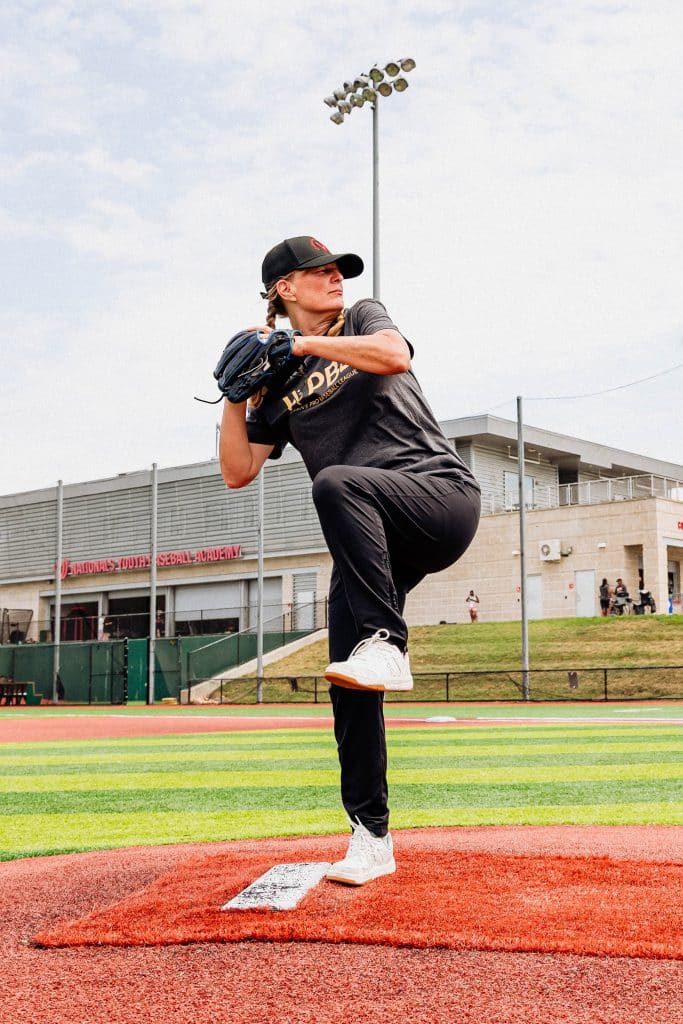
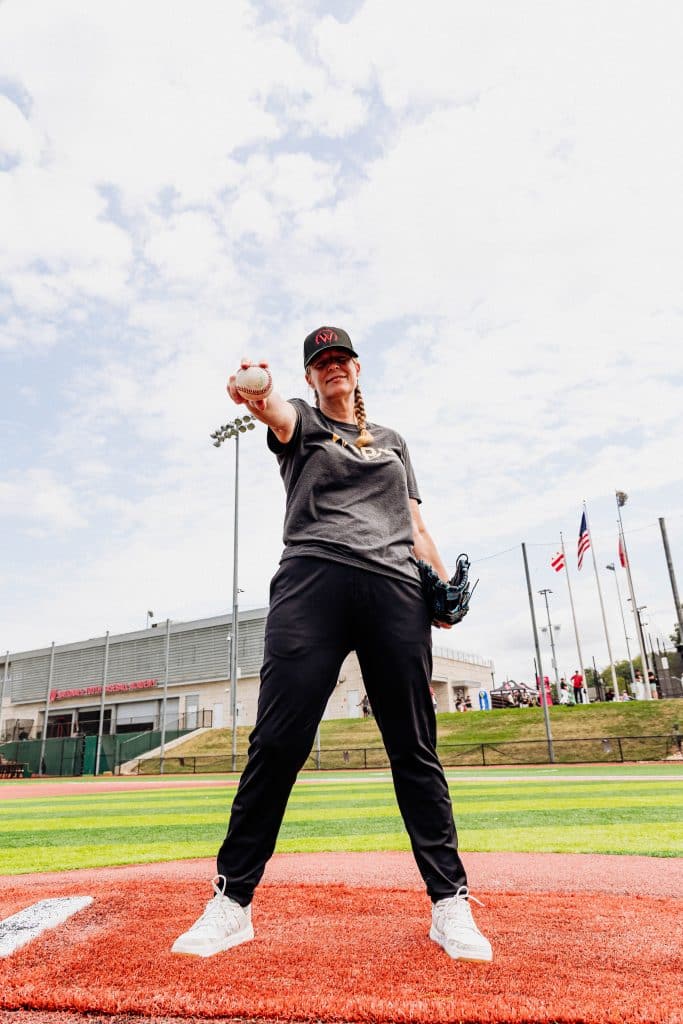
In 2024, Keith Stein wanted to start a women’s professional baseball league, so he approached Siegal to be his co-founder.
Stein, a Canadian lawyer, entrepreneur, and sports executive, is the CEO and owner of the Toronto Maple Leafs of the Intercounty Baseball League, Canada’s independent professional baseball league.
“I ended up at the top of Google,” Siegal said, because of her extensive pro baseball resume. “Keith called me and asked if I’d co-found this league with him, and I said yes.”
The two baseball devotees were inspired by the commercial success and stability of the Women’s National Basketball Association (WNBA) and National Women’s Soccer League (NWSL).
For Siegal, the opportunity represented the culmination of “a lifetime of building and frustrations and moving brick walls inch by inch” to develop the first major women’s pro baseball league in 72 years.
Plans to expand next year
“We’re definitely looking to expand next year, but you can’t overexpand too quickly,” Siegal said. “We don’t plan to stay in Springfield, either, but we will expand and represent different cities and have opportunities in those cities to play.”
Is a Cleveland team in the plan?
“Cleveland has a chance because I’m here, and I would love to see it,” Siegal said with a smile. “It’s a strong bet that Cleveland would love to have a team in Cleveland, too. Cleveland is a great sports town. I love the people in Cleveland.”
Although it’s too early to say for certain, Siegal said a number of cities have approached them about owning a team. According to Siegal, her and Stein’s 10-year plan for the WPBL shows teams in at least a dozen cities by then.
A strong player pipeline
Currently, approximately 30% of the players are international players. Siegal explained that the majority of the players either played baseball throughout their lives or played baseball early and then went to a Division 1 college softball program, and while they were doing that also played for their national baseball team, so they never really left baseball.
She added that the league does not have a lot of women who played only softball, because it’s more difficult to transition from softball to baseball than from baseball to softball.
“We don’t have hundreds of thousands of girls or women that are playing baseball every year, but the ones that do play sure are good because they kept going and had to be one of the best players to remain on that team,” Siegal said. “So maybe there are fewer, but there are more diamonds.”
One of those diamonds, London Studer from Columbus, Ohio, was selected 19th in the first round of the WPBL draft. She will play first base and pitch for the New York Heights.
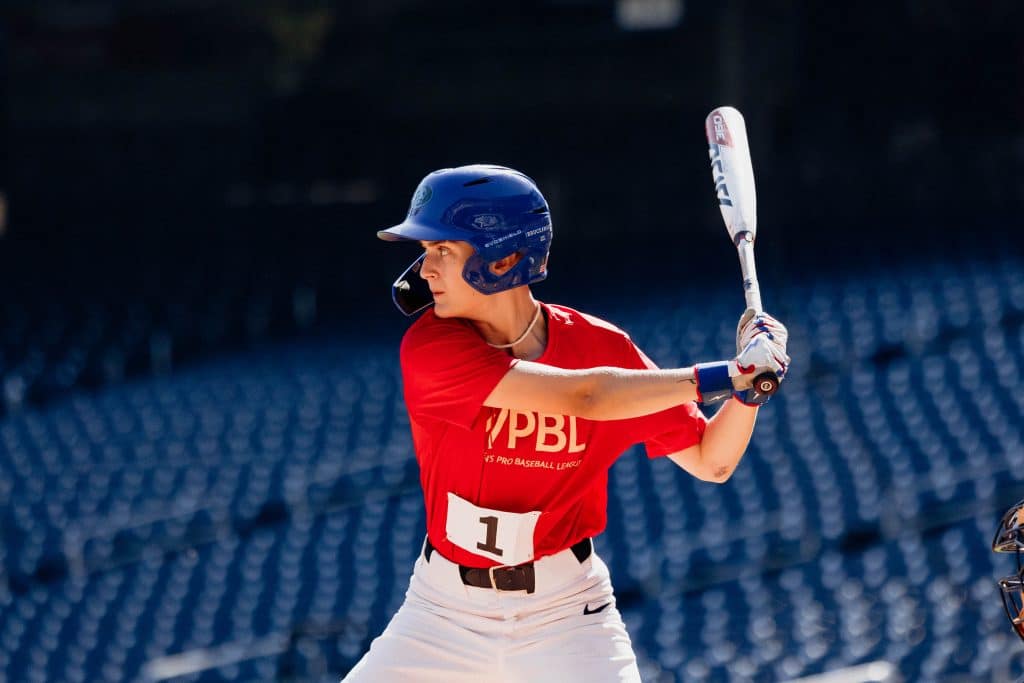
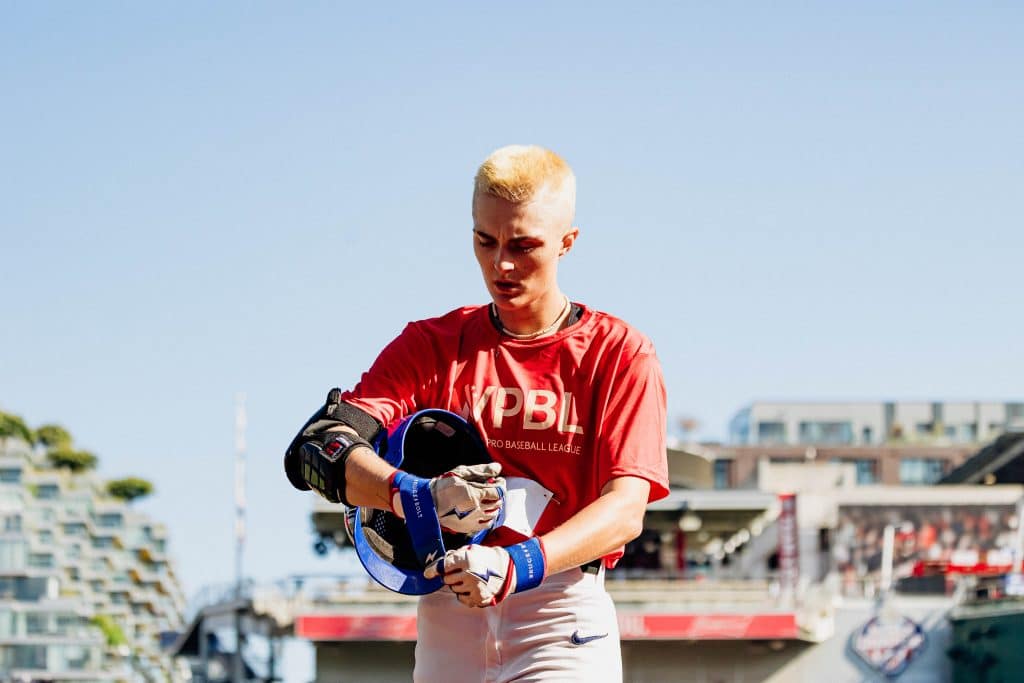
“My dream in life was to be a professional baseball player,” said Studer, who played baseball at every level she could, including travel teams and high school baseball with boys, USA Baseball and the MLB Elite Development Invitational. “When those dreams started to dim and I thought maybe this isn’t going to work out, Justine came up with the WPBL, and I knew I needed to make this dream come true.”
The week before the WPBL’s debut in Springfield, Studer served as a special guest coach in the annual Baseball For All (BFA) Nationals tournament in Rockford, Illinois. She played in the BFA as a youth. Siegal, who founded BFA to provide young girls opportunities to play and coach baseball, knew of Studer’s skills on the diamond and recruited her to tryout for the WPBL.
“I’m looking forward to making history, being one of the first women to do it and proving to all of these people that we’ve accomplished a lot,” Studer said. “We haven’t had a league since 1954, so in 70+ years we’ve finally been able to do something about girls pro baseball and giving girls another level of play to look forward to.”
One irony for the WPBL is that, while women fought to have baseball and softball be considered separate collegiate sports, the NCAA rules requiring baseball players preserve their amateur status now prohibits them from playing pro baseball until after they graduate.
“We’re in good shape from a pipeline standpoint, because we don’t need 100,000 people,” Siegal added. “We need people who are very good at what they do, and we are recruiting from all around the world, because women are playing for their national teams.”
Currently, 25 counties have national women’s baseball teams, and Team USA is number two after Japan in the world ranking, and Canada, Australia, Mexico and Venezuela also have strong teams.
Eventually, the WPBL plans to create developmental farm system teams. For now, they can recruit from the national training camps or from high school or college baseball programs.
“We do have some 18- or 19-year-olds that we’ve signed coming out of high school baseball,” Siegal said. “One player hit over .500, was an All-Star and is now in our league.”
Siegal as baseball pioneer
Among her impressive hardball credentials, Siegal was the first woman to coach men’s professional baseball in 2009 when she worked for the Brockton Rox in the Can-Am League in Massachusetts. (In 2020, the independent professional baseball league operating in the Northeastern United States and Eastern Canada folded, and the remaining franchises merged into the Frontier League.)
In 2011, Siegal had offers from the Los Angeles Dodgers and Oakland Athletics to become the first woman to throw batting practice to a major league team. She turned them down so that she could make history in her hometown for the then-Cleveland Indians.
The jersey she wore through the Indians’ spring training session that year now hangs in the Weitzman National Museum of American Jewish History in Philadelphia.
“Then in 2015, I became the first woman to coach within Major League Baseball, and it was 10 days with the A’s, but it took a lifetime to get those 10 days,” Siegal says. “It was instructional league, and it was in the fall, but that jersey is now in the Cooperstown Baseball Hall of Fame.”
The little league manager who didn’t get it
Players and fans of women’s professional baseball owe a great deal to Siegal’s Tris Speaker League manager when she was 11.
A gifted athlete, as a child Siegal played any sport that a girl could play outdoors. A “very active kid,” she also loved riding her bike anytime and everywhere.
But her love of competing in athletic contests and striving to achieve goals all changed because of one coach. Although soccer was her favorite game, she thoroughly enjoyed participating in the Tris Speaker League games.
Then one day, a new coach waited until he was alone with young Siegal in the dugout. She remembers him towering over her, as if he were a giant. He told her he did not want her on his baseball team. Girls should play softball.
“There was a part of me that just said, ‘Well, I’m never going to leave. I’m going to play baseball forever,’” she recalled. “The more people tried to take the game away from me, the more I held on, and the more I loved it, and that’s really how baseball became my thing.”
Her favorite childhood memories were attending Cleveland Force soccer games. She spent every summer attending Force soccer camps and knew every player by name.
So, she probably would have moved on to playing higher levels of soccer and kept dreaming of becoming a professional soccer player. If she hadn’t been told to quit.
“I just couldn’t let the naysayers win,” she said. “I couldn’t let these guys who told me I couldn’t do it be the ones who got me out.”
Siegal encountered similar resistance her freshmen year at Hawken School. She went to boarding school in New Hampshire for two years, and she pitched in a Florida high school baseball tournament one summer and beat Hawken. When she returned to the school her senior year, they let her play.
Higher education and baseball
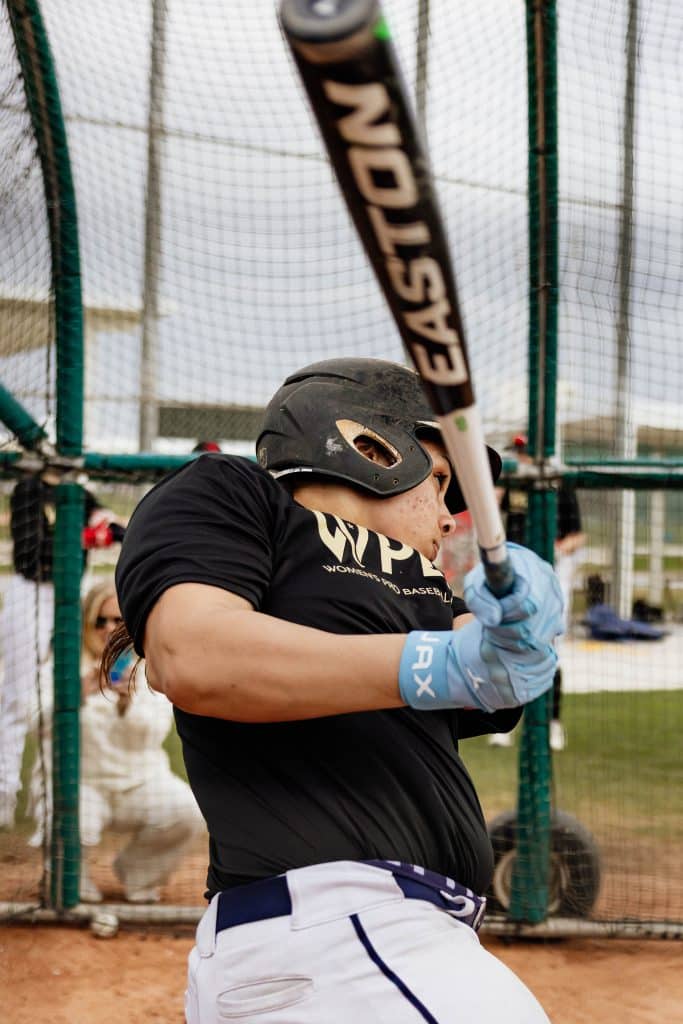
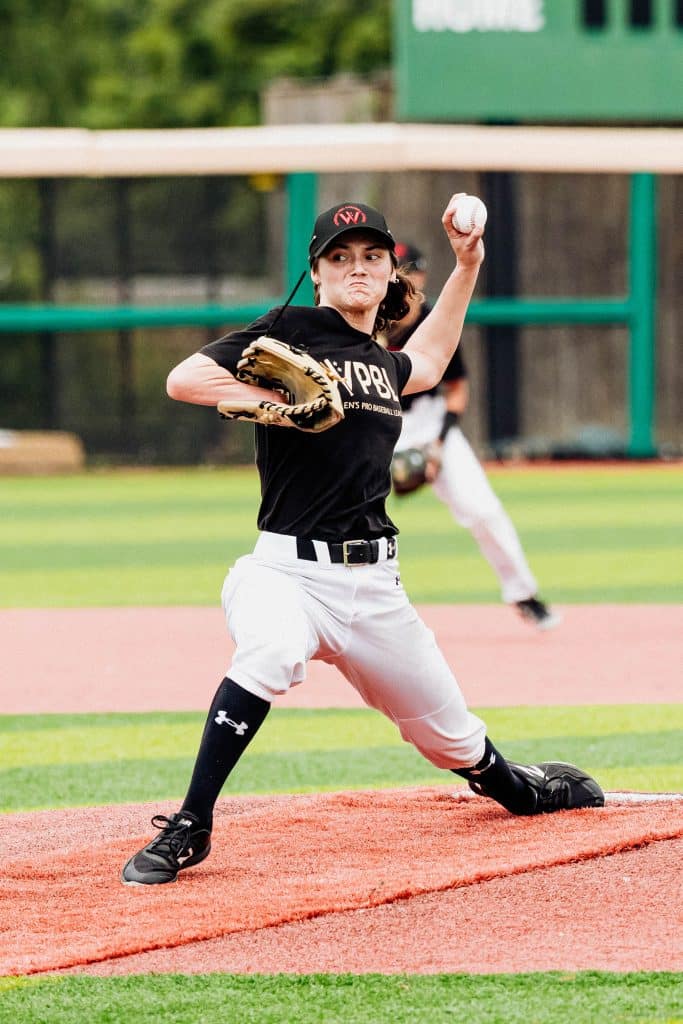
At St. Olaf College in Northfield, Minnesota, she earned her Bachelor of Arts degree in Psychology in 1998. She wrote a paper entitled “Variations of Leadership: Military, Religion and Baseball.”
She played fall baseball, but lost her amateur status when she attended the Colorado Silver Bullets’ Spring Training.
In 2000, she earned her Master of Arts degree in Sport Studies at Kent State University.
While working on her Ph.D. in Sport and Exercise Psychology at Springfield College in Springfield, Massachusetts, that she completed in 2013, Siegal also graduated from the Major League Scouting Bureau scout program. She spent the 2012-13 season as an associate scout for MLB’s Scouting Bureau responsible for the Los Angeles area.
In 2010, while still in college, Siegal had her daughter, Jasmine. That made her think about the next generation of women who might want to play baseball.
“I didn’t want my daughter to face the same discrimination that I faced,” she recalled. “It was a light bulb moment for me. Instead of thinking about my own playing career, I could build for the future.”
That’s when she founded BFA. The nonprofit’s mission is to build gender equity in baseball by creating access for girls to play, coach and lead. The organization is a member of USA Baseball and recognized by the MLB Player Trust.
“About 25% of the WPBL players played baseball for my nonprofit, so I got to know these players when they were 11 and 12 years old just looking for a voice and a chance to meet other girls,” Siegal said. “Now we have the honor to draft them into a pro league that I started, and that’s a really cool circle.”
Keep our local journalism accessible to all
Reader support is crucial as we continue to shed light on underreported neighborhoods in Cleveland. Will you become a monthly member to help us continue to produce news by, for, and with the community?
P.S. Did you like this story? Take our reader survey!
Author

Related Articles
The Movie Nerd Report: 3 film festivals this week in Northeast Ohio
Plus, see what other new releases and classics are playing at independent theaters around you!
Walking Cleveland’s past, one story at a time
“How much of Cleveland do I pass by without knowing the story?”
More than a card: Why Cleveland Public Library still matters in the digital age
September is National Library Card Signup Month. The Land talked with Cleveland Public Library Executive Director Felton Thomas, Jr. at the Main Library downtown.


