
Meet City Goods, a collective of independent local makers in Ohio City’s Hingetown
The seven mini hangars built in 2021 were intended to be work-live residences for artists. Instead, they’re home to City Goods, a retail collective of makers founded by entrepreneur Sam Friedman.
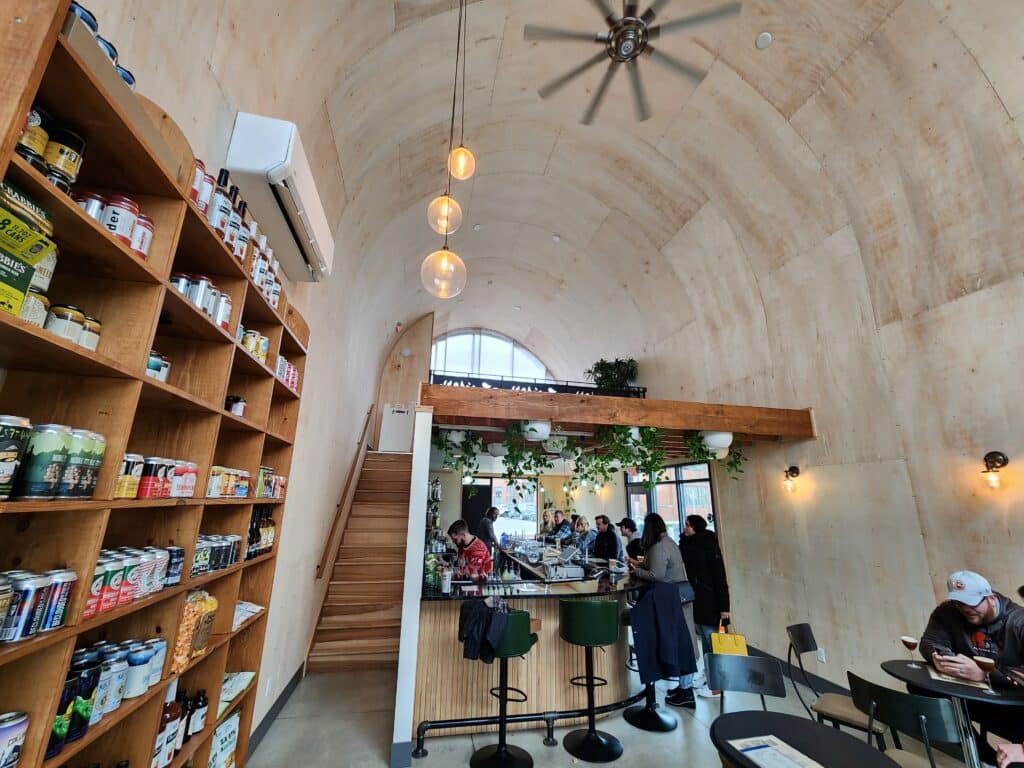
In September 2022, Ohio City welcomed a new shopping destination to the Hingetown District – City Goods, a collective of 23 local businesses that offer hundreds of locally-made products, share expenses, and manage resources together.
“In its simplest form, City Goods is a business model – we take space and let people share it,” said founder and entrepreneur Sam Friedman.
Inside the unique complex, the entrepreneurs share the cost of rent, employees, and utilities, thus minimizing the burden of expenses that independent businesses would have in their own stores. With spaces available at City Goods for between $500-$2000 a month, small businesses can enter the market with less risk than taking on a traditional lease. The monthly payment covers rent based on square footage plus a share of overhead costs (including a few City Goods employees) and utilities.
The 23 businesses are located within a complex of seven contemporary, industrial-themed hangars – so named because they resemble mini airplane hangars – that line W. 28th St. and Church Ave. in the Hingetown area of Ohio City.
Outside of sharing expenses, inhabitants also share a culture of supporting local business and entrepreneurship. Friedman said younger generations of shoppers are excited to spend their money at locally owned and operated places. As part of their leases, City Goods’ entrepreneurs keep all of the revenue from the sales at their individual locations.
“[The vendors] pay their monthly rent and keep 100% of their sales,” said Friedman, who receives no compensation from City Goods. “City Goods is never taking a penny from an item sold or from a vendor.”
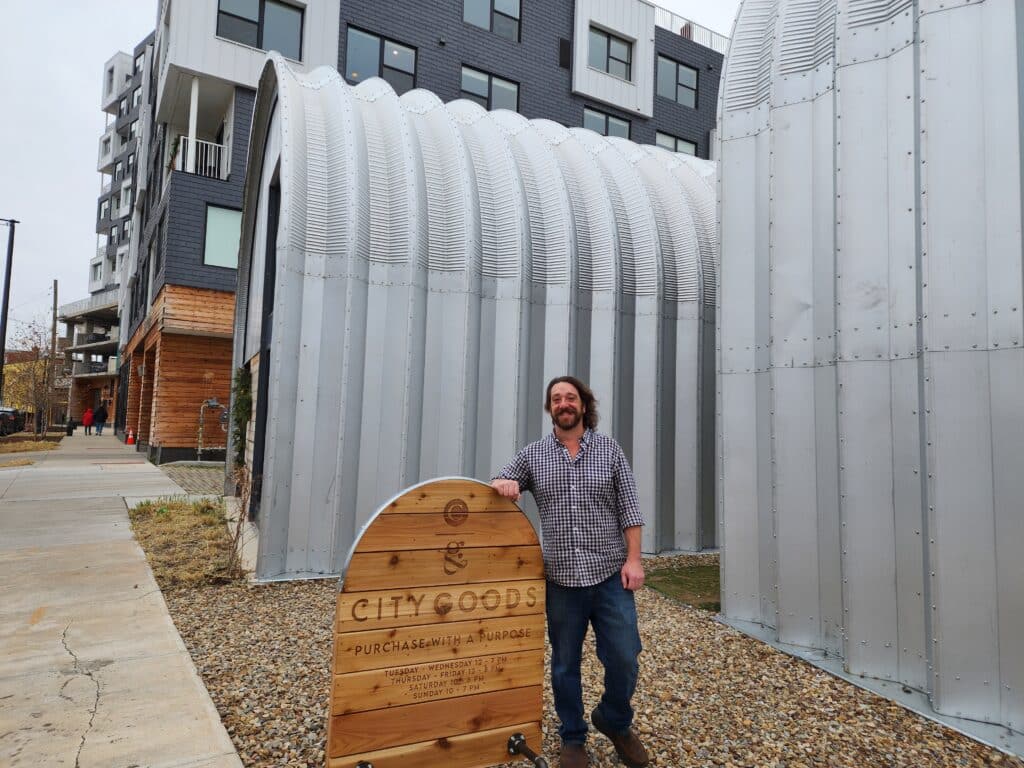
From Soap and Salve to brick and mortar
Prior to the development of the hangars by Hingetown developer Graham Veysey, Friedman was concentrating on growing his family’s company, Chagrin Valley Soap and Salve, as its brand director. He said the company produces the largest catalog of USDA-certified organic body care products in the United States. Despite their e-commerce success, until recently Chagrin Valley Soap and Salve had yet to truly fulfill their desire for a successful flagship store in Cleveland.
“I’ve always thought that any great brand should have an awesome shop in its hometown,” said Friedman. “But it’s been very difficult, and I’ve tried a few areas of Cleveland to open one. The last one for six years was at the historic 5th Street Arcade Downtown – it’s a beautiful and centrally located arcade, but inside it’s a ghost town.”
While the company worked to sustain their brick-and-mortar presence, they supplemented their in-person sales by attending a variety of maker markets and pop-up events throughout the city. Through 15 years of attending markets taking place in warehouses, parking lots, and various other places across Northeast Ohio with his vending gear in tote, Friedman recognized that without permanent retail locations, fellow makers were struggling with getting their products in the hands of customers.
“There are all these amazing small brands, makers, and people who’ve come up with great products and brands in Cleveland,” said Friedman. “But then, how do we get the product or brand to the public? Or how does the public get to me? And that’s how we ended up at a rainy parking lot at a plastic table. So I believe that we deserve better.”

Bridging the divide between makers and consumers
Recognizing the divide between independent makers and consumers, Friedman decided to find a solution. His answer was to create a cooperative maker market, but he had to find the right location.
The Hingetown district caught Friedman’s eye for its walkability, surging density, and demographic of people who are inclined to spend locally. However, affordability was an issue. “Who can come in to develop, to take space and afford retail space?” Friedman said. “It’s not the little guy. And that’s where this model, the picture of us (makers) sharing, could come into play.”
The original vision for the seven hangars, which were built in 2021, was live-work artist residences. Sensing that the hangars could be put to better use, Friedman pitched his idea for a cooperative maker market to hangar owner and developer Graham Veysey. In February 2022, they signed a lease for all seven hangars.
Friedman then hired Liz Painter as general manager of City Goods, and together they went out to find vendors to fill the spaces. In doing so, they worked with a range of community groups, emphasizing a desire for vendors from traditionally underrepresented backgrounds who would be interested in joining the market. They pitched City Goods as an option for small business owners who were ready for the next step, but didn’t quite know what the next step was, said Friedman.
Friedman got the keys to the site in July, just two months shy of opening. Within two months of signing the lease in February, Friedman and Painter had found enough vendors to fill the spaces at City Goods. But the hangars still needed modification since they were originally built as residences. City Goods had contractors transform the kitchens into check-out counters while vendors started moving into their stores, Friedman said. A quick turn-around was necessary, says Friedman: City Goods needed to quickly generate revenue to pay rent to the developer.

Taking flight
By September 2022, seven months after Friedman signed the lease, six of the hangars became home to the 23 independent businesses – including Chagrin Valley Soap and Salve.
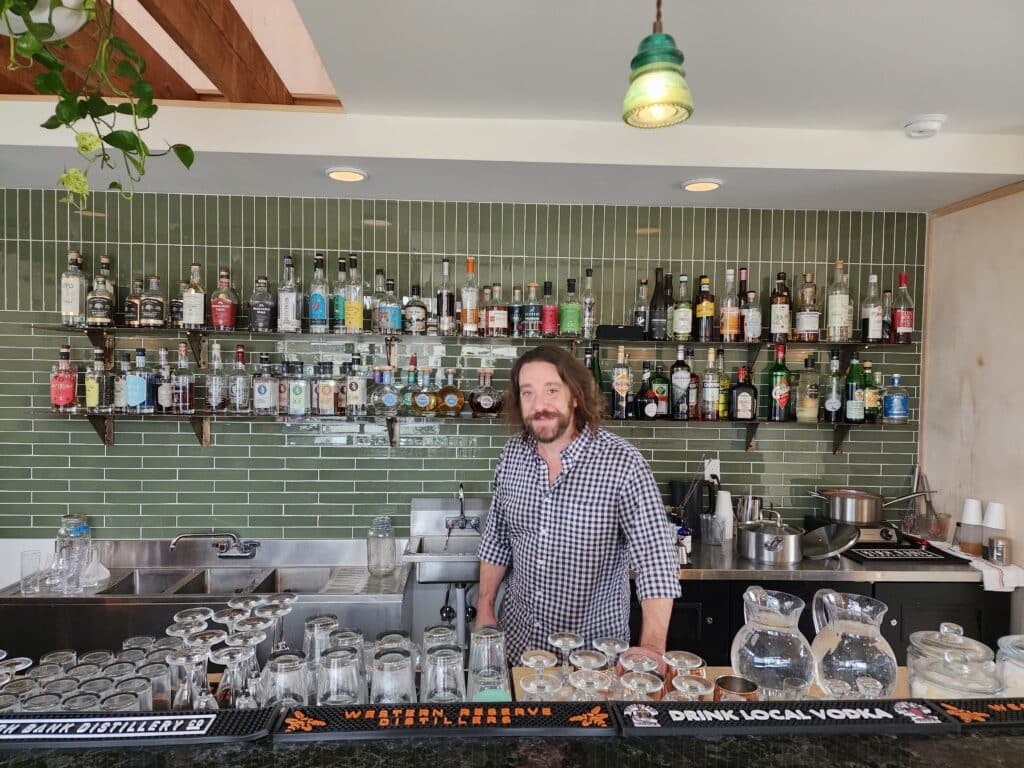
In the week before opening, the seventh hangar was furnished to become City Goods’ own Hangar Bar, where the interior is now clad with fixtures that were salvaged and fabricated in Cleveland. The bar sells almost exclusively Ohio-made beer, wine, spirits, and cacao drinks. Profits from Hangar Bar, which is staffed by City Goods employees, are City Goods’ sole source of internal revenue, meaning that all profit generated from bar sales are directly put back into City Goods’ operations – for example, Friedman said, to commission someone to design City Goods’ logo.
Now, nearly six months after their opening, and having successfully made it through their first holiday shopping season, City Goods is just getting started and will continue to evolve, says Friedman.
For starters, in the springtime, they’ll be expanding their operation to include an outdoor market on weekends to include another dozen or more vendors who will be able to set up at City Goods’ courtyard – just as Friedman did with his family’s business countless times at other maker markets.
Many of the City Goods vendors carry brands other than their own, multiplying the local impact. “We’re just now seeing how many businesses that we can support – it’s probably going to be around 200 businesses being supported by this project on particular weekends,” said Friedman.
Good brands, good company
The Land recently met with a few City Goods entrepreneurs who took a chance on the business and set up shop in the hangars along with the other two dozen brands who now use City Goods as storefront or as an incubator for their business.
Inside hangar one is Promises to Care, where founder Alicia Cleveland sells skincare products. One of the youngest of business owners at City Goods, she says that being among the makers is inspiring to her and that City Goods has validated their worth as makers in ways that money or popularity cannot. She cites the collective support and encouragement and the value of knowing that all the makers are pursuing a shop-small, sustainable retail model. “City Goods’ model brings in brands who have integrity and purpose,” she said. “It’s a great hub for different authentic brands.”
In addition to Promises to Care, Chagrin Valley Soap and Salve, and other personal care businesses, City Goods has an immediate opening in hangar one. Until the end of January, Little Spark Refill Shop, which sells natural, zero-waste home and personal care products and refills, had its third location at City Goods, where founder and CEO Rachel Regula said she liked “being part of something bigger than corporate brands taking over the market.” Now, as Little Spark expands again in a different location, she said she “chose to leave City Goods to let another small business have our space.” To fill that spot, the first available since the collective opened last September, City Goods is looking for a business whose products would complement the catalog of natural care items in hangar one.
At hangar five, shoppers will find Carmen & Co., where CEO Jasmine Villanueva told us how Covid-19 restrictions pushed her to leave her destination wedding planning company to pursue another passion inspired by her family’s Puerto Rican heritage. Villanueva now designs jewelry, specializing in gold-plated hoop earrings, and she has been selling her wares online since 2020. Men’s and children’s lines of jewelry are on the way, she says.
“When I heard about City Goods, I thought it was the perfect fit, bridging the gap between e-commerce and having a full storefront,” said Villanueva. “City Goods has been incredible, the whole set up and model of it, and makes it extremely seamless and fruitful for us. The marketing, the staff, and the aesthetic of the hangars all align with each other.”
City Goods is located at 1442 West 28th Street, Cleveland. The shops and bar are open Tuesday through Sunday. To reach City Goods, email lizpainter@citygoodscle.com.
Nate Flauto was a participant in The Land’s community journalism program.
We're celebrating four years of amplifying resident voices from Cleveland's neighborhoods. Will you make a donation to keep our local journalism going?
Author

Related Articles
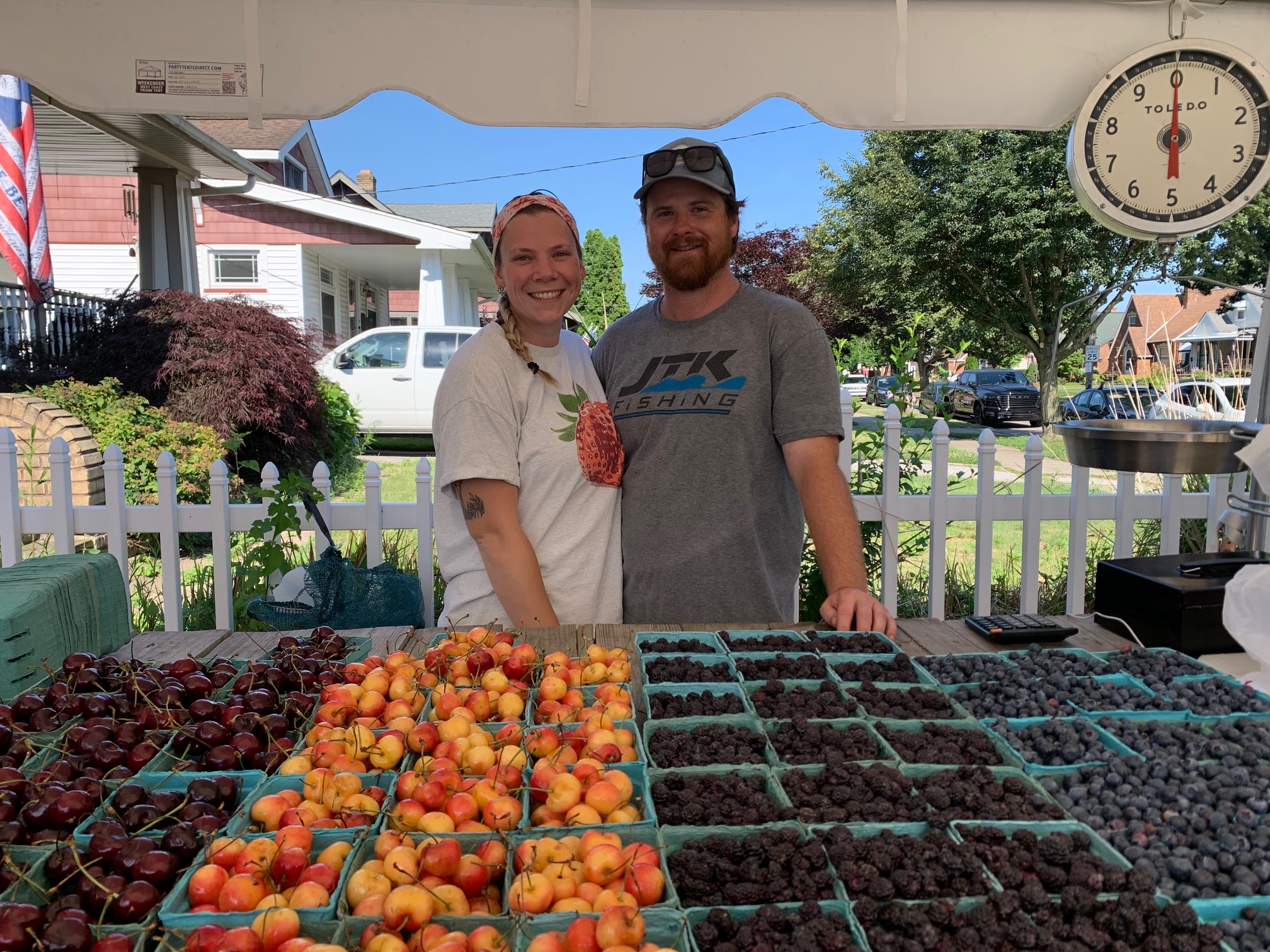
Bringing the farm to the city: Farm Dog Fresh offers fresh, local produce on Cleveland’s West Side
One customer says: “For [Clevelanders], sometimes it’s hard to get fresh, local produce. We need to take advantage of these produce stands for the four or five months out of the year that they’re open.”

Keeping the light on at Can Do Neon
Preserving the art of neon sign making is Craig Alan Nichols’ mission, but he’s in search of a student and medical aid.
New children’s bookstore in Lakewood aims to inspire, delight kids, families
The Wandering Lantern aims to be a cozy, welcoming kid’s bookstore, with space for families to explore reading.


