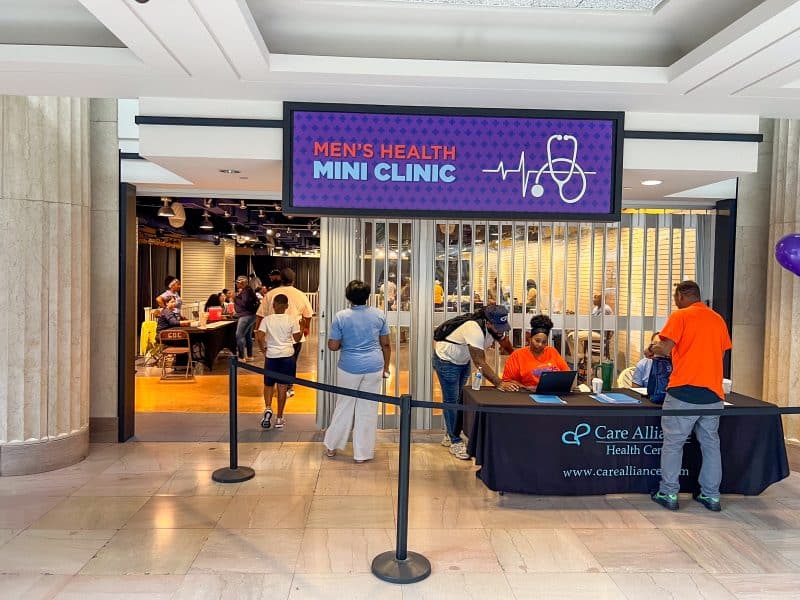
The annual event, organized by the MetroHealth System in partnership with Cuyahoga Community College, emphasized men’s health issues and making change for underserved populations.
If organizers of the 20th annual Men’s Health Fair had aimed to draw as many men as possible to learn to make informed decisions regarding their health, they succeeded – if the massive crowd at MetroHealth-Cleveland Heights was any indication.
According to William Dube, vice president of communications at the MetroHealth System, the fair welcomed nearly 1,000 visitors between the Cuyahoga Community College, Metro Campus, and MetroHealth-Cleveland Heights locations on April 27. In addition, more than 7,000 medical tests were processed, including prostate specific antigen (PSA) tests.
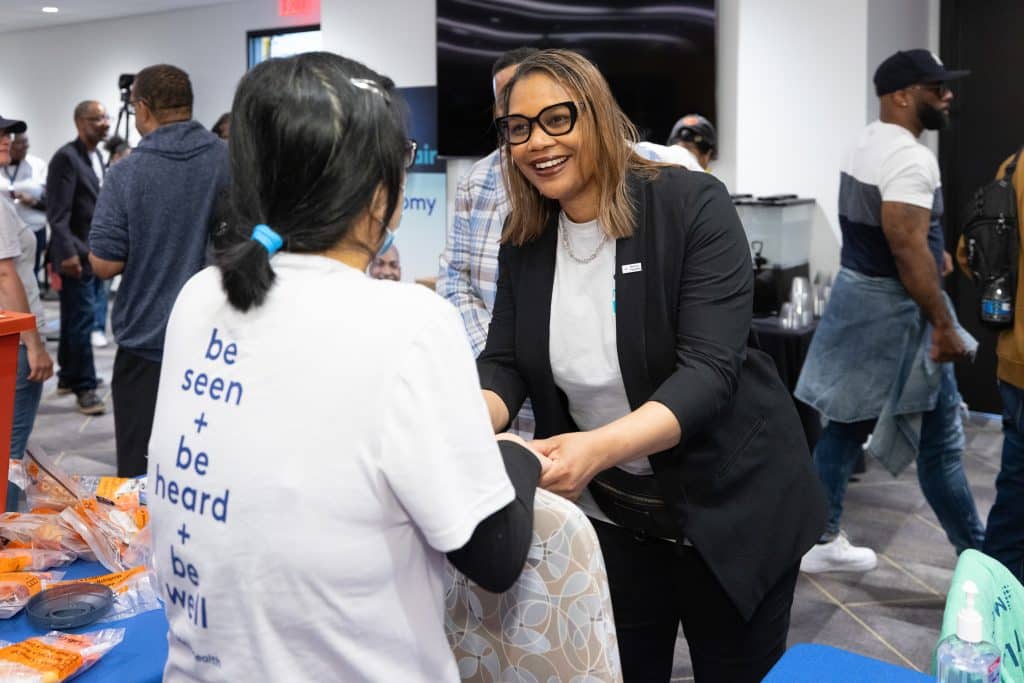
Representatives from nearly every MetroHealth department were represented throughout the first and second floors of the Cleveland Heights fair. Many gave out samples of various products, like sunscreen and Narcan (a nasal spray used to help prevent an opioid overdose), and answered health questions about senior care, mental health and many diseases that men, who notoriously tend to avoid regular checkups, need to identify before they become critical.
Dr. Charles Modlin, a board-certified urologist and medical director of the Office of Equity, Inclusion and Diversity at MetroHealth Medical Center, founded the health fair while working as director of minority health at the Cleveland Clinic.
“An important new initiative this year is the fair’s partnership with Tri-C and Dr. Michael A. Baston, president of Cuyahoga Community College,” Modlin said. “We are partnering with Tri-C because we know an association exists between education, development of economic resources, wealth and improved health. We also know the importance of stressing to the younger generation to understand the importance of routine preventative health screenings, checking for early disease detection and learning healthier behaviors at an earlier age. We are also partnering with the community health student workers at the college.”
Jon Abell, who drove to Cleveland Heights from Oakwood Village, has participated in the fair since its inception. He says this initiative is essential for those with limited or no access to healthcare.
“You get the word out,” Abell said. “Health concerns can sometimes happen during tough financial situations. I remember talking to a guy in line at a past health fair at Cleveland Clinic. He worked at a fast-food place, and prostate cancer ran in his family. The only way he could get a checkup was to come to the fair; outside of that, it would cost him $7,000 to have a doctor refer him. It turned out he did have a prostate issue.”
For all of the good work the fair has done so far, Abell still sees some room for improvement and opportunities for additional outreach.
“I would like to see something more on drug abuse. A lot of our kids now are getting into some heavy stuff, and I’m not speaking about marijuana,” he said. “Some kids may be embarrassed to speak about it, but having this outlet to speak to a professional might make a difference.”
Orignally, the event was known as the Minority Men’s Health Fair. This is the first year “minority” was taken out — as a result, regulars at the fair requested clarification on the change in the event’s title. Dube said the change was made to make it more inclusive.
“MetroHealth chose to rename this signature event the Men’s Health Fair to encourage all to attend and ensure we can support the healthcare needs of everyone,” he said. “The Fair does continue to target underserved populations across the region that need greater access to high-quality care.”
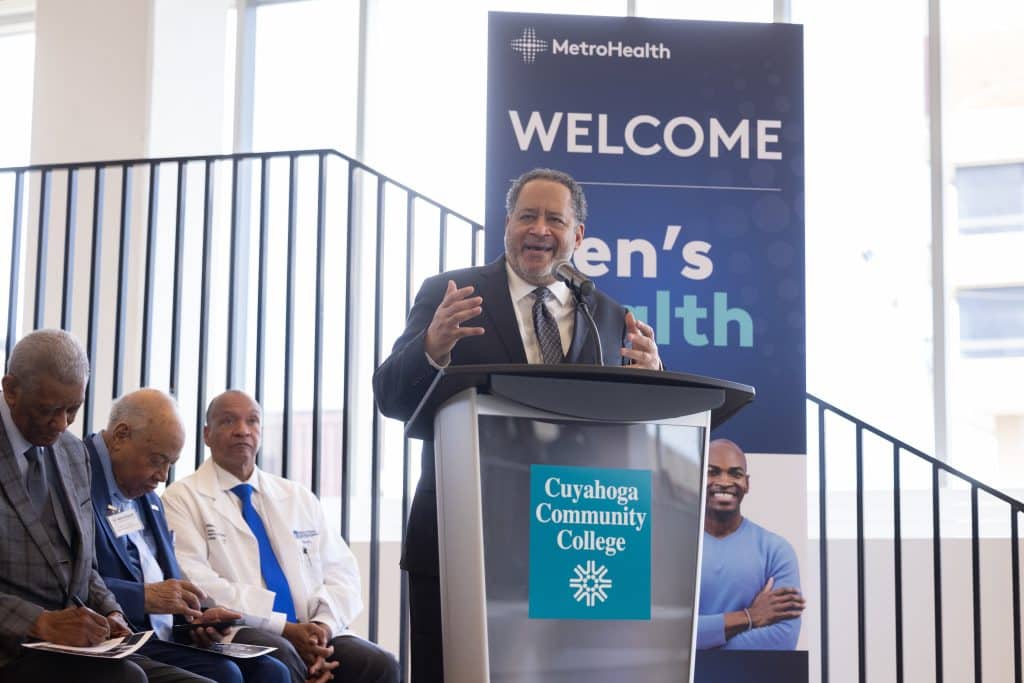
Author and activist Michael Eric Dyson enlightened those who attended the event at Tri-C. Dyson told the crowd he was honored to be a part of this year’s program. His message was primarily focused on the need to advertise the importance of healthy long-term habits.
“We must get people involved,” Dyson said. “Know your PSA level and how weight and stress affect you. I go to events throughout the country, but I’ve never been to one like this, where the power of the people is joined to scientific analysis and research-based reflection. This is tremendous.”
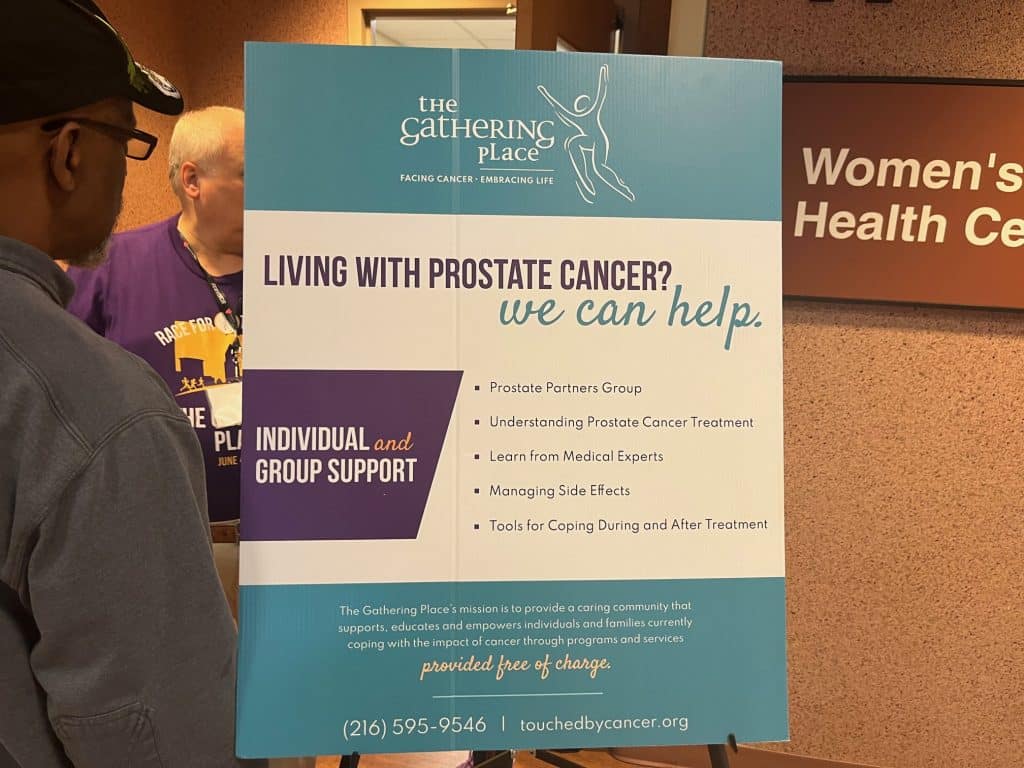
Several MetroHealth staffers took over most of the first-floor pharmacy at Metrohealth-Cleveland Heights to offer various vaccinations. Men were streaming through at a pace that caused at least one provider to force himself to take a break. Pearl’s Kitchen, a locally owned black establishment, prepared salads, sandwiches and other snacks for sale.
Tom Shackleton, a Parma resident, was visiting the fair for the first time, looking to explore his options for living better.
“It’s always good to get yourself checked out,” he said. “Especially for men who might be dealing with prostate and kidney issues and not know. Men often sit on the sideline until some illness forces them to see a doctor. Nothing is bothering me, but I plan to get tested today.”
Airica Steed, president and CEO of MetroHealth, believes the fair saves lives.
“Our outreach is done to eliminate health inequity and make high-quality healthcare more accessible to everyone,” she said. “Sometimes, people cannot come to us for reasons beyond their control. So, we will go to them. This is how we make change.”
Editor’s note: A previous version of this article incorrectly identified Dr. Charles Modlin as a neurologist. We apologize for this error.
We're celebrating four years of amplifying resident voices from Cleveland's neighborhoods. Will you make a donation to keep our local journalism going?