
Op-ed: Cleveland Art Workers want minimum wage for performing artists in Cleveland
Aja Joi Grant spoke with members of the Cleveland Art Workers collective on what it takes to survive as an artist in Cleveland and beyond. The wide-ranging conversation covers the need for an artists’ minimum wage, improved performing conditions, the trapfalls of gig work, and more.
Aja Joi Grant spoke with members of the Cleveland Art Workers collective on what it takes to survive as an artist in Cleveland and beyond. The wide-ranging conversation covers the need for an artists’ minimum wage, improved performing conditions, the trapfalls of gig work, and more.
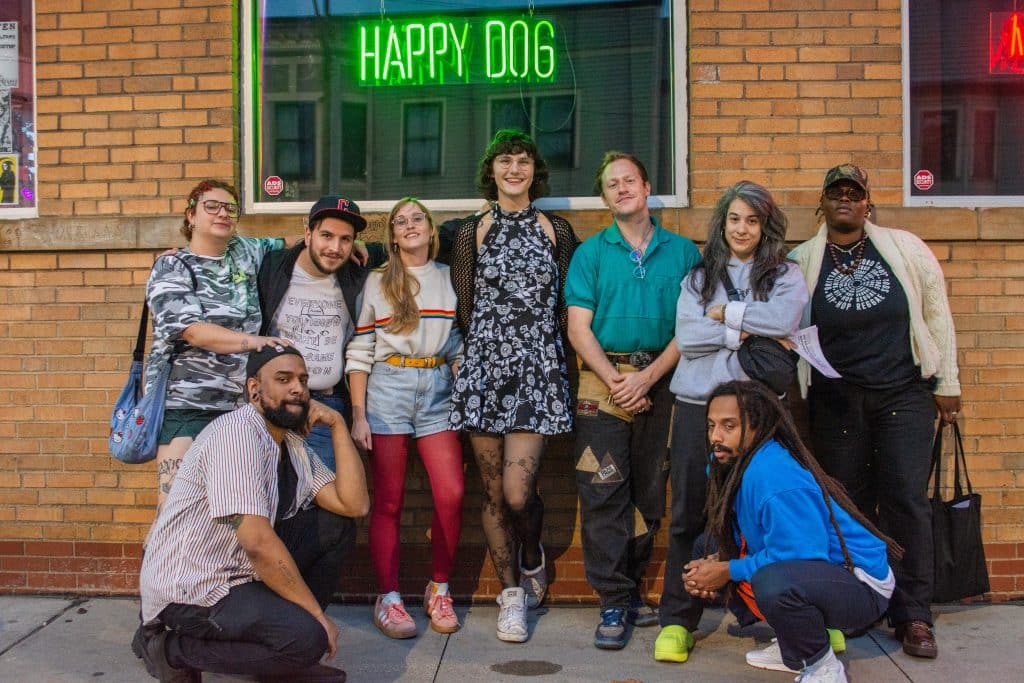
The Cleveland Art Workers (CAW) collective was established in 2022, with the initial collaborators being Bella Olivo and Andy Schumann. They’ve had a very active summer and fall season, so I decided to stop by an event and see what is being talked about, since I myself am an art worker.
Bella is a tattoo artist and Andy is a performing artist. Andy works as the community outreach manager at Northeast Ohio Worker Center. He’s a very passionate artist and organizer, with welcoming energy and is keen to listen to those he engages with. Other CAW members include Chimi, Danny, Ren, Ben (who declined to use their last names), TJ Maclin and Stephanie Ginese. I was able to speak to these fine folks on the evening of an event at Happy Dog titled “The Gig is Up!” The panel included many essential artists as part of the conversation.
First, this is what CAW members had to say about the collective, their work, and how to establish solidarity among artist workers.
In conversation with CAW
Aja Grant: What inspired you all to start this work?
Bella Olivo: We were inspired to start this work because we were not being paid well as artists, and we also had no network to talk about it and make plans on what to do in regards to this issue.
AG: In an ideal sense, with the work being done and conversations being had, what is the main goal of the collective?
Chimi: On a personal note, building trust in the community so that we collectively have each other’s best interest at heart, whether that is based individually or in working with institutions. Trust that we are all working together to ensure we are getting paid equitably.
Ren: Materially right now, we are focused on establishing a minimum wage for performing artists in Cleveland. More broadly, [we’re] trying to circumvent the challenges and obstacles of being an artist in a capitalist system.
Ben: Another important part of our tangible efforts, like the performing artist minimum wage ($50/hour), is really trying to change the way that the arts and artists are understood in this city and beyond. Right now playing shows and being an artist in our gig economy does not come with guaranteed income, and with this current system it excludes people who cannot afford that risk of low or inconsistent pay. If we are trying to be a city that fosters an art scene, that has to be remedied.
AG: Do you feel like artists should straight up refuse low pay?
All: Yes, 100%.
TJ: When you accept low pay it messes up the market. If someone can undercut the price that I asked for and book someone else, why would anyone pay the price that I am setting for myself and my skill set? But if we all have solidarity and ask similar fees, then they have no choice but to pay us fairly. Stop accepting low pay, believe in yourself.
Danny: I recently have gone through this arc with myself since my project is very new, I was accepting a lot of low paying gigs. I heard someone speaking at the CAW launch and they stated the fact that one being willing to accept low pay is a disservice to themselves, and not a move in solidarity with other working artists.”
It’s really about respect for self and for the community to refuse low paying gigs on a collective level.
Bella: A large part of our work is setting a new standard and creating alternatives to the standard structure. So in solidarity people can know If the institutions won’t pay you, you can still maintain your price point and someone will pay what you require.
AG: What does that look like for the aspiring artist looking for exposure who may still take the low pay? How do we tangibly encourage people who just want to make money via art?
Bella: Book your own shows, don’t rely on institutions (DIY).
Danny: Another thing we are aiming to do in building community is building resources, so we can share with one another. Access to generators so you can play a show outdoors, we want to provide for people just starting out who may not know how to navigate spaces and advocate for themselves.
Ben: I think outreach, education and solidarity are significant, similarly to Danny, I was also taking low paying gigs for the love and enjoyment I have for performing and being an active artist. But after gaining some knowledge and learning the effects of taking low paying gigs, I realized just how damaging it was to the ecosystem of artists engaging with venues and institutions. When you’re finally confronted with that and you still wish to take low pay, then we need to have a different discussion but awareness is key.
Chimi: We’re also aiming to find venues and institutions that understand what fair pay in the gig economy looks like, and pair them with our network or artists. Through community work and utilizing existing databases and resources, we can connect people to worthwhile opportunities.”
On August 31st, CAW held a free event at Kentucky Gardens in Ohio City. The eventhighlighted the talent of Cleveland-based performing artists like bands, DJs, vocalists and poets. The intention of this event was to show the breadth of talent as well as the support and community CAW has established, as well as their mission. Their slogan, “We shouldn’t have to choose between making art and putting food on the table” showcases the necessity artists feel to create. It is like breathing, it is a part of your survival, a part of your expression and understanding of the world. I often say to myself, that the creation of my art and sharing it is my way of relating to people, and making sense of thoughts, feelings and situations. I could not imagine having to sacrifice my art to solely focus on surviving capitalism. And CAW as a collective has people who care, and understand the way we all benefit from building a community that supports artists. Another quote in their pamphlet says, “Working as an artist should not require the privilege of wealth.”
Members also had comments about this event, and how they felt it was received by the audience.
Conversation continued
Ben: It was a great event, we had a good turnout and the energy was high and supportive, but the irony was that it was a fully volunteer based endeavor, it was great to hold this event but our end goal is to get everyone paid fairly. So as a kickstart for our efforts, it was great, turnout was better than my wildest imagination, but a big part of it was launching our survey, to begin gathering information about venues and booking agents that give artists a good deal and experience to get an accurate feel of the present opportunities.
Ren: It was a huge show of solidarity, every performer that was on the bill signed the petition to establish a minimum wage for performers. We utilized breaks between sets to have those moments of education and outreach with the audience. PSL {Party for Socialism and Liberation} also spoke about the root issue at hand, we’re not solely concerned with pay but all that is in place systemically like the racism, classism and transphobia present in the industry. We do have solidarity in our messaging and center the community as a whole.
AG: Who has performed outside of Cleveland? Any stark differences in the experience from venues/institutions in other cities?
TJ: It depends on the city, and it depends on the context under which you’re performing. Since I rap but also play guitar, if I go to Nashville to play guitar, I’ll be met with a clean venue, expert sound techs, workers are unionized within that space so the experience is good, right? But for a rap show in Detroit, I might be playing in a basement, and that happens here too, but it’s interesting the contrast I see depending on which talent I am performing for a gig. There is a stark difference based on context and you get to see how differently people get treated and paid.
Danny: The Greater Cleveland Music Census states that 80% of the musicians in the city are white, which is not true to the full presence of artists. It also gathered that the biggest scenes were rock and classical. That doesn’t feel true to me.
The Greater Cleveland Music Census has been a point of contention among many musicians and DJs that I know personally. Many claims found within that survey, we think, seem like a skewed perspective of a musician’s experience in Cleveland.
In their ecosystem breakdown of the survey results, most responses were recorded from white community members (86%) with only 6% of responses from Black community members and 3% of Hispanic members. The report states that more efforts are needed to diversify results and accurately represent the population.
Classical musicians require higher education, and are often unionized and well paid in a city like Cleveland with the presence of the Cleveland Orchestra, Music Settlement and Cleveland Chamber Society. Classical and rock are two genres dominated by white males in Cleveland, and highly supported by institutions. In a city marketed for the Rock and Roll Hall of Fame, and catering to classical, who is making room for other genres and communities to gather?
Danny: It’s so different from a gig and club musician’s experience. When I talk to friends who work in classical, they’re shocked to hear some of the pay rates I take.
Again highlighting the importance of community connected by similar work experiences.
TJ: Even within clubs there is a hierarchy, jazz musicians are also more respected and make much more than say a DJ, or rapper, or R&B singer. The more academic genres are more successful.”
Stephanie: You see that in the grant opportunities now, if there is no way to perfectly wrap up your performance idea in a gimmick or academic context, then there is no space made for it. They require some live instrumentation, many other artists are left out and not considered.
TJ: The same goes outside of music, comedians, writers and others, if they don’t exist in an academic space then you’re marginalized. It’s hard to feel like you’re making progress in this current gig economy because even when you do get a decent payout from a gig, it gets outweighed by months of waiting on contract payments, and the lower paying gigs throughout the rest of the year.
As a working visual artist I am aware of many of these aspects we discussed, but many points they had on the performance side got me thinking. Within institutions and clubs, emphasis is put more on the type of audience you bring and attract to a venue, and not artistry or expression for the performer’s benefit. It causes a lot of artists to be overlooked, and as a community we may not get to experience them and their style fully.
It is critical to maintain community to discuss experiences and ways we can improve the current state of things. People walk away from their creative careers for many reasons like burnout, unsustainability and the need for consistency. CAW cares deeply about wanting to make art a viable career path in Cleveland.
Panel highlights
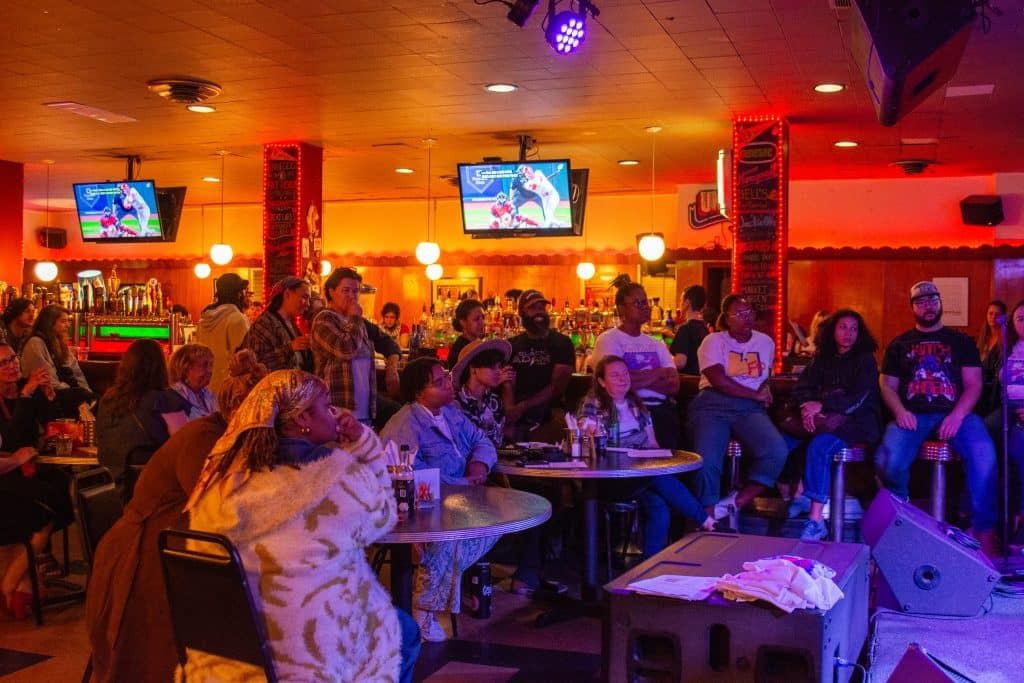
We concluded our conversation and moved inside, just as the panel was beginning. The panel was moderated by Anna Stroinski, chair of the Labor and Education Committee at the NEO Worker Center, and consisted of Tj Maclin, comedian, voice actor, musician, Yvonka Hall, executive director of NEO Black Health Coalition, Nick Kerr, labor attorney at Legal Aid, and Rebecca King, former Instacart and Doordash driver. The moderator jumped right in with some facts on independent contract work as people were settling in with drinks and, of course, hot dogs.
“According to Harvard Business Review, approximately 150 million people in North America and Western Europe work as independent contractors. That includes musicians, artists, rideshare drivers, delivery drivers, content creators and more. Some workers are deliberately deceived into thinking they are employees when they are fully independent contractors,” said Stroinski.
“There are many pros and cons to contractor based work, but the main con is there is no job security, and no benefits or wage protection. Worker’s rights laws often do not apply to contractors.”
Nick Kerr explained a bit of the differences between independent contractor status and employee status to open the panel.
“There is a pretty significant difference when it comes to the law,” Kerr said. “When you lose gig work like people did during COVID, you are not entitled to unemployment. You also pay half of your taxes, unlike how employees have taxes taken out of their gross pay.
“Gig work can also hurt some folks in the long run who may try to pivot into employment and find a job, as some employers don’t wish to see gig work or self-employment on a resume,” Kerr said.
“I can also add that many cultural jobs like beauticians and barbers are also independent contractors, and what happened during COVID … It took 6 months for some gig workers to be recognized as workers and begin receiving unemployment during the pandemic,” Hall said.
Hall shared with the audience the fuel behind her fire. As soon as she introduced herself, audience members roared with an energy that kind of lets you know the reputation a panelist holds. She told the story of her grandmother, who worked in the cafeteria at Case Western Reserve University. She explained that she too was an independent contractor and did not receive any benefits from being a university employee, like free tuition for college-aged children. She also shared that in going through some of her pay stubs, she learned that for the entire year in 1972 she had only made $1,000.
Case Western Reserve University was contacted to comment on these claims of employing entry-level staff through a third-party employer.
A University spokesperson stated “Similar to most other large higher-education institutions nationally, food service at Case Western Reserve University has been outsourced to a private company for at least 50 years.”
“It is important for us to make sure we are talking about pay equity. As a Black woman I look at where I am on the pay scale, knowing Black women make about 64 cents to a white man’s dollar,” Hall said.
“My grandmother is not here to call them out, but I am and I will,” Hall added.
The remainder of the panel was composed of audience questions. Many gig workers in the audience asked for advice on taxes, and ways to intentionally approach gig work. It was a perfect example of the community CAW is aiming to build, giving people practical advice and allowing folks to gain insight on the shared experience of contract based work.
If you are a Cleveland-based independent contractor for your main job or side gig, please get involved with Cleveland Art Workers. This is a group of people who are passionate about making art, and want to form relationships with meaningful supporters and funders. Keeping community care at the heart of their work, they aim to tackle the social constructs that discourage people from making their art. The intention of their work is centered around valuing the artist and the work of the artists. It is not something to just consume, or decorate, or make palatable. The work is to be honored, supported, and nurtured. The work is to be sustained, and in order for that to happen, the artist must be taken care of.
We're celebrating four years of amplifying resident voices from Cleveland's neighborhoods. Will you make a donation to keep our local journalism going?
Author
Related Articles
The Movie Nerd Report: 3 film festivals this week in Northeast Ohio
Plus, see what other new releases and classics are playing at independent theaters around you!
Walking Cleveland’s past, one story at a time
“How much of Cleveland do I pass by without knowing the story?”
More than a card: Why Cleveland Public Library still matters in the digital age
September is National Library Card Signup Month. The Land talked with Cleveland Public Library Executive Director Felton Thomas, Jr. at the Main Library downtown.


