
Powerful Long Ladder Theatre Company brings Italian version of “Jitney” to Waterloo Arts District
“I thought it was important to bring their version of the play here.”
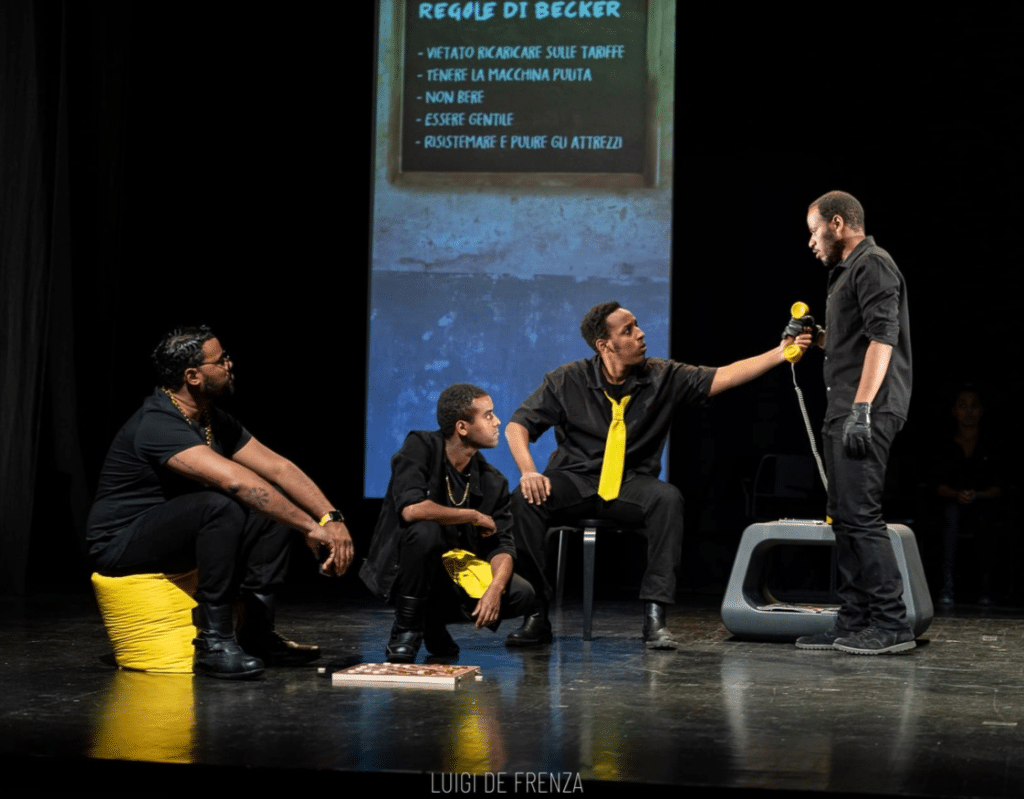
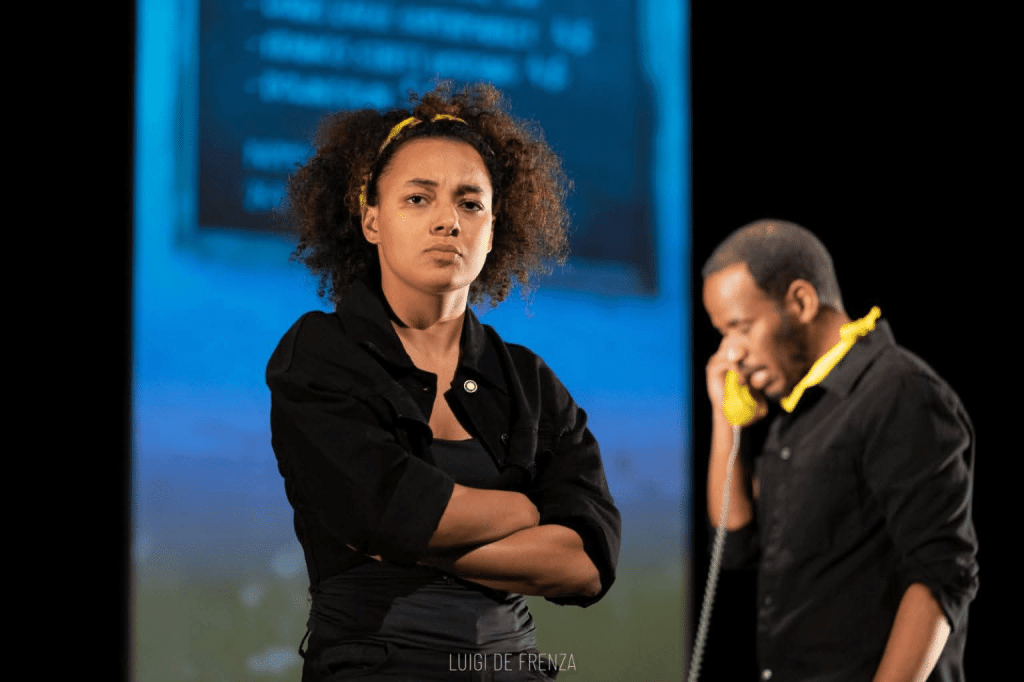
On May 5 and 6, Powerful Long Ladder Theatre Company (PLL) in partnership with Case Western Reserve University (CWRU) will present a Black-Italian production of August Wilson’s play “Jitney.” The play will be performed in the theater space at the Treelawn Social Club in the Waterloo Arts District.
Terrence Spivey, Powerful Long Ladder’s founder and artistic director, arranged for the production directed by Renzo Carbonera and produced by Sardegna Teatro and La Piccionaia Centro Produzione Teatrale to stop in Cleveland as part of a North American tour. The all Black-Italian cast will perform in Italian with English supertitles projected above the stage.
“I thought it was important to bring their version of the play here,” said Spivey, former artistic director at Karamu House. “It’s a good educational process for us all, and we will have talkback discussions, too, but just to hear the parallels of what they go through compared to what we go through in terms of racial discrimination and cultural, political climate is quite fitting.”
According to Spivey, this translated version marks the first foreign-language staging of “Jitney,” offering Cleveland audiences a bold international interpretation of Wilson’s work.
Written in 1979, “Jitney” was Wilson’s first full-length play and first in what became his acclaimed 10-play “American Cycle” of plays. It was first produced in 1982 at Allegheny Repertory Theatre in Wilson’s hometown of Pittsburgh and later became the last of his plays to appear on Broadway in January 2017. Wilson died in 2005.
The play focuses on life in a 1970s Pittsburgh Hill District gypsy cab station. As the city threatens to demolish their building for urban renewal, the drivers navigate poverty, racial injustice, family and survival. The main character is station owner Jim Becker, who is dealing with a strained relationship with his recently imprisoned son, Booster.
Discovering August Wilson
In 2019, the Italian Film Festival USA in Pittsburgh invited Carbonera, a filmmaker, to be the closing night director and show his film “Resina.” Lina Insana, the University of Pittsburgh’s director of Italian graduate studies and lead organizer of the festival, handed Carbonera a copy of “Jitney” for him to read on his return flight to Italy.
“That’s when I discovered August Wilson,” Carbonera recalled. “I didn’t know about him, which was very strange because he was so famous and known in the United States in the theater, cultural and academic communities, but I had never heard about him.”
Carbonera fell in love with the play, became committed to honoring Wilson and decided to make “Jitney” his first stage production.
He worked with the translators from the University of Padua, which has the oldest American literature department in Italy, and the University of Pittsburgh to create an Italian translation and worked with Insana and her translation students to refine it. The students spent part of the semester reviewing the script and offering input during Zoom calls with the director.
“My American students know Italian, about August Wilson and the cultural context of Pittsburgh,” Insana said in an article in the university’s newsletter “Pittwire.” “They did a great job giving input on many translation choices the translator in Italy made as she tried to evoke August Wilson’s ‘Jitney,’ set in Pittsburgh in the ’70s, for an Italian audience.”
Carbonera added that the jitney is something that today would equate with an illegal Uber car service.
“That is something that we still find in Italian cities, especially in the south,” he said. “Illegal taxi or cab drivers or motorbike or electric bikes will drive you around for small amounts of money.”
Because the characters in “Jitney” are speaking colloquially or using street slang, the translation was especially challenging to convert the language to Italian. Before they relocated to Sardinia to rehearse, Carbonera and the actors held many meetings where they read together, discussed the language and tried to put their interpretation into an Italian form.
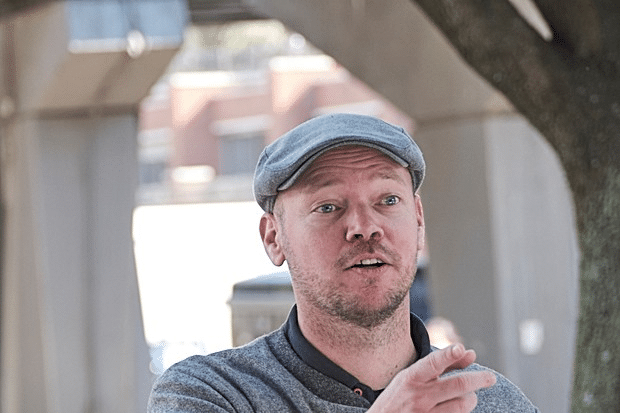
“We were continuously switching between Italian and English because it is such a spoken language that he was writing, and we needed to bring that feeling back,” Carbonera explained. “We don’t have the vernacular in Italian, so we had to find a way to make it more the way people speak without always following the grammar but not being wrong at the same time.”
Locally, students studying Italian at CWRU will benefit from that unique translation exercise, too. During the past several years, Carbonera has visited CWRU several times to show his films in the university’s Italian film festival and to speak with the students at all levels of learning Italian.
“We’re hoping to do a translation project with Renzo and the students in the fall and get them involved with how that ‘Jitney’ translation was managed because it involves a particular use of the language and some slang that needed extra time and attention to capture the essence of how that was being conveyed, because it’s not typically standard English,” said Denise Caterinacci, senior instructor of Italian in CWRU’s Department of Modern Languages and Literature.
Caterinacci plans to take a group of her students to see “Jitney” at the Treelawn.
The Italian production
Once Carbonera felt the project was moving forward with an accurate translation, he began to initiate a production.
“I decided to work on this project because Wilson was probably the most awarded and famous Black American playwright, and he was not known in Europe at all,” Carbonera said. “He was not even translated or produced in any other language, so I started working with Black Italian actors.”
Finding the cast was a challenge, because the people Carbonera cast represent the first generation of Black Italian actors.
“Things are starting to become different but it was difficult to find actors for this play because it is also the first ever play with an all-Black cast,” he said. “They come from all over Italy, so we really represent the country.”
Two of his cast members in “Jitney” are slightly younger than he is. However, being in their late 30s and early 40s they are two of the oldest and most experienced Black Italian actors.
Federico Lima Roque, who plays the roles of Doub and Fielding in “Jitney,” was the first Black Italian actor in Italy to attend Accademia Nazionale d’Arte Drammatica “Silvio d’Amico” in Rome, which Carbonera considers one of the two most important theatre schools in Italy.
“The play is so deep and universal because Wilson wrote about humanity,” Roque said. “That is why it is a challenge for an actor to play this text, and we started rehearsals a long time ago, but every day we find something new. Every day is a discovery for me.”
Miguel Gobbo Diaz, who plays Becker and Shealy, was the first Black Italian actor who ever had a lead role on an Italian TV show, playing Black police officer Malik Soprani in the series “Nero a meta” (Carlo & Malik) from 2018 to 2022.
“We’ve all become great friends now, and it’s cool working together to find the habits behind the characters,” the Dominican-born Diaz said. “It’s an amazing play, and I’m honored to be part of this project, and I can’t wait to get to Cleveland.”
The director and his company of actors have been rehearsing at Sardegna Theatro on the island of Sardegna (Sardinia), which has allowed them to maintain focus because there are no night clubs or other distractions, but they are all savoring the local village wines and cuisine in the evening together, they all said in a Zoom conversation in April.
“We are an island in a small country, so that’s marginality, and the story is about marginality, so there is this strong link about how archetypes can be universal, and that is what we were interested in producing,” said Massimo Mancini, managing director of Sardegna Teatro Company. “We don’t produce plays that are easy to understand. We want to find something that is unexpected.”
Carbonera’s production of “Jitney” first premiered in Vicenza, Italy, in 2024.
Coming to America
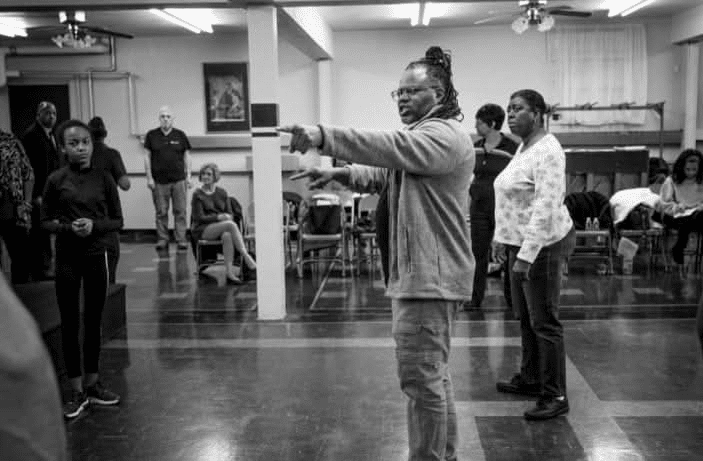
When he began to line up an American tour, Carbonera contacted Spivey after seeing an article in “American Theatre” magazine about Spivey’s play “An Ocean in My Bones” about the last slave ship “The Clotilda.” Spivey premiered the play in 2023 in Mobile, Alabama, near where the ship had landed in 1860.
At that time, Carbonera told Spivey that Karamu House was slated to produce his Italian “Jitney” in Cleveland in the spring of 2026, but he wondered if Spivey could produce the play in Mobile through his Cleveland company PLL supported by the people he was working with in Mobile.
That was the plan until last summer, when Carbonera informed Spivey that Karamu had decided not to do the show and inquired whether PLL could produce their “Jitney” in Cleveland.
Spivey was in the midst of directing the Pittsburgh Playwrights Theatre Company production of Wilson’s Pulitzer Prize-winning play “Fences” on the back porch of Wilson’s boyhood home in the Hill District of Pittsburgh, now a museum, in August.
Carbonera and Spivey scrambled to submit grant proposals to several major Cleveland arts organizations on time. The Gund Foundation gave them $13,000 and Cuyahoga Arts & Culture granted an additional $5,000. Then Spivey worked with Eric Hanson, principal at The Treelawn, to line up the theater space at the club.
Italian translation reinforces the universality of Wilson’s work
For Spivey, who has become recognized nationally as a Wilson expert and has directed several of his plays in Cleveland and at The Ohio State University, the fact that there is now an Italian translation demonstrates the universality of Wilson’s work.
“This proves how global he is in showing the effect of people of color in other countries,” Spivey said. “They’re still feeling that same disenfranchisement, racism and discrimination going on in the U.S.”
Carbonera concurs: “In the Black community in the United States sometimes they refer to Wilson as the Black Shakespeare, and I don’t know if I would go that far,” he said. “But he was writing modern classics, and most of his plays are set in this small Black community in the Hill District in Pittsburgh, but the stories he’s telling are all universal.”
After Cleveland, the Italian troupe will tour their production to Pittsburgh and St. Louis. Currently, Carbonera is finalizing a second leg of the tour for October, when they will perform in the south in Mobile, Alabama, and Atlanta, Georgia.
Carbonera was also talking with the theater department at Oberlin College, and his company may add that as a stop to the fall tour.
Keep our local journalism accessible to all
Reader support is crucial as we continue to shed light on underreported neighborhoods in Cleveland. Will you become a monthly member to help us continue to produce news by, for, and with the community?
P.S. Did you like this story? Take our reader survey!
Author

Related Articles
More than a card: Why Cleveland Public Library still matters in the digital age
September is National Library Card Signup Month. The Land talked with Cleveland Public Library Executive Director Felton Thomas, Jr. at the Main Library downtown.
The Movie Nerd Report: It’s “Primetime” for Northeast Ohio cinema
There’s a lot of fun screenings happening at independent theaters around Greater Cleveland this week.
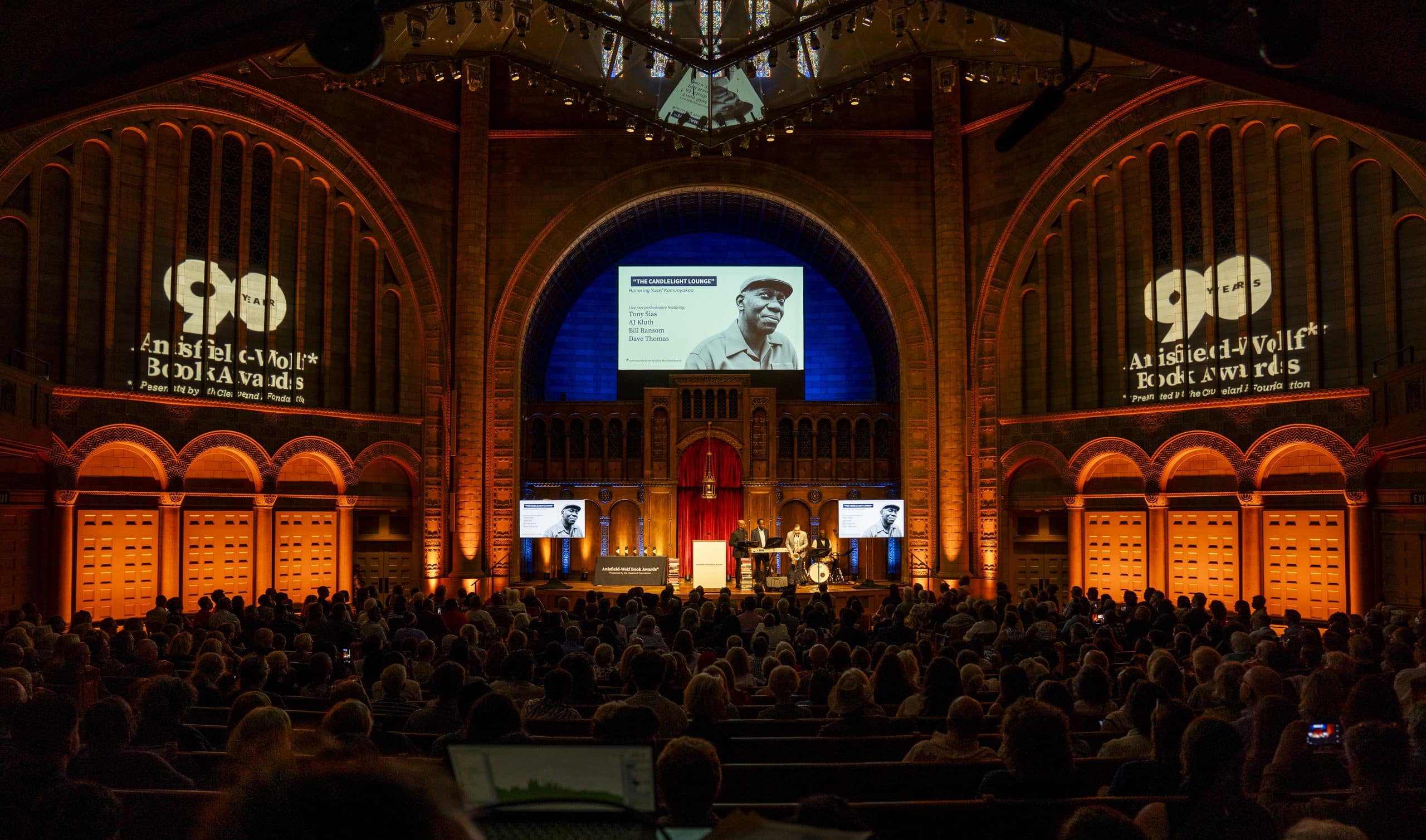
Anisfield-Wolf Book Awards weekend celebrates 2026 winners at 91st annual event
“We’re taking all of the good work the partners do year round and creating a space that allows us to have conversations that create shared language for experiences that otherwise might remain private or unspoken for readers but become a special experience for everyone.”


