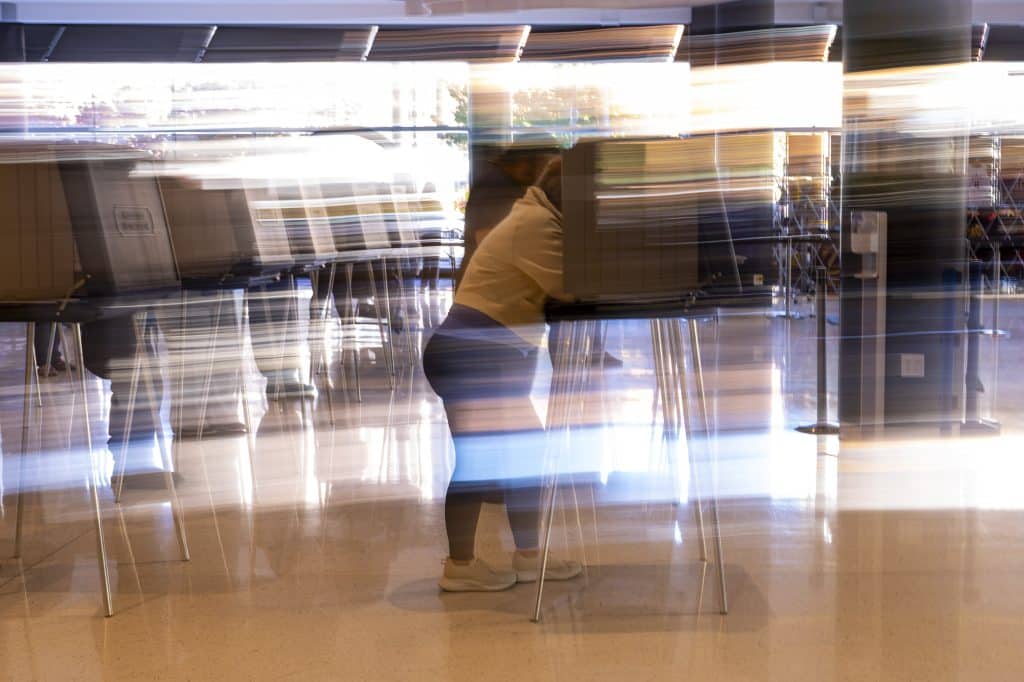
Analysts will be busy for years trying to figure out what went right or wrong during the November 2024 elections, and why we were surprised by the outcome. One international organization, the Organization for Security and Cooperation in Europe (OSCE), is not concerned with the results, but rather that our elections met international standards and adhered to U.S. and state legislation.
According to the OSCE’ s Office for Democratic Institutions and Human Rights (ODIHR), their November 6 Preliminary Report stated, “The 5 November general elections demonstrated the resilience of the country’s democratic institutions, with a well-run process in a highly polarized environment, candidates campaigning freely across the country, and voters engaging actively.”
For elections and politics junkies, the preliminary report is a page turner, quite impressive in its comprehensive coverage of the U.S. elections framework and its state-by-state coverage of individual state laws and practices. The mission focused on multiple issues that were also a topic up and down the country, such as voter registration, election mechanisms, federal and local laws and the media. Official state cooperation varied state by state, with some states not welcoming the observers at all, and some cooperating fully. The case in Ohio was mixed. State level authorities granted mid-level meetings, but denied observers access to the polls on election day, though state law does not prohibit international observers. Ohio observers spoke extensively with local election and party officials, as well as with an array of academics and media representatives. Though there is no specific report for Ohio, our state is mentioned throughout the preliminary report.

Methodology
How did they reach the conclusion that the U.S. enjoyed a “well-run process in a highly polarized environment,” and 23 more pages of findings about November 6?
“The OSCE’s participating States recognize that an election is not a one-day event but a process that commences several months before election day,” the report stated. Over 30 years of observing more than 400 elections across the OSCE region with its 57 participating states, ODIHR continues to refine its methodology to ensure all elections are observed, not just objectively, but also comprehensively. For its work in promoting free and fair elections, ODIHR was nominated for the 2024 Nobel Peace Prize.
These missions always serve at the invitation of the host government, as was this mission and the 10 preceding U.S. elections observation missions. This year’s mission was led by Hungarian historian and Anglo-American foreign policy expert Dr. Tamás Meszerics. The mission also included 15 international experts based in Washington, D.C., and 64 long-term observers from OSCE countries. These observers were deployed throughout the United States in October, including two observers on the ground in Ohio.
The Ohio observers, a Serbian and Norwegian national, travelled throughout our state speaking to the Ohio Attorney General and Election Commission representatives, as well as to members of the media, political parties and academia. The Ohio observations, and observations from other teams spread throughout the U.S., were analyzed and captured in the preliminary findings report cited above. A final report with recommendations will be published in the upcoming months. Observers to the U.S. elections were sent by Austria, the Czech Republic, Finland, France, Georgia, Germany, Hungary, Iceland, Ireland, Kazakhstan, Mongolia, Norway, Romania, Serbia and Sweden.
OSCE and Ohio
How do I know about this mission? I had the privilege of heading an election observation mission to Mongolia in June this year. I was impressed by the professionalism and experience of my mission members and even more impressed by the cooperation of the OSCE’s newest member, Mongolia, a country surrounded by Russia and China. The nation showed a genuine interest in improving its democratic institutions. Earlier, from 2012-2014, I had the privilege of serving as Head of Mission for the OSCE Mission in Moldova, where we worked on negotiating the long-festering issue of reintegration of the breakaway Transdnistrian region to Moldova. The United States has been an OSCE member since its inception in 1975, and has generously contributed personnel to OSCE and its institutions since that time.
Media
Among the many ODIHR observations, one that jumped out at me was the overall national concern that over 90-percent of our nation’s media was owned by just five corporations.
From my own research, I discovered that Washington D.C.-based Gannett/New Media Investment Group owned over 20 Ohio newspapers. The Plain Dealer is owned by Advance Local, a national brand that owns over 20 additional newspapers throughout the country. A New York-based investment firm, TEGNA owns over 60 of Ohio’s television stations. Perhaps as an example of the conflict of interest between corporate influence and journalistic integrity, over 20,000 people canceled their Washington Post subscriptions when Amazon founder and Washington Post owner Jeff Bezos refused to publish his editorial board’s endorsement of Presidential Candidate Kamala Harris. Plain Dealer Editor-in-Chief Christopher Quinn defended his choice to run his editorial board’s endorsement of Harris, saying it was a question of journalistic integrity.
Last Minute Legislation
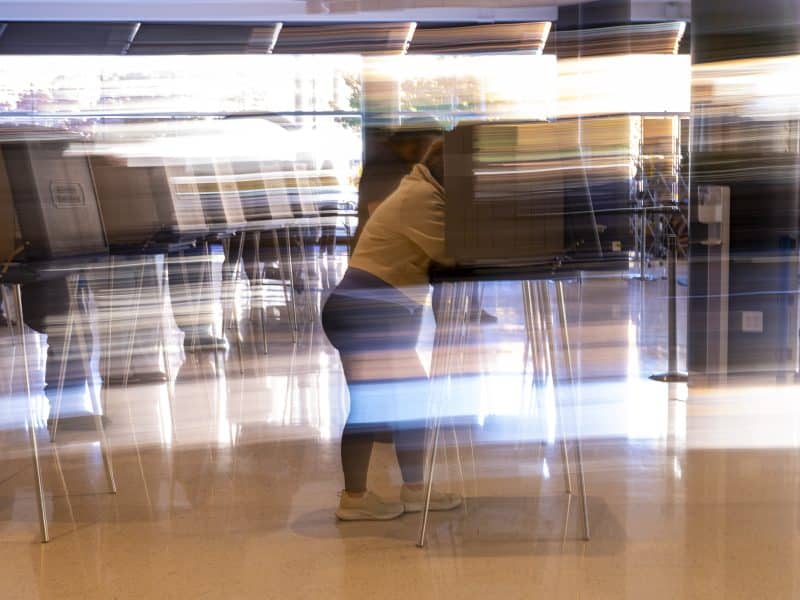
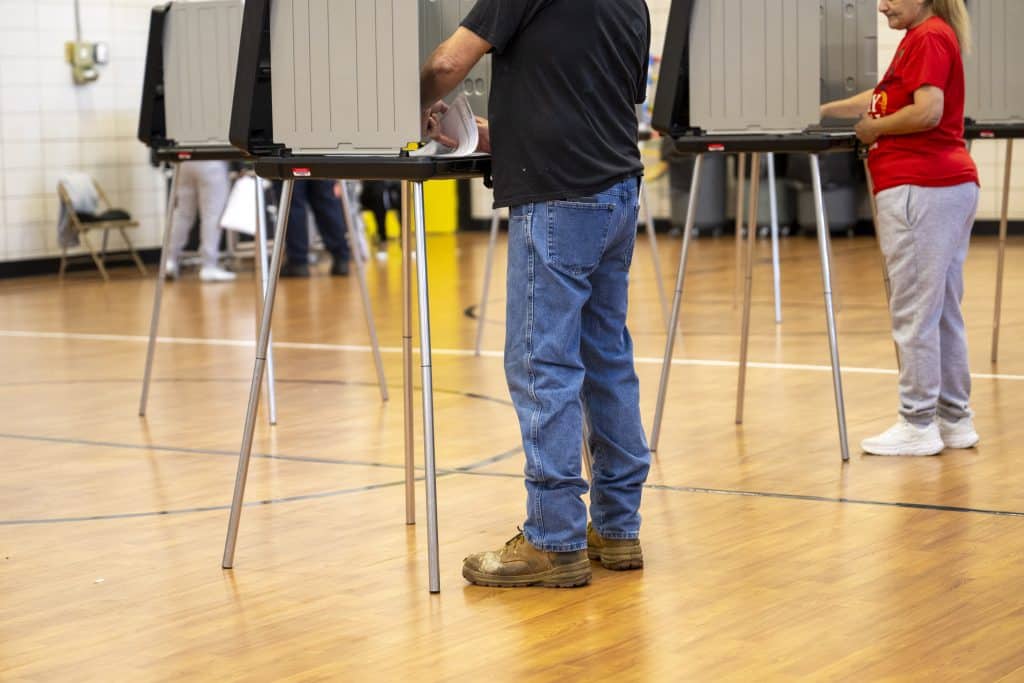
Returning to the ODIHR report, the observers also noted a tendency for some states to enact last-minute election legislation, which is discouraged internationally as bad practice. “These late changes may lead to procedural confusion and cause legal uncertainty, contrary to international good practice,” according to the report, which based its observation on a 2002 Code of Good Practice in Electoral Matters signed by the US. In Ohio’s case, though not specifically noted in the report, Secretary of State LaRose’s last-minute decision to not enforce prohibitions on wearing campaign clothing into polling stations, caused confusion. In my polling station, poll workers did not notice a voter wearing a Trump baseball cap. Under current law, they said, they would have asked him to remove the cap, and said had they noticed the cap when the voter entered, they would have asked him to remove it. More troubling, in spite of the LaRose decision, no instructions were passed down the Elections Board Chain of command, leaving the poll workers to fend for themselves. Fortunately, no incidents occurred in Ohio, though two voters in another district were allowed to vote wearing a garbage bag and a sanitary worker’s uniform. Kudos to poll workers for not escalating incidents.
Voter Registration
The report noted various states’ attempts to restrict voter identification and, again, though Ohio was not cited specifically, it’s clear for all of us living here that identification requirements have been restricted significantly. In the past, presenting a utility bill was sufficient ID, but since January 2024 voters are required to present official identification, from from drivers’ licenses to passports, all of which come with a fee. Even free identity documents provided by the Bureau of Transportation require that an applicant appear at a local office to request the document, a hardship for many senior voters who no longer drive or travel.
Uneven Playing Field?
International standards say clearly that ruling parties should not create an “unfair” playing field that prevent smaller parties from participating in the electoral process. The ODIHR report found that the participation of minor parties nationally was even more difficult in this election cycle because financing, media and large-party organization all worked to stifle smaller party participation. “In some states, burdensome requirements for registration, including a high number of supporting signatures, disproportionately limited the opportunities for smaller parties and independent candidates to run, which is at odds with OSCE commitments and international standards,” the report stated. This is relatable to what I have seen myself, where third-party candidates, from Eugene McCarthy to John Anderson, to Ralph Nader to Jill Stein, have been viewed as “spoilers,” not as representatives of a legitimate desire on the voters’ part for an alternative to the choices determined by the two main political parties.
Looking at Ohio demographics, a full third of our electorate are registered as undecided, or “non-party.” We do not really know much about them except that they have opted out of the two-party system. Analyst Dave Anderson recently wrote for the Fulcrum, a nonpartisan news platform, “Forty percent of registered voters … do not identify as Republican or Democrat … moreover one third of eligible voters are not even registered to vote.” He continues, “independents in the years to come must revolutionize American politics by establishing representation for the tens of millions of Americans who do not identify with either party.” Whew! That’s a lot of votes to leave on the table, a lot of voters looking for a home they do not think exists in America right now. Even if one drills down on this data, it holds for Ohio, and even for my mid-sized municipality.
Electoral College
And then there is the Electoral College. ODIHR reporting consistently has registered its concern that this institution runs against the universal norm of voter equality. In my opinion, Ohioans were disenfranchised, as a state, in the presidential race, as our electoral votes were dismissed by the Democratic Party at the beginning of the electoral cycle because we were not a swing state. Seven states should not have the responsibility for choosing our next President. In the future, maybe this ODIHR observation could/should give weight to reconsidering the Electoral College and whether it truly reflects democracy.

What now?
ODIHR election monitoring can be quite influential in many OSCE countries, which span the entire former Soviet Union as well as the European Union, Turkey, and North America. Mongolian officials were eager to hear our recommendations. In the American experience, the final report will have more limited resonance. But it is there, for the record, the considered observation of international experts. We are fortunate to have the wisdom of their experience and concern for our democracy.
Recruiting you!
As head of ODIHR’s election observation mission in Mongolia, I was inspired by watching representatives of so many, so different countries show concern for promoting democracy throughout the OSCE space. You can be a part of this too. ODIHR recruits from all 57 participating states. You can view upcoming elections and apply to be sent by the US as a long-term or a short-term observer through the ODIHR website. Maybe I will see you someday in Mongolia!
Ambassador (retired) Jennifer Brush was Head of Mission for the 2024 ODIHR Mongolian Parliamentary Elections Observation Mission. She previously served as head of Mission for the OSCE Mission in Moldova. She also served as Deputy Secretary General Representative for the UN Peacekeeping Mission in Kosovo. Before that, she served 28 years as a US diplomat. A native of Solon, Ambassador Brush is active in many local organizations. .
Keep our local journalism accessible to all
Reader support is crucial as we continue to shed light on underreported neighborhoods in Cleveland. Will you become a monthly member to help us continue to produce news by, for, and with the community?
P.S. Did you like this story? Take our reader survey!