
What’s shaping civic engagement this election season? Here’s one expert’s thoughts.
Are Clevelanders disengaged in politics heading into this election season? We talked to a political science professor and researcher at Baldwin Wallace University to break down some of the biggest factors shaping voter turnout and civic engagement throughout Cleveland neighborhoods.
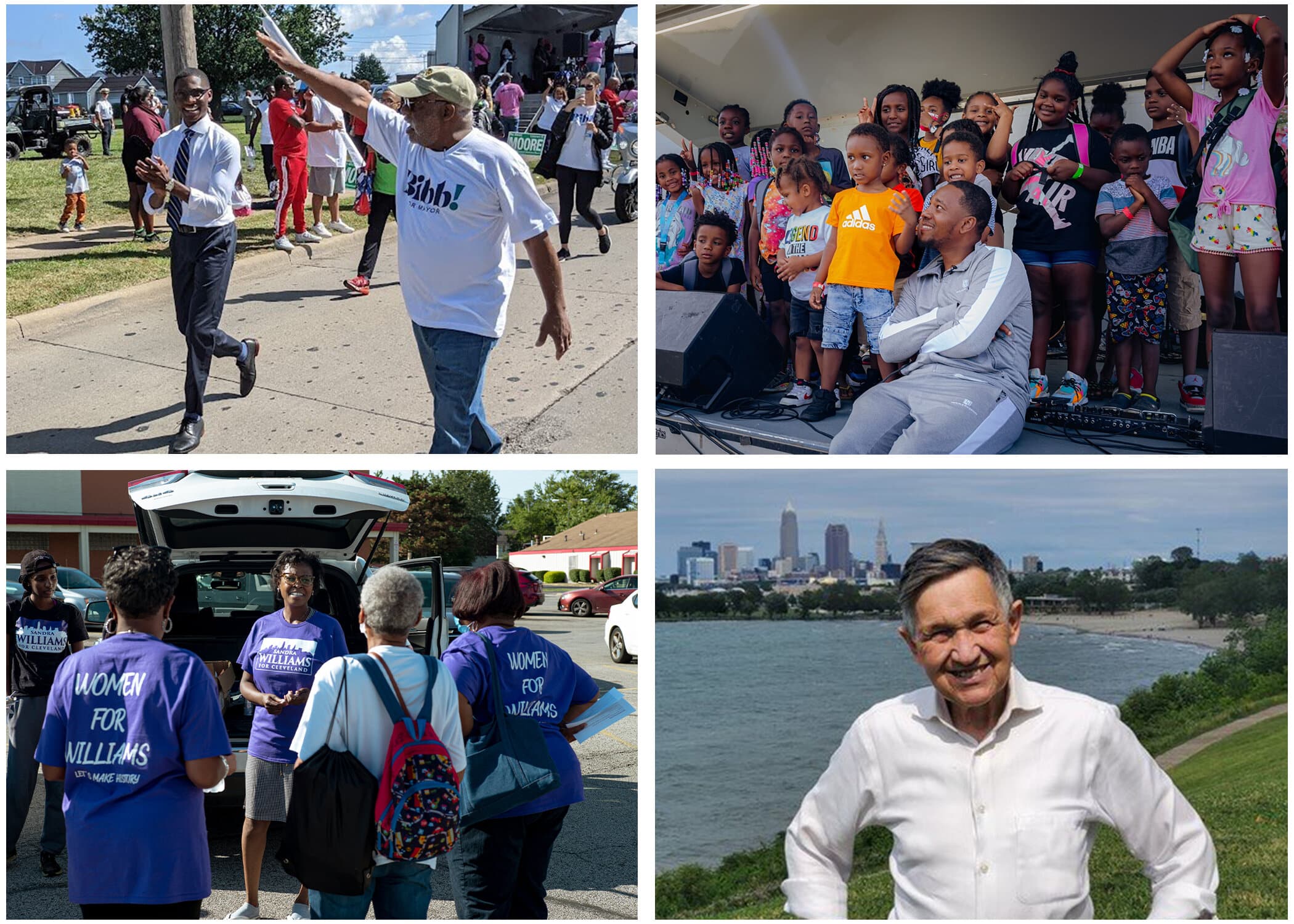
(Top left) Justin Bibb and former Cleveland Mayor Mike White at the Labor Day parade on Monday, Sept. 6, 2021. Photo by Grant Segall. (Top right) Basheer Jones speaks in front of a dozen area pastors at the Ankor Restaurant on St. Clair Ave. on Aug. 19, 2021. Photo: Mark Oprea. (Bottom left) Sandra Williams meets with about 20 volunteers in a Dave’s parking lot to prepare for a day on canvassing in Cleveland’s northeastern corner on Saturday, Sept. 4 2021. Photo by Michael Indriolo. (Bottom right) Dennis Kucinich in 2021. Contributed photo.
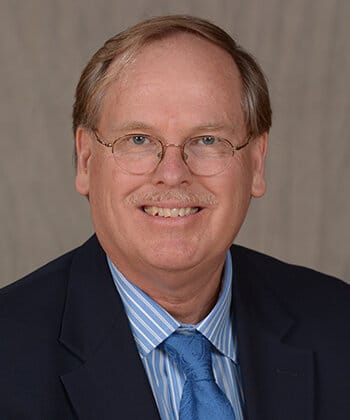
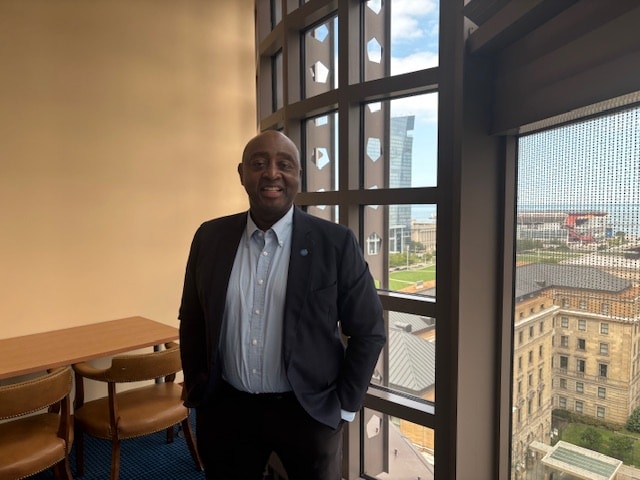
Image courtesy of Tom Sutton.
The upcoming Cleveland mayoral and council elections have been called the most important local elections of many of our lifetimes. To better understand the who’s who and what’s what heading into Tuesday’s primary, The Land recently conducted a lengthy Zoom interview with Tom Sutton, a professor of political science and director of the Community Research Institute at Baldwin Wallace University. Here are our top 10 takeaways from that conversation.
This interview has been edited for clarity.
# 1: Population loss on Cleveland’s east side means fewer votes
The population loss has been greatest in the east side neighborhoods. This is where you drive block-by-block, and you see lots of empty lots and houses in bad shape that have been boarded up, etc. You don’t see that nearly as much on the west side. You have some pockets, but not nearly to the degree that you see in the east. The east side neighborhoods are literally bleeding population, and that’s a lot of why, even though we have an uptick in population growth downtown and in some of the other neighborhoods like Ohio City, Tremont, and Detroit Shoreway, the net effect in the 2020 census was that we lost about [24,000] people compared to 10 years ago.
So overall population loss is going to mean fewer potential voters, the loss on the east side is much greater than the west side, and the west side tends to also have a higher voter turnout. A lot of that is tied to income.
# 2: In a low turnout primary, candidates need 10,000 votes to win
In the primary of 2017, we had eight or nine candidates running, including Mayor [Frank] Jackson. But the primary turnout was about [33,000]. So, if you look at that, if you can…find 10,000 votes across the city among people who are registered, who have a track record of voting in local elections, you can put together a strategy without spending a huge amount of money. Some of that means walking door-to-door through neighborhoods. You can find all that information at the Board of Elections. It’s all public. You can go through the voter list.
# 3: Low turnout doesn’t necessarily give an edge to candidates with the most name recognition
Name recognition is not enough. The other part of it is how they campaign, and not just in terms of door-to-door canvassing. Dennis Kucinich has a presence, Basheer Jones has a presence, Justin Bibb has a presence. When they speak publicly, people listen. Kevin Kelley is not bad, but compared to those three, he doesn’t get the same kind of attention. He tends to get more into the policy weeds, which loses voters.
>
“Dennis Kucinich has a presence, Basheer Jones has a presence, Justin Bibb has a presence. When they speak publicly, people listen.”
Unfortunately, Sandra Williams got off to a late start. I think she could have been a much stronger candidate as a sitting state senator and a former state representative. She’s been in politics a long time. Honestly, though, I think she came out of the gate late, and by the time things got going, she really wasn’t able to find her footing in competing with these other candidates.
I don’t think anybody took Bibb seriously, but he worked it. He did with donors, what I just described about going door-to-door. I worked with him a few years ago on some projects. I’m not surprised at all by where he is today.
# 4: Voters are disengaged because they can’t afford to be
I think for the vast number of everyday residents of Cleveland who are living in the city and working and raising their families and getting their kids to school, the disconnect really is they don’t see it being worth the trouble to get involved civically if they get the same thing over and over and over again. What has happened to the condition of the streets in your neighborhood? What has happened to your schools? Now, there have been some improvements, particularly in the arena of the schools, but we don’t vote for the school boards anymore, right? Schools are under mayoral control.
>
“I think for the vast number of everyday residents of Cleveland who are living in the city and working and raising their families and getting their kids to school, the disconnect really is they don’t see it being worth the trouble to get involved civically if they get the same thing over and over and over again. ”
I think you have high civic engagement in the nonpolitical realms. Again, I would mention the schools — we’ve got some very involved parents — and some of the recreation centers, etc. But politically, what people see locally is their ward council person. You have a few of the ward clubs that are very active, but the vast majority of people are busy living their lives. I think that tends to contribute to the disconnect.
Who has the time to go to a city council meeting? Who has the time to go to a ward club meeting? It tends to be people either who are retired or people who control the hours they work to the degree that they can set aside time to do that. And for most parents, that’s really hard to do when you’re working two or three minimum wage jobs just to take care of your kids.
# 5: Voting barriers include getting time off and access to information
Number one is information. How do I do this? And when do I do this? There’s a lot of low attention because of this idea of a September primary. Usually primaries happen in March or May. And, this whole system of seven nonpartisan candidates running to be the top two and then run in the general election, this is the only election where that happens. Everything else is partisan.
Number two is just the basics of: Can I get time off work to vote on election day or arrange for childcare? Those kinds of things were big obstacles because of COVID. And at the rate we’re going, they’re going to continue to be obstacles. And again, all of that folded into a lower-attention election.
Now, this election has more money in it because of the competition. There are TV ads for some of the major candidates. There seems to be some pretty decent bonds that exist or are being built by some of these candidates for their constituents, at least in their wards, like in the cases of Kevin Kelley, Basheer Jones, and Zack Reed. And then others are really catching attention like Justin Bibb, who is working his tail off as someone who has never run for office before.
# 6: Open City Council races could have an effect on turnout
I have seen on Twitter some of the work that [City Council candidates like Kate Warren of Ward 13 and Rebecca Maurer of Ward 12] have been doing to try to increase voter registration. It’s a really smart tactic, particularly when you’re running for the first time. People can say all day that they support you and they’ll vote for you, but if they’re not registered, then it doesn’t help.
We’re seeing a lot more competition in the ward races than we’ve seen in past years. I think there’s two factors there. We have a number of seats open. Of course, Basheer Jones’ seat and Kelley’s seat. We have people like Jennifer Spencer, who is new because of Matt Zone leaving his seat. There’s Charles Slife and a few others who got appointed because there were vacancies, so they’re working really hard because this is their first election. It’s hard to gauge particularly for you or for me who are not living in those neighborhoods, but this kind of election really does depend on that grassroots, house-to-house, person-to-person coffees, meet-and-greets and those kinds of things.
#7: Kucinich, Bibb, Kelley, and Jones are the apparent leaders, but in a seven-way race, anything can happen
Dennis Kucinich is doing well simply because of name recognition. He can claim he was the mayor before, and he wants to be the mayor again. The age factor I don’t think is playing into this. We have a 78-year-old president, so why not have a 74-year-old mayor? I’ve only seen one poll that was fairly recent but Kucinich came in at 20% as the lead. Now, 20% isn’t huge, but out of seven candidates? And apparently, he led the fundraising this past quarter that just got reported. He’s also got strong opposition. Someone out in Shaker Heights sent this eight-page “Dennis the Menace” flyer out. And he tends to thrive on that kind of thing.
The other ones who I think are strong, probably the top three right now would be Kevin Kelley, Justin Bibb, and Basheer Jones. Basheer Jones has a remarkable level of support given that he’s still in his first term on City Council. He also represents one of the hardest-hit neighborhoods in terms of housing and jobs and everything else. He’s got an electricity. He also is the only Muslim candidate. What that represents for people if someone of your faith winds up getting elected, particularly for a Muslim to get elected to citywide office, I think it would be a first.
Justin Bibb and Kevin Kelley, of course, have attracted a lot of the fundraising from the corporate sector and the business sector. Bibb also has a pretty decent grassroots operation going, and that’s translating into very effective promotions. Bibb signs are everywhere. He’s probably got the most signage of any candidate across the city. Kevin Kelley is pitching himself as having been City Council president for seven years. He’s got the Building & Construction Trades Council backing him. That’s a pretty strong network that includes a fair number of people who live in Cleveland.
# 8: Public safety may be the top issue, but no candidate has a clear message
They’re all talking about public safety and the importance of law enforcement. It’s very interesting how they’re sort of walking the fine line of recognizing issues of equity, justice, police use of force, and what happened last summer with the protests. But they also don’t want to say ‘Defund the police’ or ‘I’m against the police.’
>
“It’s very interesting how they’re sort of walking the fine line of recognizing issues of equity, justice, police use of force, and what happened last summer with the protests. But they also don’t want to say ‘Defund the police’ or ‘I’m against the police.’”
Public safety is a tough one because it’s easy to run on. We’ve got an increased murder rate, gun violence, and issues with dirt bikes and everything else. The problem is, what are you gonna do about it? Do you hire more police? Do you get them training? [People] just want to feel more safe. But also, in some neighborhoods, a police car driving down the street doesn’t mean safety. It means, ‘They’re gonna pull me over. I’m gonna get searched. Or they’re gonna get the wrong person.’
We’ve been under a consent decree since 2015, and what has that done? Crime is going up. Incidences of abuse? Well, it’s hard to say. If you were there last summer, you’d say there’s still a problem. We still have these shootings that are happening and kids that are getting shot, so I think the general perception is: Whatever these things are that you’re talking about that are going to make law enforcement work better for us, a lot of folks are like, ‘I don’t see it.’ So it becomes rhetoric, and it’s just noise. Honestly, it’s just noise.
# 9: This time, candidates are free to run on their own ideas
This is the end of the Jackson administration. But a lot of people don’t remember who the mayor was before that. For residents who are in their 20s, essentially, at the time they became aware that a Mayor was a thing, the Mayor has been Frank Jackson.
Feelings about Jackson are mixed partly because he’s such a quiet figure. He’s never been out in front publicly as a speaker or as someone who held a lot of press conferences. He made it very clear from the very beginning: That’s who he is. But in terms of his record, which he will vigorously defend, I’m not sure how much people make the connection between Frank Jackson and what they see in the city, good or bad. In some ways, that frees the candidates to be able to run on their own platforms.
So I would not begin to make a prediction other than: I think more than likely that at least Kelley or Kucinich will be in the top two. It’s quite possible they will be the top two — both of them. But I could see one of them plus Bibb or Jones or possibly even Zack Reed.
# 10: Voters want practical change
I don’t think people [in this election] are interested in hope and change. I think they’re interested in much more practical, concrete issues that involve change. But the larger sense of ‘Is this person is going to change everything?’ I don’t think that really resonates because it’s cliche, to be honest.
>
“I don’t think people [in this election] are interested in hope and change. I think they’re interested in much more practical, concrete issues that involve change. ”
What resonates with people is, for example, the potential for property developments going on in Detroit Shoreway to spread to neighborhoods like Buckeye, Glenville, and Central. Can we make that happen? Who do I think is most likely going to be able to make that happen?
Kelley steps in and says, ‘I’ve got the Building & Construction Trades Council supporting me. We’re talking about jobs for Clevelanders, and I know how to make this happen because I’ve been doing it for the last seven years as council president and before.’ I think that kind of thing resonates.
It’s like, for example, ‘I live on a block where these three houses are boarded up, and these five vacant lots used to have houses, but now they won’t even mow the grass on them. They’re vacant lots, so at least there’s no drug dealers there. But what are you gonna do about that?’ And then they hear, ‘Oh, well. We’re going to get federal money to bring in housing, and we’re going to use the land banks.’ And that doesn’t resonate, because they’ve heard it before.
And quite frankly, let’s be honest, race is a huge part of this. Nobody’s gonna admit it, because it’s politically incorrect to do so. Or at least, when talking about race, we get another set of language being tossed around. Racism as a public health crisis. And that’s great. But what are you gonna do about it?
For information about the Sept. 14 primary and Nov. 2 general election, including registering to vote, visit boe.cuyahogacounty.gov.
Like this story? Take our community impact survey here and support local journalism by becoming a member of The Land.
Michael Indriolo is a reporting fellow at The Land. Lee Chilcote is editor of The Land.
Keep our local journalism accessible to all
Reader support is crucial as we continue to shed light on underreported neighborhoods in Cleveland. Will you become a monthly member to help us continue to produce news by, for, and with the community?
P.S. Did you like this story? Take our reader survey!
Authors

Related Articles

The Movie Nerd Report: 3 film festivals this week in Northeast Ohio
Plus, see what other new releases and classics are playing at independent theaters around you!
Walking Cleveland’s past, one story at a time
“How much of Cleveland do I pass by without knowing the story?”
More than a card: Why Cleveland Public Library still matters in the digital age
September is National Library Card Signup Month. The Land talked with Cleveland Public Library Executive Director Felton Thomas, Jr. at the Main Library downtown.


