
National expert, trafficking survivor, leader Alia Azariah to keynote event in Cleveland
A California native, Azariah serves as director of collective impact for Safe House Project (SHP) in Ventura, a national nonprofit organization, and advocate to prevent human trafficking that provides aftercare for victims and helps them transition into safe, restorative care.
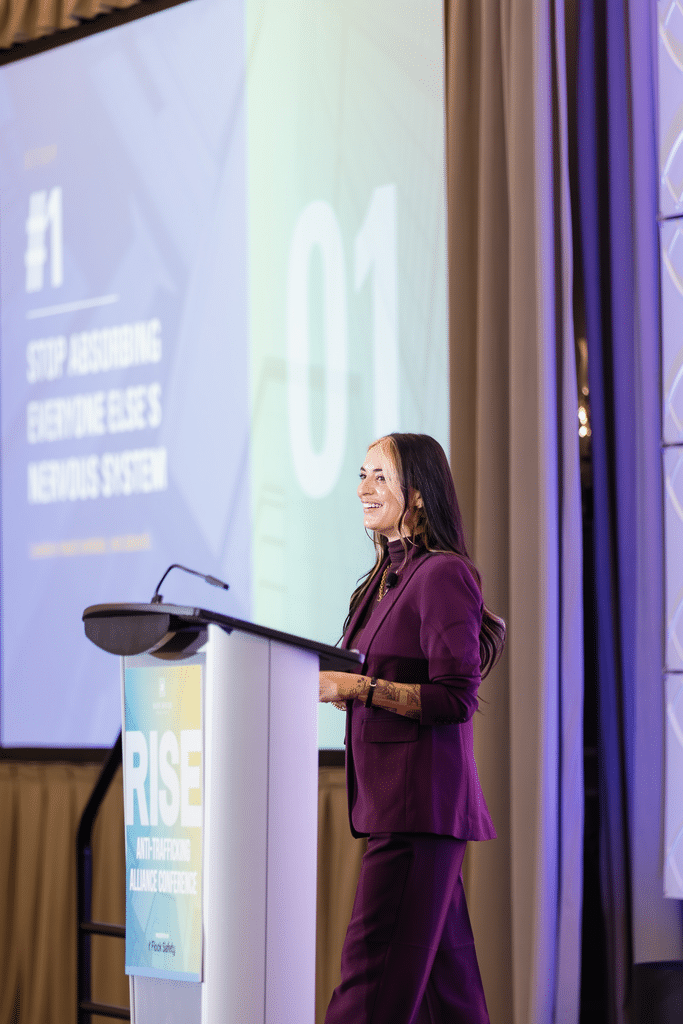
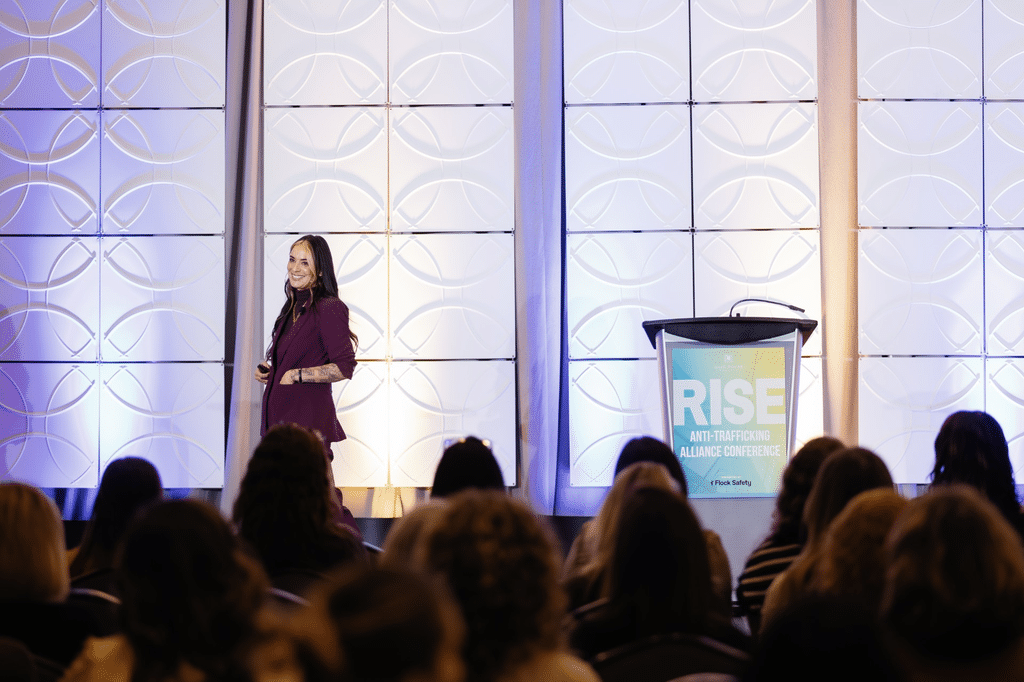
On Thursday, Sept. 24. nationally recognized anti-trafficking expert Alia Azariah will be the keynote speaker at the State of Human Trafficking luncheon that runs from 11:30 a.m. to 1 p.m. at Windows on the River restaurant in the Flats in Cleveland. The annual event is sponsored by the Collaborative to End Human Trafficking.
A California native, Azariah serves as director of collective impact for Safe House Project (SHP) in Ventura, a national nonprofit organization, and advocate to prevent human trafficking that provides aftercare for victims and helps them transition into safe, restorative care.
Cuyahoga County Executive Chris Ronayne will provide opening remarks.
“Alia is not only a survivor leader; she is a nationally recognized expert who has contributed significantly to the anti-trafficking field across the country and through her leadership at Safe House Project,” said Kirsti Mouncey, president & CEO of the Collaborative. “At the luncheon, she will bring her own journey into conversation with the data, helping us understand the human lives behind the numbers and challenging us to build a response that is informed by both evidence and lived expertise.”
Azariah is a 2025-26 Obama USA Leader and human trafficking and gender-based violence expert. She recently participated in the 70th session of the Commission on the Status of Women that took place from March 9–19, 2026, at the United Nations Headquarters in New York.
SHP is also a national leader in combating child sex trafficking, which an estimated 300,000 children are victims of every year, and established and assisted numerous safe houses across the U.S.
“The goal of my presentation is to get people to be excited about how to figure out more of the information around the human trafficking data in Cuyahoga County,” informed Azariah, who was trafficked at a young age but escaped in her late 20s. “I want to help people understand why we need data collection and how important it is to get everybody on the same page.”
Mouncey explained that the Collaborative wanted to bring Azariah to Cleveland because of its belief that survivor leadership must be at the core of how communities prevent human trafficking and respond to those who experience it.
“Data can help us understand the scale of human trafficking, but it cannot, on its own, tell us what exploitation looks and feels like, or what survivors truly need from the people and institutions around them,” Mouncey said. “That understanding must be shaped by those who have lived it.”
As a community-capacity-building organization, the Collaborative believes the people closest to the human trafficking issue must help shape the solutions. Azariah combines lived expertise, national leadership and a deep understanding of survivor aftercare and trauma-informed systems change.
“We did not invite Alia simply to tell a personal story,” Mouncey explained. “We invited her because she can help our community understand what meaningful action looks like, what survivors need, where systems fall short, and what it takes to build a response that is coordinated, informed, and worthy of the people it is intended to serve.”
As a follow-up to the luncheon, the Collaborative will publish its new report “The State of Human Trafficking in Cuyahoga County” on its website immediately afterward.
“As we release our report and look toward the next chapter of our work, her voice is exactly the one this moment requires and our community needs to hear,” Mouncey said.
The expansive report will address what local data reveals about trafficking in Northeast Ohio, which widely repeated claims the evidence does — and does not — support, why many survivors remain unidentified, what trafficking looks like for children, adults and families, why leaving trafficking is only the beginning of a survivor’s journey, and how Cuyahoga County is building a stronger, more coordinated response.
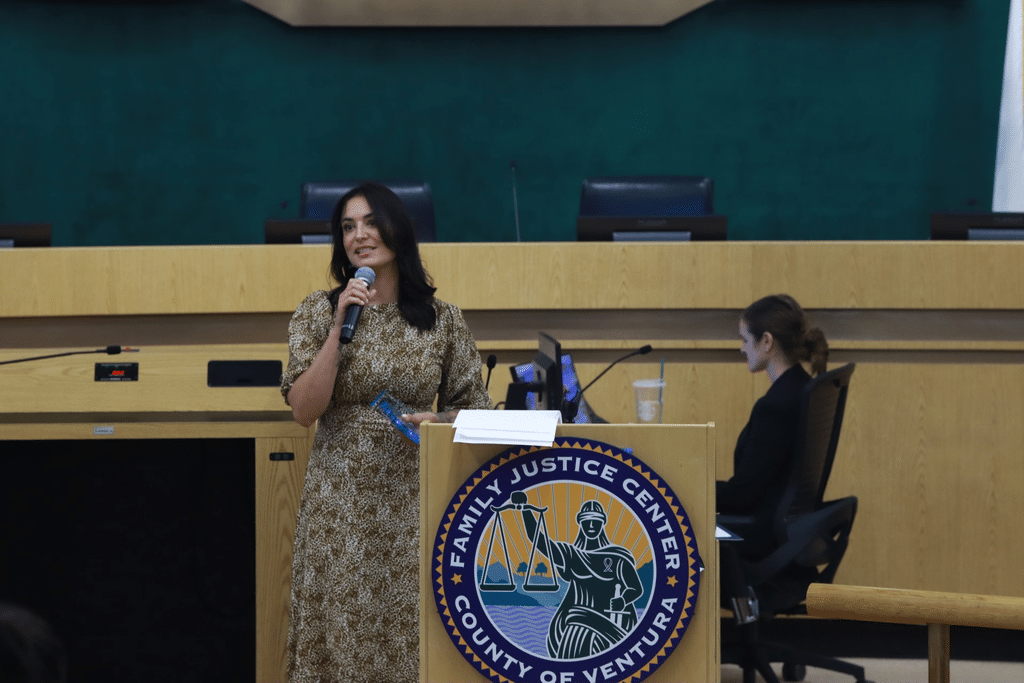
SHP’s report
Although she will briefly explain her story as a survivor, Azariah said she will focus on her journey to understanding the critical importance of data that can be shared to create a more universal comprehension of human trafficking, its components, the vulnerabilities and the needs of victims and how it manifests in a community.
She will also discuss the effectiveness of SHP’s major comprehensive report that Azariah oversaw development of and released in March: “Patterns of Exploitation: A National Analysis of Human Trafficking Trends.”
“I’ll talk about that journey, what we learned from that and the power that it has, both collectively as survivors to show that we have shared experiences and as service providers not just how we can intervene but prevent and create services that are actually helpful,” she said.
According to SHP – and Mouncey and the Collaborative concur – the fight against human trafficking has too long been shaped by limited data.
The impacts of that data deficit result in programs being created without a full understanding of survivor needs and policies being debated without clear national insight into how trafficking actually occurs.
Drawing from 4,388 verified cases of trafficking between 2023 and 2025, the report provides one of the clearest pictures to date of how trafficking operates across the United States.
SHP’s report examines who is being trafficked and the vulnerabilities often overlooked in our system, how victims are identified and when intervention is most likely, where service gaps exist between survivor needs and available care and what policymakers and practitioners can do to strengthen response systems.
The organization believes their exhaustive report begins to close the information gap and provide leaders across the field the insight needed to strengthen identification, protection, and prevention.
Myth busting
Another obstacle Azariah, Mouncey and other experts encounter are the pervasive myths about trafficking. One that annoys Azariah most is the belief that if a city has major highways that is a definitive sign that they are a significant hub of trafficking activity.
“Everywhere I go somebody will say, ‘I know we have a major trafficking problem here because of I-,’ and then list whatever the major highway is there,” said Azariah, who has been speaking at conferences, galas and training events two or three times per month this year. “That’s a very common myth that I hear probably once a week.”
She will debunk a few other myths during her presentation, including the misunderstanding that trafficking and victims and survivors are hidden and not visible to the public. Additionally, she wants people to know that victims are usually gradually groomed by traffickers who leverage the person’s vulnerabilities (e.g., poverty, substance use, mental illness, disabilities). Most victims are not abducted by strangers and thrown into the back of a windowless van in a mall parking lot.
Azariah will also address the common misconception that someone being trafficked can “just leave.” Circumstances vary but the relationship between trafficker and victim is far more complex and dangerous because they may have become reliant upon the trafficker for the drug they may be addicted to, or perhaps their trafficker has threatened to harm their family if they try to escape.
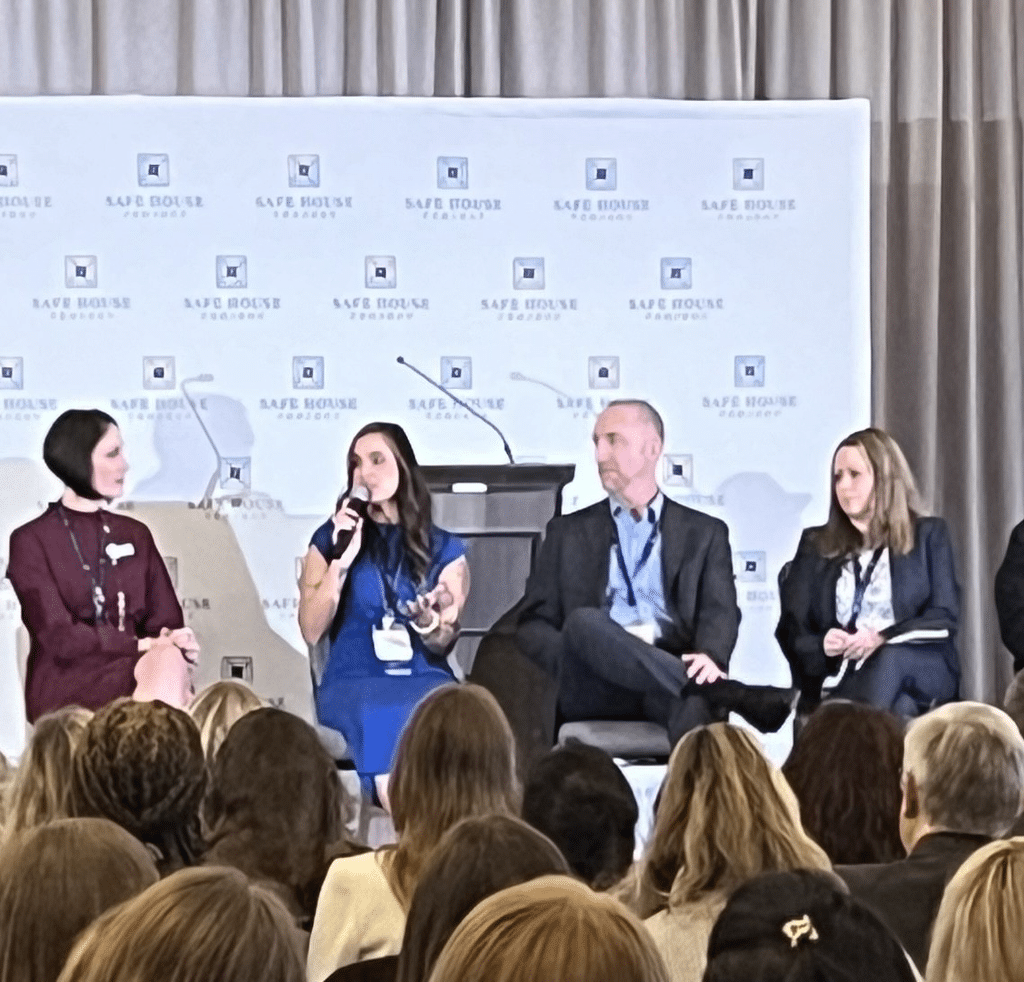
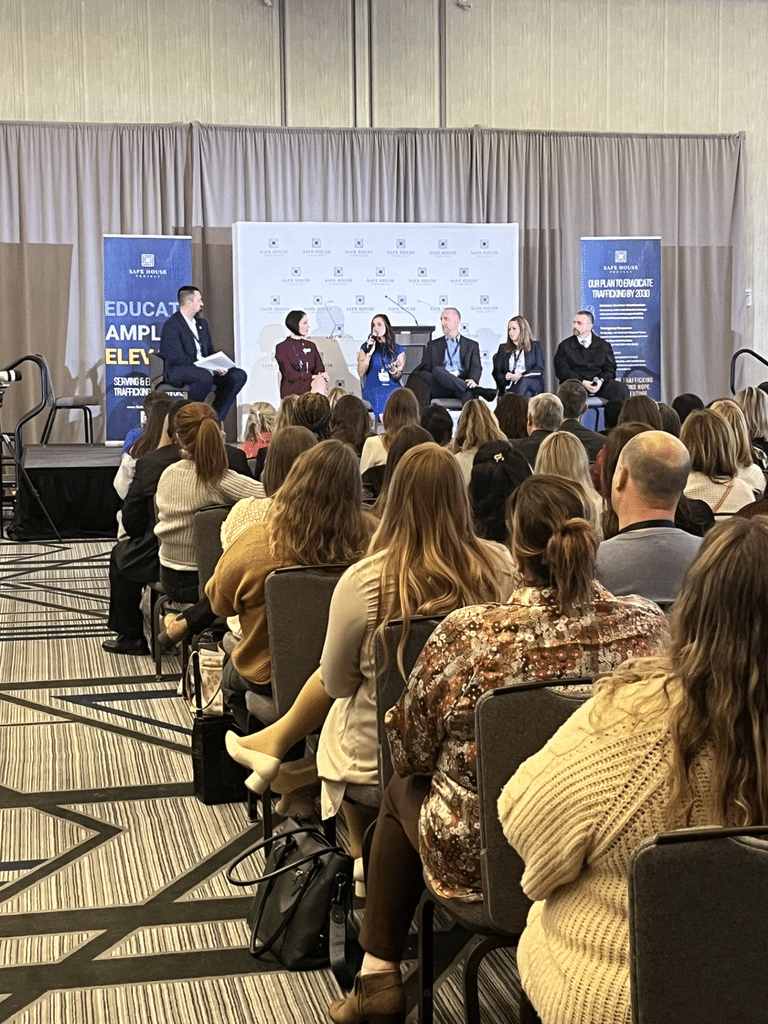
“Operation Coast to Coast”
Another challenge, Azariah said, is media coverage of trafficking, which often perpetuates those myths or other inaccuracies.
“Media continues to work against us in that they are highlighting false information or the most extreme accurate information that becomes sensationalized, and that’s what people have the most amount of access to,” she said.
Sandy Storm, a survivor of trafficking from Colorado Springs, Colorado, recently wrote on her LinkedIn page that, “Human trafficking continues to flourish because too many people still believe it happens somewhere else. In another country. In a dangerous neighborhood. To someone else’s child.”
Fortunately, Azariah said, there are a number of seasoned experts in the field providing skills-based training for law enforcement professionals and engaging in programs and activities to fight human trafficking.
Coast to Coast
Earlier in September, SHP in partnership with a coalition of more than 200 agencies across 22 states, including law enforcement, corporations and anti-trafficking leaders, conducted another “Operation Coast to Coast.”
One of the leading organizations directing the operation was the Human Trafficking Training Center, which provides onsite training to law enforcement officers, nurses, prosecutors, as well as probation and parole and victim advocates. Founder and operator of the Springfield, Missouri-headquartered organization Dan Nash is a retired Missouri State Trooper.
The initiative resulted in the recovery of 79 victims (74 adults, 5 minors), 125 arrests, and the seizure of more than $1 million in criminal assets.
SHP’s role in the operation was to ensure that every survivor received safe housing and trauma-informed care.
New initiatives for Azariah
Earlier this year, under the dynamic and affable Azariah’s direction, SHP developed Simply Report as a tool for reporting suspected human trafficking. The free, secure and privacy-conscious mobile and web app helps people identify and anonymously report suspected human trafficking and receive a quick response.
The reporting platform is available in more than 200 languages and is built on an AI-powered behavioral intelligence matrix featuring more than 700 trafficking indicators.
SHP partnered with Missouri Attorney General Catherine Hanaway to launch the free reporting tool ahead of the FIFA World Cup 2026, which was held across the U.S. Major public events are believed to increase human trafficking activities.
According to SHP, Hanaway and attorneys general across the country identified infrastructure failure with the existing national human trafficking hotline and have been working to correct the deficiency. That’s where the new app comes in.
On the conference and training circuit, Azariah has been enjoying her shift from being asked to lead breakout sessions to serving as the keynote speaker.
“A lot of my role has changed, too, into developing more people so that they can go out and train others and be experts,” she said. “That’s also been very fulfilling.”
She enjoyed participating in the U.N. woman’s event in March. She said it was interesting to see how many other countries have identified the problem of human trafficking. Those nations are now in a similar place to where the U.S. was 25 years ago when the federal Victims of Trafficking and Violence Protection Act of 2000 was passed.
“What I came away with was how much other countries still need our help,” she said. “We’re still focused on domestic work and should be because we have such a need to be focused on it, but there are a lot of countries that maybe could learn from us, and I hope that there are people out there doing that work.”
Conclusions
As she has continued to grow into her role as a young survivor leader with tremendous experience helping young girls and women who have been trafficked, training professionals and speaking publicly about human trafficking around the country, Azariah has been able to move away from constantly retelling her personal story.
That has been an important progression for her and a safer, more comfortable place to be so that she is not regularly reminded or retraumatized by reliving those painful experiences of her youth.
“I have a lot more to say than that, so it’s fulfilling to know that how things are actually changing,” she said. “When I’m talking I’m equipping people to do something different than what they were doing, so that is nice. I love that. That’s great to be able to move the needle.”
As an example, she recently met with a small group of college juniors and seniors in a fellowship program focused on coalition building around preventing Commercial Sexual Exploitation of Children.
“Answering questions that they can’t get the answers to anywhere else was exciting because I’m filling their knowledge gap as opposed to standing somewhere and talking to a community member at a rotary club that just comes and pats me on the back,” Azariah explained. “It’s really cool to be in spaces where change is actually being made, so I am thoroughly enjoying that part of my work.”
The luncheon at Windows on the River is sold out for in-person attendees, but interested people can still attend via live streaming. The fee is $25.
Funds raised from ticket sales directly support local prevention education, professional training, and survivor support systems across Northeast Ohio.
Keep our local journalism accessible to all
Reader support is crucial as we continue to shed light on underreported neighborhoods in Cleveland. Will you become a monthly member to help us continue to produce news by, for, and with the community?
P.S. Did you like this story? Take our reader survey!
Author

Related Articles
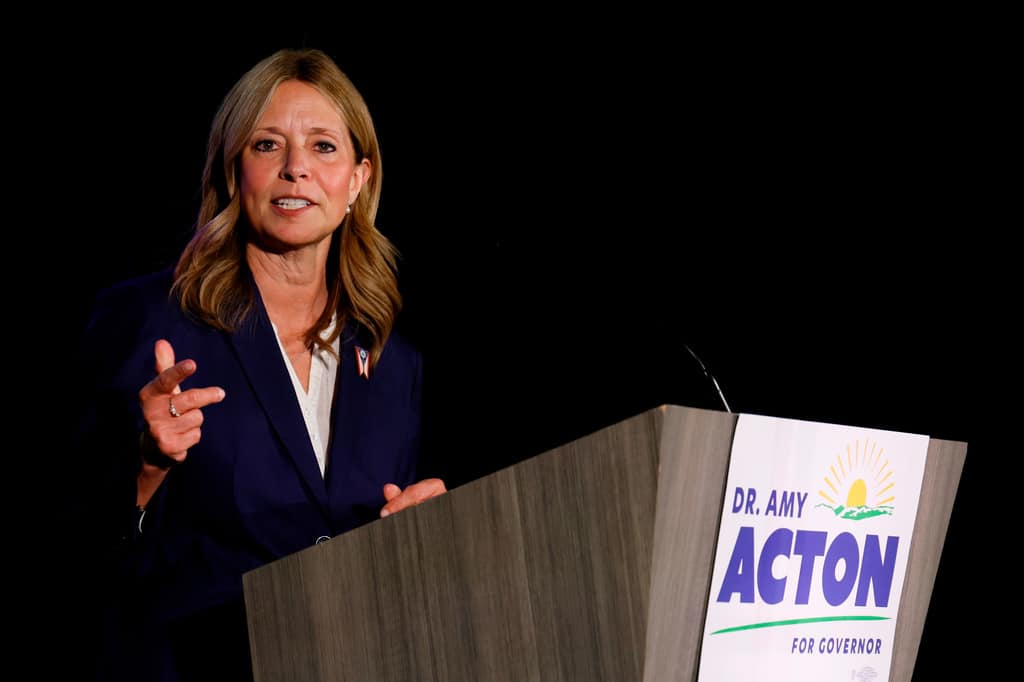
Armed man charged toward Democratic candidate for Ohio governor at fair, law enforcement says
A 38-year-old was taken into custody on Sunday, according to law enforcement.
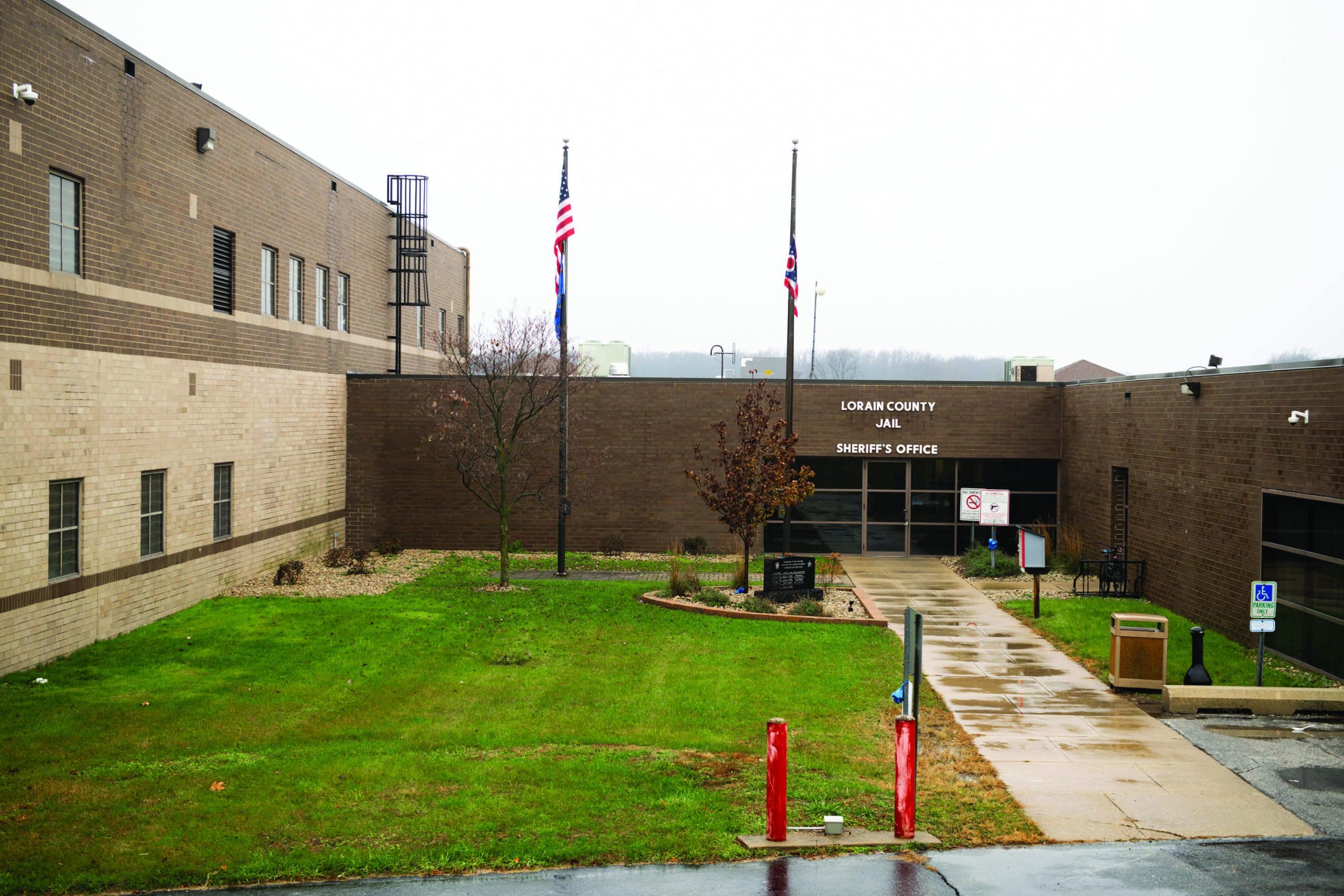
Teen treatment center CEO accused of unlawful sexual contact with minor in police sting
Police say the head of Fox Run Center for Children and Adolescents drove nearly 200 miles to meet with someone he believed was a 14-year-old girl.
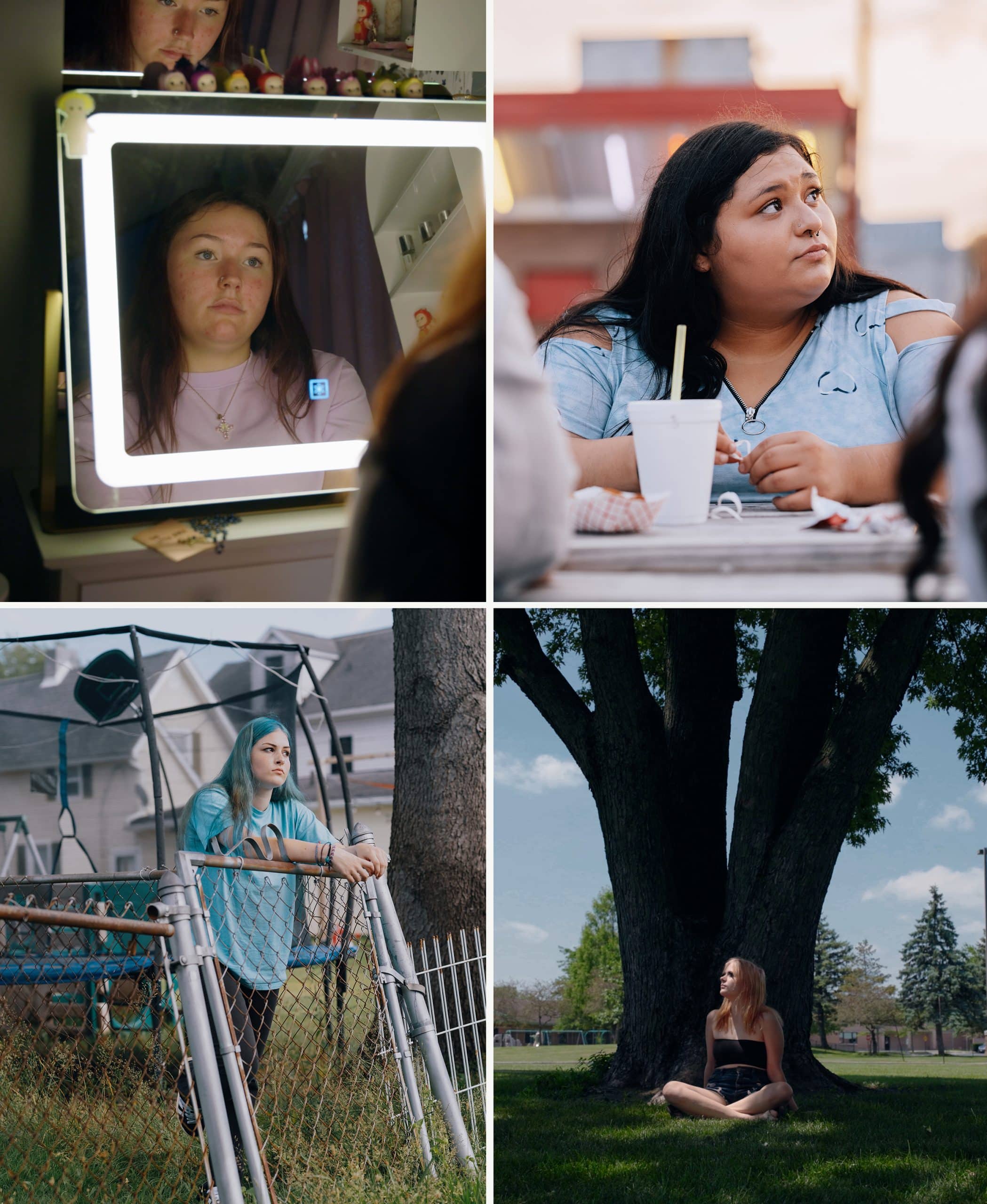
The girls who survived
Ohio’s residential treatment centers left them with trauma and questions. The friendships forged inside helped them heal and find answers.


