
Cheers to veterans, immigrants and America: Opinion
Immigrants — present and past — build bridges across racial and cultural chasms and contribute to the country’s socio-economic growth.
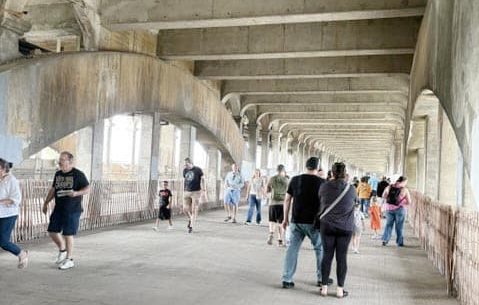
Walking on the lower deck of the Veterans Memorial Bridge was like stepping into a 3,110-foot sacred site. Formerly known as the Detroit-Superior Bridge, which ferried people to and from West 6 Street near Superior Avenue and West 25 Street near Detroit Avenue, stands as a testament to the muscle, sweat, and grit of immigrants.
About 10,000 people had the opportunity to see, touch and feel the bridge’s concrete columns on June 27 when Cuyahoga County organized a tour of the lower deck as part of the nation’s 250th anniversary celebrations. The mood at the bridge’s entrances was festive. But the atmosphere inside was one of reverence and awe.
The upper deck of the 196-foot-tall bridge still carries vehicles and pedestrians. The lower deck, opened in 1917 for streetcars and closed in 1954, stands as a paradigm of the ingenuity of a bygone era.
If you looked out from the bridge, you would see numerous skyscrapers and neon lights towering over smokestacks and the remnants of steel industries that paved the way for today’s technological and scientific marvels.
As a fitting tribute to the sacrifices of hundreds of thousands of war veterans, the bridge was rechristened as the Veterans Memorial Bridge in 1989.
There are more than 623,000 bridges. Giants among them are the Golden Gate Bridge (1937) in San Francisco, the Brooklyn Bridge (1883) and George Washington Bridge (1931), both in New York, and the Mackinac Bridge (1957) in Michigan.
They were built mostly by European immigrants seeking a better life for themselves and their families. Today’s immigrants and asylum seekers nurture the same aspirations.
Immigrants — present and past — also build bridges across racial and cultural chasms and contribute to the country’s socio-economic growth. Acknowledging their contribution, the late President Ronald Reagan, in his speech at the presentation of the Presidential Medal of Freedom in January 1989, said, “It is bold men and women, yearning for freedom and opportunity, who leave their homelands and come to a new country to start their lives over. They believe in the American dream. And over and over, they make it come true for themselves, for their children, and for others. They give more than they receive. They labor and succeed. And often they are entrepreneurs. But their greatest contribution is more than economic, because they understand in a special way how glorious it is to be an American. They renew our pride and gratitude in the United States of America, the greatest, freest nation in the world — the last, best hope of man on Earth.”
By contrast, President Donald Trump, also a Republican, and his coterie don’t miss a chance to blame the present immigrant community for the country’s ills. If only they looked intently into the rearview mirror, they would realize they are the beneficiaries of their ancestors’ voyage via the treacherous waters of the Atlantic Ocean to this land to make fortunes.
It is noteworthy that eight of the 56 signatories of the Declaration of Independence in 1776 were not born in the U.S., according to the Harvard Graduate School of Education. “Two were born in England (Button Gwinnett, Robert Morris), two in Ireland (George Taylor, Matthew Thornton), two in Scotland (James Wilson, John Witherspoon), one in Northern Ireland (James Smith), and one in Wales (Francis Lewis).”
The truth is, despite the political divide, America remains a land of opportunity for native-born citizens as well as for new arrivals.
As we celebrate the nation’s 250th anniversary, let us raise a toast to another 250 years.
Keep our local journalism accessible to all
Reader support is crucial as we continue to shed light on underreported neighborhoods in Cleveland. Will you become a monthly member to help us continue to produce news by, for, and with the community?
P.S. Did you like this story? Take our reader survey!
Author
Related Articles
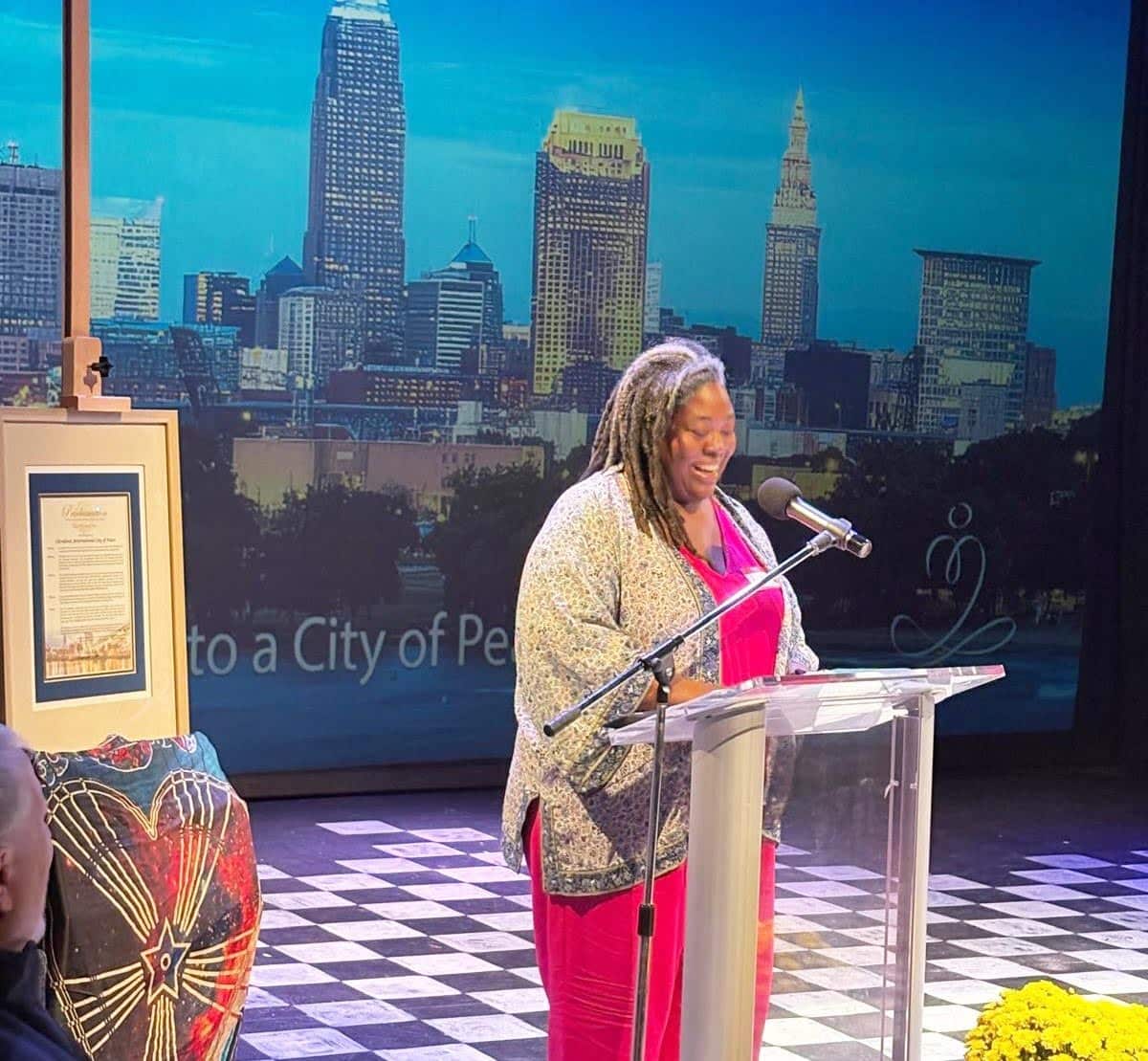
Cleveland is now a City of Peace but what does that mean?
Last year, this proclamation, which is a symbolic commitment to advancing peace, was announced on the stage of the LatinUs Theater in the Pivot Center located on W. 25th Street.

Northeast Ohio voting advocates: ‘Under no circumstances will we stop’
Despite a push to increase voting restrictions, advocates say they’re “jazzed to do this work.”


