
From Cleveland Heights to Tribeca: Joe Kowalski is having a year
The Northeast Ohio filmmaker’s first feature documentary premiered at one of the world’s top film festivals this June — and the story of how he got there is very Cleveland.
Let’s be clear about what Tribeca is.
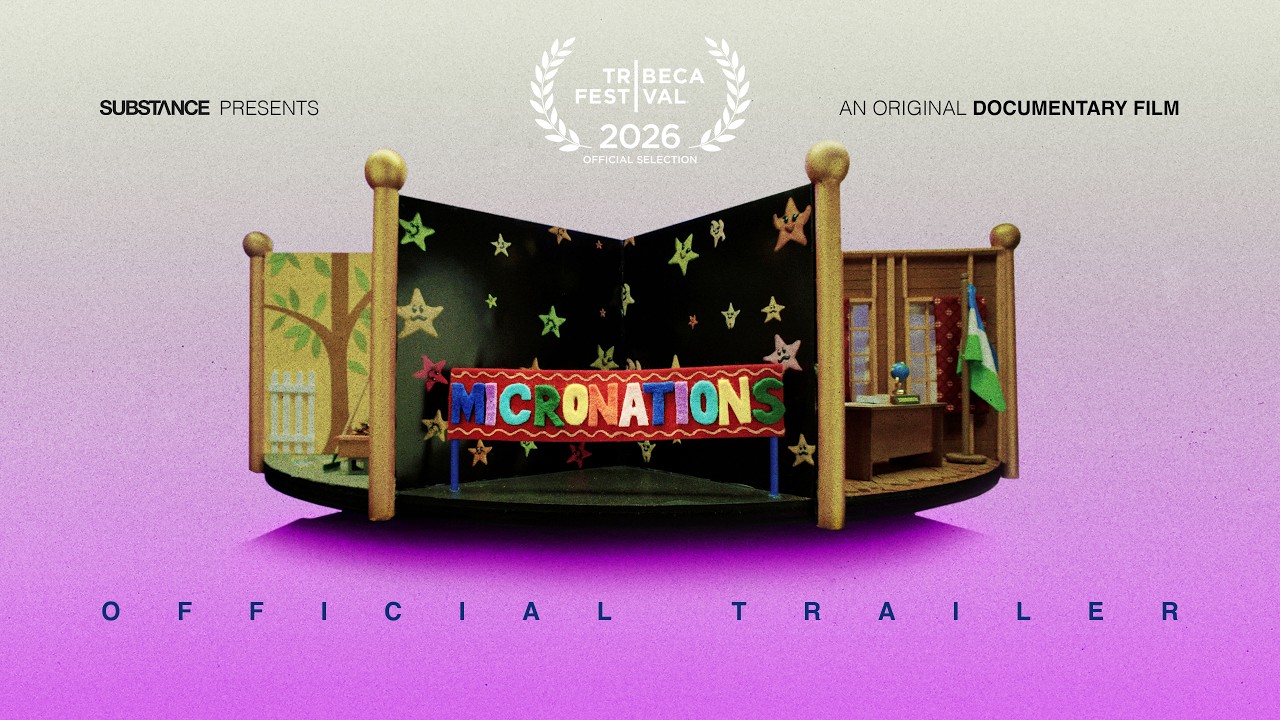
Founded in 2002 by Robert De Niro and consistently ranked among the top ten film festivals in the world, Tribeca is where independent filmmakers careers launch, where distribution deals get made over drinks in New York City, where five years of work finally gets to be seen in front of an audience that can do something about it. Getting into Tribeca with your first feature documentary — without celebrity backing, without a major studio, without what filmmaker Joe Kowalski calls “wind in our sails” — is the kind of thing that makes people stop and pay attention.
Joe Kowalski is from Cleveland Heights. And this June, he’s going to New York.
Kowalski grew up in Oberlin, in Lorain County, and came to Cleveland for school — first Lorain County Community College, then Cleveland State University. He’s lived on both the east and west sides of town and will tell you with a straight face that he has no opinion on a “better side of town” because he loves them both. He’s been here since 2015, and by now Cleveland has claimed him as its own.
He didn’t set out to be a documentary filmmaker. Like a lot of people, he wanted to make narrative films. But documentary snuck up on him, first through a job that had him editing nonfiction footage, then through the realization that he actually loved the puzzle of it, the way you work without a rigid script and just move pieces around until something true emerges. “There’s something very satisfying about not having a rigid script to work from,” he says, “and being able to sort of play around with moving puzzle pieces around.”
Before that, there was a YouTube channel he ran as a teenager, uploading something new every single week — sketches, vlogs, experiments — dragging his family and friends into whatever he was making. It was, he says, good practice. It made him faster, more creative, and gave him a reel before he even knew what a reel was.
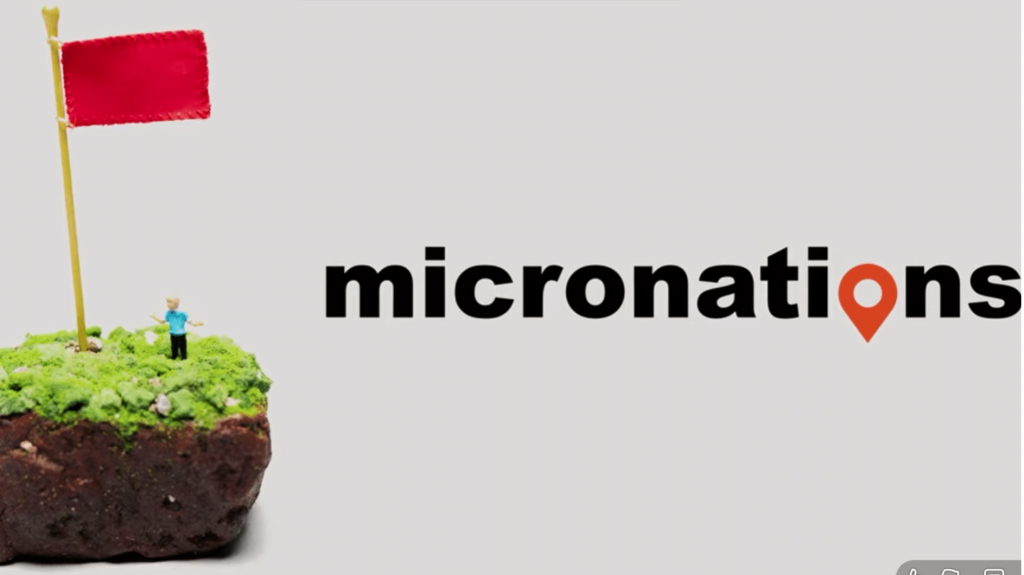
His feature documentary is called “Micronations,” and the premise sounds like something you’d stumble across at 1 a.m. in a Wikipedia rabbit hole, because that’s more or less exactly how Kowalski found it.
Micronations are self-declared countries. Kingdoms, empires, republics — some the size of a backyard, some existing entirely within a suitcase, some that started as a school project and turned into something their founders couldn’t have predicted. There are hundreds of them around the world, and there’s even a convention — Microcon — where their representatives gather to, well, do what nations do. Diplomacy. Community. Argument. Celebration.
Kowalski spent five years making a film about them. He started researching in 2021, began filming in 2022, and finished color and sound correction just weeks before Tribeca announced its selections. The film took him to Sweden, where an artist started a nation out of driftwood on a rocky beach in the 1980s and people are still carrying it on after his death. It took him to North Macedonia, where a micronation called Vevcani formed as a protest against the Yugoslavian government and has become something real and rooted. It took him to conventions in Las Vegas, where he walked into a room of about a hundred people — all representing countries they or someone they loved had invented — and found himself, as he puts it, “immediately thrust into that whole universe.”
“I thought they would all have similar stories,” he says. “Instead there was such a variety — kids who started it because of a school project, someone who heard about it online and roped their family into it, satirical approaches, political statements. All different ways of going about it.”
What he found underneath all of it was something he hadn’t expected: depth. These weren’t just people playing pretend. They were asking real questions — about what a nation even is, about sovereignty and borders and what it means to belong somewhere, about what you would do differently if you were the one making the rules. “The idea of trying to create your own country may sound kind of silly,” Kowalski says, “but it also allows you to reconsider — what do I value? What would I do if I were running things? And when you start from that perspective, it challenges some of the norms we’re just used to dealing with.”
In a year that marks the 250th anniversary of the United States, he thinks that’s more than timely. He thinks it’s necessary.
The Tribeca description of the film calls it “whimsical and surprisingly timely.” Kowalski calls it an anthology — a kaleidoscopic look at a phenomenon that keeps turning up new angles the longer you look at it. He’s not trying to tell you how to feel. He’s hoping you’ll leave with enough to talk about for a while.
While making “Micronations,” he and his crew traveled to Whittier, Alaska, a town of about 272 people where nearly the entire population lives in a single 14-story building called Begich Towers. Originally a military installation from World War II, the building has become a self-sufficient community with a post office, a grocery store, a church, a police station and a school, all under one roof. The only road in or out runs through a tunnel blasted through a mountain, and traffic alternates directions every half hour.
Kowalski shot a segment in Whittier for Micronations, thinking it could speak to the same ideas of community-building and belonging. But in the edit, it didn’t quite fit — the film already had another segment exploring similar territory, and keeping both felt repetitive. So he cut it.
But he loved the footage too much to let it disappear entirely. He and his collaborators reworked it into a standalone short documentary called “Prettier in Whittier,” and this spring it screened at the Short. Sweet. Film Fest in Cleveland. A film that started as a cut scene became its own festival run.
Two films, two festival selections, one year. For someone who describes himself as constantly fighting the feeling that it might all collapse, it’s a remarkable thing to have landed. The collapse almost happened more than once. Kowalski is honest about that.
Independent filmmaking means there is no safety net. The crew, a tight core of about eight people, sometimes down to three on location, took on debt to keep shooting. They fit all their equipment into overhead bins to afford the flights to Europe. There were moments, he says, when it felt like it was all going to fall apart.
What saved the project was finding the right partners. Most of the crew came together through a previous job, and when Kowalski and some of his colleagues were brought on at Substance, an original programming initiative out of TRG Multimedia near Cleveland’s airport, the film found the support it needed to get finished the way he’d always imagined. “They were able to not only hire me on,” he says, “but actually buy the rights of the project and help me finish it in a way that has made me really happy with the final end result.”
When the Tribeca selection came through, Kowalski says the reaction was somewhere between disbelief and validation.” For someone who spent five years with a film bottled up on a server, that kind of recognition lands differently. To have someone else experience it and actually connect with what you’re trying to do — it’s just, oh my god. Just incredible.”
He’s also quick to credit the crew. “There wasn’t that sense of ego,” he says. “It was just — we’re doing this, we’re all in this together, we’re not too good for any role. We’re just gonna make it happen.” He pauses. “Maybe that’s part of that Cleveland spirit.”
It probably is. Cleveland has always had to be scrappy. Kowalski talks about how people who work on the coasts can grab lunch with the right person and open a door. That’s not how it works here. Here you figure it out. You use what you have. You trust the people around you. You make the film with the overhead bin budget and hope someone at Tribeca watches it and feels something.
Someone did.
New York was, in Kowalski’s words, a complete whirlwind. All three public screenings of Micronations were packed and warmly received. The film’s first Rotten Tomatoes reviews came in positive. The crew were there together to take what Kowalski calls their “victory lap” and finally see the finished cut with an audience.
And then there was Jane Rosenthal. Rosenthal is the co-founder of Tribeca. Kowalski ran into her at the festival and she told him she loved the film. “I had assumed someone that high up in the organization didn’t have the time to watch more than a handful of the films selected,” he says. “I was pleasantly surprised.” He was told afterward that she makes a point of seeing quite a few of the selections. He didn’t get to meet Robert De Niro, but he was standing close enough to watch him give a speech.
What Kowalski says he’ll carry most from the week, though, isn’t the brushes with festival royalty. It’s the audience conversations, “I’ve spent a lot of time explaining the broad concepts of the film to people to get them interested,” he says. “But now I could finally engage with the more in-depth conversations.” One man came up to him after a screening and said: You have no idea how rough the past month and a half of my life has been. I really needed that movie.
“How much better of a reaction can you get?” Kowalski says.
It was also, he notes, an electric time to be in New York — the Knicks were making their championship run, and the streets were joyous in that particular way cities get when a team is doing something that feels historic.
Cleveland’s turn is coming. Kowalski confirms that screenings here are officially in the works for this fall, though details aren’t public yet. There’s even a small Cleveland connection baked into the film itself: someone from the Youngstown area who Kowalski met at the first Microcon ended up in the film, and when the local screening comes together, Kowalski is hoping he might come out for a Q&A.
When you ask Kowalski what he wants people to take away from “Micronations,” he doesn’t give you a tidy answer. He’s not that kind of filmmaker. “I don’t always love when a movie is constantly telling you how to feel,” he says. “I hope it at least gets people talking. Even if they don’t like it.”
What the film gave him, he says, is a new relationship with the people around him and proof that if you believe in someone, they will usually rise to meet those expectations. It gave him a harder-won capacity to ask for what he needs. And it left him thinking about nationhood and community and belonging in ways he’s still sorting through.
He’s already looking ahead. There’s a project taking shape — something about one of the most remarkable private libraries in the world — that he’s trying, as he puts it, to will into existence.
For now though, he’s a Cleveland Heights filmmaker whose first feature played Tribeca, packed houses, and moved strangers. And soon he’ll be bringing it home. He made it the way Cleveland tends to make things without the infrastructure, without the shortcuts, without anyone handing it to them. Just the work, and the people willing to do it together.
Micronations premiered at the Tribeca Festival on June 5, 2026, with encore screenings June 6th and 11th. For more information and updates on a potential Cleveland screening, follow @micronationsdoc and @this_is_substance on Instagram.
Keep our local journalism accessible to all
Reader support is crucial as we continue to shed light on underreported neighborhoods in Cleveland. Will you become a monthly member to help us continue to produce news by, for, and with the community?
P.S. Did you like this story? Take our reader survey!
Related Articles
The Movie Nerd Report: 3 film festivals this week in Northeast Ohio
Plus, see what other new releases and classics are playing at independent theaters around you!
Walking Cleveland’s past, one story at a time
“How much of Cleveland do I pass by without knowing the story?”
More than a card: Why Cleveland Public Library still matters in the digital age
September is National Library Card Signup Month. The Land talked with Cleveland Public Library Executive Director Felton Thomas, Jr. at the Main Library downtown.


