Prairie dogs.
Maybe not the “dogs” one would expect, but it’s the response Cleveland Animal Protective League President and CEO Sharon Harvey doesn’t hesitate to give when asked about the most unusual animal to come through the animal welfare agency’s doors.
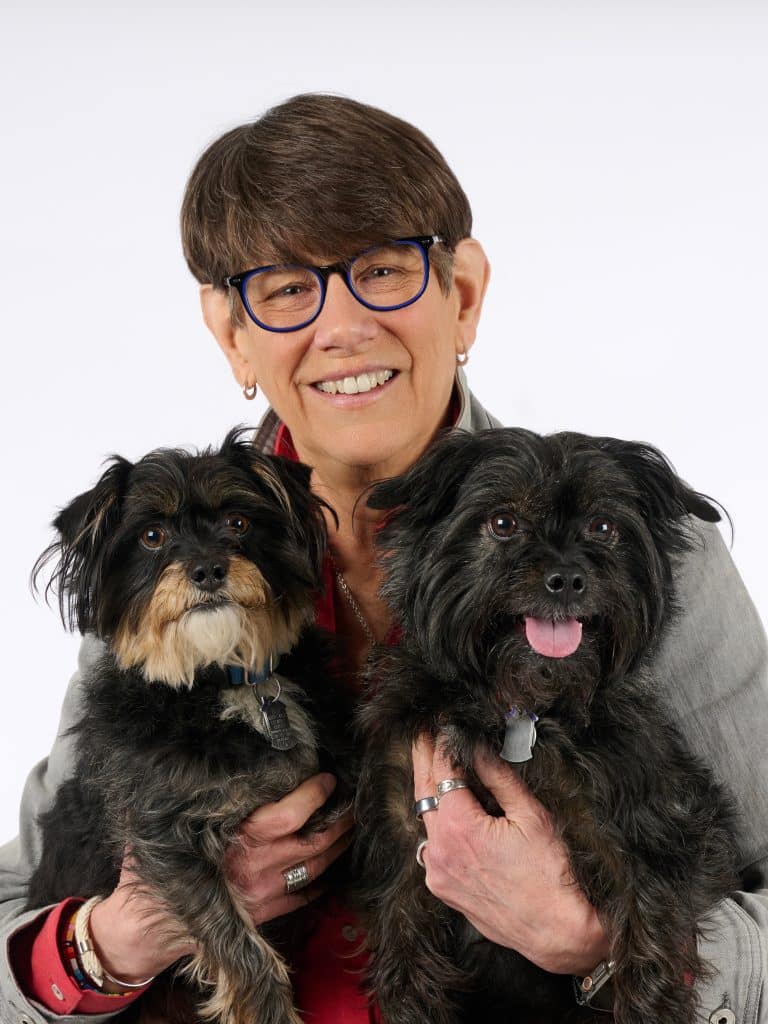
Harvey, the Tremont-based not-for-profits’ leader since 2007, who will retire at the end of 2026, recounts a humane investigation case that unfolded during the COVID-19 pandemic. It targeted a Cleveland appliance store that maintained a clandestine side hustle: exotic pocket pets. Most notable were a pair of prairie dogs.
“They really aren’t adoptable,” Harvey says of the critters that have more in common with ground squirrels than canines. “They did have a happily-ever-after and went to a sanctuary that knew how to deal with them and some of their special and unique housing needs.”
Following a nearly 20-year tenure leading the Cleveland APL, Harvey leaves some big shoes to fill. The APL’s board of directors plans to have a successor in place by summer’s end or early fall, leaving enough time to get up to speed on the workings of the APL before Harvey’s departure at year’s end.
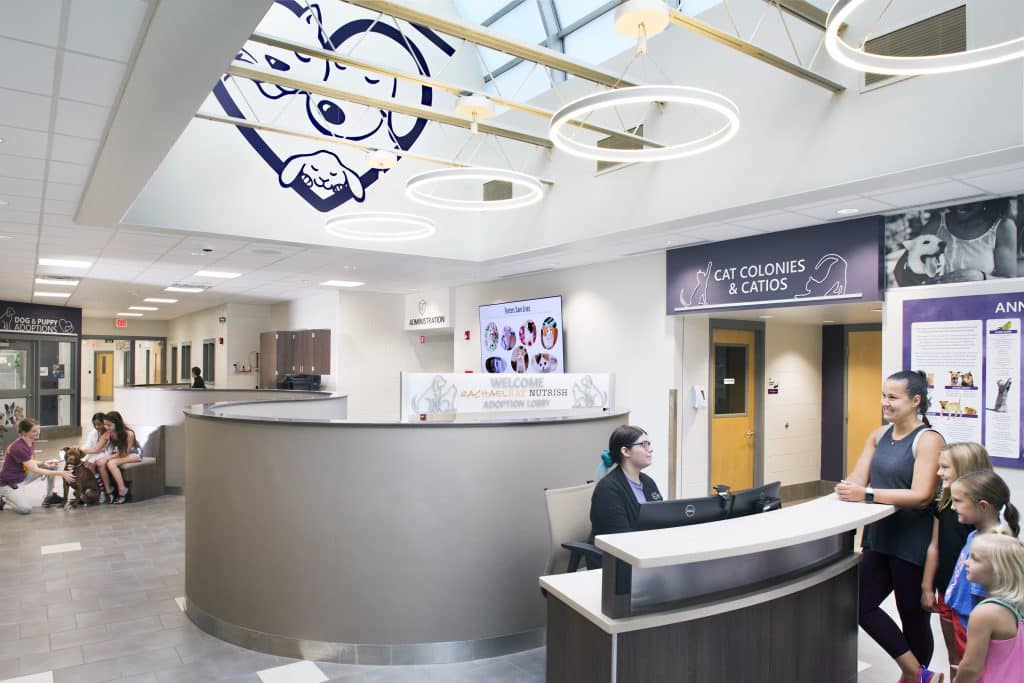
In the meantime, Harvey has been reflecting not only on her legacy, but how the agency has changed and grown during that time, including elevating programs and services to ensure every animal entering their custody receives optimal support. She cites the introduction of the Trap-Neuter-Return (TNR) program for community cats and the Second Chance Program providing specialized medical care as just two examples of providing complex care within a shelter environment.
Central to this progress, according to Harvey, is the Cleveland community’s mandate that every animal deserves a chance at life.
“We took our marching orders from our donors and our supporters who were the ones who said we believe those animals, regardless of the cost, deserve the second chance,” she says. “The value of animals in society has gone up, and the number of people who consider pets truly to be a member of the family – their family – has increased. So, that has made it so much easier for us to get the support we need, and to have the impact we’ve had on saving lives that we weren’t able to save previously.”
Harvey sat down with The Land to discuss her time with the APL and its impact on Greater Cleveland residents, both human and animal.
NOTE: The following interview has been edited for length and clarity.
THE LAND: During your tenure with the APL, how have you witnessed Greater Cleveland’s relationship with animals change and evolve?
SHARON HARVEY: When I started, if there was one piece of legislation or local policy that had had the word “animal” in it, that was a lot, especially at the [Ohio] State House. And if it had the word “animal” in it, it usually had to do with livestock or something more agricultural. We’ve been working formally with [Westlake-based public affairs and advocacy firm] Cypress for the last 10 years because we came to terms with the fact that having a presence at the State House – a voice down there – and being a resource to legislators was no longer a luxury. It’s a necessity. [Cypress] is tracking more pieces of legislation for us than they do any of their other clients. So, we’ve gone from maybe one to multiple bills every General Assembly. I want to say we’re tracking at least a dozen bills in this General Assembly that have something to do with animal policy, animal welfare, and animal protection.
In Cleveland, through [the city’s Division of] Animal Care & Control, they have worked to strengthen their ordinances. But when they intersect with a cruelty case we’re handling, we also have the ability to file those charges. So, through policy, we’ve seen a definite increase in support, which is so heartening.
THE LAND: You’ve led the organization through a recession, a global pandemic, and any number of shifting economic tides. What is the one thing people would be shocked to know about your role at the APL?
SHARON HARVEY: Through all of those times, being the CEO of an organization like the APL is first and foremost about the mission. But it is also about running the business of the organization and making sure that we are financially and legally sustainable, that we’re bringing the money in.
A lot of people would be surprised to learn – and this is a large misconception because we do humane law enforcement – we get absolutely no public funding. In 2007, when I started, our budget was about $3.5 million dollars, and we’re now at about $13.5 million dollars. Seventy percent of that is raised through donations. And that includes our Humane Law Enforcement team, who is out there with full police power to enforce Ohio’s animal protection laws. And everything around their work is paid by donations.
Behind the scenes, we are constantly working with the wonderful people who believe deeply in our mission, who believe these animals deserve to have a voice and to have the level of care we’re providing them. And to raise millions of dollars a year to keep that going … We’ve gone from a team of about 25 to more than 100. So, part of the job is everything to do with taking care of all the human resource matters around a growing team, and in a very difficult field, from the standpoint of emotional burden and compassion fatigue, also known as secondary trauma. So, there is a lot that goes on day to day behind the scenes that, for me, doesn’t involve touching animals, but very much involves people and taking care of people.
THE LAND: What measures have you taken to protect yourself and your staff from compassion fatigue?
SHARON HARVEY: To be honest, there’s only so much we, as an employer and as an organization, can do. And I state that as an individual employee of the organization, as well as the leader of the organization.
We’ve put a number of things in place to give our team the resources they need. We’ve expanded our employee assistance program benefits. We have provided them with the ability to use some sick time for self-care days. They have a very competitive vacation time and sick time policy. We encourage them to come forward productively and constructively with concerns that they may be having about things that they’ve seen.
We really emphasize the need for self-care, and that can be hard. But every individual who gets into this work really has to find a way to compartmentalize some of the hard things that we deal with and come up with a healthy balance between our commitment to this mission and the need to take care of ourselves so that we can come back every single day to fulfill the mission and help these animals. If we’re not taking care of ourselves, we can’t take care of them.
And it’s hard. I can’t say we’re perfect. It is a part of the nature of the work. And I think what we find out is there are some people who have the capacity to do that and other people who don’t. And that’s not a judgment. We’re just all made up differently.
A question that we all get is, “I don’t know how you do this. I could never see these things. I couldn’t do that work.” And that comment is made very supportively. And yet – and this may be a little overly sensitive – but the insinuation is that somehow we can see things like that, and it doesn’t bother us, therefore we can do this work. That couldn’t be further from the truth. It is hard to come into this work because you love animals and then see the worst that humanity can dole out to animals.
THE LAND: Regarding animal homelessness, what is the balance between it being a responsibility/neglect problem versus a personal resource problem?
SHARON HARVEY: Subjectively, the latter. The resource issues are much more often the [reason for surrendering a pet] then it’s something bad, or somebody just decides they don’t want the pet anymore.
There will always be people who maybe never should have gotten a pet in the first place, or it’s a good thing they’re deciding to surrender [the animal]. But more often than not, it’s because some life circumstance has happened and the resources aren’t available to take care of [the pet].
One of the things that has happened at the APL over the years, and this has been ramping up significantly now over the past three to four years, is the recognition that, unless we reach out into the community and try to provide more preventive resources to people having to surrender pets, or even think about having to surrender a pet, then we’re just doing that definition of insanity thing. We just continue to take the animals and find them new homes, and then we expect something along the line is going to change, but it’s not. We’re just doing the same thing, expecting a different outcome, and we’re getting the same outcome.
We have really committed some significant investment, resources and time into being more preventive and proactive through our Project CARE [community animal retention effort] program. We want to curb that inflow of animals from people who love their pets, but they have come up against some barrier to keeping their pet.
We will always exist as an animal shelter. There will always be animals that will have to come into us through our cruelty investigations program, from owners who don’t want them anymore, or for people who these preventive measures just can’t help. We are obligated to provide those animals with the best experience in our care possible, and to find the vast majority of them good new homes.
But it is heartbreaking to see owners come in having made the decisions that they can’t provide the care their pet needs, and the best thing for their pets is to surrender them to us. In the past, animal lovers have been very judgy about that. And you’ll see online, “I would never do that. Nothing would ever happen that I would come to the decision to surrender my pet to a shelter.” Guess what? You have never been presented with some of these challenges people are presented with, and you would be surprised.
Through our Project CARE program, we have put in place a pet food pantry through a partnership with the Greater Cleveland Food Bank. Last year, we gave out 27 tons of pet food to people who were just having trouble affording to feed their pets. And that was both through the food bank, directly at the APL, as well as through a variety of neighborhood food banks we have [relationships]. We do community vaccination and wellness clinics, as well.
What we find is people who are not providing some of this care, especially preventive care for their pets, it’s not because they don’t want to. They want desperately to do that. They just don’t have access to veterinary care. They can’t afford it. They can’t get there. There aren’t appointments. And when we hold these clinics, we generally can do about 100 clients in a day. They are lined up for hours in all kinds of weather just to get their pets vaccinated. And if that doesn’t send a message of how much they value their pets and this care, I don’t know what would.
We’ve also put in place a Crisis Safety Net Program. In the past, when people were fleeing domestic violence, or they had to go for long-term rehab, or any number facing eviction or houselessness for other reasons, they would come to us wanting help until they got back on their feet. And the only thing we could offer to them was to surrender their pet to us. Now, with the Crisis Safety Net Program, we have specialized foster homes willing to take in these animals for a short-term placement, and it can be extended, if necessary.
It’s made me really reconsider my definition of impact, because when you hear we’ve done 12,000 spay/neuter surgeries in a year and assisted 21,000 animals, it’s easy to say that’s massive impact, right? And when our [Crisis Safety Net Program] is responsible for, say, reuniting 15 pets, you could argue that’s not impactful. But when you listen to the stories of these people say, “I would not have gotten the care I needed so that I could not only take care of myself, but be a stable home for my pet, because I was going to have to surrender my pet and I wouldn’t,” then this program was life-saving to them. That’s impact, right? That is pretty impactful.
THE LAND: You are leaving at the end of 2026. Is there one project or systematic change that you wish you had the opportunity to address?
SHARON HARVEY: Let’s put it this way. I feel like we have at least started working on the systemic changes that feel workable. Are there other very aspirational things? Sure, but as somewhat of a realist, I think we have really focused our energy on the things that, right now, are doable and stand a chance of being sustainable, because that’s important.
I’ve got all kinds of ideas, but can we really implement and sustain them? I don’t think so.
For what we have started, it is just waiting to see it grow. This Project CARE program, and the impact that has going, we have got to continue to grow that. And that really is the next chapter right now, while not taking our eye off of the critical importance of everything that goes on inside the walls of the Cleveland APL.
Mike Zawacki is a Cleveland-based freelance writer. His black Pittie, Coco, is a rescue from the Cuyahoga County Animal Shelter.
Keep our local journalism accessible to all
Reader support is crucial as we continue to shed light on underreported neighborhoods in Cleveland. Will you become a monthly member to help us continue to produce news by, for, and with the community?
P.S. Did you like this story? Take our reader survey!