
Dangerous air quality persists Friday, wildfire smoke smothers Cleveland
Northeast Ohioans are urged to stay indoors and avoid prolonged exposure to the air.
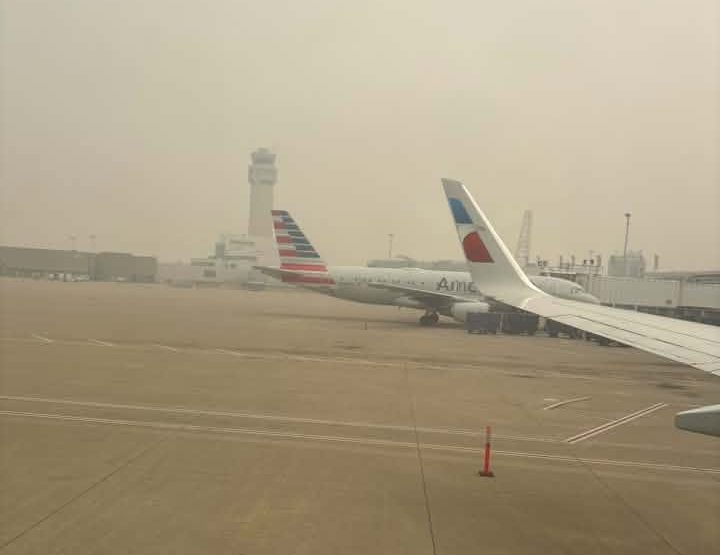
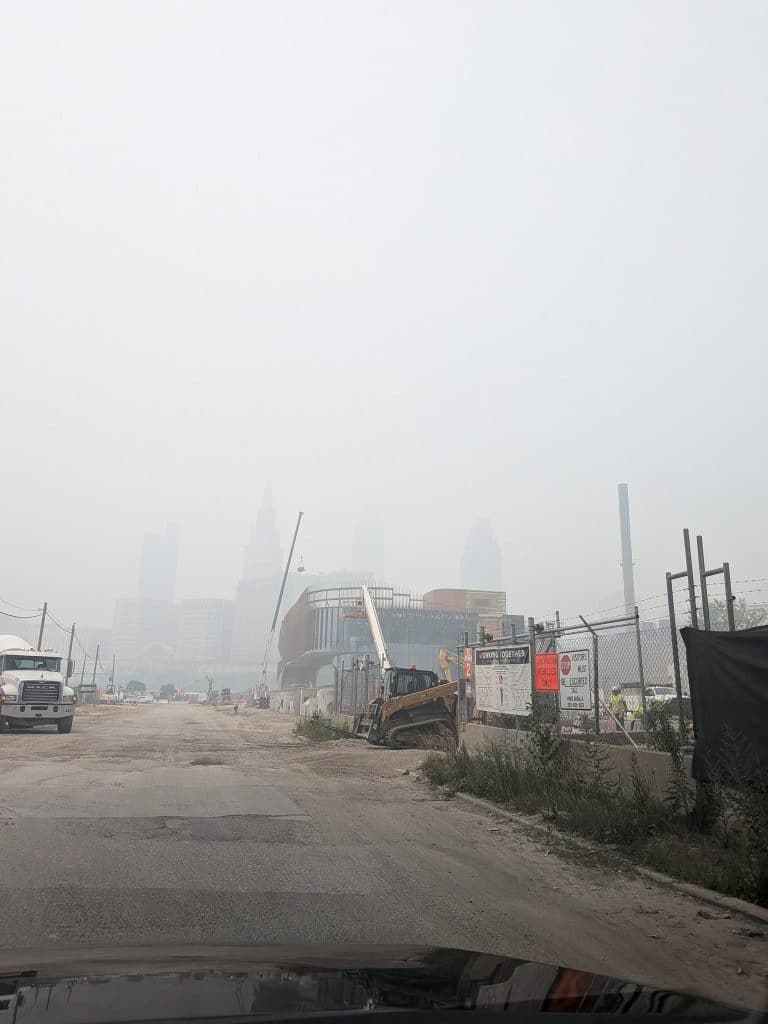
Smoke from Canadian wildfires is smothering Northeast Ohio and much of the Great Lakes region. The Ohio EPA issued an air quality alert on Thursday, which remains in effect on Friday. The agency expects our current air quality to remain “unhealthy,” for much of the day and possibly into the weekend.
As of 7:15 a.m. on Friday, the air quality in Northeast Ohio was noted at 260 AQI, or “very unhealthy.” It’s expected to get worse as the day goes on and return to “hazardous status,” according to AirNow.gov. Similarly, on Thursday, AirNow.gov described the air quality in Cleveland as “hazardous.” At 2 p.m. on Thursday, the air quality was at 502. A source at a Northeast Ohio park system reported one air quality sensor reading in the 700s on Thursday afternoon. For comparison, a range of 50 to 100 is considered “moderate” or “generally safe.” Anything above “300” is considered “hazardous.”
“A code MAROON air quality alert means that air pollution concentrations within the local region are extremely hazardous for the general population. Efforts to minimize effects, even indoors, may be difficult to impossible. Follow local emergency instructions via television or radio,” the National Weather Service said in its air quality warning alert. The advisory will remain in effect until at least 11:59 p.m. Friday.
Cities across the Great Lakes states registered air quality ranging from unhealthy to hazardous — which means it’s unhealthy for anyone, regardless of health conditions. Microscopic particles can lodge deep in the lungs and enter the bloodstream, leading to heart and lung problems and contributing to other long-term health issues.
Dr. Samuel Gurevich, a pulmonologist at the Cleveland Clinic, said conditions are particularly dangerous for children with asthma, pregnant women and people with heart conditions.
“We know that air pollution in general can really trigger a number of health issues, including simple things that we think about like asthma or COPD, but they can actually also trigger cardiovascular events. And smoke from wildfires is no exception,” he said in a statement issued through the Cleveland Clinic. “They actually put into the air a lot of what we call particulate matter, which are these very, very fine particles of dust and other organic matter that then can easily be breathed in and can irritate the airways or even be absorbed into the bloodstream.”
Northeast Ohioans are urged to stay indoors while air quality remains in the unhealthy range. Gurevich recommended donning an N95 protective mask if you do have to venture outdoors. However, medical officials insisted that respiratory ailments are not the only conditions exacerbated by the wildfire smoke.
“While breathing problems and respiratory health dangers are often considered the biggest health impact from wildfire smoke, it’s important to recognize the impact on cardiovascular health, as well.,” said Dr. Meera Kondapaneni, board president of the American Heart Association’s Greater Cleveland division and an interventional cardiologist with The MetroHealth System. “Wildfire smoke contains a lot of pollutants including fine, microscopic particles linked to cardiovascular risk. As these fires continue to burn that contaminated smoke is traveling many miles beyond the immediately affected area.”
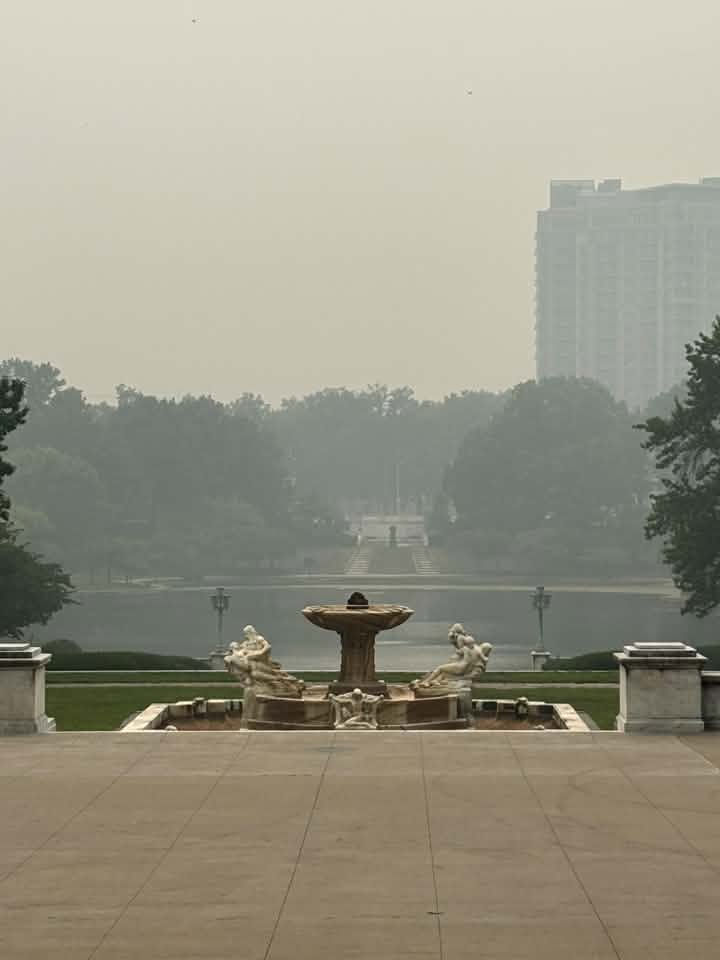
Cleveland, Cuyahoga County take action
All playgrounds, outdoor pools and youth sports in Cleveland are cancelled due to the air quality. Indoor pools remain open. Cuyahoga County offered the following tips for residents:
- Limit time outdoors, especially during the afternoon and early evening when ozone levels are often highest.
- Stay inside and in an air-conditioned area with windows and doors closed if possible.
- Reduce strenuous outdoor activity such as running, biking, and yardwork.
- If you must be outside, stay hydrated by drinking plenty of water, non-alcoholic and decaffeinated fluids, even if you don’t feel thirsty.
- Check your city’s website for locations of cooling centers.
- The Division of Senior and Adult Services maintains a map of agencies and resources to assist older adults.
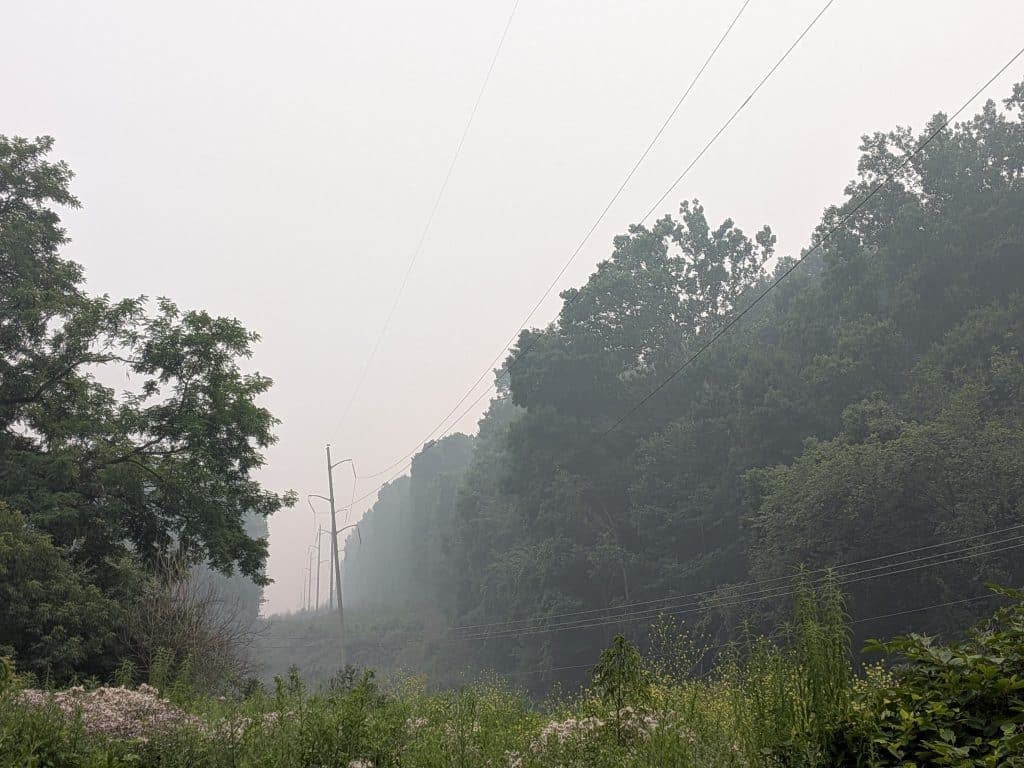
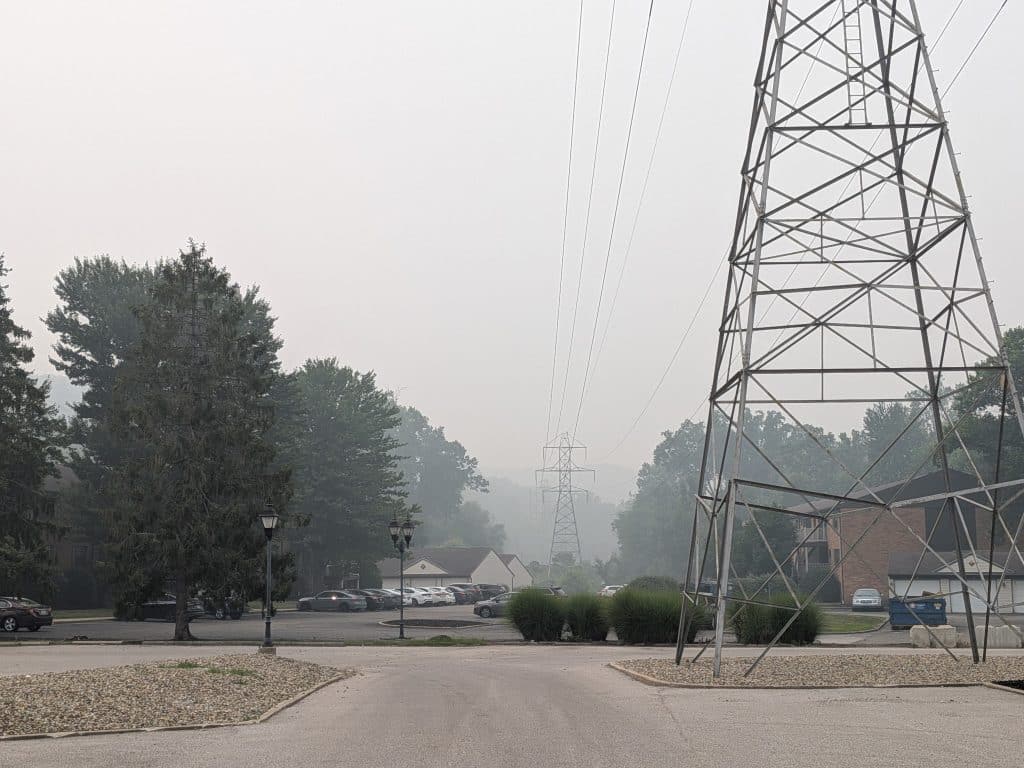
Cleveland city officials are extending hours at Neighborhood Resource and Recreation Centers (NRRCs) to offer shelter for residents exposed to the wildfire air. On Thursday and Friday, the following facilities will be open from 11:30 a.m. until 10 p.m.:
- Zelma George: 3155 Martin L. King Blvd.
- Collinwood: 16300 Lakeshore Blvd.
- Gunning: 16700 Puritas Ave.
- Kovacic: 6250 St. Clair Ave.
- Frederick Douglass: 15401 Miles Ave.
- Michael Zone: 6301 Lorain Ave.
The following facilities will be open from 11:30 a.m. until 7:30 p.m.:
- Lonnie Burten: 2511 East 46th Street
- Clark: 5706 Clark Ave.
- Cory: 10510 Drexel Ave.
- Cudell: 1910 West Blvd.
- Estabrook: 4125 Fulton Rd.
- Fairfax: 2335 East 82nd Street
- Hamilton: 13200 Kinsman Ave.
- Glenville: 680 E. 113th Street
- Thurgood Marshall: 8611 Hough Ave.
- Sterling: 1380 East 32nd Street
- Earle B. Turner: 11300 Miles Ave.
- Stella Walsh: 7345 Broadway Ave.
- Woodland: 9206 Woodland Ave.

Longterm air quality
National Weather Service meteorologist Jake Petr said even if winds from the northwest clear skies as expected later this week, the smoky air could keep returning until the fires are out. That could take weeks or longer.
“Anytime we have something that could bring air from that region until the fires are over, it could conceivably dip back into the area,” Petr said.
A study published this year found that long-term exposure to tiny particles from wildfire smoke contributed to an average of 24,100 deaths a year in the lower 48 states. Long-term exposure can make existing health problems worse and lead to a range of chronic and deadly health issues, including respiratory illness, cardiovascular and neurological diseases, and premature death.
This story features reporting from the Associated Press’s Philip Marcelo, Tammy Webber reported from Fenton, Michigan. Associated Press reporters Ed White in Detroit, Jacqueline GaNun in Lansing, Michigan.
___
The Associated Press’ climate and environmental coverage receives financial support from multiple private foundations. AP is solely responsible for all content. Find AP’s standards for working with philanthropies, a list of supporters and funded coverage areas at AP.org.
Keep our local journalism accessible to all
Reader support is crucial as we continue to shed light on underreported neighborhoods in Cleveland. Will you become a monthly member to help us continue to produce news by, for, and with the community?
P.S. Did you like this story? Take our reader survey!
Authors

Related Articles

Choosing life: Seneca Bankston’s story of suicide, faith and hope
“Seneca’s story reminds us that mental health challenges can affect anyone. It also highlights why it’s so important for people to know they don’t have to face those challenges alone.”

Haus of Transcendent hosts healthcare directory with focus on Cleveland’s Queer community
“It also serves as a one-stop shop for people who do not know what the link is to access the Medicaid portal and other critical government programs.”
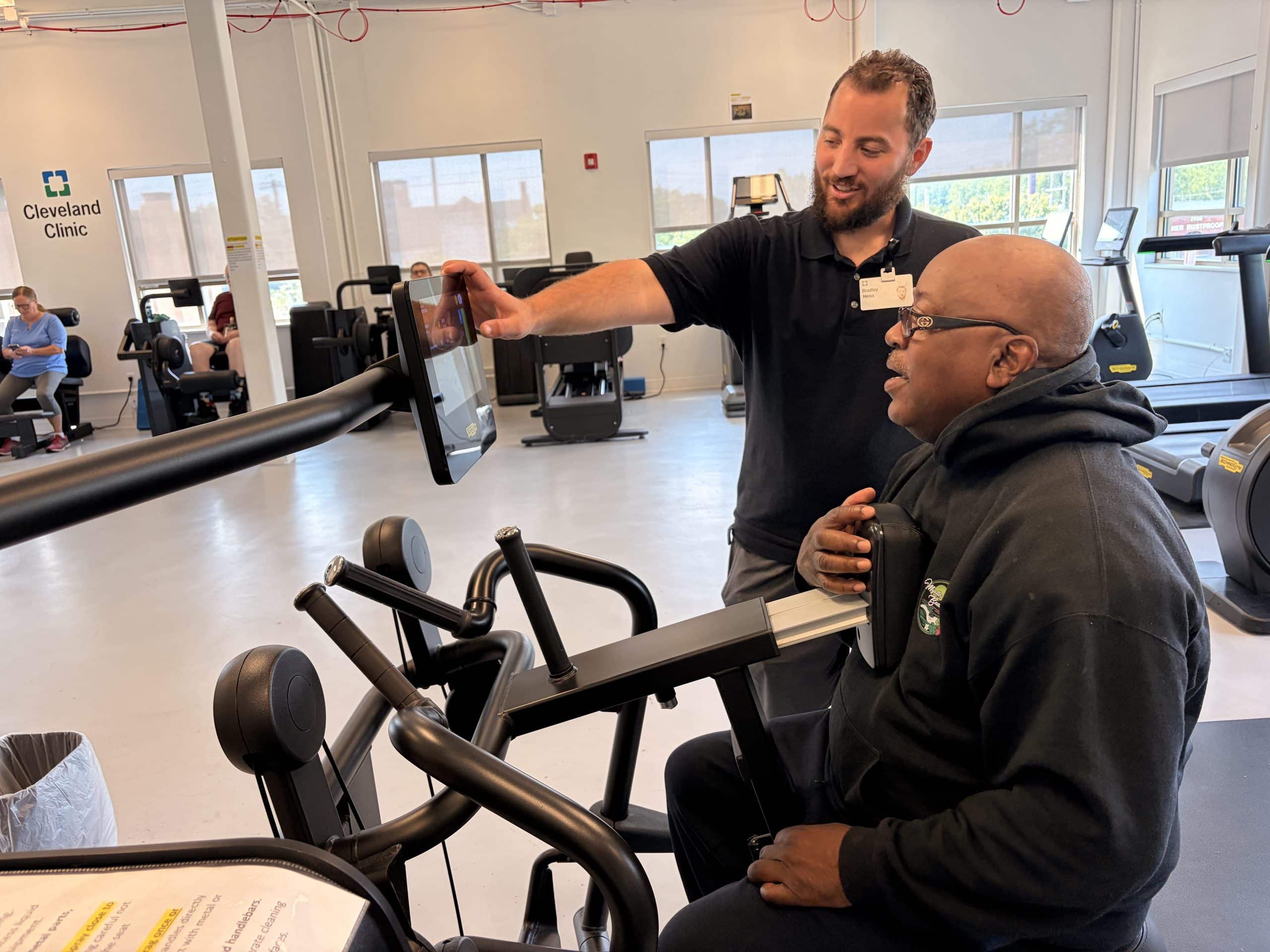
At Fairfax Community Gym, ‘exercise is medicine,’ and free (no strings attached)
What if you had a trained sports medicine doctor and a team of certified exercise physiologists at your disposal to regularly measure your body and health and guide you through a customized regimen, tweaking workouts as you go?


